

US Clears Nvidia H200 Sales To Chinese Firms
2026/05/19 16:12:02
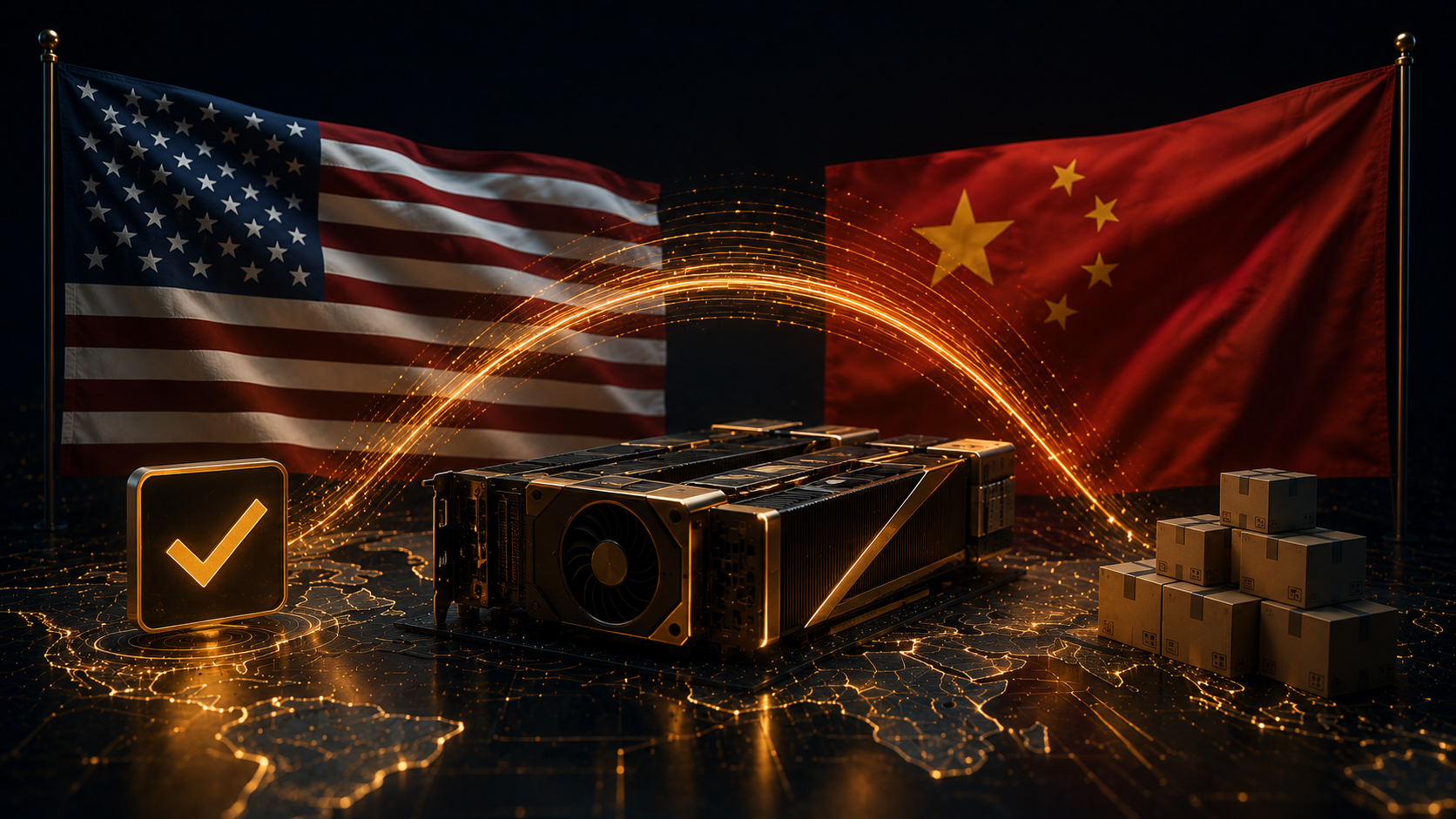
When global artificial intelligence chip exports face strict licensing hurdles, the distribution of high-performance computer hardware impacts international capital markets. International technology supply networks directly affect corporate data center expenditures and public market trends, creating strong sentiment shifts that influence decentralized infrastructure valuations. The distribution profile of the Nvidia h200 semiconductor matrix—how it works, what it changes, and where the risks lie—is the focus of the analysis below.
Key takeaways
-
The US Commerce Department approved approximately 10 Chinese enterprises for hardware acquisition in May 2026.
-
Licensing restrictions authorize individual approved buyers to purchase up to 75,000 graphics processing units.
-
Intermediary hardware distribution networks rely on authorized corporate suppliers including Lenovo and Foxconn.
-
Regulatory frameworks instituted in January 2026 mandate third-party product testing before cargo dispatch.
-
Initial policy updates implemented in December 2025 outlined profit-sharing criteria for authorized sales.
What is a high-performance compute cluster?
Nvidia h200 defined: An advanced artificial intelligence hardware processing chip designed by Nvidia to manage complex enterprise language modeling and deep learning data computations.
A high-performance compute cluster is a centralized network of interconnected graphics processors that aggregate computational power to execute complex algorithmic operations simultaneously. This setup enables large technology firms to train large language models and process big data sets that normal server networks cannot handle. You can research artificial intelligence tokens on KuCoin to trade assets linked to decentralized physical infrastructure and cloud compute protocols.
Think of a high-performance compute cluster like a centralized commercial shipping port equipped with hundreds of automated cargo cranes working together. If a logistics company tries to unload a massive container ship using a single standard dock crane, the process bogs down due to limited mechanical throughput. By linking hundreds of specialized cranes into a single system, the port unloads the entire hull in minutes. For enterprise developers, these processors provide the unified mechanical speed needed to build artificial intelligence networks.
History and market evolution
The regulatory framework governing high-performance computing components has adapted through several policy changes.
-
December 2025: Regulatory statements indicated that manufacturing firms would be permitted to supply hardware to selected regional enterprises under profit-sharing export parameters.
-
January 13, 2026: The Bureau of Industry and Security implemented formal authorization rules requiring mandatory hardware testing and restricted import volume caps.
-
May 13, 2026: Public filings confirmed that approximately 10 distinct regional firms were cleared to buy specific processing units under strict volume constraints.
► Individual Buyer Allocation Cap: 75,000 Units — Commerce Department Licensing, May 2026
► Global Core Hardware Ranking: Second-Most Powerful — Technical Product Registry, January 2026
Current analysis
Technical analysis
The availability of specialized hardware infrastructure impacts the sentiment and development pace of decentralized computing networks. On KuCoin's BTC/USDT chart, macro capital adjustments inside major technology equities often lead to volatility changes for digital tokens tied to decentralized physical infrastructure. Based on KuCoin's trading data, hardware allocation changes influence investor risk appetites, shifting capital into alternative network computing models during times of high supply chain friction. You can analyze live digital asset prices on KuCoin to monitor how broader macroeconomic and supply updates affect market depth.
Macro and fundamental drivers
The core driver of international semiconductor allocation is the balance of enterprise computing power between major global technology hubs.
► Regulatory Approval Scope: 10 Chinese Firms — Department of Commerce Filings, May 2026
Corporate records from May 2026 show that the US Commerce Department granted purchase clearance to major technology enterprises, including Alibaba, Tencent, ByteDance, and JD.com. This approval framework allows authorized entities to scale internal infrastructure up to fixed limits, though the records note that zero actual hardware shipments had been delivered by mid-May 2026. This dynamic underscores how political choices control data center spending, directly impacting global tech trends and related decentralized processing markets.
Comparison
The utilization of centralized enterprise graphics processors features a completely different operational profile than decentralized web3 compute networks. Centralized processor clusters rely on single-entity corporate data centers, which provide massive unified computing speeds but are vulnerable to state-level export bans and regulatory blocks. Distributed web3 computing networks replace this single-point vulnerability by crowdsourcing computing power from independent node operators worldwide, though they face higher network latency and lower raw training speeds.
Participants who prioritize absolute supply chain censorship resistance may find decentralized networks more suitable; those focused on massive unified processing speeds may prefer centralized enterprise hardware. KuCoin's analysis of computing infrastructure provides a detailed breakdown of how these parallel computing models manage resource scarcity.
Future outlook
Bull case
By Q3 2026, if the initial hardware deliveries clear customs smoothly for approved firms, the growth in global compute supply could ease infrastructure costs. This deployment would lift data capital values, supporting computing networks that use high-powered hardware for regional optimization.
Bear case
By Q4 2026, if trade policy friction causes import rejections by customs agencies, the execution of the hardware sales could grind to a halt. Such delays would lock up corporate hardware investments, creating supply bottlenecks that could limit the development of localized software models.
Conclusion
The regulatory decision to authorize specialized hardware sales to selected enterprise buyers highlights the complex links in the global technology supply chain. With strict 75,000-unit limits per customer and mandatory third-party testing rules, the framework shows how governments are balancing trade access with security controls. While these policy clearances provide a clear roadmap for corporate computing upgrades, the complete lack of physical deliveries by mid-May 2026 highlights ongoing execution challenges. This shifting balance between supply availability and state-level policy controls continues to shape investor sentiment across tech sectors. To track how upcoming regulatory updates affect computing markets, monitor KuCoin's latest platform announcements.
Sign up for KuCoin today to buy, sell, and manage your entire crypto portfolio in one simple dashboard. Register Now!
FAQ
Which specific companies received purchase clearance for the Nvidia h200?
Public regulatory filings from May 2026 confirmed that approximately 10 regional enterprises, including major technology entities Alibaba, Tencent, ByteDance, and JD.com, received purchase authorization.
What are the individual purchase volume limits under the May 2026 rules?
The specific licensing terms enforced by the regulatory framework state that each approved customer is permitted to buy a maximum allocation of 75,000 individual processing units.
How did the January 2026 rules change the hardware shipping process?
The policy framework launched on January 13, 2026, required mandatory third-party functional testing to verify hardware specifications before any physical cargo could be shipped.
Which manufacturing distributors handle processor logistics?
Industrial supply chain disclosures list Lenovo and Foxconn as authorized corporate distributors responsible for managing component logistics under the approved licensing structure.
Further reading
Disclaimer: The information on this page may have been obtained from third parties and does not necessarily reflect the views or opinions of KuCoin. This content is provided for general informational purposes only, without any representation or warranty of any kind, nor shall it be construed as financial or investment advice. KuCoin shall not be liable for any errors or omissions, or for any outcomes resulting from the use of this information. Investments in digital assets can be risky. Please carefully evaluate the risks of a product and your risk tolerance based on your own financial circumstances. For more information, please refer to our Terms of Use and Risk Disclosure.