

What is ZORA and How to Trade ZORA on KuCoin
2026/03/27 18:42:02
 While a significant portion of the cryptocurrency industry focuses heavily on decentralized finance (DeFi) and institutional trading infrastructure, a massive parallel economy operates around digital culture, media, and the creator economy. For years, digital artists, musicians, and content creators faced a persistent structural hurdle: the exorbitant gas fees on the Ethereum mainnet made minting and distributing everyday digital content financially unviable. Enter Zora.
If you are exploring the modern Web3 landscape and asking "what is Zora," the definitive answer is that it has evolved into the foundational infrastructure for on-chain digital creativity. Moving far beyond its origins as a simple marketplace, Zora is now a dedicated Layer 2 blockchain network built specifically to make the creation, distribution, and collection of digital media fast, affordable, and fully decentralized.
In this comprehensive guide, we will break down exactly how the Zora network operates, its underlying OP Stack technology, its unique revenue models for creators, and its current position in the 2026 crypto market.
Key Takeaways
-
Originally launched as a decentralized NFT marketplace protocol, Zora has successfully transitioned into its own independent Layer 2 blockchain network operating directly on top of Ethereum.
-
The network is built utilizing the Optimism (OP) Stack. This architecture provides users with absolute security guarantees of the Ethereum mainnet while consistently reducing transaction and minting fees by over 99%.
-
Zora utilizes unique on-chain mechanisms ensuring that creators, developers, and curators automatically earn a fixed split of the minting fee every time their digital media is collected.
-
In 2026, the Zora network serves as the underlying public ledger for a wide variety of decentralized social media protocols, DAOs, and digital publishing platforms.
-
As the Zora ecosystem continues to capture market share in the digital culture sector, tracking its network activity and native asset metrics through top-tier exchange data platforms like KuCoin is essential for informed Web3 investors.
What is Zora?
To accurately understand what Zora is in 2026, it is necessary to trace its technical evolution. Zora was originally founded in 2020 as a decentralized protocol for buying, selling, and curating non-fungible tokens (NFTs).
During its initial iterations, Zora functioned primarily as a suite of smart contracts deployed directly on the Ethereum mainnet. It provided the backend infrastructure that allowed artists and developers to build their own independent storefronts and auction houses without relying on centralized, rent-seeking platforms.
However, as overall network activity on Ethereum surged, the structural limitations of the mainnet became apparent. The transaction costs (gas fees) required to mint a simple digital image, a short video, or a music track frequently exceeded the market value of the asset itself. This economic barrier severely restricted the mass adoption of on-chain media and priced everyday creators out of the ecosystem.
To resolve this critical scalability issue, the Zora development team executed a fundamental pivot in mid-2023. Rather than remaining solely an application operating on top of Ethereum, Zora launched its own standalone blockchain: the Zora Network.
By transitioning from a decentralized application (dApp) into a dedicated Ethereum Layer 2 scaling solution, Zora shifted its core identity. It is no longer just a marketplace where users browse digital art; it is the underlying public infrastructure that powers the creation and distribution of on-chain media, dramatically lowering the financial overhead for creators and collectors alike.
How Does the Zora Network Work?
To facilitate high-volume, low-cost digital media creation, the Zora Network operates as an Ethereum Layer 2 scaling solution. Rather than building a completely new, isolated blockchain with its own security parameters and validator set, the developers constructed the network using the OP Stack, the standardized, open-source software blueprint developed by Optimism.
Off-Chain Execution via Optimistic Rollups
When a user mints a piece of digital media or deploys a new smart contract on the Zora Network, the transaction does not occur on the Ethereum mainnet. Instead, the Zora Layer 2 processes these actions off-chain. By handling the computational workload away from Ethereum’s congested environment, the Zora Network can process thousands of transactions simultaneously at exceedingly high speeds.
Batching and Data Availability
Once the transactions are executed on the Zora Network, the protocol utilizes the Optimistic Rollup methodology. The network compresses hundreds of individual transactions into a single, unified data batch. This compressed batch is then posted back down to the Ethereum Layer 1 (the mainnet) for permanent storage and final settlement. The term "optimistic" refers to the network's default assumption that all transactions within the batch are valid, unless mathematically challenged by network participants during a specific dispute window.
Inherited Security and Drastic Cost Reduction
By anchoring its transaction data to Ethereum, the Zora Network directly inherits the cryptographic security, decentralization, and immutability of the primary Ethereum blockchain. However, because the actual computational processing is handled by Zora and the data is submitted to Ethereum in highly compressed batches, the cost of block space is shared among thousands of users.
The practical result of this architecture is profound for the creator economy: the gas fees required to mint, trade, or transfer digital assets on the Zora Network are reduced by over 99% compared to executing identical operations directly on Ethereum. A transaction that might cost $15.00 on the mainnet typically costs fractions of a cent on Zora.
What Makes Zora Unique for Creators?
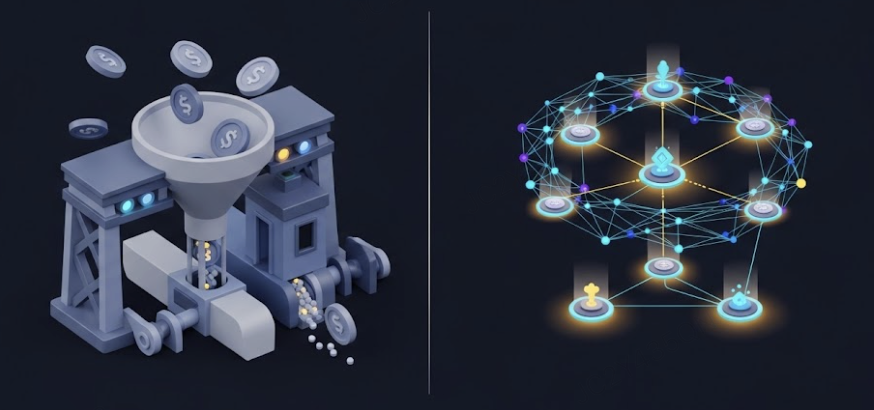
Zora distinguishes itself from first-generation NFT marketplaces by fundamentally redesigning the economic model of on-chain digital media. While legacy platforms operate as centralized intermediaries that extract value through trading fees, Zora functions as decentralized public infrastructure designed to route capital directly to network participants. The Zora Network achieves this through three core infrastructural features:
The Protocol Rewards Mechanism
The most significant economic innovation of the Zora Network is its "Protocol Rewards" system. Traditional marketplaces rely heavily on secondary trading volume, taking a percentage cut every time an asset changes hands. This model heavily favors speculative profile-picture (PFP) collections over standard digital media like music, articles, or independent video content.
Zora shifts the revenue generation to the primary creation event. When a collector acquires a digital asset on Zora, they pay a nominal, fixed minting fee. This fee is not entirely absorbed by the platform. Instead, the smart contract programmatically splits this exact fee and distributes it on-chain to the original creator, the curator who facilitated the mint, the developer of the frontend interface, and the Zora protocol itself. This mechanism guarantees immediate, predictable revenue for creators based purely on the distribution of their work, entirely independent of secondary market speculation.
Permissionless and Open-Source Architecture
Unlike centralized platforms that require account approvals, enforce geographical restrictions, or utilize proprietary backend code, the Zora Network operates as a permissionless protocol. The underlying smart contracts are open-source and immutable. Any creator can deploy a contract, and any developer can build a custom application, storefront, or decentralized social media feed on top of Zora's infrastructure without seeking approval from a centralized corporate entity. This ensures absolute censorship resistance and permanent ownership of the creator-audience relationship.
Native On-Chain Revenue Splits
Collaborative digital media, such as a song featuring multiple artists and producers, traditionally requires complex off-chain accounting to distribute royalties. Zora’s smart contracts natively support automated revenue splits at the protocol level.
When a digital asset is created, the deployment contract can be configured to automatically route exact percentages of all primary mint revenue and secondary royalties to multiple distinct wallet addresses in real-time. This eliminates administrative overhead and removes the need for third-party trust among collaborators.
The Zora Ecosystem: NFTs, DAOs, and Web3 Media
Because the Zora Network is an open, permissionless Layer 2, its utility extends far beyond a standalone website. In 2026, the protocol functions as the underlying media execution layer for a broad spectrum of decentralized applications (dApps). Developers utilize Zora’s smart contracts to embed digital asset creation directly into their own user interfaces.
The current Zora ecosystem is primarily categorized into three distinct operational sectors:
Web3 Social Media Integration (Farcaster)
The most significant driver of network activity on Zora is its deep integration with decentralized social graphs, predominantly the Farcaster protocol and its flagship client, Warpcast. Through technical standards like "Frames," developers can embed Zora minting contracts directly into a social media feed.
This allows users to view a piece of digital art, a video, or an article in their timeline and execute an on-chain minting transaction with a single click, without ever leaving the social application or being redirected to an external marketplace.
On-Chain Capital Formation for DAOs
Decentralized Autonomous Organizations (DAOs) utilize the Zora Network as a primary engine for treasury generation and membership distribution. Instead of relying on traditional venture capital or complex initial coin offerings (ICOs), DAOs deploy continuous daily auctions or open-edition mints on Zora.
When participants collect these digital assets, the generated ETH (minus the protocol reward split) is automatically routed to the DAO’s multi-signature treasury wallet. This provides communities with a legally compliant, transparent method to fund continuous operations and distribute voting rights.
Multi-Format Digital Publishing
While first-generation NFT platforms were technically optimized for static image files (JPEGs and PNGs), the Zora Network is engineered to support complex, high-bandwidth data formats. The ecosystem now hosts a substantial volume of on-chain audio (music tracks and podcast episodes), long-form text (decentralized journalism and essays), and high-definition video files.
By drastically reducing the cost of block space via the OP Stack, Zora allows independent publishers to bypass centralized hosting services and monetize their content directly on the blockchain.
ZORA Tokenomics and 2026 Market Potential
Evaluating the investment profile of the Zora Network requires a precise analysis of its native digital asset and its specific market positioning within the 2026 Layer 2 landscape. While general-purpose Layer 2 networks derive their valuation primarily from Decentralized Finance (DeFi) Total Value Locked (TVL), Zora's economic model is fundamentally tied to digital culture and media velocity.
Token Utility and Decentralized Governance
The native ZORA token functions as the governance and economic anchor of the Zora Layer 2 ecosystem. Holders of the token possess verifiable voting rights over critical protocol parameters. This includes proposing adjustments to the base protocol reward splits, directing decentralized treasury allocations for developer grants, and voting on future technical upgrades to the OP Stack architecture. Additionally, as the network progresses toward a decentralized sequencer model, the token plays a structural role in network security and sequencer revenue distribution.
Value Accrual Through Block Space Demand
The fundamental value accrual of the ZORA token correlates directly with the demand for the network's block space. Every action on the network, whether a user is minting a digital collectible, interacting with a Farcaster smart contract, or executing a DAO treasury split, consumes gas. While individual transaction costs are fractionally small due to the rollup architecture, the aggregate volume of millions of daily media micro-transactions creates a sustained baseline demand for the network's underlying infrastructure, driving utility for the native asset.
Market Positioning in 2026
In the 2026 cryptocurrency market, the intersection of decentralized social media and the creator economy, often categorized as Culture-F, has matured into a distinct, high-growth asset class. Zora's market potential is evaluated based on its dominance within this specific niche.
Unlike general-purpose blockchains that compete fiercely for transient DeFi yield, Zora has established a highly defensible structural moat among digital artists, independent musicians, and Web3 publishers. For analysts evaluating its market capitalization and Fully Diluted Valuation (FDV), the primary performance indicators are daily active minters, active smart contract deployments, and the volume of frontend social integrations, rather than traditional financial liquidity metrics.
How to Track and Trade ZORA on KuCoin
For investors and network participants looking to acquire the native asset of the Zora ecosystem, accessing a centralized exchange with deep liquidity is the most efficient route. KuCoin provides a secure, regulated infrastructure to execute this transaction.
Following the official How to Buy Zora platform guidelines, here is the standardized step-by-step process to acquire the asset:
Step 1: Account Creation and Identity Verification
Navigate to the KuCoin platform and register a new account. To comply with international regulatory standards and unlock full trading capacities, you must complete the standard Know Your Customer (KYC) identity verification process by submitting a valid ID.
Step 2: Fund Your Account
Before acquiring ZORA, you need to fund your exchange wallet with a base currency. KuCoin offers two primary methods:
-
Fiat On-Ramp: Purchase stablecoins directly using traditional finance methods such as a credit/debit card, bank transfer, or supported third-party payment channels.
-
Crypto Deposit: If you already hold digital assets in an external Web3 wallet, transfer them directly to your designated KuCoin deposit address.
Step 3: Navigate to the ZORA Spot Market
Once your account is funded, transfer your capital from the Main Account to the Trading Account. Open the KuCoin Spot Trading interface and search for the ZORA trading pair. This dashboard will provide you with the real-time order book, market depth, and execution tools.
Step 4: Execute Trade
Enter your specific purchasing parameters. You can execute a Market Order to acquire ZORA instantly at the current prevailing market price, or set a Limit Order to automatically trigger a purchase only when the asset reaches your exact specified price target. Confirm the order.
Step 5: Secure and Utilize Your Assets
Once the transaction clears, the ZORA tokens will immediately reflect in your KuCoin account balance. From here, you can hold the assets securely within the exchange's institutional-grade custody, or withdraw them to a non-custodial Web3 wallet to actively participate in the Zora Layer 2 network's governance and creator ecosystem.
Conclusion
In conclusion, answering "what is Zora" in 2026 requires looking far past the outdated concept of a simple NFT marketplace. Zora has fundamentally matured into a specialized Layer 2 blockchain network engineered specifically for the creator economy. By leveraging the OP Stack, it provides the robust cryptographic security of the Ethereum mainnet while completely removing the financial barriers to entry, reducing minting and transaction costs by over 99%. For investors tracking the Culture-Fi sector and creators seeking equitable monetization, the Zora Network represents a structural shift toward a truly decentralized media ecosystem.
FAQs
What is Zora (ZORA)?
ZORA is the native digital asset of the Zora Network, an Ethereum Layer 2 blockchain built specifically to power the Web3 creator economy, digital art, and decentralized social media.
What is the utility of the ZORA token?
The token is primarily used for decentralized protocol governance. Holders can vote on network upgrades, treasury allocations, and the distribution of sequencer revenue within the ecosystem.
Is Zora a Layer 1 or Layer 2 network?
Zora is a Layer 2 (L2) scaling solution. It uses the Optimism (OP) Stack to process transactions cheaply and quickly off-chain, while inheriting its core security from the Ethereum mainnet.
How can I buy ZORA?
You can quickly buy ZORA on the KuCoin spot market. Simply create an account, fund your wallet with a stablecoin like USDT or supported fiat currencies, and execute a trade on the ZORA/USDT pair.
How should I store my ZORA tokens?
You can store your tokens securely in your KuCoin exchange wallet for immediate trading access. Alternatively, you can withdraw them to a non-custodial Web3 wallet to actively participate in the Zora Network.