

The End of BitMEX: Why the Crypto Derivatives Pioneer Is Shutting Down
2026/07/27 14:05:00
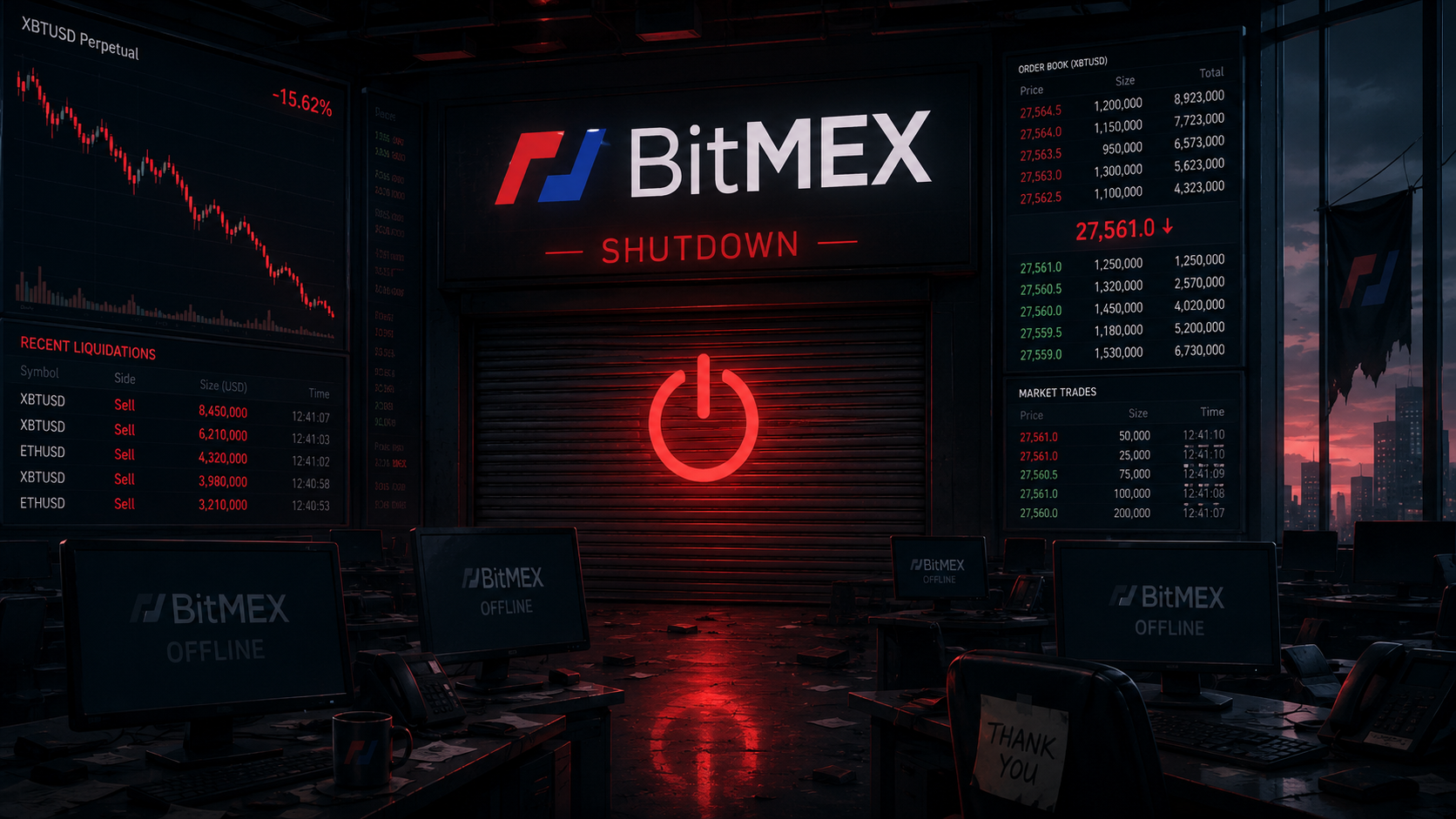
BitMEX Announces Permanent Shutdown: What Users Need to Know
BitMEX, the well-known derivatives platform based in the Seychelles, which played a pivotal role in introducing the innovative perpetual swap contract and offering an unprecedented 100x leverage to the cryptocurrency markets, made a significant announcement on July 23, 2026. The company declared that it will permanently cease all operations effective September 23, 2026, at precisely 04:00 UTC. This decision was reached by its parent company, HDR Global Trading Limited, after conducting a comprehensive strategic review of the business and the broader industry landscape. It is important to note that new account registrations have already been halted and are no longer being accepted. Starting from August 26, the platform will implement restrictions that prevent users from opening any new positions, and any remaining open contracts will be force-closed in advance of the final shutdown date.
Customers have been strongly advised to take immediate action by closing their positions and withdrawing their assets without delay; any account balances that remain after the specified deadline will incur monthly maintenance fees of $50 or an annualized charge of 1 percent. The impending closure of what was once a dominant venue in the cryptocurrency space, which significantly shaped modern crypto derivatives trading, serves as a stark reminder of how quickly liquidity, market share, and competitive advantages can diminish when larger platforms and decentralized alternatives successfully capture the product innovations that were initially pioneered by earlier industry leaders.
Strategic Review Triggers Orderly Wind-Down Timeline
HDR Global Trading Limited completed an internal strategic review that concluded continued operation of the BitMEX exchange was no longer viable within the current competitive and industry s. The formal announcement on July 23 set a clear two-month runway to September 23. During the intervening period, the platform continues to process existing trades under progressively tighter risk controls. New registrations ended immediately. Beginning August 26, only position reductions will be permitted, ensuring that open interest declines in a controlled fashion before final settlement.
Force-closure of any remaining contracts will occur in the final days so that no positions remain open at the shutdown timestamp. The company has published proof-of-reserves data showing that customer liabilities are fully covered by assets held on the platform. Network congestion on Bitcoin and other chains remains the primary operational risk for timely withdrawals, and users have been advised to initiate transfers well ahead of the deadline. This structured approach contrasts with abrupt platform failures elsewhere in the sector and reflects an intentional effort to protect remaining user funds while exiting cleanly.
Perpetual Swap Innovation That Redefined Crypto Markets
BitMEX launched the first widely adopted perpetual swap contracts in 2016, allowing traders to hold leveraged long or short exposure without expiration dates. The design combined a funding-rate mechanism that kept the contract price anchored to the underlying spot index with leverage options that reached 100 times. The XBTUSD perpetual quickly became a primary price-discovery venue, attracting professional market makers, proprietary trading firms, and high-conviction speculative capital. At its peak in the 2018–2019 expansion cycle, the platform processed daily volumes approaching $8 billion and captured roughly 57 percent of global crypto derivatives market share.
Annual turnover consistently surpassed the remarkable threshold of $1 trillion during particularly strong years. The innovative product architecture demonstrated such exceptional effectiveness that it led to nearly every subsequent centralized and decentralized derivatives venue adopting various adaptations of the same foundational model. BitMEX’s pioneering technical and product leadership thus established a highly competitive landscape that ultimately contributed to the erosion of its own market position. Throughout its operational history, the platform proudly maintained an unblemished record, never losing customer funds to hacks or smart-contract exploits, which further solidified its reputation in the industry.
By mid-2026, the daily trading volume on BitMEX had plummeted to around $400,000, indicating a significant slowdown in its business operations. Moreover, its share of the global derivatives market had dropped below 0.01 percent, according to extensive data compiled by Kaiko. This was a near-total reversal from the multi-billion-dollar daily turnover and majority market share seen less than a decade ago, showing a stark contrast in the trajectory of the platform. These changes saw liquidity providers and large directional traders migrate to alternative venues in search of better trading conditions and opportunities, where they could find deeper order books, broader contract listings, tighter spreads, and more favorable fee structures. The evolving market dynamics highlighted the difficulties BitMEX encountered in sustaining its competitive advantage within a dynamic and expanding landscape.
Centralized competitors quickly grew their operations and captured the lion’s share of new capital inflows while decentralized perpetuals began to gain traction among sophisticated traders looking for non-custodial alternatives. This drop in trading volume was accompanied by a drop in open interest on BitMEX. This change in market structure eventually decreased the overall attractiveness of the platform for retail traders and institutional players alike. These factors all contributed to a competitive environment for BitMEX trying to stay ahead in a fast-changing ecosystem. The growing popularity of decentralized solutions among traders caused a significant move in sentiment in the market, making the platform’s position even more difficult.
Competitive Pressure From Larger Centralized Venues
Larger centralized exchanges have successfully captured a significant portion of the perpetual-swap volume that BitMEX originally pioneered and established as a leader in the market. These platforms, which boast greater capital bases, more extensive product offerings, and stronger brand recognition among newer cohorts of traders, have effectively absorbed the liquidity that had previously been concentrated on BitMEX. The competitive space has been further influenced by fee competition, promotional campaigns, and deeper integration with fiat on-ramps, all of which have contributed to a notable shift in trading activity. Market makers have optimized their capital efficiency by strategically concentrating their inventory on the venues that exhibit the highest absolute trading volumes, which has left smaller trading books comparatively less attractive to participants.
The cumulative effect of these developments over several years has resulted in a significant reduction of BitMEX to a mere residual presence within the derivatives landscape. Industry data from 2025 has already indicated that the top trading venues now control the overwhelming majority of perpetual trading activity, which has left mid-tier and legacy platforms grappling with shrinking absolute and relative footprints in the market.
Moreover, the migration of whale accounts and professional trading desks has proven to be especially consequential, as these participants are responsible for generating the majority of volume and open interest in leveraged markets. Their departure from BitMEX has further exacerbated the platform's challenges in maintaining its competitive edge in an increasingly crowded and dynamic trading environment.
Rise of Decentralized Perpetual Platforms
Decentralized perpetual venues introduced additional competitive pressure by offering non-custodial trading, transparent on-chain settlement, and often lower effective costs for certain user segments. These platforms attracted capital seeking to avoid centralized counterparty risk and the residual legal overhang associated with earlier regulatory actions. Liquidity on leading decentralized protocols expanded rapidly, creating viable alternatives for traders who valued self-custody and composability with other on-chain strategies. The rise of these decentralized platforms has not only reshaped the trading landscape but has also encouraged innovation in financial products, leading to a more diverse ecosystem. As traders become more aware of the benefits of decentralized finance, the demand for these solutions continues to grow, further intensifying the competitive dynamics in the market.
BitMEX’s custodial model, while operationally reliable, no longer differentiated the platform in an environment where decentralized alternatives had matured. The combination of centralized scale and decentralized innovation left limited room for a mid-sized legacy venue to regain critical mass. Market participants increasingly allocated risk capital according to depth, execution quality, and operational transparency rather than historical first-mover status. This shift in focus has compelled traditional platforms to rethink their strategies and adapt to the growing preferences of traders. As a result, many legacy venues are now exploring partnerships with decentralized protocols or enhancing their offerings to include more innovative features, aiming to attract a broader user base and remain relevant in a rapidly changing market.
Legacy of Regulatory Settlements and Legal Overhang
Earlier regulatory actions, which included violations of the Bank Secrecy Act spanning the period from 2015 to 2020, led to guilty pleas from both the company and its co-founders, resulting in substantial financial penalties that significantly impacted their operations. Although the founders were later granted presidential pardons in 2025, the lengthy enforcement process imposed enduring operational and reputational costs that could not be easily mitigated. As a consequence, compliance expenditures increased, certain jurisdictions became increasingly challenging to serve effectively, and some institutional counterparties adopted a more cautious approach in their dealings.
The perception of increased legal risk, which persisted, played a major role in the gradual flow of professional liquidity away from the platform. By the way, the platform itself was never hacked in a way that allowed for the theft of users’ coins. But over time, the various enforcement actions it faced did weigh on its ability to compete with other players in the space that were younger or better funded. These historical factors were, of course, given full weight in the strategic review process that resulted in the decision to close the platform, balanced against the current commercial realities facing the organization.
Recent Operational Adjustments Ahead of Closure
In the weeks leading up to the formal announcement of the shutdown, BitMEX took significant steps to accelerate the delisting of illiquid contracts and trading pairs that were no longer attracting sufficient trading interest. During July alone, dozens of derivative instruments and spot pairs were systematically removed from the platform, a move that was justified by the lack of adequate trading activity. These strategic actions were aimed at simplifying the eventual wind-down process by effectively reducing the number of open markets that would require an orderly settlement as the platform transitioned towards closure.
The departure of several key executives earlier in 2026, which included the removal of the chief executive officer, the chief financial officer, and the head of growth, further indicated a significant internal restructuring within the organization. The combination of product rationalization efforts and leadership changes was clearly designed to prepare the organization for an exit strategy rather than a turnaround, signaling a shift in focus. Throughout this period, proof-of-reserves disclosures consistently demonstrated that customer assets remained fully backed, which served to reinforce the orderly nature of the entire process. Users were kept informed through repeated communications that emphasized the critical importance of making timely withdrawals to avoid incurring maintenance fees that would apply after the deadline.
Effects for Remaining Users and Asset Withdrawals
Customers who are still holding balances or maintaining open positions are now faced with a significantly compressed timeline to execute their exit strategies. The platform has officially confirmed that all assets remain securely under the control of the users, and it has been verified that the reserves are fully sufficient to cover all liabilities. The primary practical constraint that users should be aware of is the capacity of the blockchain network; during periods of heightened congestion on Bitcoin or other supported blockchain networks, there may be delays in processing large withdrawals. Therefore, users have been strongly advised to initiate their transfers as soon as it is practicable and to closely monitor the confirmation times for their transactions.
After the date of September 23, any residual balances that remain on the platform will incur the stated maintenance charges, which creates a compelling financial incentive for users to complete a full exit from the platform. In the event of a force-closure of open derivatives positions, any remaining exposure will be converted into settled cash or cryptocurrency balances that can subsequently be withdrawn by the users. This process is designed to prioritize an orderly reduction of systemic risk on the platform while simultaneously transferring the responsibility of custody back to the individual users. Those who take prompt action can successfully complete the transition without incurring any additional costs.
Limited Direct Market Impact Expected
Given BitMEX’s current daily trading volume, which is approximately $400,000, coupled with a market share that is notably below 0.01 percent, the anticipated closure of the platform is expected to produce only marginal effects on the overall liquidity of crypto derivatives markets or the process of price discovery. The perpetual-swap product category, which was originally invented by the platform, continues to generate an astonishing tens of trillions of dollars in annual trading volume across various other trading venues. Larger centralized exchanges, along with leading decentralized protocols, already facilitate and intermediate the overwhelming majority of that trading activity.
As a result, analysts are therefore anticipating that any temporary migration of residual open interest will be absorbed smoothly and efficiently by existing competitors in the market. The broader market structure remains intact and stable, and this event is primarily viewed as the conclusion of a legacy platform rather than a significant systemic liquidity event that could disrupt the market. However, this episode does reinforce the ongoing trend of consolidation within the industry, where scale and product breadth increasingly determine the survival and success of trading platforms in a highly competitive environment.
Historical Significance of an 11-Year Run
From its inception in 2014 until the peak years of 2018 and 2019, BitMEX served a dual purpose as both a commercial trading venue and an informal experimental laboratory for the design and development of derivatives products. The perpetual swap mechanism that it popularized emerged as the leading instrument for leveraged exposure to cryptocurrencies on a global scale. Over the years, generations of traders utilized the platform to learn essential skills in risk management, funding-rate dynamics, and the intricacies of high-leverage position sizing. The technical architecture of BitMEX, along with the performance of its matching engine, established early benchmarks that subsequent trading venues aspired to match or even surpass.
One of the most remarkable operational achievements of BitMEX is the fact that, throughout more than a decade of its operation, there was no loss of customer funds due to external hacks. This accomplishment stands out in an industry that has faced numerous security failures and breaches. Although the platform eventually experienced a decline, this does not diminish the significant structural contributions it made to the overall architecture of the market; the product category it pioneered continues to grow and evolve, even as the original venue prepares to exit the scene.
Lessons for Platform Longevity in Competitive Derivatives Markets
The BitMEX trajectory illustrates that first-mover advantage in product innovation provides only a temporary window. Sustained success requires continuous investment in liquidity depth, product breadth, user experience, and capital formation at a pace matching or exceeding that of larger rivals. Legal and compliance costs, once incurred, can constrain strategic flexibility for years. Liquidity itself exhibits strong network effects: once professional flow migrates, the remaining book becomes less attractive, accelerating further outflows.
Platforms that fail to reach or maintain critical scale face rising unit costs and diminishing returns on marketing or product development. The orderly nature of the BitMEX wind-down itself offers a contrasting example to disorderly failures, demonstrating that deliberate planning and transparent communication can protect residual user interests even when commercial viability has ended. Market participants will continue to evaluate surviving venues against these durability criteria.
🔥 Join KuCoin 9th Anniversary Trading CampaignKuCoin is celebrating its 9th anniversary with a special platform campaign filled with exclusive rewards, trading activities, and limited-time offers. Don’t miss the chance to participate and enjoy the benefits as the exchange marks nine years of growth and innovation. Visit the official campaign page now:
|

FAQs
When exactly will BitMEX stop all trading, and what happens to open positions?
Operations cease at 04:00 UTC on September 23, 2026. From August 26, users may only reduce existing positions. Any contracts still open near the final date will be force-closed by the platform at the prevailing mark price so that no exposure remains at shutdown.
Are user funds safe during the wind-down period?
The company has stated that customer assets remain fully reserved and under user control. Proof-of-reserves data continues to show liabilities covered by held assets. The primary risk is temporary blockchain congestion that could slow large withdrawals rather than any shortfall in reserves.
Why did BitMEX lose the market leadership it once held?
Liquidity, market makers, and large traders migrated over several years to platforms offering deeper books, more contract variety, lower effective costs, and fewer residual legal concerns. Both larger centralized exchanges and maturing decentralized perpetual venues captured the volume that previously concentrated on BitMEX.
What fees apply if assets are not withdrawn by the deadline?
Balances remaining after September 23 will incur a monthly maintenance fee of $50 or an annualized 1 percent charge on the value of the assets, whichever applies under the published terms. Prompt withdrawal avoids these charges entirely.
Does the shutdown affect the broader perpetual-swap market?
Direct impact is expected to be minimal. BitMEX’s current share is below 0.01 percent, and daily volume is approximately $400,000. The product category itself continues to trade at a multi-trillion-dollar annual scale across other centralized and decentralized venues.
Disclaimer: This content is for informational purposes only and does not constitute investment advice. Cryptocurrency investments carry risk. Please do your own research (DYOR).