



Will Stablecoin Market Cap Exceed $1 Trillion by 2026?
Stablecoins have quietly become one of the most practical bridges between traditional money and blockchain technology. What started as a niche tool for traders has grown into a multi-hundred-billion-dollar ecosystem powering everything from cross-border payments to corporate treasuries. As of March 2026, the total market capitalization of stablecoins stands at roughly $316 billion, a figure that reflects years of steady expansion accelerated by fresh regulatory tailwinds and real-world use.
Picture this: in January alone, stablecoin networks handled more than $10 trillion in transaction volume, rivaling the scale of legacy systems like Visa. At the same time, the overall market cap crossed $316 billion. The question now is straightforward: Can this momentum carry the sector past the $1 trillion threshold by the close of 2026?
By the end of this article, readers will gain a clear picture of the forces shaping stablecoin growth, the momentum building in 2026, and a grounded assessment of whether the market cap could realistically surpass $1 trillion before December.
This article will delve into the basics of how stablecoins function today, their growing impact on cryptocurrency markets and traditional finance, the practical advantages driving adoption right now, the real challenges and risks that investors and businesses must weigh, and a forward-looking outlook on the path to that trillion-dollar milestone.
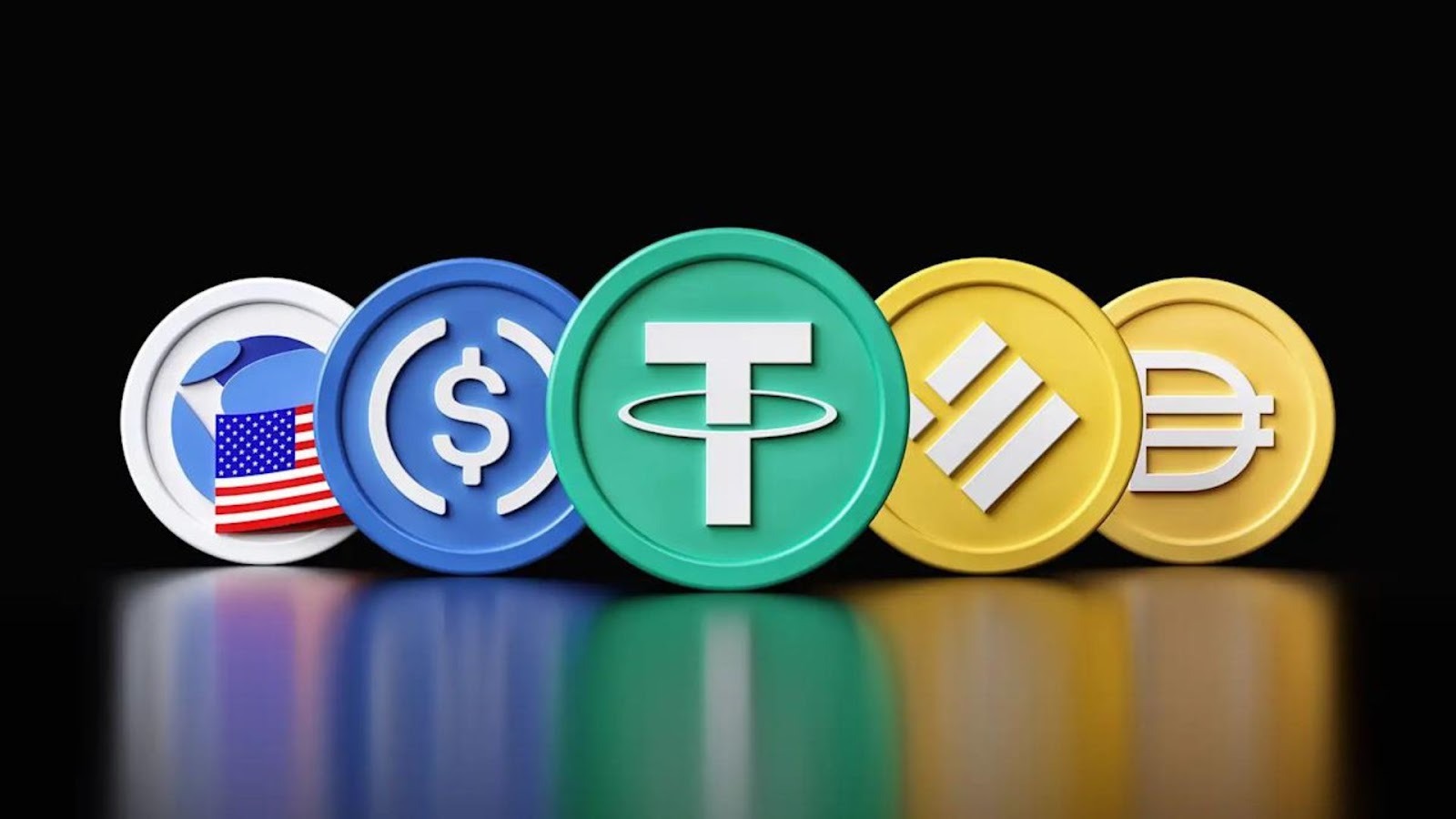
Introduction to Stablecoins
Stablecoins are digital assets engineered to hold a steady value, most often pegged one-to-one with the U.S. dollar or other major currencies. Unlike volatile cryptocurrencies such as Bitcoin or Ethereum, they prioritize predictability, making them useful for everyday transactions, trading, and storing value without the wild price swings that define much of the crypto space.
At their core, most stablecoins today are fiat-backed.
Issuers hold reserves of cash, short-term Treasuries, or other highly liquid assets equal to the amount of tokens in circulation. When someone redeems a stablecoin, the issuer releases the matching reserve. This simple mechanism has scaled dramatically. Five years ago the total market sat below $50 billion. By March 2026 it had reached approximately $320 billion, with the top five stablecoins accounting for nearly 90 percent of the total.
Tether’s USDT remains the heavyweight, commanding roughly 58 percent of the market with a capitalization near $184 billion. It operates across more than a dozen blockchains and serves as the go-to liquidity provider for crypto trading pairs worldwide. Circle’s USDC follows as the clear runner-up, recently hovering around $78–79 billion after strong growth driven by its post-IPO momentum and compliance focus. Other notable players include Sky’s USDS, Ethena’s USDe, and MakerDAO’s DAI, each carving out specialized niches in yield or decentralized finance.
Overview of USDT (Tether): Tether’s USDT is the largest and most liquid stablecoin globally. Backed primarily by U.S. Treasuries and cash equivalents, it powers high-volume trading, remittances, and emerging-market payments. Its broad availability across blockchains gives it unmatched reach, though it has faced past scrutiny over reserve transparency. In 2026, Tether continues to dominate while expanding regulated offerings to meet institutional demand.
Overview of USDC (Circle): USDC stands out for its full reserve transparency and regulatory alignment. Issued by Circle, which went public in 2025 with a blockbuster IPO that raised over $1 billion and saw shares surge dramatically, USDC has become the preferred choice for U.S.-focused institutions and compliant applications. Its growth reflects a shift toward onshore, auditable stablecoins.
Analysts from firms like 21Shares and JPMorgan have noted that stablecoin circulation could triple or more under favorable conditions, citing the sector’s move from speculative trading tool to everyday financial rail. One industry report even highlighted that stablecoin volume last year exceeded $34 trillion, putting it in the same league as major payment networks.
Impact of Stablecoins on Cryptocurrency
Stablecoins have reshaped cryptocurrency markets in fundamental ways. They provide the liquidity that allows traders to move in and out of positions without converting directly to fiat, reducing friction and slippage during volatile periods. In decentralized finance (DeFi), stablecoins serve as the primary collateral and lending asset. This enables borrowing, yield farming, and complex strategies that would otherwise be impossible at scale.
Liquidity Backbone for Crypto Trading
Without stablecoins, traders would face constant conversion between volatile assets and traditional bank accounts. This process often involves delays, higher fees, and exposure to price swings. Stablecoins solve that by acting as a steady medium of exchange on blockchain networks. Traders can quickly shift from Bitcoin or Ethereum into a dollar-pegged token like USDT or USDC during market dips, then re-enter positions when conditions improve.
The result is smoother trading, deeper order books, and more efficient price discovery across exchanges.
This liquidity effect extends far beyond spot trading. In perpetual futures and derivatives markets, stablecoins form the settlement layer for billions of dollars in daily volume. Their stability minimizes funding rate distortions and supports leveraged positions that would carry even higher risk without a reliable base asset.
Central Role in Decentralized Finance (DeFi)
In DeFi protocols, stablecoins function as the workhorse of the ecosystem. They serve as collateral for loans on platforms like Aave or Compound, allowing users to borrow against their holdings while keeping exposure to potential upside in other assets. Yield farming strategies often revolve around stablecoin pairs, where users provide liquidity to automated market makers and earn rewards in return.
Complex strategies such as delta-neutral positions, basis trading, or leveraged staking—rely heavily on stablecoins for their predictable value. Without them, DeFi would remain fragmented and limited in scale. As of early 2026, a significant portion of total value locked in DeFi protocols continues to be denominated in or collateralized by major stablecoins, underscoring their foundational importance.
Extending Influence into Traditional Finance
Beyond pure crypto, the influence of stablecoins now reaches deep into traditional finance. Banks and payment processors experiment with stablecoin rails for real-time settlement, cutting out intermediaries that once added days and substantial fees to cross-border transfers. Corporate treasurers increasingly view stablecoins as a modern cash-management tool fast, programmable, and available 24/7.
This shift mirrors themes seen in 2025’s crypto IPO wave. Companies like Circle, Bullish, eToro, and Gemini went public, signaling that the broader market now sees mature digital-asset operators as ready for mainstream capital markets. Circle’s successful debut, in particular, highlighted institutional appetite for well-governed stablecoin issuers.
The GENIUS Act as a Major Catalyst
The GENIUS Act, signed into law in mid-2025, has served as a pivotal catalyst. It created the first comprehensive federal framework for “permitted stablecoins,” requiring 100 percent liquid-asset backing, monthly disclosures, and oversight by federal or qualifying state regulators. This structure has given enterprises the legal certainty they long needed.
Legal teams at corporations now routinely evaluate several key factors before integrating stablecoins:
-
Issuer compliance under the new framework
-
Tax treatment (stablecoins generally treated as property)
-
KYC/AML and sanctions-screening obligations
-
Custody arrangements and wallet governance
-
Multi-jurisdictional regulatory requirements
This is not driven by retail speculation. Instead, it reflects corporate treasury modernization on a broad scale. Companies are treating stablecoins as practical infrastructure rather than speculative instruments.
Real-World Transaction Volumes and Institutional Examples
Case in point: transaction volumes on stablecoin networks have reached levels that rival established payment systems. In January 2026 alone, on-chain stablecoin movement surpassed $10 trillion, with USDC accounting for a dominant share of that activity. These figures highlight the shift from experimental use to high-volume, practical application.
Institutions such as BNY Mellon have begun acting as custodians for tokenized funds, bringing traditional custody expertise onto blockchain rails. Insurers have started settling claims directly in USDC, reducing processing times dramatically. Meanwhile, BlackRock’s BUIDL tokenized liquidity fund has grown rapidly, demonstrating how stablecoins can integrate seamlessly with real-world asset (RWA) tokenization. This combination allows institutions to access yield-bearing, on-chain dollar exposure while maintaining compliance standards.
Ripple Effects on the Wider Crypto Market
The ripple effect on the wider crypto market is clear. Bitcoin’s maturation into a strategic asset has benefited from deeper liquidity and more predictable on-ramps and off-ramps provided by stablecoins. When institutions want to allocate to Bitcoin, they can use stablecoins to move funds efficiently without the operational headaches of traditional banking channels.
Regulatory predictability from the GENIUS Act and parallel developments like the CLARITY Act has encouraged venture capital to re-engage. In 2025, digital-asset companies attracted $19.7 billion in investment, with much of that capital flowing to later-stage firms preparing for liquidity events such as IPOs or strategic acquisitions.
Overall, stablecoins have evolved from a convenient trading tool into a connective tissue linking decentralized innovation with traditional financial systems. Their ability to deliver speed, programmability, and stability has accelerated adoption across trading, DeFi, payments, and corporate operations. As regulatory frameworks mature and institutional participation deepens, stablecoins are positioned to play an even larger role in shaping the future architecture of both crypto and global finance.
Advantages of Stablecoins in the Current Market
Speed and Efficiency in Transactions
Transfers settle in seconds or minutes rather than days, at fractions of a cent per transaction. This capability proves transformative for cross-border payments, remittances, and payroll. Multinational companies can move funds between subsidiaries or suppliers almost instantly, improving cash-flow management and reducing foreign exchange (FX) risk.
Traditional cross-border wires often involve multiple intermediaries, delays of one to five business days, and accumulated fees that can reach several percent of the transfer amount. Stablecoins cut through that friction. Settlement occurs directly on blockchain networks, 24/7, without reliance on banking hours or correspondent banks. For businesses handling frequent international supplier payments or employee payroll across borders, the time and cost savings add up quickly. Reports from industry observers note that these efficiencies can shave meaningful basis points off transaction costs for companies moving billions annually, while also minimizing exposure to currency fluctuations during settlement windows.
Accessibility and Programmability
accessibility and programmability open new doors. Smart contracts let businesses automate payments, escrow arrangements, or conditional releases without manual intervention. In decentralized finance (DeFi), stablecoins provide stable collateral that earns yield while remaining highly liquid, something cash sitting in a traditional bank account rarely achieves at the same scale.
Programmability allows money to behave with built-in logic. For example, a payment can be released automatically once goods are confirmed delivered via an oracle, or funds can escrow until specific compliance checks clear. This reduces administrative overhead and counterparty risk. In DeFi protocols, users can lend stablecoins to earn competitive yields or use them as collateral for borrowing other assets, all while maintaining price stability. Traditional bank deposits, by contrast, typically offer minimal or no yield in low-interest environments and lack the same level of automation or composability with other financial tools.
Regulatory Clarity Unlocking Institutional Participation
Third, regulatory clarity has unlocked institutional participation. The GENIUS Act’s requirements for full reserves and regular disclosures have de-risked stablecoins for banks and corporations. Over 1,600 U.S. banks are now exploring integration via providers like Jack Henry & Associates, whose core banking platform serves approximately 1,670 institutions and credit unions. Onshore options such as Circle’s USDC and Tether’s newly launched regulated USAT (issued through Anchorage Digital Bank) are gaining traction precisely because they meet compliance standards that offshore alternatives cannot always guarantee.
The GENIUS Act, enacted in mid-2025, established the first federal framework for permitted payment stablecoins. It mandates 100% backing with high-quality liquid assets (primarily cash and short-term U.S. Treasuries), monthly attestations, and oversight by federal or qualifying state regulators. This structure gives legal teams confidence to recommend integration. Banks can now evaluate stablecoins within existing compliance workflows rather than treating them as unregulated experiments. The result is broader exploration of stablecoin rails for B2B payments, liquidity management, and even internal treasury functions.
Experts see this momentum as more than hype. Reports from a16z Crypto and Silicon Valley Bank highlight how stablecoins are becoming “the internet’s dollar,” powering new on-ramps, bank-led payment scenarios, and tokenized asset settlement. Yield-bearing variants such as those integrated with tokenized Treasuries like BlackRock’s BUIDL fund further enhance appeal for treasury teams seeking both stability and modest returns. BlackRock’s BUIDL, which has grown to manage billions in assets, combines on-chain liquidity with daily yield accrual from underlying Treasury holdings, offering institutions a compliant way to earn while maintaining dollar stability.
Real-World Applications Driving Adoption
Real-world applications are already visible and expanding. Insurance giant Aon announced in March 2026 the completion of what it described as the first known stablecoin insurance premium payment among major global brokers. The proof-of-concept involved settling premiums for clients, including Coinbase and Paxos, using USDC on Ethereum and PayPal USD on Solana. Aon highlighted how this approach scales financial operations faster, with greater transparency and institutional-grade infrastructure.
Corporate treasuries increasingly use stablecoins for internal liquidity management and supplier payments. In emerging markets, stablecoins help preserve value amid local currency volatility while enabling cheap, near-instant global transfers. Remittance corridors have seen particular uptake, enabling recipients to access dollars without the friction of traditional banking.
The combination of these advantages has driven vertical adoption, moving upward into the highest levels of the financial stack rather than just sideways within crypto trading. Banks are testing stablecoin-based settlement, insurers are piloting premium collections, and large corporations are incorporating them into treasury policies. Yield-bearing stablecoins and tokenized real-world assets further blur the lines between traditional money-market instruments and blockchain-based tools.
As these use cases mature, stablecoins demonstrate clear superiority in scenarios demanding speed, programmability, and global reach. Traditional systems, built on legacy infrastructure, often cannot match the efficiency or flexibility without significant upgrades. The GENIUS Act and parallel regulatory developments have provided the guardrails needed for responsible scaling, encouraging institutions to move from experimentation to operational integration.
In 2026, the practical benefits of stablecoins' faster settlement, automation through smart contracts, regulatory-backed trust, and real-world utility are no longer theoretical. They are delivering measurable improvements in cash management, cross-border operations, and institutional finance. As more banks connect through platforms like Jack Henry and issuers like USDC and USAT expand their compliant offerings, stablecoins are solidifying their role as essential infrastructure in modern financial systems.
Challenges and Considerations
Despite the momentum, stablecoins face meaningful hurdles that could slow their path to $1 trillion.
One persistent concern is reserve risk and depegging. History includes painful episodes, such as the 2022 Terra collapse, which wiped out confidence in algorithmic designs. Even fiat-backed coins must maintain ironclad transparency; any doubt about reserves can trigger redemptions and temporary breaks in the peg. The GENIUS Act addresses this through mandatory 1:1 liquid backing and disclosures, but enforcement and ongoing audits remain critical.
Regulatory fragmentation is another issue. While the U.S. has the GENIUS Act and the EU has MiCA, global coordination is incomplete. Issuers must navigate multi-jurisdictional rules on KYC/AML, sanctions screening, and tax treatment (stablecoins are generally treated as property, not cash, by the IRS). Banks and enterprises spend considerable legal effort mapping these obligations.
Systemic risk looms as markets grow larger. If stablecoins become systemically important, a major issuer failure could ripple into traditional finance. Central banks, including the European Central Bank, have voiced concerns about potential impacts on monetary policy transmission and bank deposits. Competition from central bank digital currencies (CBDCs) could also divert some demand, though many analysts view stablecoins and CBDCs as complementary in the near term.
Illicit finance worries persist, though regulated issuers have strengthened compliance programs. Investors and businesses must still perform due diligence on issuers, review custody arrangements, and understand wallet governance.
Solutions are emerging. Diversifying across compliant issuers, favoring those with regular attestations, and using enterprise-grade custody providers can mitigate risks. For institutions, pilot programs and phased rollouts starting with small treasury allocations allow testing without full exposure. Regulatory frameworks like the GENIUS Act provide a clearer roadmap, but vigilance remains essential.
Conclusion: The Path to $1 Trillion
Stablecoins have come a long way. From a $320 billion market cap in March 2026, the sector is no longer a crypto sideshow but the plumbing of modern finance. Regulatory progress via the GENIUS Act, Circle’s successful IPO, surging transaction volumes, and institutional integration into payments and treasury operations all point upward.
Market analysts project that, if current trends continue, stablecoin circulation could exceed $1 trillion by the end of 2026, with some forecasts extending the milestone comfortably into 2027. This growth is not fueled by retail hype; it reflects corporate-treasury modernization, 24/7 settlement needs, and the tokenization of real-world assets. Legal departments now sit at the center, assessing issuer compliance, tax implications, and multi-jurisdictional rules. As one analysis put it, the shift marks the industrialization of digital dollars.
Reaching $1 trillion would cement stablecoins as a core part of global financial infrastructure. It would also validate years of infrastructure building, from better on-ramps to programmable rails. Of course, macroeconomic conditions, enforcement of new rules, and continued transparency will determine the exact timing. Yet the direction is unmistakable: stablecoins are here to stay, evolving from trading tools into essential financial utilities.
For those tracking digital assets, now is the time to deepen understanding of stablecoin mechanics and use cases. Explore how regulated options might fit into treasury strategies or payment flows. Stay informed through credible industry reports and consider the evolving regulatory picture. Related reading on tokenized assets and institutional crypto adoption can provide further context.
FAQ Section
What exactly is a stablecoin?
A stablecoin is a cryptocurrency designed to maintain a stable value, typically pegged to the U.S. dollar through reserves of cash or liquid assets. It combines the speed of blockchain with the predictability of traditional money.
How large is the stablecoin market right now?
As of March 2026, the total market capitalization sits around $320 billion, up significantly from previous years and dominated by USDT and USDC.
Will stablecoins really reach $1 trillion by the end of 2026?
Analysts are divided but optimistic. Some forecasts from 21Shares and industry reports suggest it is achievable if institutional adoption and regulatory tailwinds persist; others see the milestone more likely in 2027.
What role does the GENIUS Act play?
Passed in mid-2025, it creates the first U.S. federal framework for stablecoins, mandating full reserves, disclosures, and oversight. It has boosted enterprise confidence and accelerated compliant issuance.
Are stablecoins safe for corporate use?
Regulated options like USDC offer strong protections through audits and reserve requirements. Companies still need to conduct due diligence on issuers, custody, and compliance.
How do stablecoins compare to traditional payment systems?
They offer faster, cheaper, 24/7 cross-border settlement. Annual volumes now rival or exceed major card networks in some metrics.
What are the main risks?
Depegging, regulatory changes, reserve transparency issues, and potential systemic impact if the market grows too large without proper safeguards.
How are stablecoins used beyond trading?
Common applications include remittances, payroll, corporate treasury liquidity, tokenized asset settlement, and DeFi collateral.
Risk Disclaimer: This content is for informational purposes only and does not constitute financial, investment, or legal advice. Cryptocurrency investments carry significant risk and volatility. Always conduct your own research and consult a qualified professional before making any financial decisions. Past performance does not guarantee future results or returns.