

Why Professional Traders Quietly Rely on Grid Trading in 2026
Professional trading has changed significantly over the past few years that markets no longer behave in clean trends that traders can easily follow. Price movements have become more fragmented, often moving sideways for long periods before making sudden, unpredictable moves. In this environment, strategies built on prediction alone are becoming less reliable. Professional traders are adapting by shifting toward systems that do not depend on guessing direction but instead focus on extracting value from price movement itself.
One strategy that has gained strong traction is grid trading. It operates on a simple principle: divide a price range into levels and profit from repeated movement within that range. While the concept sounds basic, its application has become increasingly sophisticated, especially among experienced traders who combine it with automation and data analysis.
The appeal of grid trading lies in its ability to generate consistent returns even when markets appear inactive. Instead of waiting for the “perfect trade,” it turns constant small fluctuations into opportunities. This shift reflects a broader transformation in trading culture, where consistency is valued more than occasional large wins.
Thesis statement:
Grid trading has become a preferred strategy among professional traders because it captures volatility systematically, removes emotional bias, and delivers consistent performance in markets where direction is difficult to predict.
The Quiet Rise of Grid Trading in Today’s Volatile Environment
Grid trading has seen a noticeable rise in adoption as market volatility remains elevated yet inconsistent in direction. In 2026, crypto and forex markets often display sharp intraday swings without forming sustained trends. This creates a challenging environment for traders who rely on directional setups. Professional traders have observed that even during periods when price appears stable on higher timeframes, there is significant movement within smaller ranges. Grid trading is designed to exploit exactly this behavior.
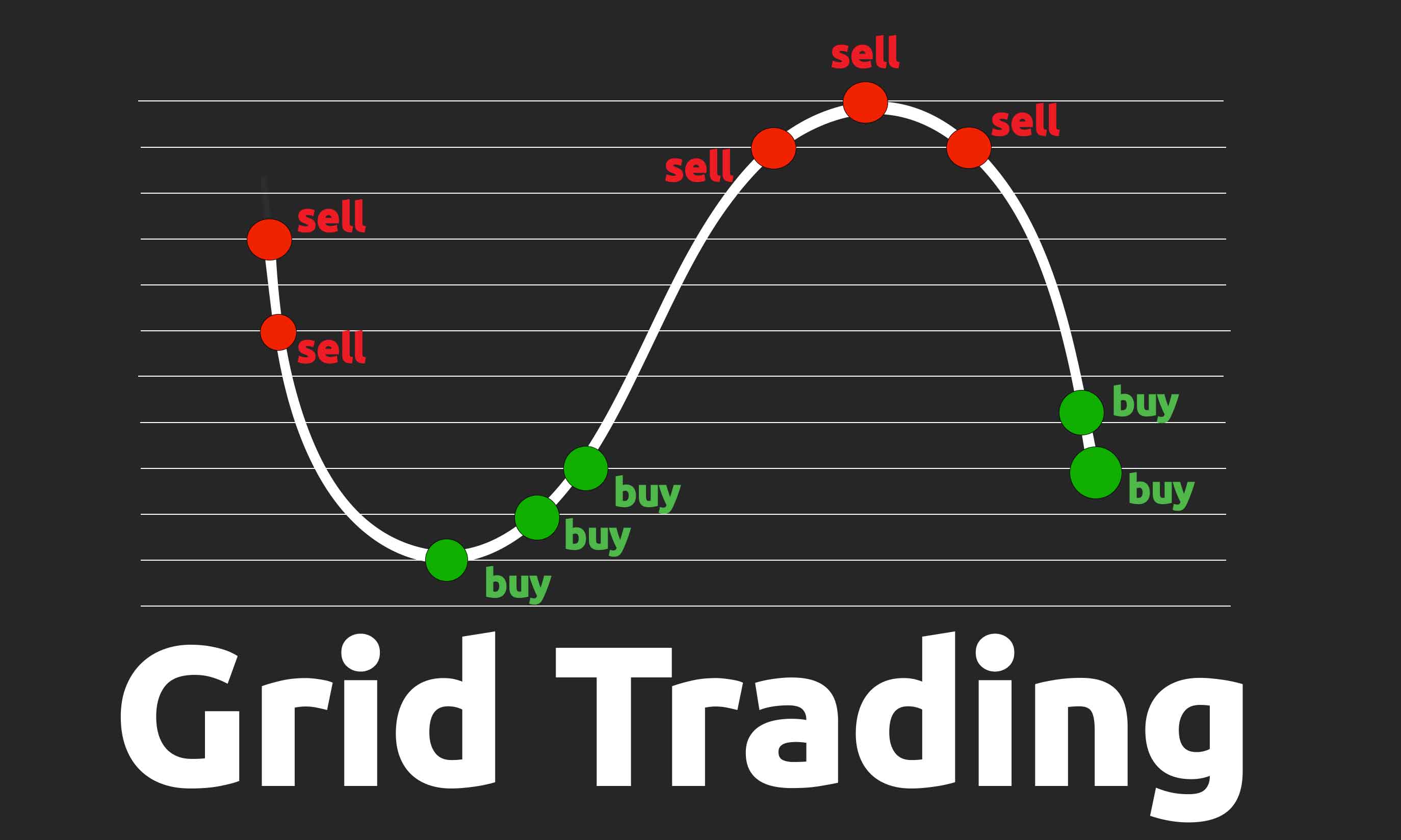
By placing a series of buy and sell orders at fixed intervals, traders can capture profits from repeated price oscillations. What makes this approach particularly attractive is its ability to function without needing a strong market bias. Traders no longer have to decide whether the market will go up or down. Instead, they focus on defining a range where price is likely to fluctuate.
This shift has been reinforced by recent market data showing that volatility is no longer tied to clear trends but is distributed unevenly across timeframes. As a result, strategies that depend on continuous movement in one direction struggle to maintain consistency. Grid trading thrives under these conditions because it is designed to benefit from uncertainty rather than be hindered by it.
Why Predicting Market Direction Has Become Increasingly Difficult
The challenge of predicting market direction has grown significantly as trading environments become more complex. Markets are now influenced by a mix of macroeconomic data, algorithmic trading systems, and global liquidity flows. These factors interact in ways that often produce conflicting signals. A setup that appears bullish on one timeframe may quickly reverse due to sudden shifts in liquidity or automated trading activity. Professional traders have noted that even well-researched directional trades can fail due to unexpected volatility. False breakouts have become more common, and price often returns to its original range after briefly moving beyond key levels.
This makes timing entries and exits far more difficult than in previous market cycles. Grid trading offers a solution by removing the need for precise predictions. Instead of trying to forecast where price will go, traders assume that it will continue to move within a defined range. This approach reduces reliance on analysis that may quickly become outdated. It also allows traders to remain active in the market without constantly adjusting their positions. As a result, grid trading aligns more closely with the current structure of financial markets, where unpredictability is a constant factor.
How Sideways Markets Became a Source of Steady Income
Sideways markets were once viewed as frustrating periods where little profit could be made. Prices would move within a narrow range, offering limited opportunities for large gains. Professional traders now see these conditions differently. Grid trading transforms sideways movement into a steady source of income by capturing small price changes repeatedly. Instead of waiting for a breakout that may never come, traders use grid systems to engage with the market continuously. Each time price moves between predefined levels, a trade is executed, generating a small profit.
Over time, these profits accumulate and can produce significant returns. This approach is particularly effective in modern markets, where prolonged consolidation phases are more common. Traders have observed that assets can remain within a range for weeks while still exhibiting frequent short-term fluctuations. Grid trading capitalizes on this behavior by turning what was once considered inactivity into a productive environment. The strategy essentially redefines what it means for a market to be “active.” Even when price appears stagnant on larger timeframes, grid traders are able to generate consistent returns by focusing on smaller movements within the range.
The Power of Automation in Eliminating Emotional Trading Errors
Emotional decision-making has long been one of the biggest obstacles to trading success. Fear and greed can lead to poor decisions, such as exiting trades too early or holding onto losing positions for too long. Grid trading addresses this issue by relying heavily on automation. Once a grid is set up, trades are executed automatically based on predefined rules. This removes the need for constant monitoring and reduces the influence of emotions. Professional traders value this aspect because it allows them to maintain consistency in their approach.
Instead of reacting to every price movement, they can trust the system to operate as intended. Automation also improves efficiency. Markets move quickly, and manual trading can struggle to keep up with rapid changes. Grid systems, on the other hand, can execute trades instantly as price reaches specific levels. This ensures that opportunities are not missed. Over time, the reduction in emotional interference leads to more stable performance. Traders are less likely to make impulsive decisions that negatively impact their results. This makes grid trading particularly appealing in high-volatility environments where emotional control is difficult to maintain.
Why Professionals Prioritize Consistency Over Large Wins
The perception of trading often centers around large, dramatic profits. Professional traders tend to take a different approach. They focus on consistency rather than chasing big wins. Grid trading fits this mindset perfectly. By generating small profits repeatedly, it creates a steady stream of returns that can compound over time. This approach reduces risk and provides a more predictable income pattern. Traders understand that large gains often come with higher risk, which can lead to significant losses. By contrast, consistent smaller gains are easier to manage and sustain. This shift in philosophy reflects a deeper understanding of how markets operate.
Price movements are inherently unpredictable, making it difficult to rely on occasional large trades for long-term success. Grid trading provides a framework for continuous engagement with the market, allowing traders to benefit from regular fluctuations. Over time, this consistency can lead to substantial overall returns. It also helps traders maintain confidence in their strategy, as they are not dependent on rare, high-risk opportunities to achieve profitability.
Real Performance Insights: What the Data Shows in 2026
Performance data from recent trading environments provides valuable insight into why grid trading is gaining popularity. Studies and backtests indicate that grid strategies can perform well in markets characterized by frequent price oscillations. In range-bound conditions, grid systems have shown the ability to generate steady returns even when the overall market trend is neutral. Some analyses suggest that annualized returns can reach between 20% and 40% under favorable conditions. These results depend on factors such as grid configuration, asset selection, and market behavior.
Case studies highlight periods where grid strategies outperformed old approaches, particularly during extended consolidation phases. In these scenarios, directional traders often struggle to find opportunities, while grid traders continue to generate profits. The data also shows that performance can vary significantly depending on how the grid is set up. Traders who carefully optimize parameters tend to achieve better results. This includes adjusting grid spacing, defining appropriate ranges, and managing capital effectively. These findings reinforce the idea that grid trading is not just a simple strategy but one that requires careful planning and execution to achieve consistent performance.
Liquidity Conditions That Make Grid Trading Work Smoothly
Liquidity plays a critical role in the effectiveness of grid trading. High liquidity ensures that trades can be executed quickly and at predictable prices. In markets with deep liquidity, the difference between bid and ask prices is smaller, reducing transaction costs. This is particularly important for grid trading, which relies on frequent order execution. Professional traders pay close attention to liquidity when selecting assets for their grid systems. They prefer markets where there is sufficient trading volume to support continuous activity.
Low-liquidity environments can lead to slippage, where trades are executed at less favorable prices. This can reduce overall profitability and increase risk. Improvements in market liquidity over recent years have made grid trading more viable. As more participants enter the market, order books become deeper, and price movements become smoother.
This creates a more stable environment for automated strategies. Traders also monitor market conditions to ensure that liquidity remains consistent. Sudden changes in liquidity can impact performance, so ongoing analysis is essential. By focusing on liquid markets, professionals increase the reliability of their grid systems.
How Experienced Traders Fine-Tune Grid Parameters
Grid trading requires careful configuration to achieve optimal results. Professional traders spend significant time refining their setups. This involves determining the appropriate range, grid spacing, and number of levels. Each of these factors affects how the strategy performs. A narrow grid spacing can capture more frequent price movements but may result in smaller profits per trade. Wider spacing can increase profit per trade but reduce trading frequency. Finding the right balance is key.
Traders often use historical data to test different configurations. This allows them to identify setups that perform well under various market conditions. Dynamic grid systems are becoming more common. These systems adjust parameters based on changes in volatility. When volatility increases, the grid may expand to accommodate larger price movements.
When volatility decreases, the grid may contract to maintain efficiency. Risk management is also integrated into the design. Traders set limits on how much capital is allocated to each level and define exit conditions for extreme scenarios. This level of customization ensures that the grid system remains effective across different market environments.
Real Traders, Real Outcomes: Stories From the Field
Behind every strategy are real traders navigating complex markets. Grid trading has become a practical solution for many professionals seeking stability. Some traders turn to grid systems after experiencing losses from emotional trading. The structured approach provides a sense of control and consistency. In trading communities, stories of steady performance during challenging market conditions are becoming more common. Traders report that grid systems allow them to remain active even when markets lack clear direction.
This contrasts with traditional strategies that often require strong trends to generate profits. Small trading firms have also adopted grid trading to maintain steady income streams. By focusing on consistent returns, they are able to manage risk more effectively. These real-world experiences show the practical benefits of the strategy. It is not just about theoretical performance but about how traders adapt to changing conditions. Grid trading offers a way to navigate uncertainty with a structured approach, making it a valuable tool for professionals.
Grid Trading in an Algorithm-Dominated Market Structure
Modern financial markets are increasingly dominated by algorithmic trading. Automated systems execute a large portion of trades, creating a fast-paced and highly competitive environment. This has changed how prices move. Patterns that were once reliable are now less predictable. Grid trading aligns well with this new structure. It operates on predefined rules and responds quickly to price changes. Professional traders recognize that competing in this environment requires adopting similar approaches.
Manual trading alone is often insufficient to keep up with the speed of the market. Grid systems provide a way to participate effectively without requiring complex infrastructure. They allow traders to automate their strategies while maintaining control over key parameters.
This makes grid trading a practical solution for adapting to modern market dynamics. As algorithmic trading continues to grow, strategies that rely on automation are likely to become even more important. Grid trading represents a step in this direction, offering a balance between simplicity and effectiveness.
Risk Management Strategies That Keep Grid Trading Sustainable
Grid trading is often perceived as low-risk, but it requires careful management to remain effective. One of the main challenges is dealing with strong directional trends, If price moves beyond the defined grid range, losses can accumulate. Professional traders address this by implementing risk controls. Stop-loss levels are used to limit potential losses in extreme scenarios.
Traders may also adjust grid ranges dynamically to adapt to changing market conditions. Diversification is another key strategy. Running multiple grids across different assets can reduce overall risk. This ensures that losses in one area are balanced by gains in another. Position sizing is also carefully managed.
Traders avoid overexposing their capital to a single grid. This layered approach to risk management helps maintain stability. By combining grid trading with other strategies, professionals create a more resilient portfolio. This ensures that performance remains consistent even when market conditions change.
The Future of Grid Trading as Technology Evolves
The future of grid trading is closely tied to advancements in technology. Machine learning and data analytics are beginning to play a larger role in strategy development. These tools can analyze vast amounts of data to optimize grid parameters in real time. This allows traders to adapt more quickly to changing market conditions. Hybrid strategies are also emerging. These combine grid trading with predictive models to enhance performance.
While grid trading itself does not rely on direction, integrating predictive elements can improve efficiency. The increasing accessibility of trading tools is likely to drive further adoption. More traders will be able to implement grid systems without requiring advanced technical knowledge. This could lead to greater competition and innovation. Despite these changes, the core principle of grid trading remains the same. It focuses on capturing value from price movement rather than predicting direction. This simplicity, combined with adaptability, ensures that grid trading will continue to play a significant role in professional trading strategies.
FAQs
1. Why do professional traders prefer grid trading over manual trading?
Professional traders prefer grid trading because it removes emotional decision-making and ensures consistent execution. Automated systems follow predefined rules, helping traders maintain discipline and avoid impulsive mistakes that can impact performance.
2. Does grid trading work in all market conditions?
Grid trading performs best in sideways or range-bound markets where prices fluctuate within a defined range. During strong trends, adjustments or additional risk management strategies are necessary to maintain effectiveness.
3. How much capital is needed to start grid trading?
The required capital depends on the grid configuration and asset being traded. Traders typically allocate enough funds to support multiple grid levels while maintaining flexibility for adjustments.
4. Is grid trading suitable for beginners?
Grid trading can be suitable for beginners due to its structured nature. However, understanding market behavior, volatility, and risk management is essential before using the strategy effectively.
5. What are the main risks of grid trading?
The main risk is a strong directional move that pushes price beyond the grid range, potentially leading to accumulating losses. Proper risk controls can help mitigate this issue.
6. Can grid trading be combined with other strategies?
Yes, many traders combine grid trading with trend-following or momentum strategies to improve performance across different market conditions.
Disclaimer
This content is for informational purposes only and does not constitute investment advice. Cryptocurrency investments carry risk. Please do your own research (DYOR).