

Apple ChatGPT deal and OpenAI legal tensions
2026/05/20 14:12:02
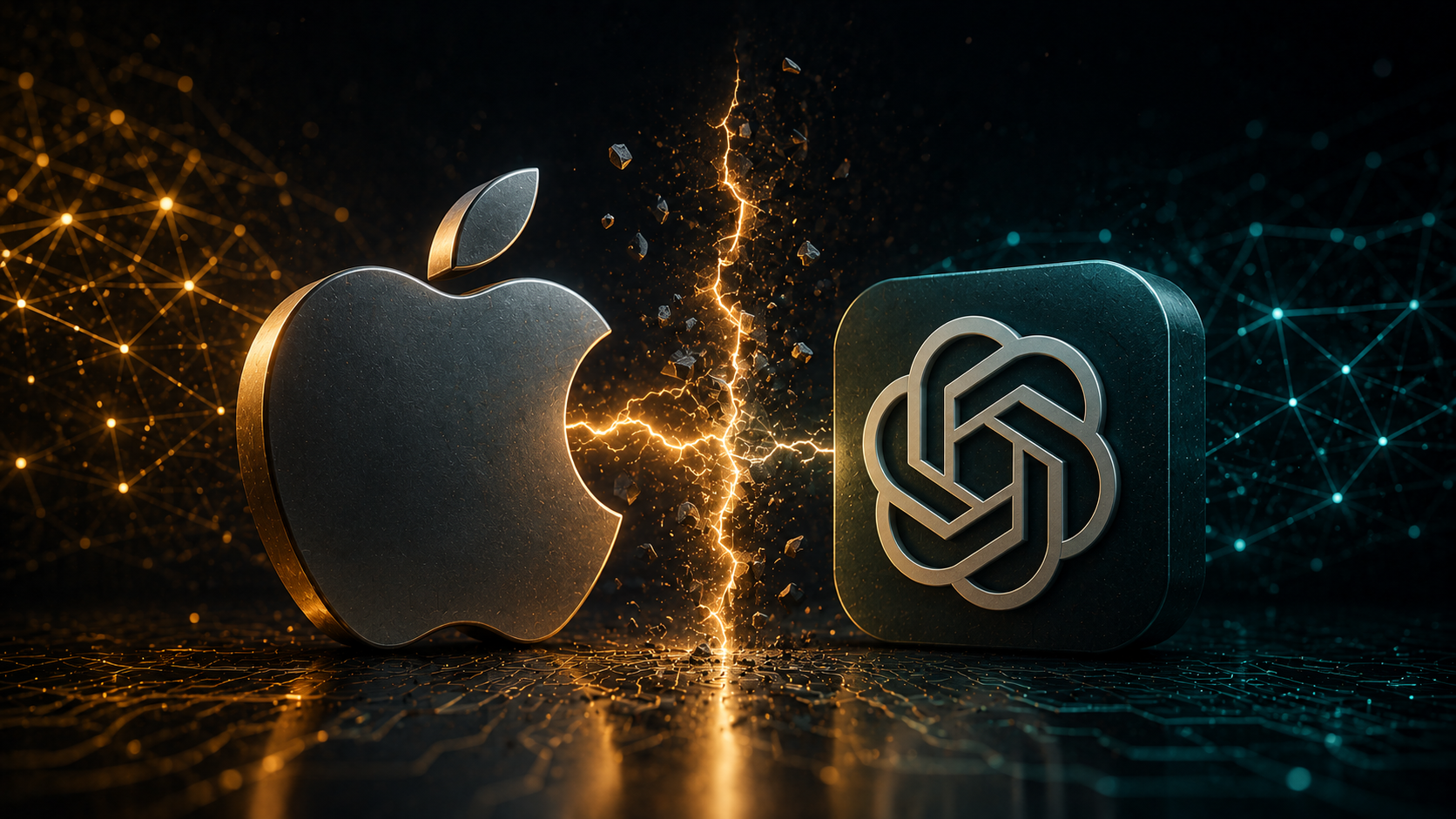
Apple ChatGPT deal tensions intensified in May 2026 after reports said OpenAI was evaluating legal action over unmet commercial expectations. The dispute places Apple, OpenAI, and AI distribution economics at the center of broader technology and crypto market sentiment shifts.
The apple chatgpt deals — how it works, what it changes, and where the risks lie —This is the focus of the analysis below.
Key takeaways
-
OpenAI reportedly considered a breach-of-contract notice against Apple in May 2026 following revenue concerns tied to the 2024 partnership.
-
Apple’s 2024 ChatGPT integration reportedly involved no direct cash payment to OpenAI at launch.
-
Apple announced a multi-year Gemini collaboration for Siri functions in January 2026, reducing OpenAI exclusivity.
-
Siri AI extensions linked to iOS 27 were reported in March 2026 as a possible AI marketplace structure.
-
Apple’s App Store commission remained 30% in reported iOS 27 extension discussions during March 2026.
-
Elon Musk’s separate OpenAI lawsuit was dismissed in May 2026 as time-barred, reducing one legal distraction for OpenAI.
What is the Apple ChatGPT deal?
apple chatgpt deal defined: Apple integrated ChatGPT into Apple Intelligence devices through a partnership with OpenAI announced in June 2024.
The Apple ChatGPT deal is a distribution partnership between OpenAI and Apple that brought ChatGPT capabilities into Apple Intelligence across Apple devices. OpenAI is the artificial intelligence developer behind ChatGPT, while Apple controls one of the largest consumer hardware ecosystems through iPhone, Siri, and iOS services.
The partnership became strategically important because Apple devices offered OpenAI access to large-scale consumer distribution without requiring users to visit standalone AI apps. Reports from June 2024 indicated that the arrangement focused more on device engagement and brand exposure than direct revenue generation.
The structure resembles a shopping mall operator allowing a major retail brand into prime space without upfront rent because both parties expect indirect commercial benefits. Apple gained AI functionality for Siri and Apple Intelligence, while OpenAI gained visibility inside Apple’s ecosystem.
In January 2026, Apple expanded its AI strategy by announcing Gemini support for some Siri functions, creating uncertainty around OpenAI’s long-term position inside Apple products. By May 2026, reports said OpenAI was evaluating legal remedies tied to unmet expectations of the arrangement.
Readers tracking AI-linked crypto sentiment often monitor these developments because AI infrastructure demand and platform economics can influence broader digital asset risk appetite. Users following AI-related market narratives can also track crypto AI narratives on KuCoin.
History and market evolution
The Apple–OpenAI relationship evolved from a distribution-focused partnership into a legal and strategic dispute within less than two years. Each milestone changed expectations around AI monetization, platform control, and ecosystem leverage.
June 2024 — Apple announces ChatGPT integration
Apple introduced ChatGPT support for Apple Intelligence during June 2024, establishing OpenAI as a major consumer-facing AI partner. Reports from Fortune and SCMP stated that Apple was not directly paying OpenAI cash for the integration at launch.
► Partnership launch: June 2024 — Apple integrated ChatGPT into Apple Intelligence.
► Payment structure: No direct Apple cash payment reported at launch: Fortune/SCMP, June 2024.
The arrangement shifted investor attention toward distribution economics rather than subscription revenue. For crypto markets, the development reinforced the broader narrative that platform ownership could determine AI monetization outcomes.
January 2026 — Gemini enters Apple’s Siri roadmap
Apple announced a multi-year Gemini collaboration for Siri functions in January 2026. Reports connected to Tim Cook’s comments suggested Apple viewed Gemini as a strong technical foundation for parts of Siri’s AI stack.
The development reduced perceptions that OpenAI held a privileged long-term position inside Apple products. AI-linked market narratives reacted to the possibility that major platform owners would diversify AI suppliers rather than rely on a single model provider.
► Siri roadmap shift: Gemini collaboration announced in January 2026.
► Siri rollout target: iOS 26.4 expected around March or April 2026.
March 2026 — iOS 27 AI extensions emerge
Bloomberg-linked reporting summarized by Mashable stated that Apple was exploring AI app extensions tied to iOS 27. The reports described a potential marketplace structure where AI services could operate similarly to apps within Apple’s ecosystem.
Apple’s reported 30% App Store commission structure became relevant because it raised questions about how AI developers might monetize distribution inside Apple platforms.
May 2026 — OpenAI weighs legal action
Reports from the New York Times and TechCrunch stated that OpenAI considered issuing a breach-of-contract notice against Apple. Bloomberg-linked reporting also indicated OpenAI hired an outside law firm to evaluate legal options.
The dispute became more visible after a federal jury dismissed Elon Musk’s separate OpenAI lawsuit in May 2026 as time-barred, reducing another legal burden surrounding the company.
Current analysis
Technical analysis
The apple chatgpt deal narrative remains sentiment-driven rather than directly tradeable, but AI-related crypto sectors often react to platform and infrastructure developments. Based on KuCoin’s trading data, traders typically monitor AI-linked token volatility when major technology partnerships shift.
OpenAI’s legal friction with Apple introduces uncertainty around AI distribution dominance, which can influence speculative trading behavior across AI infrastructure and compute-related digital assets. Market participants often interpret ecosystem disputes as signals about future monetization control.
AI-linked crypto sectors historically react strongly to changes involving Apple, OpenAI, and large-language-model deployment strategies. Traders monitoring AI-related narratives can follow live AI-related market prices on KuCoin.
Macro and fundamental drivers
The core macro driver behind the dispute is control over consumer AI distribution and monetization. Apple controls hardware, operating systems, and App Store infrastructure, while OpenAI controls the AI model layer.
► Legal escalation: OpenAI reportedly explored a breach-of-contract notice in May 2026.
► Platform economics: Apple’s App Store commission remained 30% in reported iOS 27 extension discussions.
The reported absence of direct payments in the original 2024 arrangement suggests OpenAI initially prioritized distribution scale over immediate monetization. That strategy became more complicated once Apple introduced Gemini into Siri functions during January 2026.
Crypto markets monitor these developments because AI infrastructure narratives frequently overlap with blockchain investment themes. Investors often treat AI compute demand, decentralized infrastructure, and platform monetization as interconnected growth sectors.
The dispute also highlights a broader macro issue affecting digital platforms: distribution owners may capture more economic value than application providers. That theme mirrors recurring debates inside blockchain ecosystems involving wallets, exchanges, and protocol access layers.
Comparison
The apple chatgpt deal differs from the Google Gemini Apple deal because OpenAI initially focused on distribution exposure, while Gemini appears tied more directly to Siri infrastructure integration. Apple’s evolving strategy suggests the company prefers multiple AI partners instead of a single-provider ecosystem.
OpenAI gained consumer visibility through Apple Intelligence in June 2024, but reports indicated limited direct monetization. By contrast, Apple’s January 2026 Gemini partnership appears more integrated into Siri’s operational foundation.
The comparison matters for crypto investors because it reflects how platform operators can diversify AI dependencies. Similar patterns exist in blockchain infrastructure, where networks often avoid relying on a single validator, oracle provider, or scaling layer.
Apple’s reported iOS 27 extension strategy also creates a potential distinction between AI service providers and AI marketplace operators. If Apple controls the extension marketplace structure, AI firms may compete for placement within Apple-controlled distribution channels.
Participants who prioritize consumer distribution scale may find the apple chatgpt deal more suitable; those focused on infrastructure-level integration may prefer the Gemini-centered approach. Readers following platform monetization trends can review KuCoin's analysis of AI and crypto market trends.
Future outlook
Bull case
The bullish scenario centers on Apple expanding AI integrations through iOS 27 extensions by late 2026. Reports tied to Bloomberg coverage suggest Apple may create broader AI extension functionality that could increase exposure for external AI providers.
If Apple develops an AI marketplace structure, OpenAI could gain renewed monetization opportunities through distribution scale, subscription conversion, or extension-based services. The partnership still provides OpenAI with access to one of the world’s largest consumer ecosystems.
Sam Altman and OpenAI may also benefit from reduced legal distractions after Elon Musk’s separate OpenAI lawsuit was dismissed in May 2026. That outcome potentially allows leadership to focus more directly on commercial negotiations and platform expansion.
Bear case
The bearish scenario centers on competitive substitution and platform control risks. Apple’s January 2026 Gemini collaboration reduced OpenAI exclusivity inside Siri and weakened OpenAI’s leverage within Apple’s ecosystem.
Another risk involves App Store economics tied to reported iOS 27 extension structures. If Apple maintains tight control over AI distribution and commissions, OpenAI may struggle to capture meaningful revenue despite large-scale exposure.
Legal escalation also introduces reputational and operational uncertainty. A breach-of-contract notice could damage long-term cooperation between Apple and OpenAI without guaranteeing improved financial outcomes.
Conclusion
The apple chatgpt deal evolved from a high-profile AI distribution partnership into a broader debate over platform economics, monetization control, and strategic leverage. Apple provided OpenAI with large-scale consumer reach through Apple Intelligence, but reports from 2024 and 2026 suggest the partnership may not have produced the commercial results OpenAI expected.
Apple’s Gemini collaboration, reported iOS 27 extension plans, and OpenAI’s consideration of legal action all point to intensifying competition over consumer AI ecosystems. For crypto markets, the dispute matters less as a direct trading catalyst and more as a signal about how infrastructure ownership shapes value capture across emerging technology sectors. Additional ecosystem developments can be tracked through KuCoin's latest platform announcements.
Sign up for KuCoin today to buy, sell, and manage your entire crypto portfolio in one simple dashboard. Register Now!
FAQ
What is the Apple ChatGPT deal?
The Apple ChatGPT deal is a partnership announced in June 2024 that integrated ChatGPT capabilities into Apple Intelligence products and Siri-related experiences across Apple devices. Reports indicated the arrangement focused primarily on distribution exposure and ecosystem engagement rather than direct cash payments to OpenAI at launch.
Why is OpenAI considering legal action against Apple?
OpenAI reportedly evaluated legal options in May 2026 because the partnership may not have delivered the expected commercial benefits or user growth. Reports from the New York Times and TechCrunch stated that OpenAI considered a breach-of-contract notice and consulted outside legal advisers.
How does the Google Gemini Apple deal affect OpenAI?
Apple’s January 2026 Gemini collaboration reduced OpenAI’s exclusivity within Apple’s AI ecosystem by introducing another major AI provider into Siri-related functions. The move increased competitive pressure on OpenAI and weakened assumptions that Apple would rely on a single AI partner long term.
Why does the apple chatgpt deal matter to crypto markets?
The apple chatgpt deals with crypto markets because AI platform economics often influence broader technology risk sentiment. Crypto investors monitor AI distribution, compute demand, and infrastructure narratives because they frequently overlap with blockchain investment themes and speculative capital flows.
What are iOS 27 extensions in the Apple AI strategy?
Reports linked to Bloomberg coverage described iOS 27 extensions as a possible framework allowing AI services to operate through Apple-controlled extension systems. The structure could resemble an AI marketplace model where Apple manages distribution while external AI providers compete for user access and monetization opportunities.
Further reading
Disclaimer: The information on this page may have been obtained from third parties and does not necessarily reflect the views or opinions of KuCoin. This content is provided for general informational purposes only, without any representation or warranty of any kind, nor shall it be construed as financial or investment advice. KuCoin shall not be liable for any errors or omissions, or for any outcomes resulting from the use of this information. Investments in digital assets can be risky. Please carefully evaluate the risks of a product and your risk tolerance based on your own financial circumstances. For more information, please refer to our Terms of Use and Risk Disclosure.