

What Was The Ethereum Merge and How Did It Change the Network?
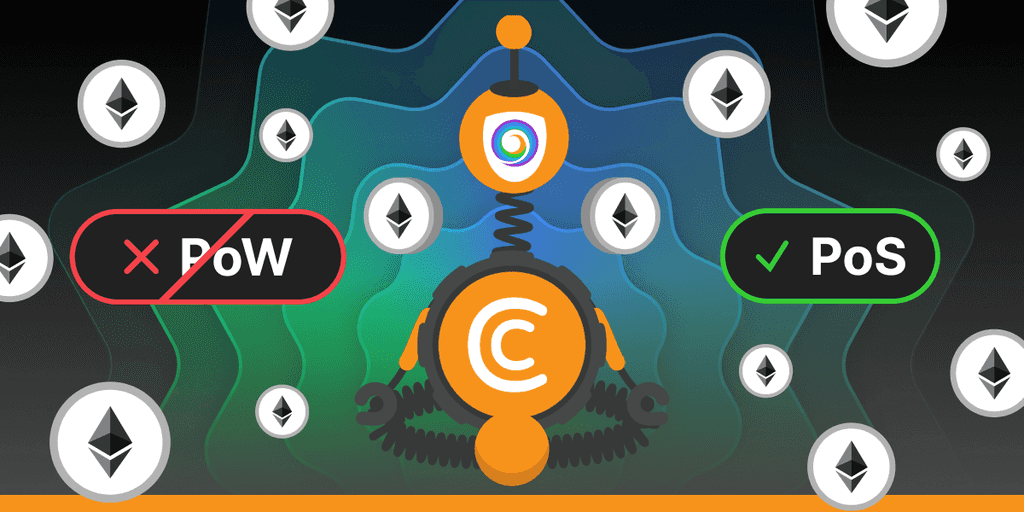
In the history of technology and finance, few events have been as ambitious as The Ethereum Merge. This wasn't merely a software update; it was a live, open-heart surgery performed on a running, multi-billion-dollar financial system. It marked Ethereum's shift from a high-energy Proof-of-Work (PoW) consensus mechanism to the highly efficient Proof-of-Stake (PoS) model.
(Source: CryptoTab Farm – Useful Tips)
The success of The Merge fundamentally reshaped Ethereum’s core identity. It addressed years of criticism, paved the way for future scalability, and created a new economic reality for the network. This article will explore the deep-seated impacts of this historic event and its lasting significance.
From Miners to Validators: The Core Technical Shift
Before The Merge, Ethereum was a PoW network, relying on a global network of "miners." These miners competed to solve complex mathematical puzzles, a process that consumed a vast amount of electricity, to secure the network and earn ETH as a reward. This "compute-for-security" model was robust but came at a high environmental cost.
The Merge transitioned the network's security model to PoS, replacing miners with "validators." Instead of burning energy, validators stake 32 ETH as collateral to participate in block validation. Their chance of being selected to propose and confirm new blocks is proportional to the amount of ETH they've staked. This shift removed the need for energy-intensive mining hardware, fundamentally changing the network's operational and economic structure. The Beacon Chain, which had been running in parallel for two years, seamlessly merged with the original Ethereum mainnet, a technical feat that went off without a hitch and validated the project’s meticulous planning.
Three Major Impacts of The Merge

(Source:Kraken blog)
1.A Revolutionary Impact on the Environment
The most immediate and profound impact of The Merge was its effect on the environment. The move to PoS resulted in a staggering 99.95% reduction in Ethereum’s energy consumption. This wasn't a minor change; it took the network's annual energy use, which was once comparable to that of a small country, down to the level of a single household. This transformation silenced years of criticism and made Ethereum a leader in the sustainable tech movement, paving the way for mainstream and ESG (Environmental, Social, and Governance) investors to consider ETH as a viable asset. It was a powerful statement that technology and sustainability can coexist.
2.A Profound Economic Transformation
The Merge fundamentally altered Ethereum's economic model, making ETH a more compelling asset for investors.
-
Drastic Supply Reduction: The PoS model eliminated the need to issue a large amount of new ETH to reward miners. Post-Merge, the issuance rate of new ETH dropped by over 90%, from roughly 13,000 ETH per day to just under 1,600 ETH per day. This supply shock was so significant that the crypto community dubbed it a "Triple Halving," comparing its effect to three of Bitcoin's supply-halving events happening at once.
-
The Rise of a Deflationary Asset: This reduced issuance, combined with Ethereum's existing EIP-1559 burning mechanism (which destroys a portion of every transaction fee), means that during periods of high network activity, the supply of ETH can actually shrink. This makes ETH a potentially deflationary asset, a narrative that has led to its proponents calling it "ultra-sound money."
3.The Foundation for Future Scalability
While The Merge did not immediately increase transaction speed or lower gas fees, it was a critical first step on the path to a scalable future. By moving to PoS, Ethereum unlocked its roadmap for future upgrades, most notably sharding. Sharding will allow the network to process transactions in parallel, a crucial step for achieving the massive throughput needed for global adoption.
From Technical Feat to Market Catalyst
The successful execution of The Ethereum Merge was more than a technical achievement; it was a testament to the power of a decentralized community to coordinate and implement a massive, multi-billion-dollar upgrade. It proved that a leaderless network could achieve what many skeptics deemed impossible.
This event has also had a significant impact on market perception and institutional investment. The shift to a sustainable, yield-bearing asset has made ETH more attractive to large-scale investors who previously couldn't invest due to regulatory or corporate policy constraints. This change has played a major role in the ongoing discussions around potential Ethereum ETFs, as regulators now have a clearer path to classifying ETH as a commodity, similar to Bitcoin.
A key recent development that has further empowered the ecosystem is the Shanghai/Capella Upgrade. This major update, which happened after The Merge, enabled the withdrawal of staked ETH. It provided much-needed security and flexibility for investors, assuring them that their locked assets were not permanently trapped, which further boosted confidence in the network.
What Comes Next: The Post-Merge Era

The Merge was not the end of Ethereum's journey but the beginning of a new era. The roadmap is now focused on a series of upgrades, collectively known as "The Surge," "The Scourge," "The Verge," "The Purge," and "The Splurge." These phases will address scalability, censorship resistance, and network optimization, pushing Ethereum closer to its ultimate vision of a decentralized, global computing platform.
In conclusion, The Ethereum Merge was a defining moment in crypto history. It solved the network's biggest criticisms, created a sound economic model, and set the stage for a scalable future. It transformed Ethereum into a more robust, sustainable, and powerful foundation for the decentralized world.
Further Reading:
-
https://www.kucoin.com/price/ETH
-
https://www.kucoin.com/futures/trade/ETHUSDTM
-
https://www.kucoin.com/trade/ETH-BTC
-
https://www.kucoin.com/how-to-buy/ethereum
-
https://www.kucoin.com/support/27434793193497