

KuCoin AMA With Archer Hunter (FASTER) — The Future of Gaming on Sei Network: Archer Hunter’s On-Chain Adventure
Dear KuCoin Users,
KuCoin recently hosted an AMA (Ask Me Anything) session in the KuCoin Exchange Group, featuring Brian, Core Contributor at Archer Hunter.
Time: November 13, 2025, 05:00 AM - 06:05 AM (UTC)
Official Website: https://archerhunter.io/
Follow Archer Hunter on X & Discord
Q&A from KuCoin to Archer Hunter
Q: Many Web3 studios launch games without proven traction, but Nika Labs started from a successful IP with millions of players. Why did you choose this “Web2-first, on-chain-later” approach, and what advantages does it provide over traditional Web3 game launches?
Brian: That’s a good question! And to be honest, it came from observing the same mistakes across the industry.
Most Web3 games try to build everything at once: tokens, gameplay, community, and monetization. But without proven gameplay or retention, the economy collapses once the hype fades.
In Archer Hunter, we wanted to reverse that model. We start with proof of gameplay first for real users, real retention, and real market feedback. Archer Hunter had already reached over 3 million downloads globally before touching on-chain.
When we brought it on-chain, we weren’t “launching a Web3 game” but we were likely to evolve an existing universe into something more open and participatory.
This approach gives us stability, stronger player trust, and the freedom to design a token model that rewards performance and engagement, rather than short-term farming.
You can read more about Archer Hunter Scaling Gaming Revenue On-Chain by Tokenizing IP-based Games from $500K to $50M.
Q: Archer Hunter already achieved over 3 million installs and strong engagement metrics before its Web3 transition. What made this IP particularly attractive for Nika Labs’ $2 million investment to transition from Web2 to tokenizing IP-based games?
Brian: The investment wasn’t just about buying a successful game, but it was about owning a living, proven IP that already had the right DNA for tokenization.
Archer Hunter had a strong gameplay loop, global appeal, and a loyal community with high session time.
Eg: on average 3.2 hours of playtime per user and over 8 sessions a day. That kind of stickiness is rare even in top-tier mobile games, let alone Web3. Recent internal analytics highlight from Archer Hunter not only scale but engagement depth:
= 737,000 monthly new users acquired during the latest performance cycle.
= 438,000 returning users, reflecting strong retention momentum.
= Average playtime: 3.2 hours per user per day.
= Session frequency: 8.1 sessions per player daily.
= DAU/MAU stickiness: 10.3% - a level comparable to top-tier mobile RPGs.
= WAU/MAU: 34.7%, demonstrating consistent week-over-week engagement.
For Archer Hunter, the goal wasn’t to create a new game economy from scratch, it was to bring a proven, revenue-generating IP into a tokenized structure, where players can finally own part of what they help grow. So, this strategic investment was really about transforming that momentum into something permanent. You can see more reasons here.
We also on the Top 1 of Magic Eden on SEI for our first NFT collection - Giga Archery NFT: Sold out within 40 mins / Top 1 on ME on Sei ()
➵ Total Vol: ~$500K
➵ Owners (Unique): 4,792 (56.1%)
➵ Avg 24h Vol: 5,264 SEI
You may check this link.
Q: $FASTER dedicates 58.5% of its total supply to player rewards which is a major share compared to most Web3 games. Why did the team choose such a player-first distribution model, and how does it help strengthen Archer Hunter’s economy and community trust post-TGE?
Brian: We’ve always believed that a game’s token should reward participation, not speculation.
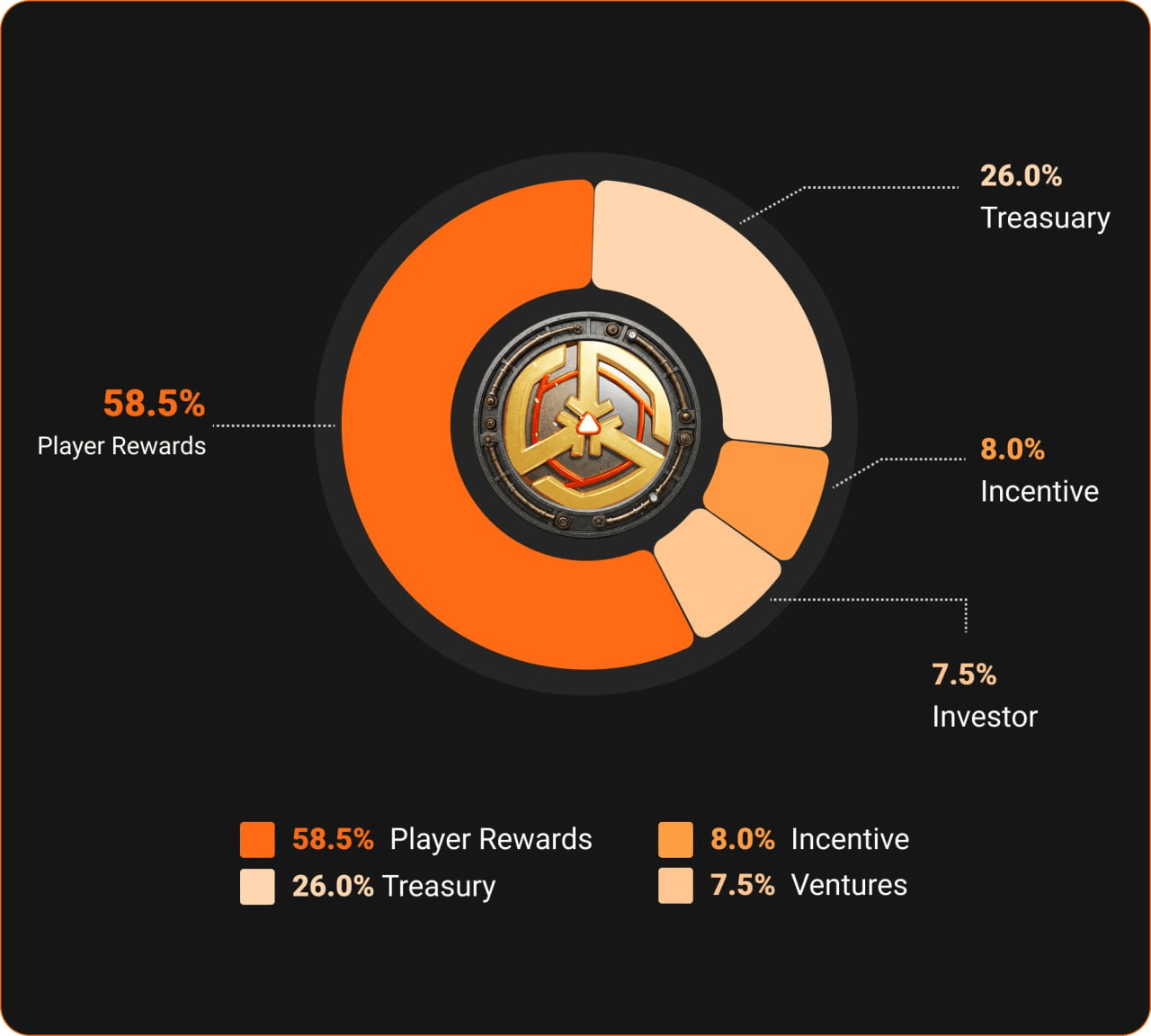
That’s why over half of the total $FASTER supply: 58.5% goes directly to players. It’s not just a marketing gesture; it’s a long-term design decision.
In traditional Web3 models, tokens often flow to investors or short-term farmers first, leaving players as secondary beneficiaries.
We wanted to flip that power dynamic. Every reward, every emission, every sink in Archer Hunter connects back to real gameplay, whether that’s through completing quests, upgrading heroes, or contributing to the ecosystem.
Post-TGE, this model builds real trust. Players know they’re not competing with whales or insiders, they’re part of an economy that grows with their activity. That’s how you create long-term holders and sustainable liquidity rather than pump-and-dump cycles. Gam3S has also made an official announcement about FASTER Tokenomics. And FASTER has successfully completed a comprehensive smart contract audit with FailSafe.
Q: The whitepaper mentions that $FASTER enables revenue sharing and asset tokenization. How does this model give players a stake in the game’s broader economy and reward their participation?
Brian: Thanks for the questions, Rami! Here is our Whitepaper. In Web2, players spend money but never really own anything. Our goal with $FASTER is to change that. Through tokenization, we’re giving players the ability to convert time, skill, and in-game progress into actual value that lives on-chain.
For example, when players upgrade equipment or earn rare items, those assets can be tokenized, meaning they can be traded, staked, or even generate yield through revenue-sharing pools.
Many Web3 gaming projects begin their journey before the game is proven at scale, relying on speculative tokenomics or untested mechanics.
By contrast, Archer Hunter adopts a fundamentally different path: it starts with proven intellectual property (IP), and then methodically transitions that asset into a tokenized infrastructure designed for long-term growth and ownership.
The $FASTER token is designed to serve as the foundation of Archer Hunter’s on-chain economy, powering gameplay, community engagement, and ecosystem growth. It transforms every player action into meaningful participation in a shared world where rewards, upgrades, and achievements hold real value.
Through Sei Network’s infrastructure, $FASTER ensures fast, low-latency, and reliable interaction, bridging the gap between traditional gaming and Web3 ownership. As the Archer Hunter ecosystem continues to expand, $FASTER will remain its central economic driver, connecting players, developers, and partners through a shared on-chain vision.
Q: With over 950,000 on-chain active addresses and 3.3 million transactions per month, Archer Hunter has become one of Sei Network’s top games. How does Archer Hunter plan to expand this success further post-TGE?
Brian: Those numbers are a big validation for us, but they’re just the beginning. Our next focus is to deepen liquidity and strengthen long-term engagement through post-TGE initiatives. These metrics position Archer Hunter as one of the most active gaming applications in Sei’s ecosystem, with transaction throughput comparable to early DeFi-native projects.
Each transaction corresponds to real gameplay events including minting, upgrading, quest completions, and in-game trades, etc. reinforcing that blockchain activity here reflects genuine user interaction rather than automated volume.
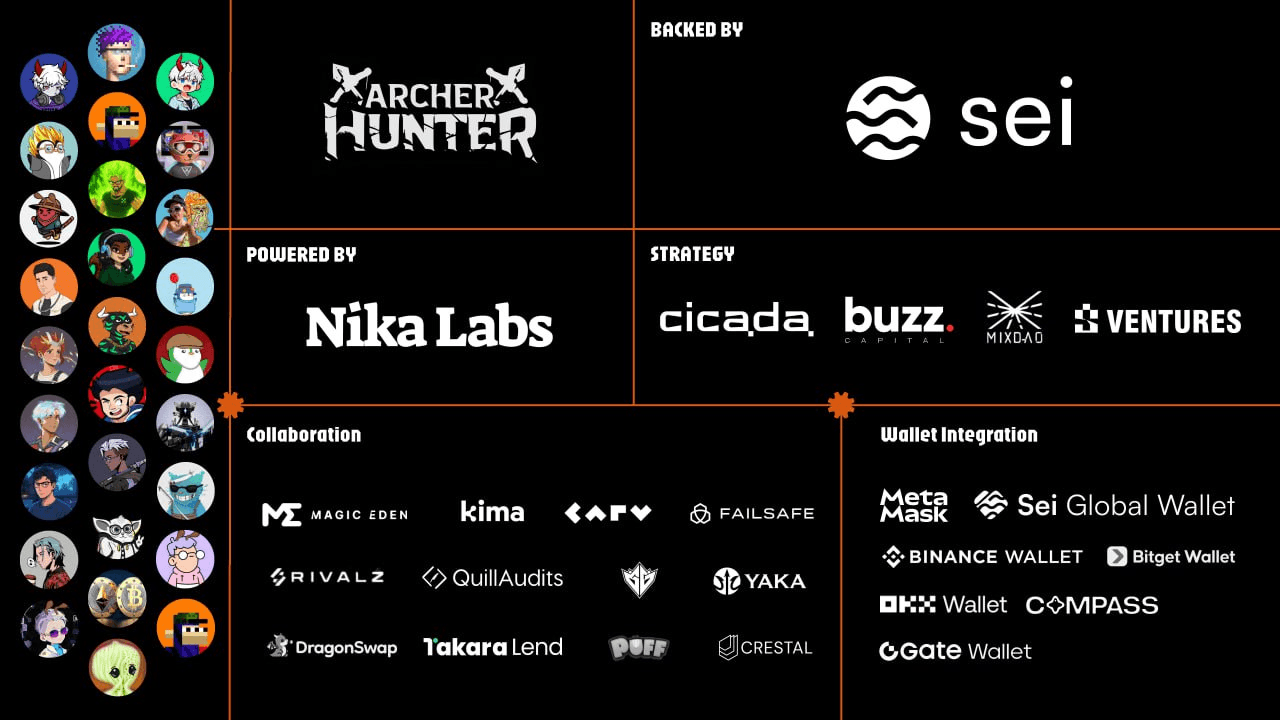
We’re working on several campaigns with Sei and our DeFi partners, including liquidity vaults, single-asset staking, and trading competitions on DEXs like Sailor and DragonSwap.
All of these are designed to build real on-chain utility around $FASTER while rewarding early community members.
Beyond that, we’re integrating cross-game mechanics under Nika Labs, so Archer Hunter becomes part of a larger tokenized IP network.
The goal is simple: take what we’ve proven with one title and scale it across multiple IPs without losing the core of what made it successful: real players, real assets, real value.
Q: The data shows strong engagement (3.2 hours of average playtime per user daily and 8.1 sessions per player). What do these numbers say about real user activity and the success of your on-chain design compared to other mobile RPGs?
Brian: The data tells us one thing: people play because they love the game, not because they’re chasing rewards. That’s the biggest difference between Archer Hunter and most Web3 titles.
Beyond its on-chain traction, Archer Hunter continues to perform exceptionally well across traditional mobile analytics, showing strong retention, engagement, and geographic diversity.
The game’s user base is truly global, with the strongest regional markets concentrated in Southeast Asia (Vietnam, Indonesia, Thailand, and the Philippines), followed by Russia, China, and the United States.
These regions collectively represent the majority of the active player population, reflecting Archer Hunter’s broad appeal across both emerging and developed gaming markets.
Device data indicates a healthy cross-platform balance, with a large proportion of users playing on Android, while iOS maintains a solid share, demonstrating consistent accessibility across both ecosystems. This cross-device adoption reinforces Archer Hunter’s positioning as a global mobile-first action RPG capable of reaching audiences beyond the Web3 niche.
User retention remains a standout strength, with stickiness at 35 %, reflecting a healthy ratio between daily and monthly active users. The average monthly DAU stands at around 30,000, indicating a stable and loyal player base that continues to interact regularly with in-game content, events, and seasonal updates.
Collectively, these off-chain indicators illustrate that Archer Hunter’s success does not rely solely on blockchain incentives. Instead, its gameplay, accessibility, and cross-regional resonance form a sustainable core that complements its on-chain growth and sets a strong foundation for long-term expansion.
When we integrated blockchain, we didn’t touch the gameplay loop, we simply enhanced it. Every mint, upgrade, or quest completion became an on-chain action which is why we’re seeing millions of transactions per month.
Three hours of average playtime per day means people are emotionally invested. It also means our tokenomics can sustain longer, because engagement feeds the economy instead of draining it. That’s the key to merging Web2 retention with Web3 ownership.
Q: Finally, with Archer Hunter as the blueprint for tokenizing IP-based games, how will Nika Labs replicate or scale this model across future titles? Will $FASTER play a role in connecting multiple games under one economic framework?
Brian: What we’re building at Nika Labs is an infrastructure for tokenized IPs, a system where successful Web2 games can transition on-chain using proven frameworks and shared economies. $FASTER will be the common layer that ties everything together.
Nika Labs’ acquisition of the Archer Hunter IP marks a defining moment in the evolution of Web3 gaming. It signifies the transition from speculative game economies to data-driven, performance-validated ecosystems where value is grounded in proven player engagement and long-term ownership.
Through this investment, Nika Labs has positioned itself at the forefront of a new paradigm, tokenizing IP-based games that already demonstrate global traction, sustainable user bases, and real economic potential.
As Archer Hunter expands through the upcoming launch of $FASTER, it stands as both proof of concept and the foundation for Nika Labs’ broader vision: a self-sustaining, player-owned economy where creativity, utility, and participation converge into lasting value.
Nika Labs’ strategic investment in Archer Hunter also reflects a strategic commitment to its vision of tokenizing proven gaming IPs.
Unlike many Web3 titles that launch without market validation, Archer Hunter had already built a strong foundation in the global mobile market, surpassing 3 million downloads with standout retention and engagement metrics, including 737,000 new users, 438,000 returning players, and an average playtime of 3.2 hours daily.
So when a player earns or holds $FASTER in Archer Hunter, it will later connect to new experiences, new games, and even new IPs under Nika Labs. Our mission is simple: build the bridge where Web2-scale gaming meets Web3 ownership, sustainably, transparently, and at scale. Feel free to check this link.
Free-Ask from the KuCoin Community to Archer Hunter
Q: Archer Hunter says it aims to “bridge Web2 gaming and Web3 ownership.” How do you define success in achieving that bridge? Is it measured by number of on-chain users, gameplay hours, or something deeper like community retention?
Brian: That’s a great question and it really touches the heart of what we’re trying to do. For us, success isn’t about how many wallets we create; it’s about how many players stay and feel a sense of ownership in what they play.
Archer Hunter already had over 3 million installs before going on-chain, so we didn’t need to “acquire users”, so our goal was to convert existing players into owners. That means making blockchain invisible in the experience, but meaningful in value.
So yes, we look at numbers like on-chain activity and engagement hours but the real metric is retention and interaction consistency.
When we see players logging in daily, completing quests, staking assets, and participating in the economy weeks after launch, that’s when we know the bridge between Web2 and Web3 is actually working.
Q: You’re calling Archer Hunter the "first action-packed IP RPG" on Sei Network with over 3 million installs. How did you transition from a traditional mobile game to a tokenized on-chain ecosystem and what were the biggest hurdles?
Brian: It wasn’t an overnight process. The first step was securing the full IP rights for Archer Hunter, which Nika Labs did with a strategic investment. That gave us the creative and technical control we needed to fully integrate blockchain without compromising gameplay.
From there, we rebuilt certain backend systems to support tokenized assets. Things like hero upgrades, item ownership, and rewards needed to connect to Sei’s infrastructure while keeping the mobile experience seamless.
The hardest part wasn’t technical but it was design philosophy. We had to teach ourselves how to blend entertainment value with economic logic. We wanted players to enjoy the game first, and only then discover that every action they take also builds real ownership value on-chain.
That learning curve: balancing UX with blockchain logic was the biggest hurdle, but it’s also what now gives Archer Hunter its unique edge.
Q: Given your millions of Web2 users, what concrete $FASTER token sinks (burning or lock-up mechanisms) are designed for endgame players to prevent inflation and ensure the token's long-term economic stability?
Brian: That’s something we’ve thought about from day one, because sustainable tokenomics is the biggest weakness of most Web3 games. $FASTER isn’t meant to be farmed and dumped; it’s designed to circulate through real utility. We’ve built several layers of token sinks:
🔸Hero Upgrades and Equipment Enhancements: advanced players need $FASTER to unlock new abilities, improve attributes, and strengthen their characters.
🔸NFT Minting and Asset Purchases: all in-game assets, skins, and cosmetics require $FASTER for minting and trade.
🔸Revenue Share and Staking Lockups: players who stake $FASTER can earn part of ecosystem revenue, but it comes with time-based locks to align long-term holders.
🔸Seasonal and Limited-Time Events: special missions or PvP modes consume tokens to enter, creating natural deflationary loops.
So, instead of depending on external speculation, our burn and lock systems are embedded in gameplay itself the more people play, the stronger the token economy becomes.
Q: Archer Hunter already has strong traction in Asia’s mobile gaming scene. How do you plan to grow your Web3 player base in regions like Bangladesh, India, and the Philippines —where mobile penetration is high but blockchain onboarding is still new?
Brian: We see Southeast Asia and South Asia as our most strategic growth regions, not just because of gaming culture, but because mobile-first users there are already open to digital ownership. Our approach has three layers: localization, accessibility, and education.
We’re building simplified wallet login flows and collaborating with partners like MetaMask and Sei ecosystem wallets to make onboarding as easy as signing in with email. Next, we’re running localized campaigns and community clusters: eg: in the Philippines, Vietnam, India, and Bangladesh where creators and guilds help teach new users how to earn, stake, and own in-game assets.
We don’t want “crypto users who game,” we want “gamers who discover crypto naturally.”
That’s why we focus on lowering technical friction and making the ownership layer feel rewarding, not intimidating.
Q: You’re building on Sei Network which offers fast finality and dedicated gaming infrastructure. What advantages has choosing Sei given you in terms of latency, cost, cross-chain capability, and how do you plan to scale beyond it if needed?
Brian: Good question! Shout out to Sei Network. Choosing Sei was one of the best technical decisions we made. For a real-time action RPG like Archer Hunter, latency and transaction speed matter, you can’t afford lag when every frame impacts the experience. Sei’s sub-second finality gives us that Web2-level responsiveness while still being fully on-chain.
The low gas cost and scalability allow us to record millions of transactions, we’re averaging 3.3 million per month, without any disruption to gameplay or user experience. And Sei’s EVM compatibility means we can easily bridge or expand to other networks in the future without redesigning our core systems.
In short, Sei gives us the perfect balance: speed, reliability, and future-proof architecture.
For now, it’s home but as the ecosystem grows, we see Sei as the foundation layer for scaling our multi-IP, multi-game economy across the broader Web3 landscape.
KuCoin Post AMA Activity — Archer Hunter
🎁 Participate in the FASTER AMA quiz now for a chance to win 812.50 FASTER.

The form will remain open for five days from publishing this AMA recap
Archer Hunter - FASTER Giveaway Section
KuCoin and Archer Hunter have prepared a total of 162,500 FASTER to give away to AMA participants.
1. Pre-AMA activity: 56,875 FASTER
2. Community Voice: 4,063 FASTER
3. Free-ask section (Main groups): 4,063 FASTER
4. React King: 16,250 FASTER
5. Flash Mini-games: 16,250 FASTER
6. Post-AMA Quiz: 65,000 FASTER
Sign up for a KuCoin account if you haven’t done so yet, and ensure you complete your KYC verification to be eligible for the rewards.