


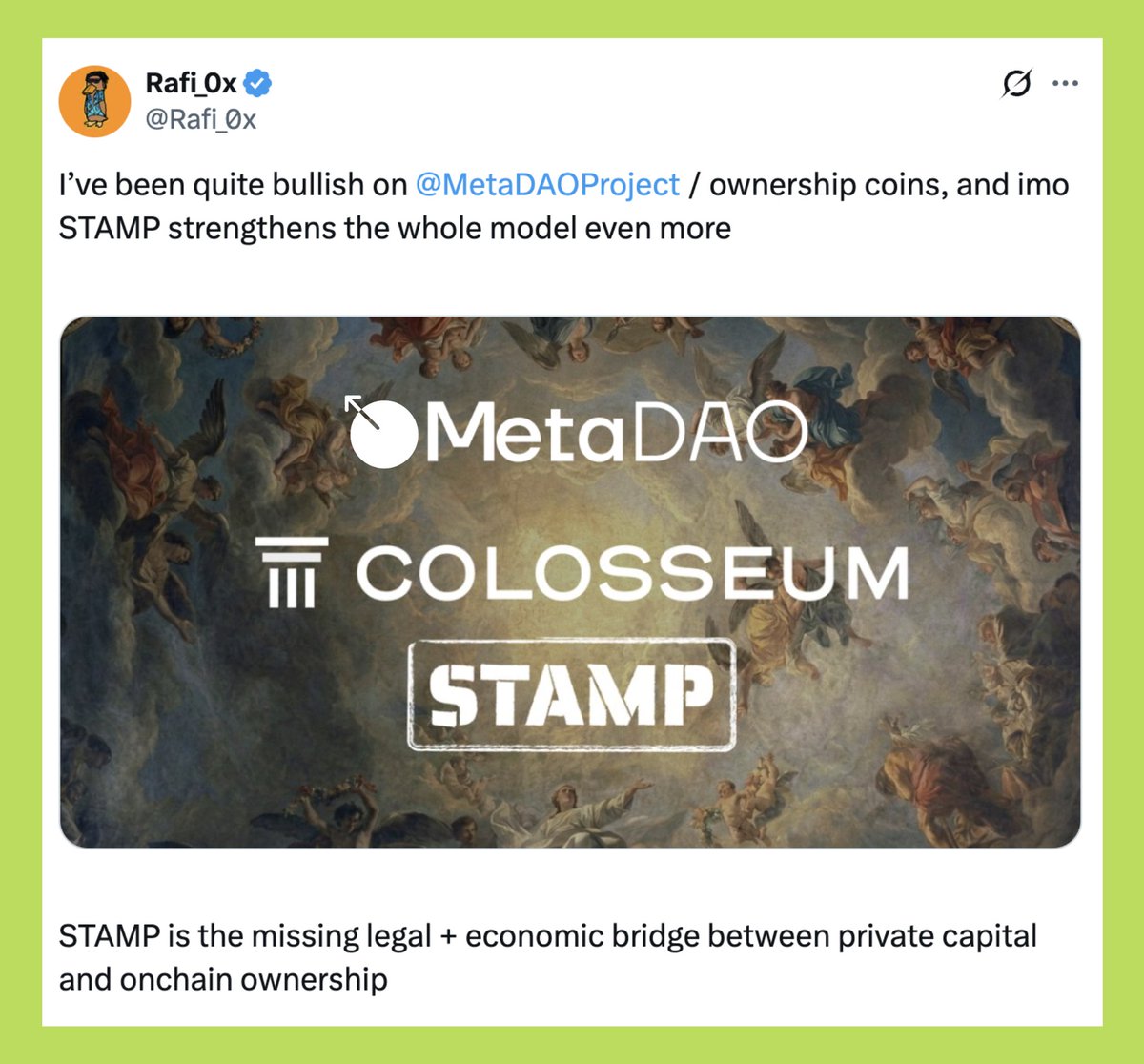
💯 What is STAMP and why does it make ICOs fairer? A big problem with many crypto projects lies in the pre-ICO phase. Before tokens exist, projects still need money to build the product, hire a team, and survive. In the past, this phase almost always happened off-chain: through SAFE notes, debt instruments, or private deals with investors. Outsiders had no idea who held what, under what conditions, and the risk of a "dump" after the ICO was very high. STAMP was created to bring this phase on-chain, making it more transparent and disciplined. Instead of investing based on "trust alone," investors in STAMP know three specific things upfront: how many tokens they will receive, when they will be unlocked, and only if the project hits certain milestones. Everything is set from the beginning, with no room for changing the terms later. Importantly: STAMP does not create a privileged group of investors. When the ICO happens, STAMP simply converts into regular tokens. Early participants are governed the same as any other tokenholder, with no special rights or backroom deals. This helps solve a common problem in crypto: VCs come in early, and retail investors bear the consequences. With STAMP, the amount of tokens for early investors is clearly limited, and the unlock schedule is known in advance, so there's no sudden dump that crashes the market. For founders, STAMP allows them to raise capital early without ruining the token's future. Funds are released in stages, so builders only get money when they actually deliver. Old equity or debt agreements are also consolidated and converted into on-chain ownership, instead of lingering in the background. Compared to the old ways—SAFE notes, messy equity, and vague token warrants—STAMP is like an upgrade: simpler, more transparent, and fairer for both builders and future token buyers. In short, STAMP isn't about "beautifying" the fundraising story, but about fixing a fundamental flaw in crypto: money comes in first, but responsibility and ownership remain unclear. It turns the early fundraising phase from a gamble based on trust into a process with clear rules. If MetaDAO becomes the default place for projects to raise funds, launch tokens, and manage governance afterward, then STAMP is the piece that makes the entire lifecycle run smoothly and with less risk for everyone involved. According to @Rafi_0x - Researcher with 35k followers For those who don't know: 📌 @colosseum - the organization developing STAMP is a large collaborative entity combining hackathons, accelerators, and investment funds focused on building the Solana ecosystem. It's the birthplace of many innovative projects. 📌 @MetaDAOProject is a name that has been mentioned a lot recently due to its integration of Futarchy (DAO + Prediction Market) + Launchpad + Ownership... and is openly held by Paradigm and many other funds.

Share


Source:Show original
Disclaimer: The information on this page may have been obtained from third parties and does not necessarily reflect the views or opinions of KuCoin. This content is provided for general informational purposes only, without any representation or warranty of any kind, nor shall it be construed as financial or investment advice. KuCoin shall not be liable for any errors or omissions, or for any outcomes resulting from the use of this information.
Investments in digital assets can be risky. Please carefully evaluate the risks of a product and your risk tolerance based on your own financial circumstances. For more information, please refer to our Terms of Use and Risk Disclosure.