


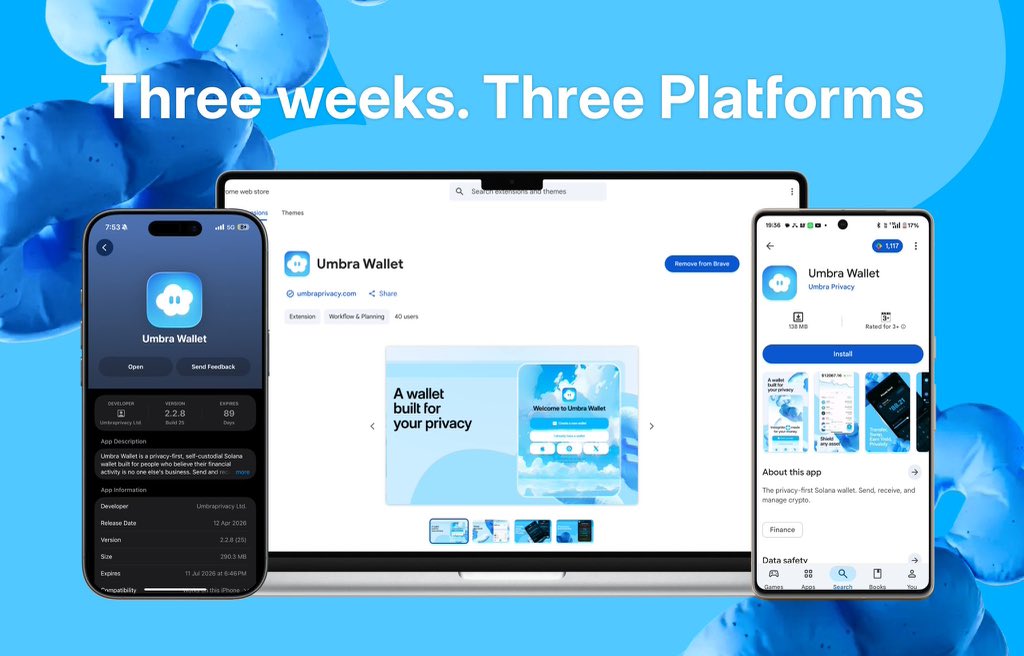
Privacy in crypto was supposed to be the point. Crypto promised financial sovereignty but on most chains, every wallet, every balance, every transfer sits there in public forever. Anyone can trace, link, or surveil you. That's not freedom. That's a new kind of exposure. Most privacy solutions fall short: •Mixers (like old Tornado Cash): Obfuscate flows but rely on pools that can be analyzed, have been sanctioned, and offer zero composability with DeFi. •Privacy coins like (Monero): Strong default privacy via ring signatures + stealth addresses but limited ecosystem, slow, and regulators treat it harshly (no selective disclosure). •Zcash: Optional shielded txns with zk SNARKs and viewing keys for auditability better compliance angle, but privacy isn't default and shielded pool usage stays low. •ZK L2s/protocols like (Aztec) or (Railgun): Enable private smart contracts and DeFi on Ethereum, but often isolated states, high complexity costs, and weaker composability across the broader ecosystem. They trade off one thing for another: either max privacy (but clunky + isolated) or usability (but leaks data). @UmbraPrivacy changes the game on Solana. Umbra delivers a Solana-native privacy wallet powered by @Arcium encrypted execution (MPC + confidential computing). It brings shielded transfers, encrypted swaps, and private execution where sender, recipient, and amounts stay hidden all while staying fully composable with Solana’s speed and ecosystem. What makes it stand out in the comparison: - Privacy guarantees: Strong confidentiality for identities, amounts, and flows. Transactions process encrypted onchain without exposing data publicly. - Trust assumptions: Minimal leverages decentralized MPC network (Arcium); no single party sees plaintext. Browser local validation adds independence. - Usability: Designed for normal people wallet feels familiar, private by default or easy opt-in, with compliance tools (selective auditability via viewing keys or voluntary disclosure). - Composability: True encrypted shared state lets private actions interact with DeFi (swaps, etc.) without breaking out of the privacy layer unlike many isolated shielded pools. - Security model: Built on audited, open components, processes in encrypted environments to shrink attack surface. - Track record: Newer but production ready with public launch, focuses on real usage like shielding new wallets, protecting trading strategies, and daily transfers. - Decentralization: Leverages Solana high throughput + Arcium’s distributed compute nodes. - Regulatory approach: Balances privacy with practical tools for auditability privacy without forcing total opacity, making it more institution and compliance friendly than mandatory private systems. Result: Privacy that’s actually usable. Fast like Solana. Private like it should be. Composable with the ecosystem instead of siloed. Smooth enough for everyday use, open enough for DeFi and beyond. That’s why Umbra feels like the next evolution: privacy infrastructure that scales with Solana, not against it. Built for anyone who wants to move, trade, or build without leaving a permanent public trail while keeping the option to prove what’s needed when it matters. Crypto shouldn’t make you choose between transparency theater and total isolation. Umbra gives you real control.

Share


Source:Show original
Disclaimer: The information on this page may have been obtained from third parties and does not necessarily reflect the views or opinions of KuCoin. This content is provided for general informational purposes only, without any representation or warranty of any kind, nor shall it be construed as financial or investment advice. KuCoin shall not be liable for any errors or omissions, or for any outcomes resulting from the use of this information.
Investments in digital assets can be risky. Please carefully evaluate the risks of a product and your risk tolerance based on your own financial circumstances. For more information, please refer to our Terms of Use and Risk Disclosure.