


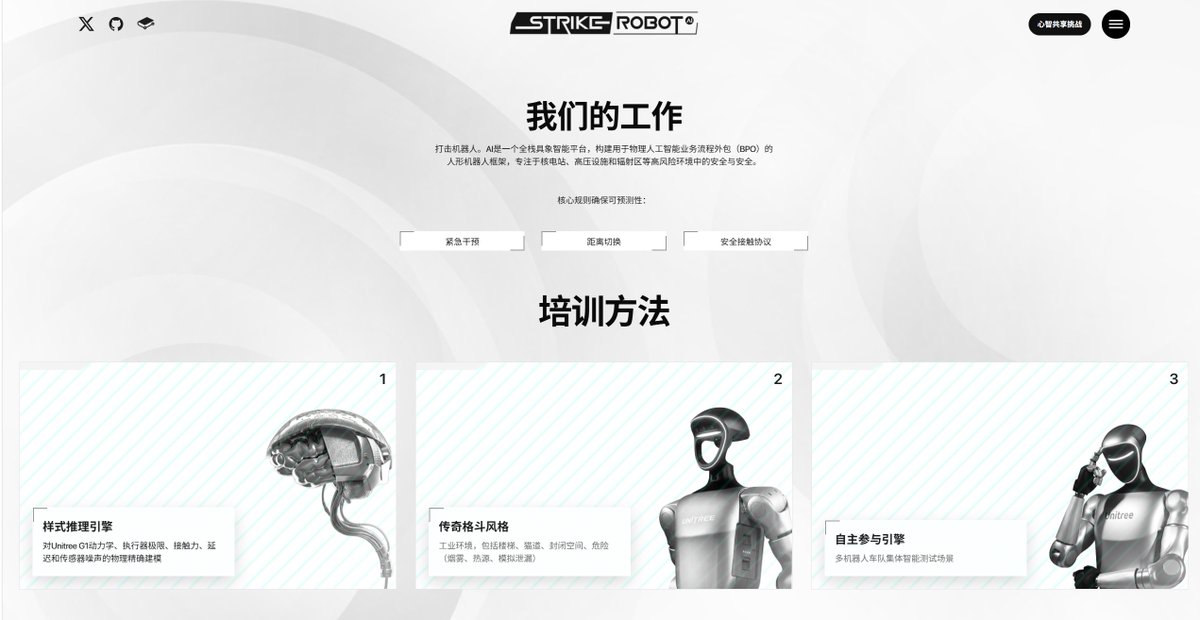
Today, as Web3 enters 2026, the nature of on-chain trading has fundamentally changed. If, just two or three years ago, we were still debating how to manually secure spots in popular project presales or race for speed when liquidity pools opened, today’s trading has become an outright battle between algorithms and agents. In this context, the emergence of @StrikeRobot_ai is not merely an upgrade in tools—it represents a profound shift in trading logic from “execution-driven” to “intelligence-driven.” Early trading bots were essentially scripted programs with predefined logic. They operated on the simplest “If-Then” rules: if a contract is deployed, buy; if price hits a threshold, sell. Such logic may have worked during the early days of liquidity surges, but in today’s hyper-complex 2026 market, these rigid scripts can no longer survive. The market is now saturated with sophisticated MEV strategies, manufactured social media hype, and rapidly shifting liquidity fronts. @StrikeRobot_ai’s core competitive advantage lies in its integration of a true AI decision layer. It no longer passively waits for instructions; instead, it models real-time on-chain data to understand the “intent” behind trades. This means users no longer need to study complex contract parameters or manually adjust gas fees—the AI agent automatically identifies the optimal execution path based on the user’s risk tolerance and profit targets. This transition from “manual transmission” to “autonomous driving” marks the maturation of Web3 infrastructure. For experienced traders, the greatest challenge is often not technical execution, but filtering through overwhelming noise. On social media—especially X—information overload has created an extremely high signal-to-noise ratio. When a project is heavily discussed, is it genuine community momentum, or an orchestrated bot-driven push? @StrikeRobot_ai’s deeper value lies in its quantitative analysis of social sentiment. By leveraging large language models to process real-time social data, it can distinguish between projects with authentic community consensus and those fueled by fleeting hype. Combined with on-chain capital flows—particularly the movements of wallets known as “smart money”—it delivers users a relatively objective investment recommendation. This ability to fuse social signals with on-chain data is devastatingly effective in today’s PvP market. On-chain security risks have not disappeared in 2026—they’ve become more隐蔽 (hidden). Rug pull tactics have evolved to include highly complex exit logic embedded within smart contracts. Traditional anti-rug bots typically react only after the project team initiates a withdrawal transaction—but in a high-frequency trading environment, such latency is often fatal. @StrikeRobot_ai demonstrates infrastructure-grade depth in this area. Its security module doesn’t just scan contracts for common backdoors; more importantly, it predicts potential sell-off risks by monitoring liquidity pool depth and bid-ask ratios at millisecond intervals. Moments before danger strikes, the AI can send withdrawal commands via private RPC nodes (such as Jito or similar MEV-protected channels). This “predictive defense” dramatically increases retail traders’ survival rates during extreme market volatility. The Future of Intent-Centric Architecture We frequently discuss mass adoption in Web3—but if the barrier to participating in on-chain interactions remains this high, that day will never come. The significance of @StrikeRobot_ai lies not only in helping users profit, but in drastically simplifying user interaction pathways through its intent-centric design. The future of trading should be simple: you tell the AI your target asset range and risk tolerance, and it handles everything else—discovering opportunities, auditing security, configuring positions, and auto-executing take-profit and stop-loss orders. @StrikeRobot_ai is deeply exploring this direction. It transforms trading from a tedious technical chore into a strategic intellectual game. In summary, @StrikeRobot_ai’s positioning is clear: it is an integrated system combining AI intelligence with ultra-fast execution. As decentralized finance evolves from floating-rate models toward more complex term structures, and as RWA (real-world assets) become deeply intertwined with on-chain assets, this type of trading bot with “deep thinking” capabilities will become an indispensable ally for every serious trader. For anyone seeking to capture opportunities in this rapidly evolving market, understanding and leveraging such tools may be more critical than analyzing projects themselves. Because in 2026, winners are not just those who understand trends—they’re those who wield the most powerful tools to instantly convert trends into profit.

Share


Source:Show original
Disclaimer: The information on this page may have been obtained from third parties and does not necessarily reflect the views or opinions of KuCoin. This content is provided for general informational purposes only, without any representation or warranty of any kind, nor shall it be construed as financial or investment advice. KuCoin shall not be liable for any errors or omissions, or for any outcomes resulting from the use of this information.
Investments in digital assets can be risky. Please carefully evaluate the risks of a product and your risk tolerance based on your own financial circumstances. For more information, please refer to our Terms of Use and Risk Disclosure.