

Ripple’s Native Lending Protocol Hits Testnet: Everything You Need to Know
2026/06/30 15:25:00
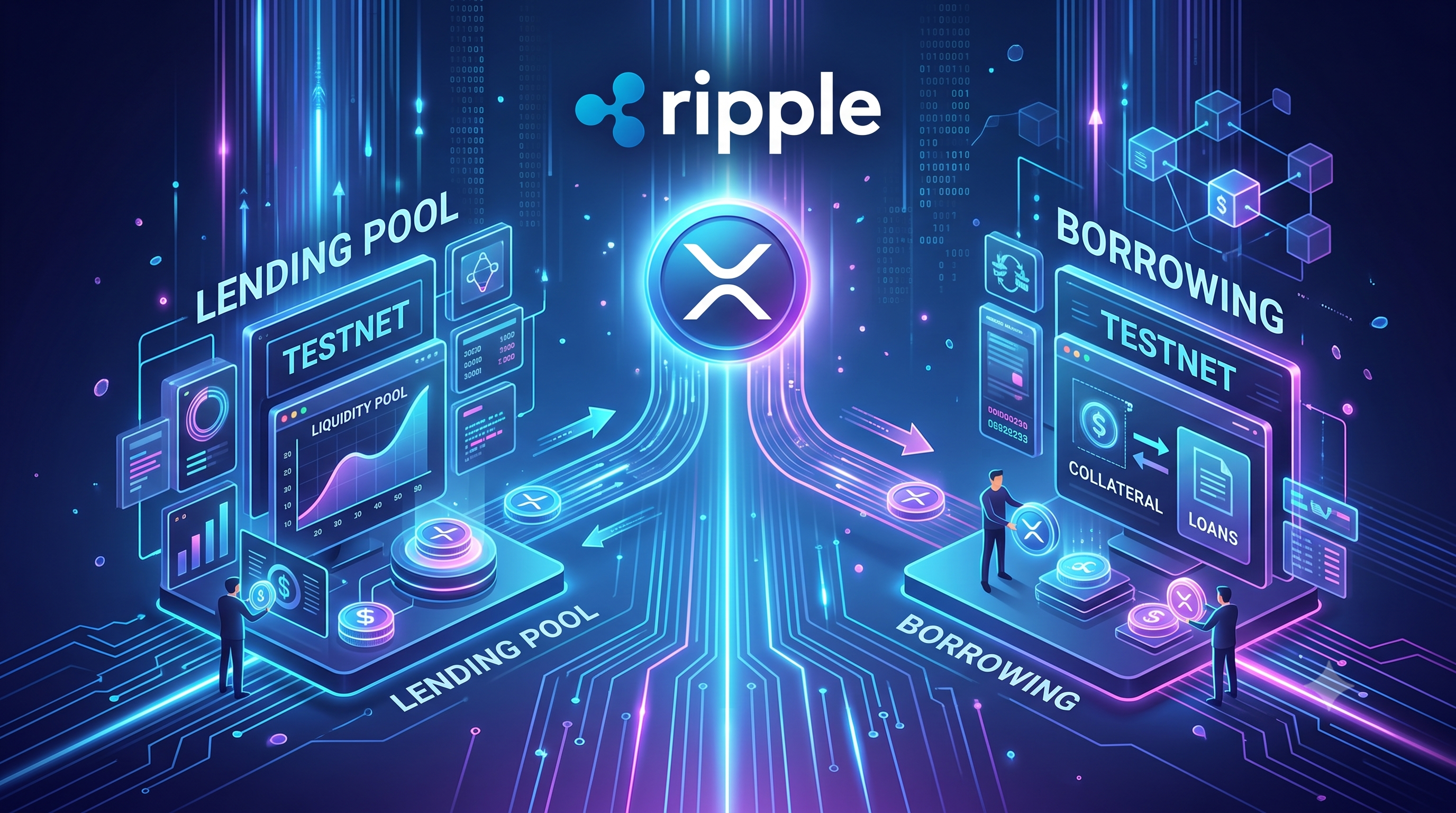
For years, the XRP Ledger (XRPL) has been pigeonholed by the broader crypto community as simply a high-speed cross-border payment rail. While the rest of the blockchain space was engrossed in the explosive "DeFi Summer" of 2020 and the subsequent rise of decentralized lending platforms, XRPL seemingly sat on the sidelines. But the narrative is undergoing a seismic shift. Ripple has officially launched its highly anticipated native Lending Protocol on the developer testnet (Devnet), marking a watershed moment for the ecosystem.
This is not just another decentralized finance (DeFi) clone attempting to siphon retail liquidity. It is a meticulously engineered infrastructure designed to bridge the chasm between traditional finance (TradFi) and the blockchain. By introducing a hybrid lending model that pairs off-chain compliance with on-chain execution, Ripple is laying the groundwork for the multi-trillion-dollar Real World Asset (RWA) market to finally find a compliant home in Web3.
For developers, it’s a blank canvas. For institutions, it’s a regulatory-friendly gateway. And for XRP holders, it’s a fundamental expansion of network utility. Here is a comprehensive deep dive into the new XRPL Lending Protocol, how it works under the hood, and why it is poised to disrupt the current DeFi hierarchy.
What is the New XRPL Lending Protocol?
At its core, the newly introduced XRPL Lending Protocol is a native, on-chain mechanism that allows participants to borrow and lend digital assets directly on the XRP Ledger. However, to understand its true market positioning, one must look past the basic definitions of borrowing and lending.
Unlike retail-dominated platforms such as Aave or Compound—which rely on permissionless, over-collateralized pools and algorithmic, variable interest rates—Ripple’s protocol is purpose-built for the institutional sector. The protocol facilitates fixed-term, fixed-rate loans with highly customizable, pre-agreed terms. This structural decision is critical. Institutional players, from hedge funds to corporate treasuries, require predictable cash flows and clear legal frameworks; they cannot effectively operate in environments where borrowing costs can double overnight due to algorithmic rate spikes.
RippleX, the open-source development arm of Ripple, highlighted this specific design philosophy in their technical roll-out. According to the official RippleX developer documentation regarding the proposal, the protocol was explicitly designed to bypass the friction of variable-rate liquidity pools, stating: "The native lending protocol introduces a fixed-term loan structure managed by off-chain delegates, optimizing capital efficiency while catering to the rigorous compliance needs of institutional participants."
By focusing on fixed-term lending, the protocol minimizes the volatility risks inherent in early-generation DeFi. It introduces a structured environment where institutions can confidently deploy capital, knowing that the parameters of their loans—maturity dates, interest rates, and collateral requirements—are immutably locked into the ledger, while the human element of credit assessment remains intact off-chain.
Under the Hood: How the Protocol Actually Works (XLS-65 & XLS-66)
To bring this ambitious vision to life, the Ripple development team had to upgrade the foundational architecture of the XRP Ledger. Because XRPL does not use Turing-complete smart contracts like Ethereum (a deliberate choice to maximize speed and security), new functionalities are added via native "amendments." The Lending Protocol is built upon two distinct but deeply intertwined proposals: XLS-65 and XLS-66.
XLS-65: Single Asset Vaults
Before you can lend money, you need a secure place to pool it. This is where XLS-65 comes in. This proposal introduces the concept of "Single Asset Vaults" to the XRP Ledger. In traditional DeFi, liquidity pools often require users to deposit pairs of assets (e.g., XRP and USDT), which exposes liquidity providers (LPs) to "impermanent loss"—a phenomenon where the fluctuating ratio of the two assets causes the LP to lose money compared to simply holding the tokens.
XLS-65 eliminates this risk by allowing vaults to hold only one type of asset. An institution or retail user can deposit a single token (be it XRP, a stablecoin like USDC, or a tokenized RWA) into a vault and receive vault tokens in return. These vault tokens act as a cryptographic receipt, representing the user’s proportional share of the pool and any interest accrued. This streamlined accounting mechanism is vastly superior for corporate balance sheets, which require clear, linear tracking of single-asset yields.
XLS-66: The Lending Protocol
If XLS-65 is the bank vault, XLS-66 is the loan officer. This proposal dictates exactly how the liquidity sitting in the Single Asset Vaults can be utilized for fixed-term loans.
The workflow is elegantly simple but highly effective:
-
The Request: A borrower submits a loan request detailing the desired amount, the collateral they are willing to offer, the term length, and the proposed interest rate.
-
The Underwriting: Instead of an algorithm blindly accepting the collateral, a designated "Loan Delegate" (a professional entity managing the vault) reviews the request.
-
The Execution: If the delegate approves the terms, they sign the transaction. The XLS-66 protocol then seamlessly interacts with the XLS-65 vault, pulling the necessary liquidity and disbursing it to the borrower, while locking the borrower's collateral on-chain.
-
The Lifecycle: The protocol natively tracks the loan's maturity date. Upon maturity, the borrower repays the principal plus the fixed interest, which flows back into the vault, enriching the liquidity providers. If the borrower defaults, the protocol features automated mechanisms to liquidate the collateral and make the vault whole.
The "Hybrid" Advantage: Why Ripple Chose Off-Chain Underwriting
The most controversial, yet arguably the most brilliant, aspect of Ripple’s new protocol is its "hybrid" nature. For years, DeFi purists have argued that every single step of a financial transaction must be decentralized and executed on-chain. Ripple has taken a pragmatic detour, separating the decision-making process from the execution process.
In this hybrid model, the underwriting, credit scoring, KYC/AML (Know Your Customer/Anti-Money Laundering) checks, and legal collateral negotiations happen entirely off-chain. A traditional financial institution or a specialized credit fund acts as the Loan Delegate. They can verify the real-world identity of the borrower, assess their off-chain creditworthiness, and negotiate terms that comply with local regulatory jurisdictions.
Once this traditional compliance work is finished, the actual transfer of funds, the escrow of collateral, and the enforcement of the payment schedule are executed on-chain by the XRPL protocol.
This solves the biggest hurdle facing institutional DeFi adoption. As highlighted by Messari, a leading crypto market intelligence platform, in their sector reports on Real World Assets, purely permissionless systems are fundamentally incompatible with Wall Street compliance. Messari researchers noted that "institutional capital remains heavily sidelined in decentralized lending due to the lack of robust, privacy-preserving identity frameworks and the inability to underwrite under-collateralized loans on-chain." By moving the underwriting off-chain, Ripple directly addresses this bottleneck. Institutions can now lend under-collateralized money to trusted, KYC-verified counterparties—a staple of global corporate finance—while still reaping the benefits of blockchain efficiency, transparency, and instant settlement.
The Million-Dollar Question: What Does This Mean for XRP Holders?
For the global community of XRP holders, the launch of the Devnet is not just an academic exercise in blockchain architecture; it is a catalyst for fundamental token utility. The success of this protocol could drastically alter the supply and demand dynamics of XRP.
First and foremost is the metric of Total Value Locked (TVL). TVL is the lifeblood of any DeFi ecosystem. As institutions and retail participants begin depositing assets into XLS-65 vaults to earn yield, massive amounts of XRP and other XRPL-issued tokens will be effectively taken out of active circulation. A reduction in circulating supply, coupled with increased network demand, creates a historically bullish macroeconomic environment for the native token.
Furthermore, XRP is uniquely positioned to serve as the premier collateral asset within this new ecosystem. Because the XRPL is incredibly fast (settling in 3-5 seconds) and features transaction fees that cost fractions of a penny, maintaining and managing collateral positions in XRP is vastly more efficient than on legacy networks.
Lastly, this ties perfectly into Ripple’s aggressive push into the Tokenization of Real World Assets. If a real estate firm tokenizes a $50 million commercial property on the XRPL, they can now use the Lending Protocol to post those property tokens as collateral to borrow stablecoins or XRP for operational liquidity. XRP sits at the very center of this emerging digital economy, acting as the frictionless bridge currency routing liquidity between tokenized T-bills, stablecoins, and global fiat on-ramps.
How XRP Trading Works on KuCoin
While the XRPL lending protocol is still in its early development phase, many traders are already positioning themselves around XRP exposure through major exchanges. One of the most commonly used platforms for this is KuCoin, which offers spot trading pairs for XRP and a relatively simple onboarding process for both beginners and experienced users.
How to Trade XRP on KuCoin
To trade XRP, users typically follow these steps:
-
Create an account on KuCoin and complete basic verification
-
Deposit funds using USDT, USDC, or fiat channels depending on availability
-
Search for the XRP/USDT trading pair in the spot market
-
Place a market or limit order depending on your entry strategy
-
Store XRP either on-exchange or transfer to a personal wallet for long-term holding
For more active traders, KuCoin also provides advanced tools such as futures markets and grid trading, which some users use to manage volatility around major XRP ecosystem updates.
XRPL vs. Ethereum & Solana: A New Contender in DeFi?
To understand the magnitude of this launch, we must contextualize XRPL’s new capabilities against the reigning heavyweights of decentralized finance: Ethereum and Solana.
Ethereum is the undisputed king of DeFi. According to DefiLlama, an authoritative multi-chain analytics dashboard, Ethereum consistently commands the vast majority of the industry's Total Value Locked, housing giants like Aave, MakerDAO, and Compound. However, Ethereum’s architecture relies on Turing-complete smart contracts. While highly flexible, these contracts are notoriously vulnerable to hacks, exploits, and draining attacks. Furthermore, Ethereum's gas fees can become prohibitively expensive during times of network congestion, eating into lending margins.
Solana, on the other hand, solves the speed and cost issues of Ethereum, boasting a thriving retail DeFi ecosystem with platforms like Marginfi. Yet, Solana has historically battled network outages and is heavily skewed toward retail speculation and meme-coin trading, often lacking the enterprise-grade stability required by Tier-1 financial institutions.
The XRP Ledger offers a third path, which can be seen in the structural comparison below:
| Feature | XRPL Lending Protocol | Ethereum (e.g., Aave) | Solana (e.g., Marginfi) |
| Architecture | Native L1 Amendments (No smart contract risk) | Turing-complete Smart Contracts | Turing-complete Smart Contracts |
| Interest Rate Model | Fixed-term, fixed-rate | Variable, algorithmic | Variable, algorithmic |
| Underwriting | Off-chain via Delegates (Hybrid / KYC) | On-chain, fully permissionless | On-chain, fully permissionless |
| Transaction Fees | Fractions of a cent | Variable (often $10 - $50+) | Fractions of a cent |
| Primary Audience | Institutions, Corporate Treasuries | Retail, Degens, DAOs | Retail, High-frequency traders |
Instead of relying on user-uploaded smart contracts that could harbor hidden bugs, the Lending Protocol is integrated directly into the ledger’s core code as a native amendment. This "Layer 1" integration provides a fortified security profile; the code has been rigorously peer-reviewed and tested by the core network validators. It cannot be easily exploited by malicious contract interactions.
XRPL may never beat Ethereum in the sheer number of wild, experimental "degen" protocols. However, it doesn't need to. By offering ultra-low fees, high throughput, and a secure, compliance-ready hybrid lending architecture, XRPL is building a specialized moat. It is positioning itself as the blockchain of choice for serious capital.
For the Builders: How to Join the Devnet Right Now
For developers looking to catch the next major wave in Web3, the time to act is now. The opening of the Lending-Devnet is an invitation to be among the first architects of XRPL’s institutional DeFi landscape.
To get started, developers need to update their nodes to the latest Rippled software version, which contains the active code for the XLS-65 and XLS-66 proposals. From there, you can connect to the XRPL Devnet, a parallel testing environment that perfectly simulates the mainnet without the financial risk of using real funds. Ripple has provided extensive, newly updated documentation on their developer portals, complete with API references, transaction templates, and SDKs in multiple programming languages (including Python, JavaScript, and Java).
Currently, the ecosystem is heavily incentivizing participation. Developers are encouraged to build front-end interfaces for the Single Asset Vaults, design complex collateral management dashboards, and pressure-test the protocol through extensive bug bounty programs. In the crypto space, first-mover advantage is everything. Those who build the most intuitive and robust platforms on the Devnet today will be perfectly positioned to capture massive institutional inflows when the protocol goes live.
The Road to Mainnet: When Will It Officially Launch?
While the Devnet launch is a massive milestone, retail users and institutions cannot yet deploy real capital. The protocol is currently in a rigorous testing and auditing phase. Ripple, in collaboration with top-tier third-party blockchain security firms, is actively stress-testing the native amendments to ensure absolute resilience against edge-case failures and economic exploits.
The transition to the Mainnet is not a unilateral decision by Ripple. Because the XRP Ledger is decentralized, introducing XLS-65 and XLS-66 requires a formal governance vote. The amendments must be officially proposed to the network's independent validators. For an amendment to pass, it must secure at least an 80% approval rating from trusted validators and maintain that threshold continuously for two full weeks.
Given the overwhelming community support for expanding XRPL’s utility, the vote is largely viewed as a formality, though a necessary one to ensure network consensus. Analysts expect the protocol, pending successful security audits, to push for a Mainnet vote later this year.
Conclusion
The launch of the XRPL Lending Protocol on the developer testnet is a defining moment for Ripple and the broader XRP community. By rejecting the chaotic, hyper-speculative model of early DeFi and instead embracing a hybrid, compliance-friendly architecture, the XRP Ledger is actively maturing.
It is transforming from a singular tool for cross-border payments into a comprehensive, global financial powerhouse. With Single Asset Vaults mitigating risk, and off-chain delegates ensuring regulatory compliance, XRPL has laid out a red carpet for institutional capital. As developers begin to build on this new frontier, the bridge between traditional finance and decentralized technology has never looked stronger.
Frequently Asked Questions (FAQs)
Can I borrow money or earn yield on XRPL right now?
Not with real money just yet. The Lending Protocol is currently live on the Devnet, which is strictly a testing environment for developers using "play" XRP. It requires a successful security audit and a formal validator vote before it launches on the Mainnet for public use.
Do I need to understand smart contracts to use the XRPL Lending Protocol?
No. One of the greatest advantages of the XRP Ledger is that it uses native built-in functionalities (via the XLS amendments) rather than external, Turing-complete smart contracts. This drastically reduces the risk of hacks and makes the user experience much more streamlined and intuitive.
Is this exactly the same as Aave or Compound?
No, the architecture is fundamentally different. Aave and Compound are fully permissionless, multi-asset pools that use algorithmic variable interest rates. Ripple’s protocol is designed for fixed-term, fixed-rate loans and utilizes a "hybrid" model where credit checks and underwriting happen off-chain to maintain legal compliance.
How will this new protocol affect the price of XRP?
While nothing in crypto is guaranteed, increased DeFi activity generally leads to higher network utility. The protocol requires XRP for transaction fees and utilizes XRP as a primary collateral asset. This locks up circulating supply (increasing TVL) and drives ecosystem demand, factors that historically benefit the underlying native token.
What is a "Single Asset Vault" (XLS-65)?
A Single Asset Vault is a liquidity pool that holds only one type of cryptocurrency. Unlike traditional decentralized exchanges that require you to deposit a pair of tokens (like XRP and USDC), a single asset vault protects liquidity providers from "impermanent loss" and makes yield accounting much easier for institutional investors.
Disclaimer: This article is for informational purposes only and does not constitute financial or investment advice. Cryptocurrency investments carry significant risk. Always conduct your own research before trading.