

What is a Bear Flag Pattern? A Guide to Identifying Bearish Continuity
Key Takeaways:
-
Reliable Trend Continuation: The bear flag is a signal with high probabilities for "bearish continuity", showing that an abrupt price drop (the flagpole) is only taking a temporary respite (the flag), before continuing downward momentum (the flag).
-
Precision Through Volume & Fibonacci: For any valid setup to remain valid under 2026 standards, its volume needs to decline during consolidation phase and spike sharply at breakout. Furthermore, professional 2026 standards suggest the retracement should remain between 38.2%-50% Fibonacci levels to remain valid.
-
Data-Driven Targets: Traders use the Measured Move strategy to set objective profit targets by projecting the height of an initial flagpole downward from its breakout point and using disciplined risk/reward management practices.
What is a Bear Flag Pattern?
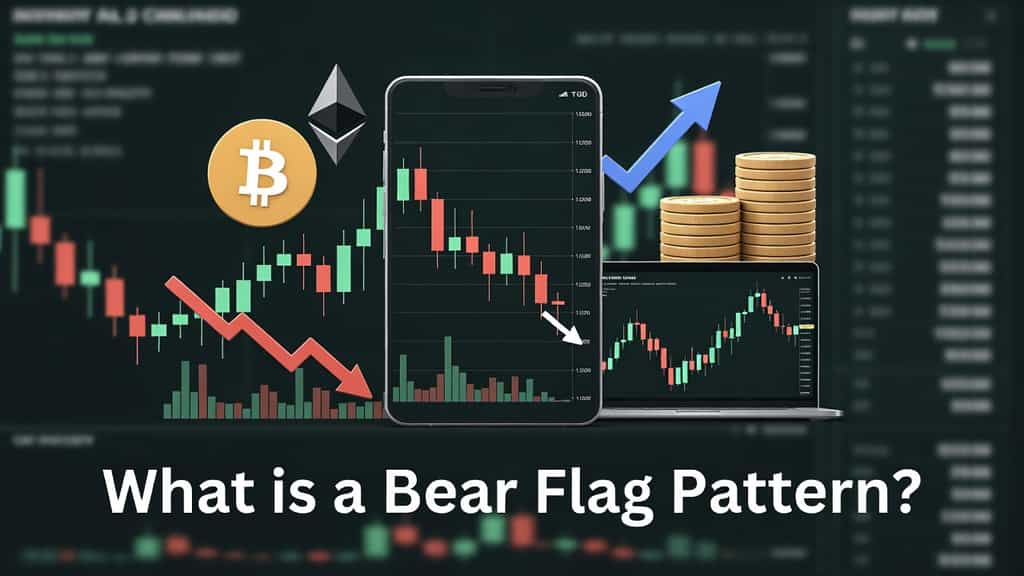
Bear Flag Patterns are powerful technical analysis formations which indicate an ongoing downward price trend. Visually, they resemble an inverted flag on a pole after experiencing a rapid and sudden price decrease known as flagpole effect. After this initial collapse, prices can sometimes experience a brief consolidation phase known as "flagged", where they fluctuate gently up or sideways within a narrow, parallel channel. Bear flags in 2026's cryptocurrency market can typically be identified when their price retraces by less than 50% of their flagpole's length, before decisively breaking below its lower support line and breaking decisively below. Our platform traders use this pattern as an indication that bears are simply taking a breather before driving the asset's price towards its next support level.
To accurately identify a high-probability bear flag, look for these three core components:
-
The Flagpole: A rapid and significant decline in price, usually accompanied by a spike in trading volume, indicating intense selling pressure.
-
The Flag (Consolidation): A tight, upward-sloping or horizontal channel where volume typically diminishes, showing a temporary lack of conviction from buyers.
-
The Breakout: A sharp move below the flag’s lower trendline, often triggered by a renewed surge in volume, which validates the bearish continuity and provides a clear entry signal for short positions.
How to Identify a Valid Bear Flag?
Identification of a bear flag pattern requires careful three-step observation of price action and volume. First, look out for a "flagpole," a sharp, high-volume descent that indicates intense selling pressure. Second, observe the "flag," an upward-sloping consolidation wherein prices remain trapped between parallel trendlines for an extended period of time; professional traders ensure this retracement stays within 38.2% to 50% Fibonacci levels as any move higher often invalidates this pattern and suggests potential trend reversal instead. Thirdly, watch for "breakout," when prices pierce lower support lines usually accompanied by renewed surges in trading volume to confirm this setup.
Key Components of the Bear Flag Pattern
-
The Sharp Descent (The Pole): A near-vertical drop in price that creates the initial momentum.
-
Tight Consolidation (The Flag): The price should move in a narrow range. If the "flag" becomes too wide or lasts too long, it may transition into a "rectangle" or "wedge" rather than a classic bear flag pattern.
-
Volume Confirmation: Volume should decline during the formation of the flag and spike significantly the moment the lower trendline is breached.
-
The Measured Move: Traders often calculate the price target by measuring the height of the original flagpole and projecting that same distance downward from the breakout point.
Pros and Cons of Bear Flags
The bear flag pattern is a favorite among professional crypto traders due to its high reliability as a trend-continuation signal. However, like any technical indicator, it is not infallible. Understanding the trade-offs of this formation is essential for maintaining a disciplined risk-to-reward ratio on a high-leverage exchange.
Pros of Bear Flags
-
Clear Entry and Exit Points: The bear flag pattern provides a structured framework, with a definitive entry at the lower trendline breach and a logical stop-loss just above the flag’s resistance.
-
Calculated Price Targets: Traders can use the "measured move" technique projecting the length of the flagpole downward to set data-driven take-profit levels.
-
High Probability in Bear Markets: In a macro-downtrend, the bear flag pattern is one of the most consistent indicators of bearish continuity, helping traders avoid "buying the dip" too early.
Cons of Bear Flags
-
Risk of "Bull Traps": In low-liquidity environments, a price may briefly break the flag's resistance, trapping "long" traders before reversing and continuing the downward trend.
-
Time Sensitivity: If the "flag" (consolidation) lasts too long, the bearish momentum of the flagpole often dissipates, leading to a "failed" bear flag pattern or a transition into a neutral trading range.
-
Whipsaw Volatility: Rapid price fluctuations can trigger stop-losses prematurely before the actual breakout occurs, especially during major crypto news events or liquidations.
Bear Flag Pattern Trading Strategy
Trading a bear flag pattern effectively requires a combination of precise entry timing and disciplined risk management. The most common approach involves waiting for a decisive 15-minute or 1-hour candle close below the flag's lower support line to avoid "wick" fakeouts. Once the breakout is confirmed, traders typically set their price target using the Measured Move method: calculating the vertical distance of the initial "flagpole" and projecting that same distance downward from the breakout point. On a professional exchange, this bear flag pattern strategy is often paired with volume analysis; a surge in selling volume during the breakdown significantly increases the probability of hitting the target.
To optimize your success rate with this setup, consider these three professional trading tactics:
-
The Conservative Entry: Instead of chasing the initial break, wait for a "retest" where the price bounces back to touch the previous support (now resistance) before continuing lower.
-
Stop-Loss Placement: To protect your capital, place a stop-loss order slightly above the upper trendline of the flag or the most recent "lower high" within the consolidation.
-
Volume Correlation: A valid bear flag pattern should show declining volume during the formation of the flag and a sharp expansion of volume at the moment of the bearish breakout.
-
Multi-Timeframe Confirmation: Verify the bearish continuity on a higher timeframe (e.g., the 4-hour or Daily chart) to ensure you aren't trading against a larger macro-trend.
Bear Flag Pattern vs Bull Flag Pattern
Bear Flag Pattern and Bull Flag Pattern in Contrast, however, illustrate their mutual nature as continuation signals in opposite market directions. Bear flag patterns typically form during downtrends and forecast more declines (with buyers making tentative recoveries as buyers tilt the flag upward), whereas bull flag patterns are formed during an uptrend with an acute upward flagpole and downward-sloping consolidation period, signaling potential upward continuation after breaking through an upper flag line. Understanding the bear flag pattern versus its bullish equivalent helps crypto traders on platforms like ours recognize high-probability setups, whether shorting during bearish phases or avoiding false recoveries in volatile markets so as to make more informed decisions and effectively manage risk in fast-moving cryptocurrency environments.
Real-World Examples in Crypto Markets
A classic example occurred during the Bitcoin (BTC) price action of May 2024; after a sharp 15% drop from the $70,000 resistance level (the flagpole), the price entered a multi-day ascending channel with decreasing volume (the flag). Traders who identified this bear flag pattern were prepared for the subsequent breakdown, which saw BTC plummet toward the $56,000 support zone. Similarly, many Ethereum (ETH) and Solana (SOL) charts frequently exhibit these patterns during macro-downtrends, where "paper handed" retail traders provide the brief exit liquidity needed for the next leg of the sell-off.
Historical instances on our exchange demonstrate that these patterns are most reliable when they align with broader market sentiment:
-
The 2022 LUNA Collapse: Numerous bear flag patterns formed across the altcoin market as temporary relief rallies were met with overwhelming sell-side pressure, leading to the "measured move" targets being hit within hours.
-
Solana (SOL) Q3 2024: During a period of network congestion and broader market fear, SOL formed a series of "cascading" bear flags on the 4-hour chart, serving as a textbook example of bearish continuity for short-sellers.
-
Stablecoin De-pegging Events: When assets lose their peg, the initial panic creates a massive flagpole, while the desperate attempts to arbitrage back to $1.00 often form the narrow flag of a bear flag pattern before a final capitulation.
-
Post-ETF Approval Volatility: Even in "bullish" years like 2024 and 2025, Bitcoin has shown intra-day bear flags following "sell the news" events, proving that the pattern is a vital tool for both day traders and long-term hedgers.
The bear flag pattern remains an essential tool for navigating the volatile cryptocurrency markets of 2026. By identifying the classic "pole and flag" structure, traders can distinguish between true market recoveries and temporary pauses in a larger downtrend. When paired with disciplined entry tactics—such as waiting for candle-close confirmations and using volume as a filter—this pattern offers a structured, objective framework for short-selling and risk management. Whether observed during historic events like the LUNA collapse or intra-day volatility in Bitcoin and Solana, the bear flag provides the technical clarity needed to capitalize on bearish market momentum.
Create your free KuCoin account today to access over 700+ global crypto assets and the latest gems. Sign Up Now!
FAQs
-
How can I tell the difference between a bear flag and a trend reversal?
The key lies in the retracement depth. A valid bear flag typically retraces less than 50% of the flagpole’s length. If the price climbs higher than the 50% Fibonacci level, the bearish momentum is likely dissipating, suggesting a potential trend reversal or a transition into a neutral trading range.
-
What is the "Measured Move" and how do I calculate it?
The Measured Move is a technique used to estimate the price target. You measure the vertical distance of the initial sharp drop (the flagpole) and subtract that same value from the price level where the breakout occurs (the lower support of the flag).
-
Why is volume important when trading a bear flag pattern?
Volume acts as a confirmation tool. You want to see volume "dry up" while the flag is forming, showing that buyers lack conviction. A sudden surge in volume during the breakdown confirms that aggressive sellers have returned, increasing the likelihood that the target will be reached.
-
What is a "Bull Trap" in the context of a bear flag?
A bull trap occurs when the price briefly breaks above the upper resistance of the flag, leading traders to believe a recovery is starting. In low-liquidity environments, the price often quickly reverses and collapses back into the downward trend, trapping those who went "long."
-
Which timeframes are best for spotting bear flags in crypto?
While they appear on all timeframes, 15-minute and 1-hour charts are popular for day trading entries. However, using Multi-Timeframe Confirmation (checking the 4-hour or Daily chart) is highly recommended to ensure the local bear flag isn't trading against a larger bullish macro-trend.
Disclaimer: The information on this page may have been obtained from third parties and does not necessarily reflect the views or opinions of KuCoin. This content is provided for general informational purposes only, without any representation or warranty of any kind, nor shall it be construed as financial or investment advice. KuCoin shall not be liable for any errors or omissions, or for any outcomes resulting from the use of this information. Investments in digital assets can be risky. Please carefully evaluate the risks of a product and your risk tolerance based on your own financial circumstances. For more information, please refer to our Terms of Use and Risk Disclosure.