

Tether Freezes $344 Million in USDT: Is Stablecoin Regulation Getting Tighter?
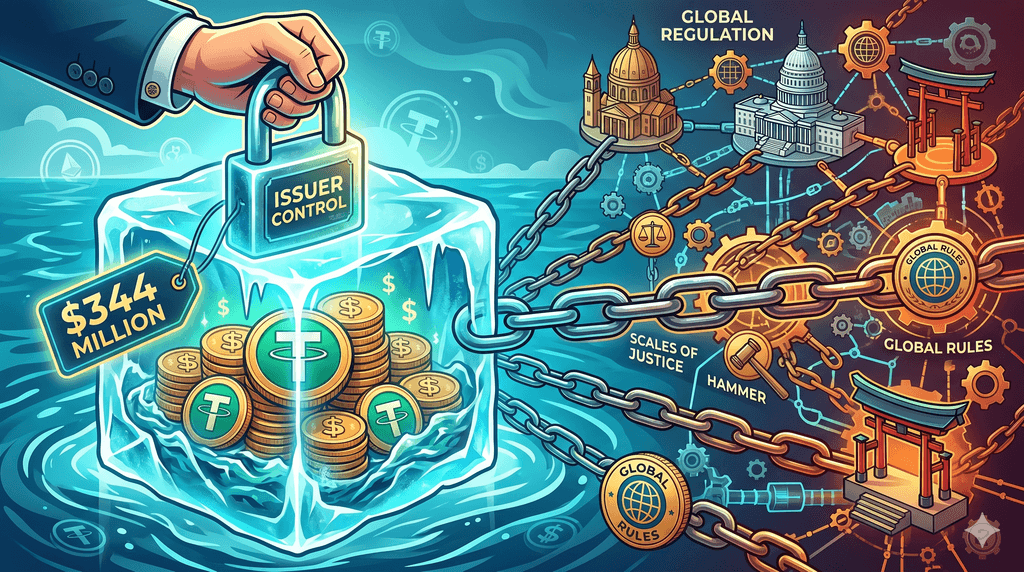
Tether’s freeze of more than $344 million in USDT has brought stablecoin regulation back into the spotlight. The action was not just another crypto enforcement headline. It showed how centralized stablecoin issuers can work directly with authorities to block suspicious funds, even when those funds move on public blockchains.
On April 23, 2026, Tether announced that it supported the U.S. government in freezing more than $344 million in USDt across two addresses. The company said the action was carried out in coordination with OFAC and U.S. law enforcement. Tether also described the freeze as part of a broader pattern of cooperation with authorities in cases involving illicit activity.
The freeze reportedly involved USDT on the Tron blockchain, a network widely used for stablecoin transfers because of its low fees and fast settlement. CoinDesk reported that the frozen funds were tied to suspected illicit activity and that the action followed coordination with U.S. law enforcement.
This case raises a major question for the crypto market: is stablecoin regulation getting tighter?
Stablecoins are becoming more regulated because they now play a much larger role in digital payments, crypto trading, cross-border transfers, and on-chain settlement. Regulators are no longer treating them as niche crypto products. They are increasingly viewing stablecoins as financial infrastructure that needs clear rules, stronger compliance, and direct oversight.
What Happened in the $344 Million USDT Freeze?
Tether froze more than $344 million in USDT across two blockchain addresses after coordination with U.S. authorities. The freeze stopped those tokens from being moved further, showing that centralized stablecoin issuers can take direct action when specific wallets are flagged by regulators or law enforcement.
This matters because USDT is not a fully decentralized asset. It runs on public blockchains, but it is issued and controlled by Tether. That gives the company certain administrative powers, including the ability to freeze specific addresses on supported networks.
For many crypto users, this is one of the most important differences between centralized stablecoins and decentralized cryptocurrencies. Bitcoin, for example, does not have a company that can freeze coins at the protocol level. USDT does. That structure makes USDT useful for compliance actions, but it also creates concerns about centralization and control.
The size of this freeze made the issue impossible to ignore. A freeze worth hundreds of millions of dollars shows that stablecoins are not outside the reach of regulators. Even when tokens move on-chain, issuers can still play a major role in enforcement.
Why the Tether Freeze Matters
The Tether freeze matters because stablecoins are now deeply embedded in the crypto economy. USDT is used by traders, exchanges, payment platforms, businesses, and individuals who want access to a dollar-pegged digital asset.
Stablecoins are popular because they make it easier to move value quickly without relying on traditional bank transfers. They are used for trading pairs, liquidity, settlement, remittances, and decentralized finance activity. This utility has made stablecoins one of the most important parts of the digital asset market.
However, the same features that make stablecoins useful also make regulators pay attention. Stablecoins can move across borders quickly. They can be transferred between wallets without the same friction as bank payments. They can be used on multiple blockchains. They can also interact with exchanges, DeFi platforms, and over-the-counter trading networks.
For regulators, that creates risks around money laundering, sanctions evasion, fraud, terrorist financing, and illegal capital flows. For stablecoin issuers, it creates pressure to monitor suspicious activity and respond when authorities identify high-risk wallets.
The $344 million USDT freeze shows how that pressure is playing out in real time.
Is Stablecoin Regulation Getting Tighter?
Stablecoins regulation is getting tighter. The Tether freeze is one example of a wider global shift toward stricter rules for stablecoin issuers, crypto exchanges, wallet providers, and other digital asset firms.
Stablecoins are no longer treated only as crypto trading tools. They are increasingly viewed as digital payment instruments that need strong reserve standards, redemption rules, anti-money laundering controls, sanctions compliance, and issuer accountability.
Stronger Law Enforcement Cooperation
The Tether freeze shows that stablecoin issuers are expected to cooperate with law enforcement when suspicious wallets are identified. In this case, Tether said the freeze was carried out in coordination with OFAC and U.S. law enforcement.
This kind of cooperation is becoming more common. Stablecoin issuers can use blockchain analytics, internal controls, and official requests to block funds connected to suspected criminal activity. For law enforcement, this creates a practical way to intervene in digital asset flows.
For users, it confirms an important point: centralized stablecoins can be frozen. That does not mean every user is at risk of having funds blocked without cause. But it does mean stablecoins like USDT are subject to issuer-level controls that do not exist in the same way for decentralized assets.
More Focus on AML and Sanctions Compliance
Anti-money laundering and sanctions compliance are now central to stablecoin regulation. Because stablecoins can move quickly across borders, authorities are paying close attention to how they are used and whether issuers can prevent misuse.
OFAC’s involvement is especially important. OFAC is responsible for enforcing U.S. sanctions. When stablecoin addresses are linked to sanctioned entities, high-risk jurisdictions, or suspected illicit networks, issuers may face pressure to block those funds.
This makes stablecoin regulation about more than consumer protection. It is also about national security, sanctions enforcement, and financial crime prevention.
Stablecoin issuers that want to operate at scale will likely need stronger compliance teams, better wallet-screening tools, and closer relationships with regulators. The Tether freeze shows that enforcement cooperation is becoming part of the operating model for major issuers.
Reserve and Redemption Rules Are Becoming Stricter
Stablecoin regulation is not only about freezing suspicious funds. Regulators are also focused on the assets backing stablecoins.
A fiat-backed stablecoin is supposed to maintain a stable value, usually close to one U.S. dollar. To support that peg, issuers need reliable reserves. Regulators want to know what those reserves are, where they are held, how liquid they are, and whether users can redeem tokens during periods of stress.
In the United States, the FDIC has proposed rules linked to the GENIUS Act that would establish a prudential framework for FDIC-supervised payment stablecoin issuers. The proposed framework covers issues such as reserve assets, redemption, capital, liquidity, and risk management.
This shows that stablecoin regulation is moving beyond enforcement. Policymakers are trying to build a full framework for how stablecoins should be issued, backed, redeemed, and supervised.
Global Stablecoin Frameworks Are Expanding
The push for stricter stablecoin rules is not limited to the United States. Europe has already moved forward with the Markets in Crypto-Assets Regulation, known as MiCA.
The European Banking Authority says issuers of asset-referenced tokens and electronic money tokens must hold the relevant authorization to operate in the EU. These requirements are set under MiCA and supported by technical standards and guidelines.
This is a major shift for stablecoin issuers. In Europe, stablecoins are no longer operating in a vague legal space. Issuers must fit into defined categories and meet regulatory requirements if they want access to regulated markets.
Other jurisdictions are also developing stablecoin rules. The direction is clear: major financial centers want stablecoins to operate under formal supervision.
Centralized Stablecoins Face More Oversight
Centralized stablecoins such as USDT are likely to face more oversight because they depend on identifiable issuers. That makes them easier for regulators to supervise compared with fully decentralized crypto assets.
Tether issues USDT, manages the token’s supply, and supports redemptions according to its own policies. It can also freeze specific wallets when required or requested under certain legal and compliance conditions.
For regulators, this structure is useful. It creates a responsible party that can be contacted, pressured, licensed, or investigated. For crypto users, it creates counterparty risk and centralization concerns.
This is the core tradeoff of centralized stablecoins. They can offer liquidity, speed, and dollar stability, but they do not provide the same level of censorship resistance as decentralized assets.
What It Means for the Stablecoin Market
Tighter regulation could make stablecoins more acceptable to banks, payment companies, fintech platforms, and institutional users. Clearer rules around reserves, redemption, and compliance may reduce uncertainty and make stablecoins easier to integrate into regulated finance.
At the same time, stricter regulation may reduce some of the flexibility that made stablecoins attractive in the first place. Users may see more compliance checks, more exchange restrictions, more regional limitations, and more targeted freezes of flagged wallets.
The stablecoin market is not disappearing. It is becoming more formal, more supervised, and more connected to traditional financial rules.
Stablecoin Regulation Is Moving Into a New Phase
Stablecoin regulation is entering a stricter and more formal phase as regulators pay closer attention to how these tokens are issued, backed, transferred, and used across global crypto markets. Stablecoins sit between crypto and traditional finance. They move on blockchains, but many of them represent claims on fiat currency and are backed by reserves held in the traditional financial system.
This hybrid structure creates both opportunity and risk. Stablecoins can support faster payments, improve crypto market settlement, help users move dollar-denominated value without waiting for bank transfers, and power new financial applications. At the same time, regulators are concerned about reserve transparency, redemption reliability, sanctions compliance, money laundering, consumer protection, and issuer accountability.
The $344 million USDT freeze shows how this regulatory shift is already affecting the stablecoin market. The debate is no longer only about whether stablecoins should be regulated. The focus is now on how strict the rules should be, who should supervise issuers, and what responsibilities stablecoin companies should carry.
Stablecoins Connect Crypto With Traditional Finance
Stablecoins are digital assets, but they are often linked to fiat currencies such as the U.S. dollar. This makes them different from many other crypto assets. A fiat-backed stablecoin usually depends on reserves, banking relationships, redemption policies, and issuer controls.
That connection to the traditional financial system is one of the main reasons stablecoins attract regulatory attention. If a major stablecoin loses its peg, fails to honor redemptions, mismanages reserves, or becomes widely used for illicit finance, the impact can spread quickly across crypto markets.
As stablecoins grow, regulators are focusing more on reserve transparency, issuer licensing, consumer safeguards, and law enforcement cooperation.
Tron-Based USDT Shows the Importance of Network Activity
The reported use of the Tron blockchain in the $344 million USDT freeze is important because Tron has become one of the most active networks for USDT transfers.
Users often choose Tron-based USDT because transfers are usually faster and cheaper than some other blockchain options. This makes Tron useful for legitimate users, but it also attracts attention from compliance teams, blockchain analytics firms, and enforcement agencies.
When large amounts of stablecoins move through low-cost networks, regulators may monitor those flows more closely. Issuers can then be asked to respond when specific addresses are linked to suspicious activity.
The Tether freeze shows that network choice does not remove issuer control. Even if USDT moves on Tron, Ethereum, or another supported blockchain, the issuer may still be able to freeze specific addresses.
USDT Freezes Create a Compliance and Control Debate
The $344 million freeze can be viewed in two ways.
From a compliance perspective, it may make USDT appear more responsive to law enforcement. It shows that Tether can act on official requests and block funds connected to suspected illegal activity. This may help the company demonstrate cooperation with regulators and enforcement agencies.
From a decentralization perspective, the freeze highlights a major concern. If an issuer can freeze funds, users do not have full control in the same way they might with decentralized assets. A wallet can hold USDT, but the issuer’s rules and legal obligations still matter.
This does not make USDT automatically unsafe. It means users should understand what type of asset they are holding. USDT is a centralized, issuer-backed stablecoin. It offers liquidity and broad market use, but it also carries issuer risk, compliance risk, and freeze risk.
Crypto Exchanges and Platforms Face Higher Compliance Pressure
Crypto exchanges and platforms are likely to face more pressure as stablecoin regulation tightens. If stablecoin issuers must follow stricter AML and sanctions standards, platforms that list or support those tokens may also face higher expectations.
Exchanges may need stronger monitoring systems, clearer reporting policies, and better controls for suspicious activity. They may also need to respond faster when stablecoin issuers freeze or blacklist addresses.
This can affect how platforms manage deposits, withdrawals, and compliance reviews. In some regions, exchanges may decide to restrict or delist stablecoins that do not meet local regulatory standards.
For users, stablecoin access may become more dependent on jurisdiction, platform policy, and regulatory approval.
DeFi Protocols Must Account for Stablecoin Freeze Risk
Stablecoin freezes also matter for decentralized finance. Many DeFi protocols use centralized stablecoins as collateral, liquidity, or settlement assets. If a stablecoin issuer freezes a wallet connected to a protocol, it can create operational and liquidity issues.
This creates a difficult question for DeFi builders. Centralized stablecoins often have deep liquidity and strong demand, but they also introduce centralized control points. Decentralized stablecoins may reduce issuer control risk, but they can come with other risks, including collateral volatility, governance risk, liquidity limits, and technical complexity.
The Tether freeze may push some DeFi users and builders to think more carefully about stablecoin exposure. However, demand for USDT is unlikely to disappear quickly because USDT remains widely used across global crypto markets.
More Stablecoin Freezes Could Follow
More stablecoin freezes are likely as regulation becomes stricter and blockchain analytics improves. This does not mean every stablecoin user should expect problems. It means issuers are becoming more active in responding to official requests and suspicious activity reports.
Large stablecoin issuers now operate in an environment where regulators expect fast action. When law enforcement identifies wallets connected to sanctions, scams, hacks, or laundering, issuers may be asked to freeze funds.
This trend may continue as stablecoins become more connected to mainstream finance. The larger stablecoins become, the more regulatory attention they are likely to receive.
Next Stage of Stablecoin Oversight
In the early crypto market, stablecoins were mainly used as trading tools. Today, they are part of global digital asset infrastructure. That change brings greater scrutiny from regulators, banks, exchanges, and policymakers.
The next stage of stablecoin regulation is likely to focus on:
-
Licensing requirements for issuers
-
High-quality reserve assets
-
Clear redemption rights
-
Stronger audits and disclosures
-
AML and sanctions compliance
-
Wallet monitoring and enforcement cooperation
-
Cross-border regulatory coordination
-
Consumer and market protection
Stablecoins are not necessarily moving away from growth. They are moving toward growth under more formal rules, stronger oversight, and clearer accountability.
In Conclusion
Tether’s freeze of more than $344 million in USDT is one of the clearest signs yet that stablecoin regulation is getting tighter. The action shows that centralized stablecoin issuers can work directly with authorities to freeze flagged funds, even when those funds exist on public blockchains.
For regulators, this is evidence that stablecoins can be brought into the compliance system. For crypto users, it is a reminder that centralized stablecoins are not the same as decentralized assets.
Stablecoins will likely remain a major part of the crypto market because they solve real problems around liquidity, settlement, and digital dollar access. But the rules around them are changing. Issuers are facing more pressure to maintain strong reserves, support redemptions, follow sanctions rules, and cooperate with law enforcement.
The future of stablecoins will not be regulation-free. It will be shaped by compliance, transparency, issuer accountability, and the growing role of governments in digital asset markets.
FAQs
Why did Tether freeze $344 million in USDT?
Tether said it supported the U.S. government in freezing more than $344 million in USDt across two addresses in coordination with OFAC and U.S. law enforcement.
Does the USDT freeze mean stablecoin regulation is getting tighter?
Yes. The freeze is part of a wider trend toward stronger stablecoin oversight, including AML controls, sanctions compliance, reserve rules, redemption standards, and issuer supervision.
Can Tether freeze USDT?
Yes. Tether can freeze specific USDT addresses on supported networks. This is one of the main differences between centralized stablecoins and fully decentralized cryptocurrencies.
Does a USDT freeze affect all users?
No. A freeze usually applies to specific wallet addresses identified in connection with legal, sanctions, or enforcement concerns. It does not automatically freeze all USDT in circulation.
Why are regulators focused on stablecoins?
Regulators are focused on stablecoins because they are widely used for trading, payments, settlement, and cross-border transfers. Their scale creates concerns around reserves, redemptions, sanctions compliance, money laundering, and financial stability.
Are stablecoins still useful under stricter regulation?
Yes, stablecoins can still be useful for settlement, payments, and liquidity. However, users should understand that centralized stablecoins come with issuer control, compliance obligations, and possible address-level freeze risk.
Disclaimer: This article is for informational purposes only and should not be considered investment advice.