

KOSPI Surges Nearly 10% in Two Days: Leveraged ETF Deleveraging Nears Completion as Foreign Inflows Return to Korean Chip Stocks
2026/07/23 15:45:00
Introduction
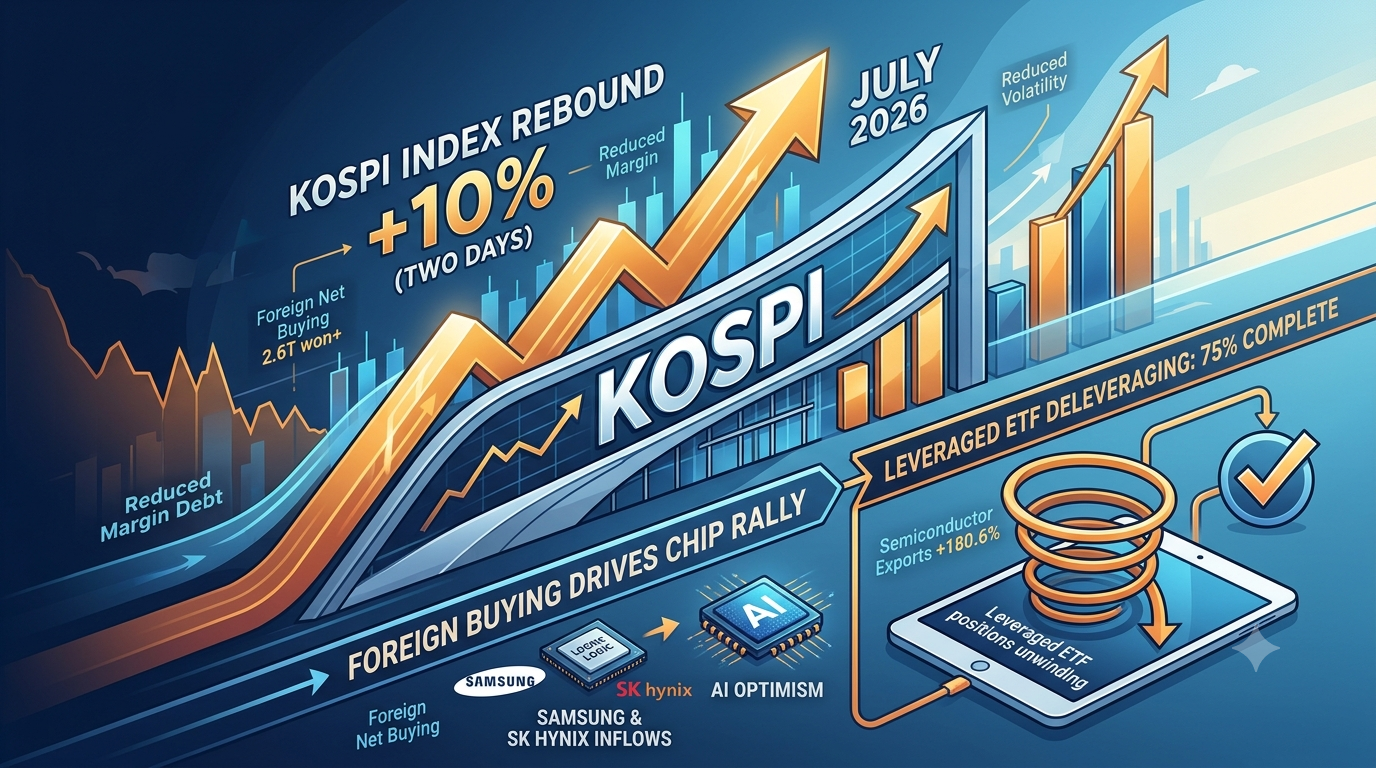
The KOSPI index has staged a dramatic rebound, climbing nearly 10% over two trading days in mid-July 2026. This surge reflects easing pressure from leveraged ETF positions and renewed foreign buying in semiconductor heavyweights Samsung Electronics and SK hynix.
Korean stocks led Asian markets on July 22 as chip stocks rallied on revived AI optimism. The benchmark climbed as much as 6.2% intraday before closing up 0.74% at 6,797.70, following a 3.56% gain the previous day. Foreign investors poured in billions, signaling a potential shift after weeks of outflows.
This recovery highlights the interplay between retail-driven leverage unwinding and institutional capital flows into Korea’s dominant chip sector, which accounts for over half the KOSPI’s market cap.
What Triggered the KOSPI’s Sharp Two-Day Rebound?
The KOSPI’s nearly 10% cumulative gain over July 21–22 stems directly from bargain hunting in semiconductors after a prior rout, amplified by positive U.S. chip momentum.
On July 21, the index rose 3.56% to 6,747.95, led by Samsung Electronics (+6.15%) and SK hynix (+4.08%). July 22 saw intraday highs above 7,000 before profit-taking trimmed gains, yet foreign net buying exceeded 2.6 trillion won.
U.S. peers like Micron and Sandisk surged over 10–14% overnight, boosting sentiment for Korean memory chip leaders tied to AI infrastructure demand.
Leveraged ETF Deleveraging: 75% Complete and Easing Volatility
Deleveraging in single-stock leveraged ETFs has reached approximately 75%, according to Morgan Stanley’s latest report, significantly reducing forced selling pressure on the KOSPI.
These products, launched in late May 2026 and tied primarily to Samsung Electronics and SK hynix, attracted massive retail inflows—over 13 trillion won in weeks—but amplified downside moves during the June–July correction. Assets under management dropped from peaks as retail positions unwound amid volatility.
Korea Financial Investment Association data shows margin debt (financing balances) fell to 33.4 trillion won by July 16, down 13% from late-June highs. This reduction in leveraged exposure has stabilized the market, allowing organic buying to dominate.
Regulators responded with tighter rules, including higher margin requirements, yet the natural deleveraging process has already absorbed much of the prior overhang.
Foreign Investors Return with Record Buying in Chip Stocks
Foreign investors have reversed course, delivering the largest net purchases in nearly two months. They bought over 3.5 trillion won in recent sessions, with heavy flows into electrical/electronics shares totaling 3.18 trillion won across three days.
This marks a sharp turnaround from earlier 2026 net selling of over 148 trillion won in the first half, driven previously by profit-taking and global rebalancing.
Samsung Electronics and SK hynix captured the bulk of inflows, underscoring confidence in Korean chipmakers’ AI exposure despite earlier caution. Cumulative foreign buying over recent sessions exceeded 5 trillion won in some tallies.
Role of Semiconductor Exports and AI Demand Recovery
Strong July export data underpins the rebound. Semiconductor shipments from July 1–20 jumped 180.6% year-over-year, contributing to overall exports rising 52.3%.
Global AI infrastructure spending expectations remain intact ahead of major U.S. tech earnings, supporting memory chip pricing and Korean producers’ margins.
Market Structure and Volatility Lessons from Leveraged Products
Single-stock leveraged ETFs, while intended to retain domestic capital, created feedback loops that exacerbated swings. Turnover reached extreme levels, with sidecars triggered frequently—the 20th buy-side instance in 2026 alone.
The episode demonstrates how concentrated retail leverage in two names (over 50% of index weight) can “wag the dog,” influencing even U.S. semiconductor pricing temporarily.
Government measures, including minimum deposit hikes and marketing curbs, aim to mitigate future risks while preserving market depth.
Conclusion
The KOSPI’s nearly 10% surge over two days in July 2026 demonstrates the market’s resilience as leveraged ETF deleveraging approaches 75% completion and foreign capital returns to core chip holdings. Reduced margin balances, strong semiconductor export figures, and renewed AI optimism have shifted momentum positively after intense volatility.
Samsung Electronics and SK hynix continue to anchor the benchmark, representing both opportunity and concentration risk. While regulatory tightening on leveraged products should dampen extreme swings going forward, global tech earnings and geopolitical factors will dictate the next leg.
Investors should prioritize risk management in this environment. The rebound validates underlying demand for Korean semiconductor leadership in AI, yet sustained gains depend on broader market stabilization and foreign flow consistency. KuCoin users can complement traditional exposure with crypto strategies linked to the evolving tech landscape for balanced participation.
FAQs
What caused the recent high volatility in the KOSPI?
Massive inflows into single-stock leveraged ETFs on Samsung and SK hynix amplified price swings, combined with foreign selling and geopolitical tensions.
How much have foreign investors bought recently?
Foreigners net purchased over 3.5 trillion won in recent sessions, the highest in nearly two months, focused on chip stocks.
Are leveraged ETFs still risky for retail investors?
Yes—products can experience decay and amplified losses in volatile or sideways markets, prompting regulator warnings and restrictions.
Will the KOSPI hold above 7,000?
It depends on U.S. tech earnings outcomes and sustained foreign inflows; recent sessions showed profit-taking pressure near that level.
How do Korean chip stocks relate to global AI trends?
Samsung and SK hynix are key memory suppliers for AI servers, with export surges directly tied to data center and infrastructure demand.