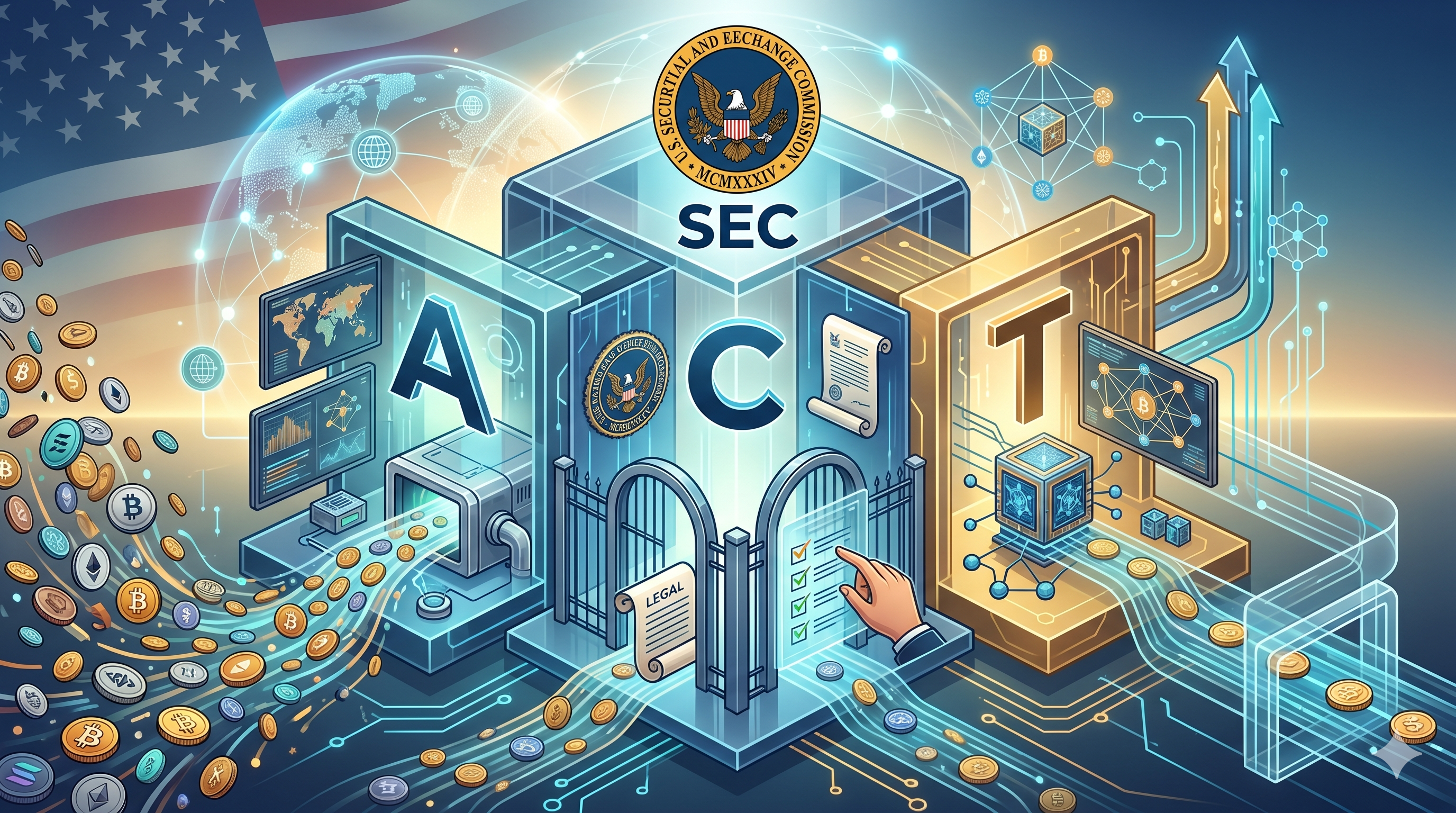
SEC’s A-C-T Strategy: A New Phase for Crypto Regulation
SEC’s A-C-T Strategy: A New Phase for Crypto Regulation
2026/05/03 08:42:22
Thesis Statement
The digital asset ecosystem in the United States is undergoing its most significant transformation since the inception of Bitcoin. For years, the industry was locked in a bitter stalemate with regulators, characterized by high-profile lawsuits and a pervasive regulation-enforcement philosophy. However, the arrival of 2026 has signaled a definitive end to that era.
Under the leadership of SEC Chair Paul Atkins, the agency has formally pivoted to a new operational blueprint known as the A-C-T strategy: Advance, Clarify, and Transform. This framework moves away from the combative litigation of the past and toward a collaborative, rules-based environment designed to bring crypto innovation back to American soil. The SEC’s A-C-T strategy represents a fundamental shift from punitive litigation to proactive guidance, utilizing a new three-pillar framework to provide the long-awaited regulatory clarity necessary for institutional crypto adoption in the United States.
A Bold Departure from the Era of Litigation
For nearly half a decade, the relationship between the SEC and the crypto sector was defined by the Howey Test and a series of aggressive court battles. Market participants often felt they were forced to guess at policy through the lens of individual enforcement actions rather than clear, codified rules. This environment led to a significant brain drain, with many of the industry's most innovative firms moving their operations to offshore jurisdictions like Dubai or Singapore. The introduction of the A-C-T strategy on April 20, 2026, marks a categorical rejection of this approach.
According to recent reports from Bitcoin News, Chair Paul Atkins has publicly committed to trading litigation-first boxing gloves for a sophisticated set of tools intended to help markets function. This shift is not merely a change in tone but a structural overhaul of how the SEC interacts with emerging technologies. By prioritizing a compliance-first mentality, the agency is signaling to the global market that the United States is once again open for digital asset business, provided firms are willing to meet the new, clearly defined standards of the A-C-T framework.
Advancing Innovation Through Technological Literacy
The first pillar of the new strategy, Advance, focuses on modernizing the SEC’s internal understanding of blockchain technology. Historically, the agency was criticized for viewing decentralized protocols through the same lens as centralized 1930s-era stock exchanges. This lack of nuance often resulted in one-size-fits-all enforcement that stifled technical progress. Under the Advance mandate, the SEC has established Project Crypto, an initiative designed to integrate technical experts directly into the policymaking process.
As noted by Proskauer, the agency is now hosting regular lunch-and-learn sessions and technical roundtables to ensure that staffers understand the difference between a custodial exchange and a decentralized liquidity pool. This pillar aims to ensure that the SEC’s default setting is no longer to fend off new technologies but to understand them deeply enough to regulate them effectively. By advancing its own literacy, the SEC is reducing the risk of accidental regulation that inadvertently bans harmless technical innovations while failing to stop actual fraud.
Clarifying the Great Token Taxonomy Debate
Perhaps the most impactful component of the A-C-T strategy is the Clarify pillar. For years, the industry’s biggest question was, Is it a security or a commodity? On March 17, 2026, the SEC issued a landmark interpretive release in coordination with the CFTC to provide a definitive answer. As detailed by Dentons, the agencies have established a coherent five-category taxonomy for digital assets. These categories include digital commodities, digital collectibles (NFTs), utility tokens, payment stablecoins, and digital securities.
By providing these clear buckets, the SEC has removed the existential dread that once hung over every new token launch. Developers now have a roadmap to follow: if their token functions as a tool for a specific network and its value is driven by decentralized supply and demand rather than a central team's entrepreneurial efforts, it is classified as a digital commodity. This clarity is a direct response to years of requests for rules of the road that allow businesses to build without a constant fear of retroactive subpoenas.
Transforming the Broker-Dealer Ecosystem
The Transform pillar of the strategy aims to update the very infrastructure of the U.S. financial system. This involves redefining how traditional market participants, such as broker-dealers, interact with digital assets. On April 13, 2026, the SEC’s Division of Trading and Markets issued a revolutionary statement regarding Covered User Interfaces. According to Sidley, the SEC now allows certain technology providers to operate crypto interfaces without registering as full broker-dealers, provided they do not exercise control or discretion over the transactions.
This is a massive win for decentralized finance (DeFi) developers who provide the front-end software that users use to access on-chain liquidity. By transforming these definitions, the SEC is creating a middle ground that allows for innovation in user experience while still maintaining guardrails against the predatory practices of the past. This transformation is essential for bridging the gap between the Wild West of early crypto and the highly regulated world of traditional finance.
Moving Past the Shadow of Debt Box
The new A-C-T strategy is also a necessary response to past failures that damaged the SEC’s credibility. The 2024 DEBT Box case serves as a cautionary tale of what happens when enforcement goes too far. In that instance, a court found that the SEC made false and misleading representations to obtain a temporary restraining order against a crypto firm. As highlighted by the Club for Growth, this bureaucratic abuse was a profound embarrassment for the agency.
The A-C-T strategy is designed to prevent such overreach by ensuring that every enforcement action is rooted in clear, pre-existing rules rather than "invented" legal theories. Chair Atkins has emphasized that the agency's goal is to punish real bad actors, those committing fraud and theft, rather than targeting lawful businesses that are simply trying to navigate a complex landscape. This move back to a due process model is intended to restore faith in the SEC as a fair and predictable arbiter of the markets.
Harmonizing with the CFTC for Market Unity
One of the most frequent complaints from crypto firms was the turf war between the SEC and the Commodity Futures Trading Commission (CFTC). Companies often felt caught in the middle of two agencies vying for jurisdiction. A key victory of the A-C-T era is the March 11, 2026, Memorandum of Understanding (MOU) between the two agencies. As reported by Latham & Watkins, this agreement commits both regulators to clarify, coordinate, and harmonize their policies.
This means that if the SEC designates an asset as a digital commodity, the CFTC takes the lead on oversight without the SEC later claiming it was a security all along. This unified front provides a level of certainty that was previously impossible. It also streamlines the registration process for hybrid platforms that may deal in both securities and commodities, allowing them to operate under a single, cohesive regulatory umbrella rather than being pulled in two different directions.
The End of Investment Contract Limbo
A breakthrough in the Clarify pillar is the formal recognition that a token's status can change over time. Historically, the SEC argued that if a token was sold as a security once, it was a security forever. The new 2026 interpretive guidance changes this. According to the SEC's own official release, the agency now acknowledges that investment contracts can come to an end. A token might be a security during its initial fundraising phase when investors are relying on a central team to build a network. However, once that network is fully functional and decentralized, the token can shed its security status and become a Digital Commodity.
This concept of a pathway to decentralization provides a clear exit ramp for projects that want to become truly public protocols. It allows for the capital raising necessary to build complex technology while ensuring that the end product can be traded freely without the heavy requirements of securities laws once it is mature.
Protecting Investors from Real Harm
While the A-C-T strategy is significantly more industry-friendly, it does not mean the SEC is going soft on crime. In fact, the "Clarify" pillar makes it easier for the agency to pursue actual fraud. By defining what is legal, the SEC can more effectively isolate and prosecute what is illegal. Current trends in 2026 show a focus on clear violations, such as market manipulation, Ponzi schemes, and the misuse of customer funds.
As noted by KuCoin’s policy analysis, the SEC is no longer using its resources to chase down every meme coin or small-scale airdrop. Instead, it is focusing on high-impact enforcement that protects retail investors from being rugged by dishonest actors. This surgical approach to enforcement is more efficient and more effective at maintaining market integrity than the previous carpet-bombing approach, which often hit legitimate startups harder than the actual scammers.
Encouraging Institutional Participation in Tokenized Assets
The Transform pillar is also opening the floodgates for the tokenization of traditional assets. Major financial institutions are now looking at the SEC’s taxonomy and seeing a clear path to putting stocks, bonds, and real estate on the blockchain. In January 2026, the SEC stated that tokenized securities provide a framework for how these digital representations of traditional assets must be handled. This has led to the launch of several pilot programs where major exchanges are testing the issuance of digital equity.
This isn't just about crypto; it's about the modernization of all finance. By providing a safe, regulated way to use blockchain for settlement and record-keeping, the SEC is helping the U.S. maintain its lead in global capital markets. The A-C-T strategy ensures that as the world moves toward 24/7, programmable finance, the American regulatory system remains relevant and supportive of that evolution.
Navigating the Non-Custodial Interface Safe Harbor
The recent April 2026 statement on Covered User Interfaces is a specific victory for the Transform pillar's goal of fostering technological growth. For the first time, the SEC has explicitly stated that simply providing a website or a browser extension that helps a user interact with a blockchain does not automatically make the provider a broker-dealer. This safe harbor applies to interfaces that are non-custodial and do not execute trades themselves. As explained by JD Supra, this preserves the technology layer of the crypto ecosystem.
It allows developers to create innovative tools for viewing data and formulating transactions without being burdened by the millions of dollars in compliance costs required for a broker-dealer license. This distinction between the tools and the trade is a critical nuance that was missing from previous regulatory discussions and is a direct result of the A-C-T strategy’s commitment to technical literacy.
Addressing the Growing Role of Stablecoins
Stablecoins have long been a point of contention, but the A-C-T strategy has finally brought them into the fold. By classifying certain dollar-backed stablecoins as payment stablecoins rather than securities, the SEC has cleared the way for their use in everyday commerce. This alignment with the 2025 GENIUS Act (Guiding and Establishing National Innovation for U.S. Stablecoins Act) ensures that the SEC isn't working at cross-purposes with Congress.
As noted by Sidley, the SEC’s new stance allows for a predictable regime where issuers can comply with specific reserve and transparency requirements without being treated like mutual funds. This has already led to increased adoption of stablecoins for cross-border payments and as a reliable on-ramp for the broader digital economy. By providing this clarity, the SEC is supporting the role of the U.S. dollar in the digital age, ensuring that dollar-pegged assets remain the global standard for stability.
Fostering a New Era of Public-Private Dialogue
The final hallmark of the A-C-T strategy is the shift in how the SEC talks to the public. Under previous leadership, communication was often limited to press releases announcing lawsuits. Today, the SEC is actively seeking feedback. The April 13 statement on user interfaces is an interim step that includes a five-year sunset clause, explicitly designed to be modified based on public input. Commissioner Hester Peirce, long a proponent of crypto clarity, has welcomed this more permanent regulatory approach but continues to push the agency to listen even more closely to innovators.
This dialogue-first approach, as highlighted by KuCoin, is transforming the SEC from a distant, feared entity into a collaborator in market safety. This culture change is perhaps the most important part of the Transform pillar, as it ensures that regulation can evolve at the same speed as the technology it oversees.
Looking Ahead to the Next Phase of Growth
As we move through the second quarter of 2026, the success of the A-C-T strategy will be measured by the return of capital and talent to the United States. Early signs are promising. Large-scale tokenization projects that were previously on hold are now moving forward, and DeFi developers are beginning to feel comfortable launching new products on U.S.-based servers. The Advance, Clarify, and Transform framework has provided the foundational stability that the market has craved for a decade.
While challenges remain, particularly regarding the final passage of comprehensive crypto legislation in the Senate, the SEC has done its part to move the needle. By choosing cooperation over confrontation, the agency is not just regulating a new industry; it is helping to build it. The A-C-T strategy isn't just a new phase for crypto regulation; it's a new chapter for the American economy.
FAQs
What does the A-C-T strategy actually stand for?
The A-C-T strategy is the SEC's new framework for 2026, standing for Advance, Clarify, and Transform. Advance refers to modernizing the agency's technological expertise and literacy regarding blockchain.
Clarification involves providing clear, written guidance and a taxonomy to distinguish between securities and commodities. Transform focuses on updating existing financial definitions and infrastructure to accommodate digital assets and decentralized technologies fairly.
Is every cryptocurrency still considered a security by the SEC?
No, the SEC’s 2026 interpretive release explicitly clarifies that many digital assets are not securities. Under the new taxonomy, assets can be classified as digital commodities, digital collectibles, or digital tools.
The agency now acknowledges that even if an asset was initially sold as part of an investment contract, it can transition into a non-security commodity once the underlying network is sufficiently decentralized or the issuer's commitments are met.
How does the A-C-T strategy affect decentralized finance (DeFi) developers?
DeFi developers benefit from the Transform pillar, specifically the recent safe harbor for Covered User Interfaces. This guidance suggests that if a developer provides a non-custodial software interface that allows users to interact with blockchains without the developer exercising control over funds or trade execution, they generally do not need to register as a broker-dealer. This provides a much-needed legal buffer for creators of decentralized front-ends.
Are stablecoins now regulated under this new SEC strategy?
Yes, stablecoins have been integrated into the A-C-T framework. Most dollar-backed stablecoins that follow specific reserve and transparency rules are now categorized as payment stablecoins rather than securities.
This change aligns the SEC with recent Congressional acts and allows stablecoins to function as a medium of exchange and a bridge between traditional and digital finance without the burden of being treated as investment products.
Will the SEC stop suing crypto companies entirely under Paul Atkins?
The SEC has not stopped enforcement, but the focus has changed. Instead of regulation by enforcement, where lawsuits were used to set new policy, the agency is now using enforcement to punish clear cases of fraud, theft, and market manipulation. The goal is to protect investors from actual harm rather than penalizing companies for navigating previously vague or unwritten rules. Enforcement is now a tool for maintaining a clean market rather than a way to define it.
What is the pathway to decentralization mentioned in the new guidance?
The pathway to decentralization is a formal process recognized by the SEC in 2026. It allows a project to start as a regulated security offering to raise capital for development. Once the project achieves a certain level of technical maturity where the network is no longer dependent on a central group for its value, the SEC provides a framework for the token to be re-classified as a digital commodity, allowing it to trade on more diverse platforms.
Disclaimer: This content is for informational purposes only and does not constitute investment advice. Cryptocurrency investments carry risk. Please do your own research (DYOR).