

Are NFTs Still a Thing? An In-Depth Analysis of Market Evolution and Utility
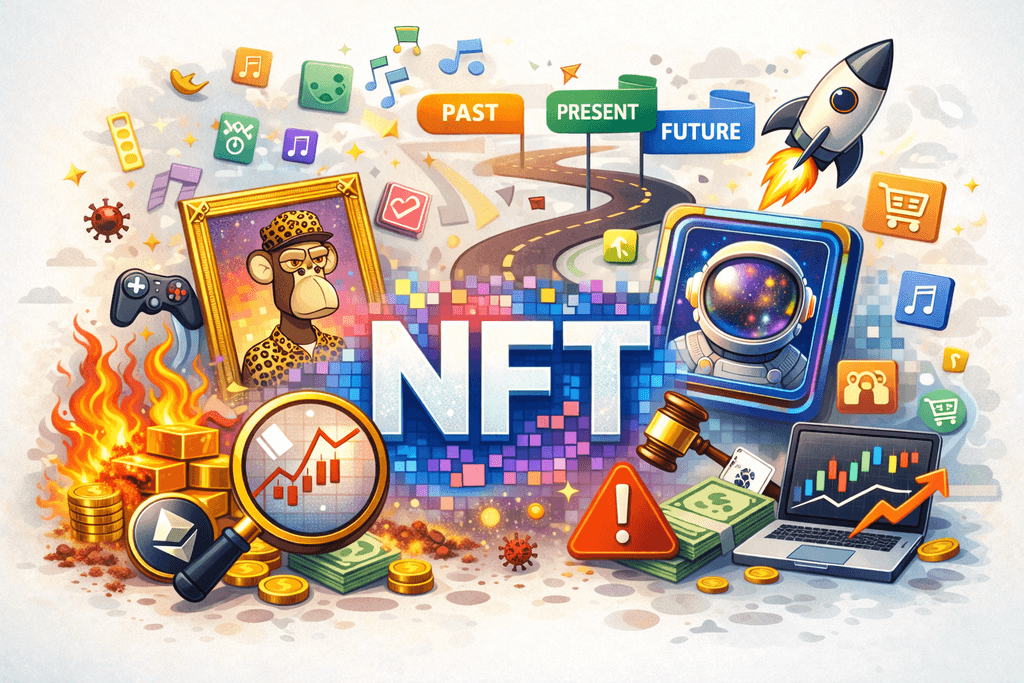
The question "Are NFTs still a thing?" frequently surfaces in financial discussions, often accompanied by skepticism following the explosive bubble of the early 2020s. However, as of early 2026, the answer is not a simple "yes" or "no," but rather a complex "how." While the era of speculative digital art sold for millions has largely faded, the underlying technology of Non-Fungible Tokens (NFTs) has matured into a functional pillar of the digital economy.
The market has shifted from a "hype cycle" driven by retail speculation to a "utility cycle" led by institutional integration and real-world applications. In 2026, the focus moved away from static images toward dynamic, programmable assets that solve problems in identity, ownership, and finance.
Key Takeaways
-
Market Recovery: In early 2026, the NFT market capitalization increased by over $220 million in a single week, signaling a rebound driven by existing capital and high-utility projects.
-
Shift to Utility: Over 38% of NFT transaction volume in 2026 is commanded by Gaming NFTs, while Real-World Asset (RWA) tokenization has reached a valuation of approximately $1.4 billion.
-
Institutional Adoption: Major financial institutions and luxury brands are utilizing NFTs for fraud prevention, supply chain transparency, and membership loyalty programs.
-
New Tech Frontiers: The integration of Artificial Intelligence (AI) and cross-chain interoperability is making NFTs more functional and accessible across different blockchain networks.
What Are NFTs?
At their core, NFTs are unique digital identifiers recorded on a blockchain. Unlike cryptocurrencies such as Bitcoin (BTC), which are fungible (one BTC is identical to another), each NFT is distinct and cannot be replaced with something else. This uniqueness allows them to act as digital certificates of ownership for both virtual and physical items.
How Do NFTs Work?
NFTs function through Smart Contracts—self-executing code on a blockchain that manages the transfer and verification of ownership. When an NFT is minted, metadata containing information about the asset (such as its origin, rarity, or legal rights) is permanently stored on the ledger. This ensures a transparent, tamper-proof history of every transaction.
Are NFTs Dead or Still a Thing Today?
Contrary to the "NFTs are dead" narrative, 2026 data shows a significant, albeit more disciplined, market. The global NFT industry valuation is projected to reach $60.82 billion by the end of 2026. However, the nature of "what is a thing" has changed.
The speculative "floor price" of generic profile picture (PFP) collections has largely stabilized or declined, while "Golden Shovel" NFTs—those that provide financial benefits like Airdrop eligibility or yield—now see the highest liquidity. The market is no longer a monolith; it has bifurcated into high-value cultural artifacts and functional digital tools.
Why the NFT Hype Declined
The decline of the initial hype was a necessary market correction. Several factors contributed to the "Great Reset":
-
Saturation and Low Quality: An influx of low-effort projects overwhelmed the market, leading to a collapse in demand for assets without clear value.
-
Liquidity Issues: NFTs are inherently illiquid compared to fungible tokens. During market downturns, finding a buyer for a unique asset becomes significantly harder.
-
Regulatory Scrutiny: Increased oversight by global regulators required projects to move away from purely speculative models toward compliant frameworks.
-
The "Small Image" Logic Failure: Investors realized that ownership of a JPEG image did not equate to long-term value unless backed by intellectual property (IP) or tangible benefits.
Contemporary Applications of NFTs
In 2026, the most successful NFTs are those integrated into broader industries.
Gaming and the Metaverse
Gaming represents the largest sector of NFT adoption, capturing 38% of the total volume. Players now use NFTs to own in-game assets—such as characters, skins, or virtual land—which can be traded across different games, supporting a "play-and-own" economy rather than the volatile "play-to-earn" models of the past.
Real-World Asset (RWA) Tokenization
The integration of physical goods with blockchain is a breakout trend. Real-World Assets (RWAs) like real estate deeds, luxury watches, and fine art are being tokenized as NFTs. This allows for Fractional Ownership, where an investor can buy a small percentage of a high-value asset, such as a commercial property or a rare collectible, enhancing market liquidity.
Identity and Ticketing
Digital Identity (DID) systems are utilizing NFTs to store secure credentials, such as graduation certificates or passports. In the entertainment industry, NFT-based ticketing has captured over 5% of sales in major venues, virtually eliminating ticket fraud and allowing artists to capture a percentage of secondary market resales.
How NFTs Are Evolving in 2026
Technological advancements are refining how we interact with NFTs.
-
AI Integration: AI-powered NFTs are now capable of evolving based on user interaction. AI algorithms also assist in fraud detection and the curation of personalized NFT feeds.
-
Cross-Chain Interoperability: Users are no longer restricted to a single blockchain. Markets now support seamless movement of assets between Ethereum (ETH), Solana (SOL), and various Layer-2 solutions.
-
Sustainable Practices: The shift to Proof of Stake (PoS) and carbon-credit NFTs has addressed environmental concerns, making the technology more acceptable for corporate sustainability initiatives.
Conclusion
The NFT market has successfully transitioned from a period of irrational exuberance to a phase of strategic utility. While the days of overnight "ape" fortunes are mostly gone, technology has found its "forever home" in gaming, finance, and identity. For the modern investor, the question is no longer whether NFTs are still a thing, but which specific applications offer the most robust long-term value in an increasingly tokenized world.
Start your crypto journey in minutes by creating a secure KuCoin account with no initial deposit required. Sign Up Now!
FAQ
Why did my NFTs lose so much value?
Most early NFTs were valued based on social hype rather than fundamental utility. As the market matured, capital flowed away from speculative art toward projects with sustainable revenue models, intellectual property, or functional use cases.
Is it still worth investing in NFTs in 2026?
Investment in 2026 requires a focus on E-E-A-T principles. High-utility NFTs, such as those used in gaming ecosystems with active players or those representing fractional shares of real-world assets (RWAs), are generally considered to have better risk-adjusted potential than purely aesthetic collections.
What are "Golden Shovel" NFTs?
"Golden Shovel" is a market term for NFTs that act as financial credentials. Holding these tokens often grants the user early access to new projects, whitelist spots, or eligibility for token airdrops, providing tangible financial value beyond the art itself.
How can I verify if an NFT is authentic?
Authentication is handled by blockchain. By checking the smart contract address and the token's provenance (history of ownership) on a block explorer like Etherscan, you can verify that an NFT was minted by the official creator and has not been tampered with.
Are there environmental concerns with NFTs in 2026?
Environmental concerns have significantly diminished. Most major NFT activity has migrated to energy-efficient Proof of Stake (PoS) networks or Layer-2 scaling solutions, which use a fraction of the electricity required by older Proof of Work (PoW) systems.
Further reading
Disclaimer: The information on this page may have been obtained from third parties and does not necessarily reflect the views or opinions of KuCoin. This content is provided for general informational purposes only, without any representation or warranty of any kind, nor shall it be construed as financial or investment advice. KuCoin shall not be liable for any errors or omissions, or for any outcomes resulting from the use of this information. Investments in digital assets can be risky. Please carefully evaluate the risks of a product and your risk tolerance based on your own financial circumstances. For more information, please refer to our Terms of Use and Risk Disclosure.