

KuCoin Cross Margin Tutorial: Understanding Margin, Leverage, and Risk Management
When you start trading crypto futures or margin pairs, one of the first concepts you’ll encounter is margin. Understanding what margin is — and how it works in KuCoin Cross Margin Mode — can make the difference between efficient trading and unnecessary losses.
This guide will explain what margin means, how cross margin differs from isolated margin, and how you can use KuCoin Cross Margin to optimize your capital across multiple positions.
What Is Margin?
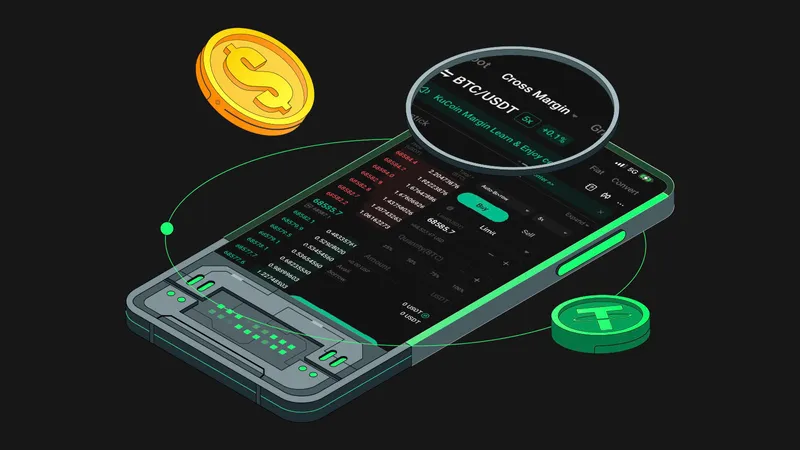
In trading, margin is the amount of funds a trader must deposit to open a leveraged position. It acts as collateral for the borrowed funds used in the trade. Essentially, margin allows traders to control positions larger than their actual account balance.
For example, if you open a BTC/USDT long position with 5× leverage, you only need to commit 20% of the position value as margin. If the trade moves in your favor, profits are amplified — but losses are also magnified if the price moves against you.
Margin trading comes with risk, but it also provides flexibility and efficiency when managed properly.
KuCoin Margin Trading Overview
KuCoin offers two main types of margin trading modes:
Isolated Margin Mode – Each position is independent. The margin for that specific position is fixed and not affected by other trades.
Cross Margin Mode – All positions share the same account balance as margin, which helps you maximize capital usage and reduce the risk of forced liquidation on a single position.
If you’re new to margin trading, KuCoin provides a detailed breakdown and step-by-step guide in its KuCoin Cross Margin Mode FAQ.
What Is KuCoin Cross Margin Mode?
KuCoin Cross Margin Mode allows all positions within the same margin account to share a common margin balance. This means your unrealized profits and remaining account balance can be used to support all open positions.
If one trade is at a loss, your other profitable trades or remaining balance can automatically help prevent liquidation. This system is designed to increase capital efficiency and stabilize your overall portfolio.
Here’s how it works:
-
Shared Margin Pool: All positions with the same settlement currency (e.g., USDT) use the same available balance as margin.
-
Dynamic Margin Usage: Profits from one position can increase the available margin for others.
-
Risk Distribution: Losses are spread across the account instead of being confined to a single position.
KuCoin Cross Margin Example
Let’s take a simple example:
You have 1,000 USDT in your KuCoin cross margin account and you open a BTC/USDT long position at 50,000 USDT with 25× leverage.
Your initial margin would be:
1000 × 25 = 25000 USDT
If your trade gains 200 USDT, your total margin increases to 1,200 USDT. You can now use that extra margin to open additional positions without closing your current one.
On the other hand, if your position loses 200 USDT, your total balance decreases to 800 USDT. Your other trades will automatically share this reduced margin, meaning all open positions are affected by the loss — that’s the trade-off for higher flexibility.
Cross Margin vs. Isolated Margin
Source:CoinMarketCap
| Feature | Cross Margin | Isolated Margin |
| Margin Pool | Shared across all positions | Separate for each position |
| Capital Efficiency | High | Lower |
| Risk Level | Shared across positions | Confined to individual trades |
| Ideal For | Experienced traders who manage multiple positions | Beginners who prefer limited risk exposure |
Both modes have their advantages. Beginners might prefer isolated margin for its simplicity and limited downside, while experienced traders use cross margin for optimized fund allocation and lower liquidation risk when managing multiple trades.
Benefits of Using KuCoin Cross Margin
Maximized Capital Efficiency All your available funds work together to support open positions. You don’t need to constantly transfer margin between positions.
Reduced Liquidation Risk If one trade starts to lose value, the system automatically uses your available balance or unrealized profits from other trades to support the margin.
Seamless Multi-Position Management Cross margin simplifies the process for traders who handle multiple leveraged positions in the same account.
Integrated KuCoin Platform Experience KuCoin offers a smooth interface and deep liquidity, making it easy to manage and monitor your cross margin trades through the KuCoin Cross Margin Trade Page.
Risks and Best Practices
While KuCoin Cross Margin Mode enhances flexibility, it also increases exposure. Because your entire account balance supports all positions, a sharp loss on one trade can affect all other positions.
Here are a few tips to trade responsibly:
-
Monitor total margin levels regularly.
-
Avoid overleveraging even when margin seems abundant.
-
Use stop-loss orders to protect your balance from large market swings.
-
Stay informed — market volatility can quickly change your margin ratio.
Getting Started with KuCoin Cross Margin
If you’re ready to try KuCoin Cross Margin trading, start small and familiarize yourself with how funds move across your positions.
Visit the KuCoin Cross Margin Trade Page.
Choose your preferred trading pair (e.g., BTC/USDT).
Select Cross Margin Mode before placing your order.
Adjust leverage according to your risk tolerance.
KuCoin also provides comprehensive learning materials and tutorials in its Cross Margin FAQ Section to help you understand the mechanics, formulas, and risk calculations involved.
Conclusion
Understanding what margin is — and how KuCoin Cross Margin works — is essential for traders looking to grow their portfolios strategically.
Cross Margin Mode offers flexibility, efficiency, and risk-sharing advantages, especially for experienced traders managing multiple open positions. However, it also requires careful monitoring and disciplined risk control.
By leveraging KuCoin’s robust platform, transparent margin system, and user-friendly interface, traders can fully harness the benefits of KuCoin Cross Margin while keeping risk under control.