

Bitcoin Las Vegas 2026 Preview: In‑Depth Analysis of the Industry Conference
Introduction
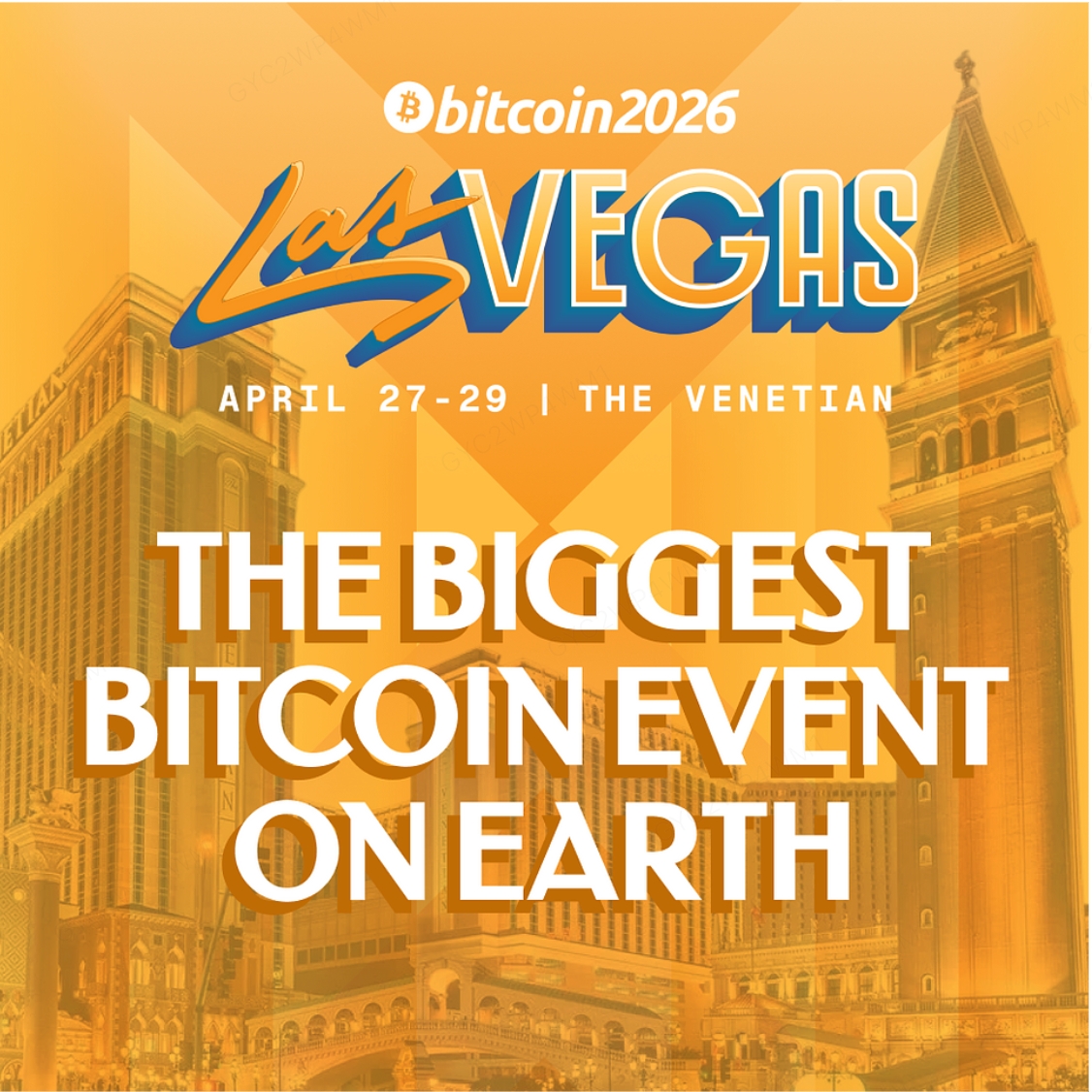
Bitcoin Las Vegas 2026 is shaping up to be one of the most consequential gatherings in the digital asset space this decade. As Bitcoin continues to integrate with old finance, attract institutional capital, and evolve technologically, this conference represents a real crossroads for the industry’s next phase.
Unlike earlier years when enthusiasm alone drove attendance, this year’s event carries weight from macroeconomic shifts, regulatory pressures, and measurable adoption signals. Institutional participation is no longer speculative, it is data‑driven. On‑chain metrics and market behavior suggest a deepening maturity in how Bitcoin is valued, traded, and integrated.
This preview explores the layers of Bitcoin Las Vegas 2026 from multiple angles, trends, technology, regulation, institutional dynamics, and investor implications. Our aim is to provide a comprehensive, actionable, and insightful look ahead.
Overview of Bitcoin Las Vegas 2026: What to Expect
Bitcoin Las Vegas 2026 is positioned as a focal point for global crypto dialogue, bringing together founders, institutional allocators, policymakers, technologists, and influential voices from across the ecosystem.
Historically, this conference has served as a bellwether for investor sentiment and market trends. In 2026, Bitcoin’s role has expanded beyond a digital asset to an emerging macro instrument, increasingly influenced by global policy, capital market behavior, and new layers of financial infrastructure.
Attendance numbers are expected to surpass previous editions as financial institutions view this as a forum for strategic repositioning rather than social networking. According to pre‑event estimates and industry speculation, attendance could exceed 30,000 global participants, including priority representation from hedge funds, family offices, and sovereign wealth offices.
Key Themes and Trends Shaping the Conference
Multiple narratives are converging at Bitcoin Las Vegas 2026:
Institutional Demand and Capital Flows
ETF inflows and institutional custody solutions continue to be primary drivers. Exchange‑traded products have collectively absorbed significant volumes of BTC, a trend that correlates with market stabilization and deeper liquidity pools. A report from CoinMarketCap shows Bitcoin ETFs have seen tens of billions in cumulative inflows since launch.
Regulatory Navigation
With uneven global regulation, one key theme is how companies maintain compliance while fostering innovation. Crypto firms must constantly monitor shifting policies across jurisdictions, from clear frameworks in countries like Switzerland and Singapore to restrictive environments in other regions. Navigating this patchwork of rules requires sophisticated legal teams, proactive engagement with regulators, and adaptable operational strategies.
At Bitcoin Las Vegas 2026, panels will likely examine how companies balance compliance obligations with the need to innovate, such as launching new financial products or exploring decentralized finance applications. Effective regulatory navigation not only mitigates legal risks but also builds institutional confidence, attracting long-term capital to the market.
Technological Progress
Adoption of Layer‑2 scaling solutions and advancements in cryptographic protocols points to an industry that is building, not just speculating.
These themes set the stage for discussions that go beyond price and hype, toward structure and sustainability.
Major Speakers and Thought Leaders to Watch
Bitcoin Las Vegas has curated a lineup that reflects the intersection of technology, finance, and policy. The roster includes:
-
Established blockchain founders
-
Leading economists
-
Heads of institutional trading desks
-
Regulators and compliance experts
Speakers expected to provide macro insights include analysts from leading financial institutions who analyze Bitcoin’s correlation with traditional markets, as well as executives from global exchanges.
Policy panels are anticipated to feature regulators exploring how frameworks like the CLARITY Act may impact institutional participation, a conversation documented as actively evolving in major financial news outlets such as Reuters
These voices add depth and credibility, turning the conference into more than a networking event, it becomes a forum for informed, forward‑looking industry strategy.
The Role of Institutional Investors in 2026
Institutional capital has fundamentally reshaped the market dynamic.
ETFs as a Gateway
Bitcoin exchange‑traded products have significantly altered both liquidity and sentiment. Based on reports regarding U.S. spot Bitcoin ETFs, cumulative total net inflows have indeed surpassed the $50 billion milestone, with some data sources, such as CoinGlass, indicating total net inflows reached over $56 billion as of late March 2026.
Custody & Risk Frameworks
Custody solutions built for institutional standards are enabling larger allocations. This is not purely retail speculation, it reflects investment frameworks similar to commodities and fixed income.
The participation of institutional allocators does more than add large orders; it forces risk protocols, compliance frameworks, and operational processes that elevates the industry’s sophistication.
At Bitcoin Las Vegas, panels will examine not just capital flows, but how capital allocators assess:
-
Custodial risk
-
Liquidity conditions
-
Regulatory uncertainty
-
Macro correlations
This depth provides a rare look into professional capital behavior rather than retail sentiment.
Emerging Bitcoin Technologies: Layer‑2, Taproot, and Beyond
Bitcoin’s base layer remains intentionally minimalist, designed for security over complexity. However, the ecosystem of extension technologies is expanding.
Layer‑2 Scaling
Solutions like the Lightning Network continue to improve throughput and reduce transaction costs. While still maturing, Layer‑2 adoption has steadily grown as measured by capacity and routed volume increases.
Taproot & Smart Contract Capabilities
Taproot upgrades have enabled more sophisticated scripts, enhancing privacy and flexibility. Developers are now building approaches that bring controlled programmability to Bitcoin without compromising the core protocol.
Additionally, research into concepts like bitVM and optimized script execution reflects a community that is seeking scalable programmability while preserving the fundamental architecture of Bitcoin.
Conference sessions addressing these topics will explore the real‑world implications of Bitcoin expanding from a pure store of value into a foundation for broader financial activity.
Regulatory Developments and Their Impact on the Industry
Regulation is no longer an abstract backdrop, it is a shaping force.
In the United States, regulatory frameworks remain a topic of contention. Reuters reported that stalled crypto legislation has already caused major financial institutions to adjust their outlooks and risk models, a reflection of how deeply policy uncertainty can impact market projections
Globally, the regulatory landscape varies dramatically:
-
Some jurisdictions have adopted progressive frameworks
-
Others restrict certain crypto activities
-
Multinational firms must navigate overlapping requirements
Market participants will be watching panels that explore:
-
Compliance pathways for institutions
-
International coordination on digital asset policy
-
Consumer protection vs. innovation balance
These discussions are no longer theoretical, they influence capital allocation, product design, and operational risk.
Market Sentiment: Retail vs. Professional Investor Perspectives
Sentiment in 2026 is not uniform.
Retail Signals
Metrics such as trading volume and social engagement have rebounded across exchanges. According to CoinGecko, trading volumes in 2025 climbed compared to the prior year, with retail participation showing steady growth in global markets.
Retail behavior tends to be more reactive, sensitive to price swings and narrative shifts.
Professional Traders & Funds
By contrast, professional allocators focus on liquidity, risk management, and macro signals. They employ metrics such as:
-
Funding rates
-
Derivatives positioning
-
Institutional flows
The difference between these cohorts reflects a market that is no longer unified by a single narrative, it is being shaped by meaningful capital allocation decisions.
Bitcoin Las Vegas panels are expected to highlight these distinctions, offering richer insight into how different investor segments are interpreting the market.
Spotlight on Crypto Exchanges: KuCoin and Global Competitors
Centralized exchanges (CEXs) remain the backbone of market access for most participants. Despite the rise of decentralized alternatives, leading CEXs still control the majority of trading volume.
According to TokenInsight, centralized exchanges accounted for over 70% of total global crypto trading volume in 2025, underscoring their continued importance, and maintaining a 91.67% average market share of total global trading volume (combined spot and derivatives). While decentralized exchanges (DEXs) saw significant growth, particularly in on-chain derivatives, the market remained heavily CEX-led throughout the year.
Within this competitive environment:
-
KuCoin is known for broad token listings
-
Other major players emphasize liquidity, futures options, or institutional services
KuCoin’s global positioning strategy includes:
-
Expansion into emerging markets
-
Broad product offerings
-
Strong community engagement
Comparing exchange strategies provides valuable context for where the industry is heading, and how user expectations are shaping platform evolution.
DeFi Innovations and Their Conference Presence
Decentralized finance (DeFi) has historically been associated with smart contract platforms beyond Bitcoin. However, recent developments have seen concepts that bridge Bitcoin with DeFi‑style applications.
While Bitcoin’s base layer does not natively support complex smart contracts, solutions that leverage sidechains or interoperability models are emerging. These approaches aim to bring:
-
Lending and borrowing facilities
-
Liquidity markets
-
Yield protocols
Conference workshops will explore how Bitcoin can interface with DeFi primitives, and how these integrations could influence liquidity and utility.
Security, Compliance, and Best Practices for Traders
Security remains a core concern as market participation grows.
Exchange incidents in prior years have heightened awareness of:
-
Custody vulnerabilities
-
Smart contract exploits
-
Account takeover risks
Best practices for traders and investors include:
-
Multi‑factor authentication
-
Hardware wallet usage for long‑term holdings
-
Risk assessment before using leverage
Conference sessions will provide operational insight, featuring panels from cybersecurity experts and compliance officers who will discuss industry standards, threat models, and institutional‑grade safeguards.
NFT and Metaverse Integration in Bitcoin Ecosystem
Bitcoin’s cultural and technological sphere has expanded beyond payment and store‑of‑value narratives. Non‑fungible tokens (NFTs) and metaverse integration have grown into broader cross‑chain ecosystems.
While most NFT activity resides on other chains, initiatives that anchor Bitcoin utility, including portable digital identity, cross‑chain collectibles, and credential verification, are emerging.
Speakers at Bitcoin Las Vegas will explore how Bitcoin can influence digital ownership models and interoperability, not as a direct NFT factory but as a foundational value layer for cross‑protocol ecosystems.
Networking Opportunities and Strategic Partnerships
One of the most tangible values of industry conferences is the connection economy.
At Bitcoin Las Vegas 2026, participants can expect:
-
Dedicated networking lounges
-
Institutional roundtables
-
Startup pitch sessions
-
Collaborative workshops
These spaces often drive partnerships that catalyze new products, integrations, and global initiatives. For founders and capital allocators alike, this event is a rare chance to align strategies in person.
Workshops, Panels, and Hands‑On Learning Sessions
Bitcoin Las Vegas 2026 is not just a series of speeches, it features densely structured educational tracks.
Topics include:
-
Bitcoin infrastructure development
-
Institutional trading strategies
-
Regulatory compliance frameworks
-
Security operations
Hands-on sessions led by technologists and regulatory experts help bridge the knowledge gap between theoretical understanding and practical application.
How Bitcoin Las Vegas 2026 Shapes the Future of Crypto Adoption
Bitcoin Las Vegas is a signal event, not only for Bitcoin, but for the broader direction of digital assets.
The collective insights from capital allocators, technologists, and policymakers will set strategic direction for:
-
Institutional frameworks
-
Technology adoption paths
-
Regulatory engagement
-
Market behavior
When large allocators make allocation decisions or institutional platforms integrate new product lines, these effects ripple across global markets.
This event is where the macro meets the micro, and where direction is set for the next annual cycle.
Key Takeaways and Actionable Insights for Investors
Bitcoin Las Vegas 2026 offers multiple actionable insights:
-
Institutional capital remains a critical driver of long‑term valuation
-
Regulatory clarity is central to structural growth
-
Emerging technology suggests Bitcoin’s utility is expanding
-
Market behavior is not monolithic, retail and professional cohorts behave differently
-
Exchanges and derivative products are evolving to meet more sophisticated needs
Investors who understand these dynamics, beyond price movements alone, are positioned to navigate the next phase of growth more strategically.
Conclusion
Bitcoin Las Vegas 2026 is more than a conference, it is a window into the future of digital finance. This event brings together the forces shaping the next chapter of crypto adoption, technology integration, and capital market behavior.
Whether you are a trader, institutional allocator, developer, or policy professional, the insights emerging from this event will resonate well beyond Las Vegas.
FAQ: Frequently Asked Questions
1. What makes Bitcoin Las Vegas 2026 different from earlier events?
It reflects a market defined by institutional participation, technological progress, and policy influence, not just retail hype.
2. Will institutional capital continue driving Bitcoin’s price?
Current data suggests yes, capital flows through ETF products and strategic allocations are influencing structural market behavior.
3. How does regulation impact institutional participation?
Clearer regulatory frameworks reduce risk, encourage capital allocation, and support product innovation.
4. What tech trends are expected at the conference?
Layer‑2 scaling, Taproot enhancements, and interoperability solutions are major areas of focus.
5. Is Bitcoin integration with DeFi possible?
Emerging models using sidechains and cross‑chain protocols indicate interfaces between Bitcoin and DeFi concepts.
6. How can investors prepare for insights from the conference?
By staying informed on macro trends, regulatory signals, exchange developments, and institutional behavior.