

Fed Beige Book June 2026: Middle East Conflict Fuels Strong Inflation as Prices Rise Moderately to Strongly
2026/06/06 10:00:00
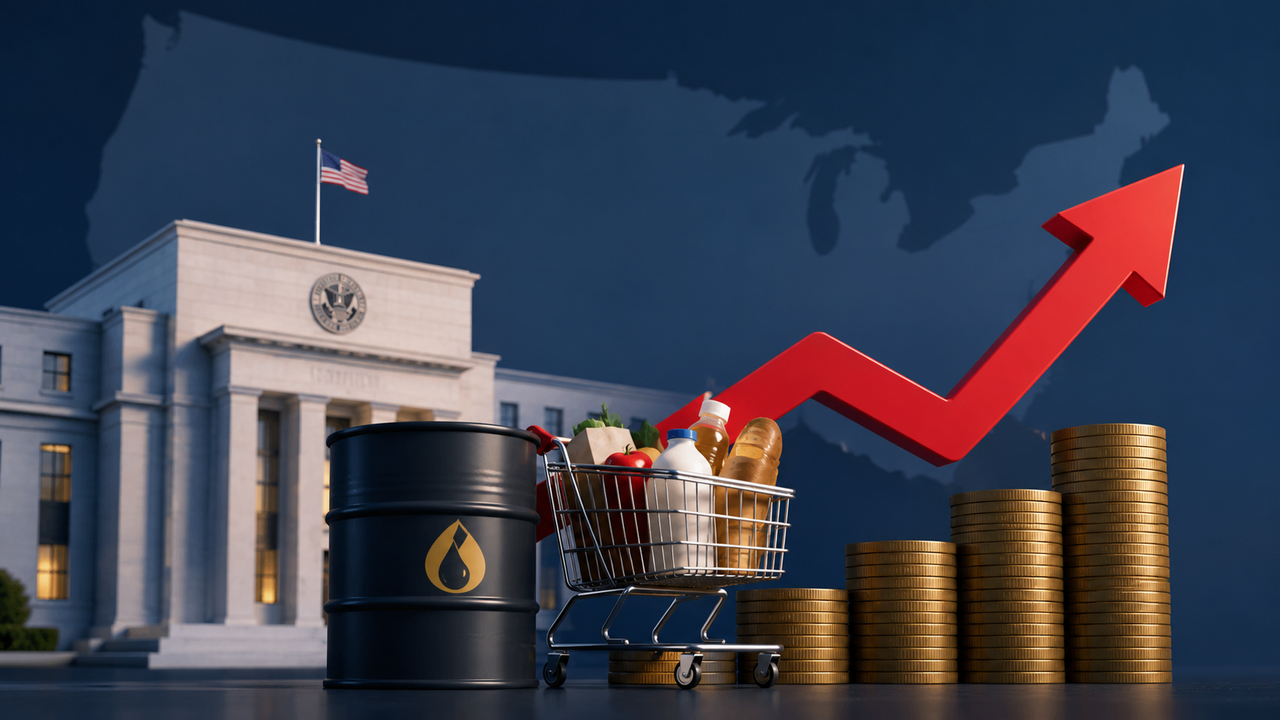
The Federal Reserve’s latest economic summary reveals a striking disconnect: while the broader economy continues to grow, persistent inflationary forces are tightening their grip on American businesses and consumers. According to the Federal Reserve’s Beige Book released on June 3, 2026, economic prices rose at a moderate to strong pace overall across the United States. This acceleration marks a noticeable uptick in inflationary momentum compared to previous reporting cycles, primarily driven by surging global energy costs linked directly to the ongoing conflict in the Middle East. As geopolitical tensions reshape global commodity channels, businesses find themselves navigating severe input cost spikes, creating a highly complex backdrop for the Federal Open Market Committee (FOMC) as it evaluates the future path of U.S. monetary policy.
Key Takeaways
-
Geopolitical Inflation Shock: The ongoing conflict in the Middle East has triggered an international oil shock, forcing domestic U.S. prices to rise at a moderate to strong pace due to surging energy and supply chain input costs.
-
Hawkish Fed Pivot: Persistent inflationary pressures have pushed the Federal Reserve toward a restrictive, "higher-for-longer" monetary policy stance, prompting markets to rapidly price out interest rate cuts for the remainder of 2026.
-
Stagnant Labor Market: The U.S. employment landscape has entered a low-hire, low-fire equilibrium, with 11 out of 12 regional Fed districts reporting flat lining headcount growth as businesses adopt a defensive posture.
-
Bifurcated Consumer Behavior: Surging household living expenses have deeply polarized American spending habits, forcing middle- and low-income demographics to cut discretionary retail spending and lean heavily on revolving credit debt.
-
Manufacturing and AI Resilience: Despite widespread macroeconomic headwinds, pockets of robust industrial growth persist, specifically driven by massive corporate capital expenditure in artificial intelligence (AI) data center infrastructure and defense manufacturing.
What is the Primary Cause of the Resurgence in Inflation According to the Fed?
The ongoing Middle East conflict is the primary catalyst behind the sudden acceleration of U.S. inflation. According to the June 3, 2026 Fed Beige Book, escalating geopolitical tensions and the military conflict in the Middle East have triggered a sharp oil shock, sending international energy prices upward and creating systemic cost pressures across multiple sectors.
The Federal Reserve explicitly noted that these elevated energy costs have far exceeded localized fuel pumps, actively spilling over into essential supply chain inputs including shipping, transportation logistics, product packaging, agricultural fertilizers, and commercial groceries. This supply-side friction is creating an environment where non-labor input costs are climbing at a much faster rate than final selling prices. Consequently, a vast majority of the 12 regional Federal Reserve districts reported higher inflation rates than in the previous April 2026 reporting period, highlighting that external geopolitical shocks are directly dictating domestic price stability.
How Has High Inflation Altered the Federal Reserve's Interest Rate Outlook?
Sticky inflation and accelerating energy costs have forced the Federal Reserve to adopt a decidedly hawkish policy bias, sharply reducing near-term expectations for interest rate cuts. According to the June 2026 economic data compiled by the Kansas City Fed, persistent inflation has remained stubbornly above the central bank’s 2% target for more than five consecutive years, and the recent war-driven price hikes have completely dismantled previous market consensus regarding monetary easing.
The economic report indicates that the internal sentiment among central bank policymakers has shifted drastically away from an interest rate cut bias toward a restrictive, “higher-for-longer” stance. Following the appointment of Kevin Warsh as the new Federal Reserve Chairman in late May 2026, market participants and major banking institutions are actively recalibrating their projections. Data from June 2026 reveals that markets are rapidly pricing out interest rate cuts for the remainder of the year, with a growing contingent of macroeconomic analysts warning that the FOMC may even be forced to implement an additional rate hike if supply-side energy shocks continue to feed into the core Consumer Price Index (CPI).
What Does the Labor Market Tell Us About the Health of the U.S. Economy?
The U.S. labor market has entered a phase of stagnation, characterized by an environment of low hiring and low firing activity across nearly all industrial hubs. According to the Federal Reserve's summary of economic conditions, employment figures showed little to no change across 11 of the 12 Federal Reserve districts during the late-spring reporting period, with only a single district recording modest employment growth.
This flat lining of national employment indicates that while businesses are not executing mass layoffs, they have become intensely selective with capital expenditure and headcount growth. The Fed's report emphasized that heightened geopolitical uncertainty and signs of cooling consumer demand have made corporate leaders hesitant to expand operations. Hiring has transitioned into a strictly defensive strategy focused primarily on critical operational roles or direct attrition replacement. While wage growth remained generally moderate and largely in line with inflation, several districts reported that firms are frequently forced to implement targeted cost-of-living adjustments simply to help existing workers mitigate escalating fuel and household living expenses.
How Are Higher Prices Changing American Consumer Spending Habits?
Surging living costs have created a deep economic polarization, resulting in a distinctly bifurcated consumer landscape where middle- and low-income households face severe financial strain. According to the June 2026 Beige Book data, consumer spending patterns vary dramatically based on household income levels, leading to highly uneven retail activity across the country.
-
High-Income Households: This segment continues to exhibit notable economic resilience, maintaining robust discretionary spending habits and demonstrating a low sensitivity to the recent moderate-to-strong price increases.
-
Middle-Income Households: Families within this bracket are actively squeezing more life out of every dollar before deciding to execute any non-essential expenditures, resulting in fewer retail visits and delayed purchases.
-
Low-Income Households: This demographic is facing intense financial pressure, forcing a structural shift in capital allocation away from discretionary items toward basic necessities.
This consumer pullback is clearly reflected in the automotive sector. Auto dealers across multiple Fed districts reported soft demand for new vehicles due to high fuel costs and restrictive financing rates. Instead, consumers are aggressively pivoting toward used vehicles and hybrid models to maximize fuel efficiency. Furthermore, multiple regions noted a substantial uptick in nationwide credit card usage and dependency, pointing to a growing reliance on revolving debt to fund everyday household costs.
Which Sectors of the Economy Are Still Showing Economic Growth?
The U.S. manufacturing sector and technology-driven real estate infrastructure are showing robust growth momentum despite the broader macroeconomic headwind. According to the Federal Reserve’s findings, manufacturing activity increased at a modest to strong pace in 9 out of the 12 Federal Reserve districts, proving to be the economy's primary engine of resilience.
This industrial outperformance is being fueled directly by structural tailwinds, most notably massive capital expenditure in artificial intelligence (AI) data center infrastructure and heightened defense industry demand resulting from global conflicts. For instance, the Federal Reserve Bank of Boston and the Federal Reserve Bank of Cleveland both reported that surging data center construction is boosting localized manufacturing orders, commercial raw material consumption, and specialized construction demand. Similarly, the New York district highlighted a massive surge in commercial office leasing specifically driven by AI-related technology companies. This pockets of hyper-growth are helping to keep overall economic activity expanding at a slight to moderate pace in 10 out of the 12 districts, preventing a broader corporate contraction.
How to Trade Global Macro Shifts and Fed Policy on KuCoin
The Federal Reserve’s hawkish shift and the stagflationary signals highlighted in the June 2026 Beige Book introduce heightened volatility to global financial markets, creating specific strategic opportunities for crypto asset traders. As traditional market expectations for interest rate cuts diminish and Treasury yields remain elevated, the U.S. Dollar Index (DXY) typically gains carry-trade advantages, which can place short-term pressure on risk assets like Bitcoin (BTC) and Ethereum (ETH). However, persistent, energy-driven inflation also reinforces the long-term narrative for decentralized, hard-cap digital assets as alternative inflation hedges.
Navigating these fast-moving global macroeconomic shifts requires access to advanced trading infrastructure that allows you to hedge risk and capitalize on price fluctuations in real time. By registering an account on KuCoin, you gain immediate access to a comprehensive suite of institutional-grade financial instruments designed for every market environment. If you anticipate that sticky inflation will weigh heavily on crypto valuations in the near term, you can utilize KuCoin Futures to execute short positions or trade inverse contracts with flexible leverage. Conversely, if you view geopolitical supply shocks as a long-term catalyst for fiat currency devaluation, you can leverage KuCoin Spot Trading to accumulate blue-chip digital assets or utilize KuCoin Trading Bots to automate dollar-cost averaging (DCA) strategies during market pullbacks. Protect your portfolio and trade the global macro cycle by opening your KuCoin account today.
Conclusion
The Federal Reserve's June 3, 2026 Beige Book delivers a sobering look at an economy burdened by geopolitical conflict and structural supply-side pressures. With prices rising at a moderate to strong pace across the majority of the 12 districts, the primary driver of inflation has firmly shifted toward energy costs, shipping bottlenecks, and agricultural input spikes tied to the Middle East war. This persistent inflationary pressure has successfully altered the central bank's monetary stance, causing policymakers to abandon their previous easing bias under the leadership of new Fed Chairman Kevin Warsh.
Concurrently, the national labor market has flattened out into a low-hire, low-fire equilibrium, raising valid concerns regarding a potential stagflationary environment. While high-income consumers remain insulated, the American middle and lower classes are experiencing tangible financial erosion, manifesting as increased credit dependency and constrained retail demand. Although localized sectors like AI infrastructure, data center construction, and defense manufacturing continue to provide pockets of robust economic growth, the overarching corporate outlook remains deeply cautious. For global investors and crypto asset traders alike, this macro environment underscores the critical importance of monitoring central bank policy and utilizing robust trading platforms to navigate ongoing market volatility.
FAQs
What exactly is the Federal Reserve Beige Book and how often is it published?
The Beige Book is a prominent Federal Reserve report that compiles anecdotal information on current economic conditions directly from bank directors, business contacts, economists, and market experts across the 12 Federal Reserve districts. It is published eight times a year before each regularly scheduled meeting of the Federal Open Market Committee (FOMC), serving as a crucial qualitative tool for central bank officials as they debate interest rate decisions and national monetary policy.
Why does a conflict in the Middle East cause inflation inside the United States?
A Middle East conflict directly threatens global oil production and vital maritime trade routes, which triggers a sharp increase in international crude oil prices. Because energy is a foundational input for the entire global economy, these higher crude oil costs instantly inflate the expense of transport logistics, ocean freight shipping, product packaging, and chemical manufacturing, forcing domestic businesses to raise their selling prices to preserve profit margins.
What is stagflation and is the U.S. economy currently entering it?
Stagflation is an unfavorable macroeconomic condition characterized by a simultaneous combination of stagnant economic growth, high unemployment or flat lining job growth, and persistently high price inflation. The June 2026 Beige Book indicates that the U.S. economy is displaying distinct stagflationary traits, as national employment growth has completely stalled at 0% across major industrial hubs while inflation has simultaneously accelerated to a moderate-to-strong pace.
How do rising U.S. Treasury yields impact the broader cryptocurrency market?
Rising U.S. Treasury yields increase the risk-free rate of return available to institutional investors, making traditional debt instruments highly attractive relative to volatile risk assets. When yields climb due to sticky inflation expectations, capital frequently flows out of speculative markets—including cryptocurrencies, tech equities, and emerging market funds—and back into the U.S. dollar, which can compress crypto market liquidity and lower asset valuations.
How can retail consumers protect their purchasing power during periods of strong inflation?
Retail consumers can protect their purchasing power by reallocating a portion of their capital out of depreciating fiat currencies and into scarce, yield-bearing, or hard assets that historically outpace inflation. This includes investing in commodities, short-term Treasury bills, inflation-protected securities, or digital assets with fixed programmatic supplies—such as Bitcoin—which cannot be diluted by central bank monetary expansion.