

The $25.6 Billion Milestone: How RWAs Became the New Backbone of Digital Finance
2026/05/14 17:48:02
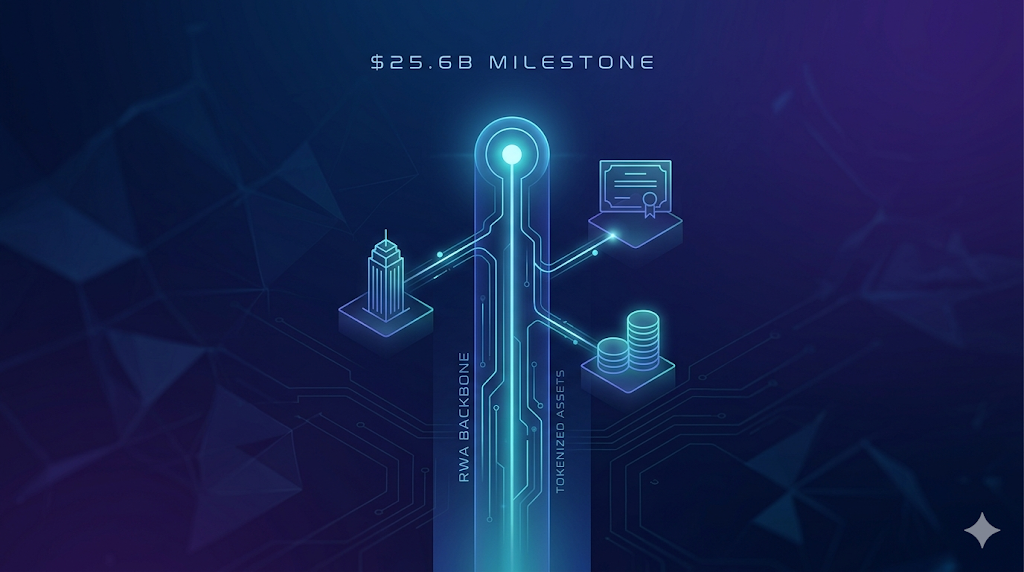
Did you know that the total value of tokenized Real-World Assets (RWAs) officially surpassed the $25.6 billion milestone in early 2026? This explosive financial expansion confirms that global institutional capital has permanently integrated into blockchain infrastructure. Real-world asset tokenization resolves inefficiencies in traditional markets, offering unprecedented liquidity, continuous trading, and immediate settlement. By bringing everything from U.S. Treasuries to private credit onto distributed ledgers, financial giants are actively rewriting the mechanics of global wealth.
As we analyze the latest on-chain metrics and institutional fund flows, investors can pinpoint exactly where the next phase of capital migration will occur.
tokenized treasuries: Digital representations of government debt providing immediate on-chain yield.
institutional crypto adoption: Traditional financial firms leveraging blockchain to optimize capital efficiency.
RWA platforms: Digital ecosystems built to issue and trade tokenized physical assets.
The $25.6 Billion Milestone and the Growth of Tokenized Treasuries
The $25.6 billion milestone in total RWA value demonstrates that tokenized U.S. Treasuries are the primary catalyst for mass institutional adoption in 2026. According to Binance News from April 2026, the broader tokenized asset market quickly expanded to $27.65 billion, with U.S. Treasuries accounting for an impressive $12.78 billion of that total. This massive capital allocation proves that risk-averse institutions are actively shifting their treasury reserves away from legacy banking systems and directly into blockchain-native yield vehicles.
By digitizing traditional government debt, asset managers have successfully bridged the gap between conventional finance and decentralized ecosystems, proving that on-chain settlement is both viable and vastly superior to legacy models.
U.S. Treasuries Leading the Charge
Tokenized U.S. Treasuries dominate the RWA sector because they provide a highly secure, familiar, and predictable yield for institutional investors entering the blockchain space. The on-chain value of tokenized U.S. Treasuries surged past $13.4 billion by early April 2026, based on a recent Q1 report from InvestaX. This specific asset class serves as the ultimate gateway for traditional finance because it addresses the opportunity cost of holding non-yielding stablecoins. By converting idle digital cash into yield-bearing treasury tokens, large-scale crypto funds and corporate treasuries can generate continuous returns without sacrificing the operational agility required to navigate fast-paced blockchain networks.
The Mechanics of On-Chain Yield
On-chain yield generation operates through the direct programmatic distribution of traditional bond interest to token holders via smart contracts. When an institution purchases a tokenized treasury product, the underlying fiat is invested in actual government bonds, while the blockchain automatically calculates and distributes the daily accrued interest to the associated digital wallet. This mechanism eliminates the need for manual dividend processing, traditional brokerages, and prolonged settlement periods. Consequently, investors benefit from a frictionless environment where yield compounds continuously, allowing capital to remain highly fluid, instantly verifiable, and easily deployable across various decentralized finance protocols.
Stablecoin Utility and RWA Synergies
The integration of RWA tokens with major stablecoins has created a highly efficient, dual-layered liquidity system for global digital markets. Stablecoins serve as the baseline currency for acquiring tokenized assets, while the tokenized assets themselves act as yield-bearing collateral within decentralized lending platforms. As reported in the InvestaX outlook for 2026, institutions are increasingly borrowing stablecoins against their tokenized treasury holdings to maximize capital efficiency. This synergistic relationship ensures that capital remains productive at all times, transforming how digital treasuries operate and paving the way for a significantly more interconnected financial ecosystem.
Institutional Giants Shaping the RWA Ecosystem
Major asset managers like BlackRock and Franklin Templeton are aggressively dictating the pace of RWA market expansion through the launch of regulated tokenized funds. These financial heavyweights are not merely experimenting, they are deploying massive capital into production-ready blockchain networks to secure a dominant market share. Their aggressive entry signals to the broader market that blockchain technology is officially recognized as the superior settlement layer for modern global finance and institutional wealth management.
BlackRock's BUIDL Fund Crossing Key Thresholds
BlackRock's BUIDL fund officially cemented its position as the market leader by accumulating nearly $2.5 billion in assets under management by May 2026. According to reports from Markets Media in May 2026, BlackRock has also filed with the SEC for two additional tokenized funds to capture even more of the idle institutional capital market. The unprecedented success of the BUIDL fund validates the concept of institutional-grade on-chain finance. By providing a secure, transparent, and highly liquid vehicle for digital treasury management, BlackRock has essentially established the gold standard for how traditional asset managers will operate in the decentralized future.
Franklin Templeton and the Rise of On-Chain ETFs
Franklin Templeton is actively revolutionizing retail and institutional access to equities by partnering with blockchain networks to launch tokenized Exchange-Traded Funds (ETFs). During the first quarter of 2026, the firm successfully launched tokenized versions of five major ETFs, making them tradeable 24/7 directly via crypto wallets, according to InvestaX data. This strategic maneuver completely bypasses the limitations of traditional stock market trading hours and legacy brokerage accounts.
Ondo Finance's Expansion in Tokenized Stocks
Ondo Finance has definitively proven the massive demand for decentralized equity trading by capturing over 70% of the tokenized stock market share. Based on RootData metrics from May 2026, Ondo Global Markets surpassed a total locked value of $1 billion in less than eight months. The platform currently supports over 260 tokenized U.S. stocks and ETFs, seamlessly bridging traditional equities with public blockchains like Solana and Ethereum. This rapid expansion highlights a critical shift in investor preference—traders now demand the ability to hold and trade traditional corporate equity within the exact same digital wallets they use for their cryptocurrency portfolios.
The Broadening Scope of Tokenized Commodities and Real Estate
The tokenization of commodities and real estate is systematically unlocking billions of dollars in trapped liquidity by fractionalizing historically inaccessible asset classes. While government bonds initially led the RWA surge, the market has rapidly diversified to include precious metals, commercial property, and private credit. This diversification is crucial because it allows investors to build comprehensive, multi-asset portfolios entirely on-chain without reverting to fiat gateways. By eliminating massive entry barriers and reducing transaction friction, tokenization is democratizing wealth generation and altering the ownership structure of the world's most valuable physical resources.
Gold and Precious Metals Moving On-Chain
Tokenized commodities reached a staggering $7.3 billion in market capitalization by early April 2026, driven almost entirely by the massive demand for digital gold. According to InvestaX's Q1 2026 report, major banking institutions are actively launching tokenized gold shares to provide investors with a safer, easily transferable alternative to physical custody. Gold tokenization solves the perennial problems of storage costs, physical security, and slow transfer times. Investors can now instantly trade fractional ounces of gold across global borders 24/7, effectively merging the ancient store of value with the speed and flexibility of modern digital networks.
Fractional Real Estate Investment
Tokenized real estate is transitioning from experimental sandboxes to fully operational production markets across major global jurisdictions. In early 2026, regions like Hong Kong and Dubai officially approved and launched secondary markets for tokenized property units, allowing retail investors to easily trade fractional ownership of commercial real estate. By representing real estate as tradable digital tokens, these markets are injecting unprecedented liquidity into an asset class that has historically suffered from extreme illiquidity and high barriers to entry.
The Liquidity Transformation in Private Credit
The private credit sector has experienced a massive 180% year-over-year growth as tokenization platforms successfully originate billions in on-chain corporate loans. According to MEXC's May 2026 market analysis, platforms like Centrifuge and Maple Finance have facilitated over $3.2 billion in tokenized private credit. This digital transformation allows small and medium-sized enterprises to bypass traditional banking monopolies and source capital directly from global decentralized liquidity pools. For investors, tokenized private credit offers highly attractive, uncorrelated yields that are rigorously managed through transparent, programmable smart contracts, creating a vastly more efficient and equitable lending ecosystem.
Regulatory Frameworks Cementing RWA Legitimacy
Comprehensive regulatory frameworks established in early 2026 have provided the definitive legal clarity necessary for institutions to deploy billions into the RWA sector. Without these vital legal guidelines, traditional financial entities were previously restricted by internal compliance departments from engaging with blockchain technology. However, recent approvals and taxonomy guidelines issued by global financial authorities have completely legitimized the tokenization process. This newly established legal certainty is the primary catalyst driving the rapid transition of real-world assets from localized, paper-based ledgers to global, distributed blockchain networks.
The Impact of U.S. Regulatory Clarity
Sequential regulatory decisions by U.S. authorities in Q1 2026 have definitively outlined the structural direction for the nation's tokenized securities market. According to InvestaX, the SEC issued formal statements on tokenized securities and approved intraday trading for specific tokenized money market funds earlier in the year. These foundational rulings have empowered massive financial institutions to confidently launch their own tokenized products without fear of retroactive punitive action. The resulting environment has catalyzed a massive influx of Wall Street capital, shifting the epicenter of digital finance toward regulated, compliance-first infrastructure.
Global Jurisdictions Embracing Tokenization
International financial hubs are actively competing to establish the most accommodating regulatory environments for RWA tokenization to attract global capital. Jurisdictions such as Singapore, Hong Kong, and the European Union have implemented clear, progressive frameworks that dictate the exact standards for issuing and trading tokenized assets. This global regulatory competition ensures that blockchain innovation is not stifled by isolated, restrictive policies.
Overcoming Operational and Legal Constraints
The primary hurdle to mass adoption is the complex integration of modern blockchain networks with deeply entrenched legacy financial infrastructure. Legal experts continuously highlight that aligning regulatory approaches across varying global jurisdictions remains a significant challenge for multinational tokenization efforts. However, the industry is aggressively addressing these friction points by developing standardized asset-backed tokens and deeply interoperable network protocols. As institutions successfully bridge their internal legal frameworks with decentralized technology, the operational friction that previously deterred mass market participation is being systematically eradicated by innovative engineering and legal cooperation.
The Technological Infrastructure Powering RWAs
The spectacular growth of the RWA market relies entirely on the robust, highly secure technological infrastructure provided by modern blockchain networks. Without advancements in network throughput, institutional custody, and smart contract architecture, managing tens of billions of dollars in digitized physical assets would be functionally impossible. The infrastructure layer acts as the vital circulatory system for tokenized finance, ensuring that asset transfers are instantaneous, verifiable, and completely immutable. As this technology continues to mature, it will seamlessly support the projected multi-trillion-dollar expansion of the tokenized economy over the coming decade.
Cross-Chain Interoperability and Settlement
Cross-chain interoperability protocols are the critical technical components allowing tokenized assets to flow seamlessly between disparate blockchain networks. Rather than isolating liquidity within a single ecosystem like Ethereum or Solana, modern RWA platforms utilize advanced bridging technologies to ensure assets can be traded wherever demand is highest. This fluid movement of capital is essential for maintaining efficient global markets, aligning asset prices, and preventing localized liquidity crunches. By standardizing the communication layers between different distributed ledgers, developers have created a unified global settlement network for traditional financial instruments.
Smart Contracts and Automated Compliance
Smart contracts automate the entire lifecycle of a tokenized asset, from initial issuance and dividend distribution to complex regulatory compliance enforcement. These self-executing programs contain hard-coded rules that prevent unauthorized transfers, ensuring that tokenized securities are only held by verified, KYC-compliant investors. This inherent automation drastically reduces the immense administrative overhead traditionally associated with asset management and regulatory reporting. Embedding compliance directly into the asset's underlying code, financial institutions can operate with absolute certainty that every transaction inherently adheres to strict, pre-defined legal parameters.
Institutional-Grade Custody and Security
Advanced institutional custody solutions, particularly those utilizing Multi-Party Computation (MPC), provide the impenetrable security foundation required to safeguard billions in RWA value. MPC technology fractures private keys into multiple discrete shares, ensuring that no single individual or compromised server can authorize a malicious transaction. This military-grade security architecture is the absolute prerequisite for any traditional bank or asset manager entering the digital space. By eliminating the single point of failure inherent in legacy crypto wallets, these custody providers have successfully mitigated the existential risks associated with holding massive sums of digital wealth.
How to Trade the RWA Sector on KuCoin
KuCoin serves as your premier centralized hub for capitalizing on this macroeconomic shift, granting you seamless market access to the core infrastructure and governance tokens driving the tokenization industry. You can strategically navigate the RWA ecosystem on KuCoin through two optimized avenues:Spot Trading & Portfolio Allocation:
Utilize the Spot Trading terminal to instantly acquire top-tier RWA governance tokens, including ONDO, MANTRA, and CFG. Benefit from the platform’s deep institutional liquidity to execute your accumulation strategies with minimized slippage and reduced price volatility.
Deploying Quantitative Trading Bots:The price discovery of RWA infrastructure tokens is highly responsive to macroeconomic policy updates. You can seamlessly deploy KuCoin Spot Grid or Infinity Grid Bots to continuously harvest premium volatility gains 24/7, reacting to market momentum without constant manual monitoring.
Conclusion
As the underlying technology of cross-chain settlement and smart contract compliance matures, the historical friction between legacy banking and decentralized finance will completely evaporate. The tokenization of real-world assets provides a vastly superior, highly efficient system for wealth generation, offering continuous trading and instant settlement. (While local securities laws continue to enforce specific onboarding and accreditation thresholds based on user jurisdictions, the ecosystem systematically broadens asset availability like never before.) Investors equipped with the right knowledge and utilizing robust exchange platforms are uniquely positioned to benefit from this historic financial migration. The data is undeniably clear: tokenization is not a temporary trend, but the permanent future of global capital markets.
FAQs
What exactly is RWA in the cryptocurrency market?
A Real-World Asset (RWA) is a traditional physical or financial asset—such as real estate, government bonds, or commodities, that has been digitized and represented as a secure token on a blockchain. This process allows these historically illiquid or restricted assets to be traded globally, instantly, and in fractional amounts.
Why are tokenized U.S. Treasuries so popular among crypto institutions?
Tokenized U.S. Treasuries provide a highly secure, predictable, and legally compliant yield on capital that would otherwise sit idle in non-yielding stablecoins. Institutions use these digital bonds to generate continuous returns while keeping their capital readily available for deployment within decentralized finance ecosystems.
What role do smart contracts play in the tokenization process?
Smart contracts automatically execute and enforce the specific rules associated with a tokenized asset, including dividend distribution, compliance checks, and secure ownership transfers. By embedding these operational and legal parameters directly into the asset's code, smart contracts eliminate the need for expensive middle-men and significantly reduce administrative friction.
Why is regulatory clarity important for the growth of RWAs?
Regulatory clarity provides traditional financial institutions with the definitive legal safety required to invest billions of dollars into blockchain-based assets without fear of government penalization. When authorities establish clear guidelines for the issuance and trading of tokenized securities, it directly catalyzes mass adoption by removing the primary operational risk for highly regulated asset managers.
Disclaimer:This content is for informational purposes only and does not constitute investment advice. Cryptocurrency investments carry risk. Please do your own research (DYOR).