

Bitcoin as a Cybersecurity Tool: US Military Running Bitcoin Node for Network Security Tests
2026/04/28 14:54:02
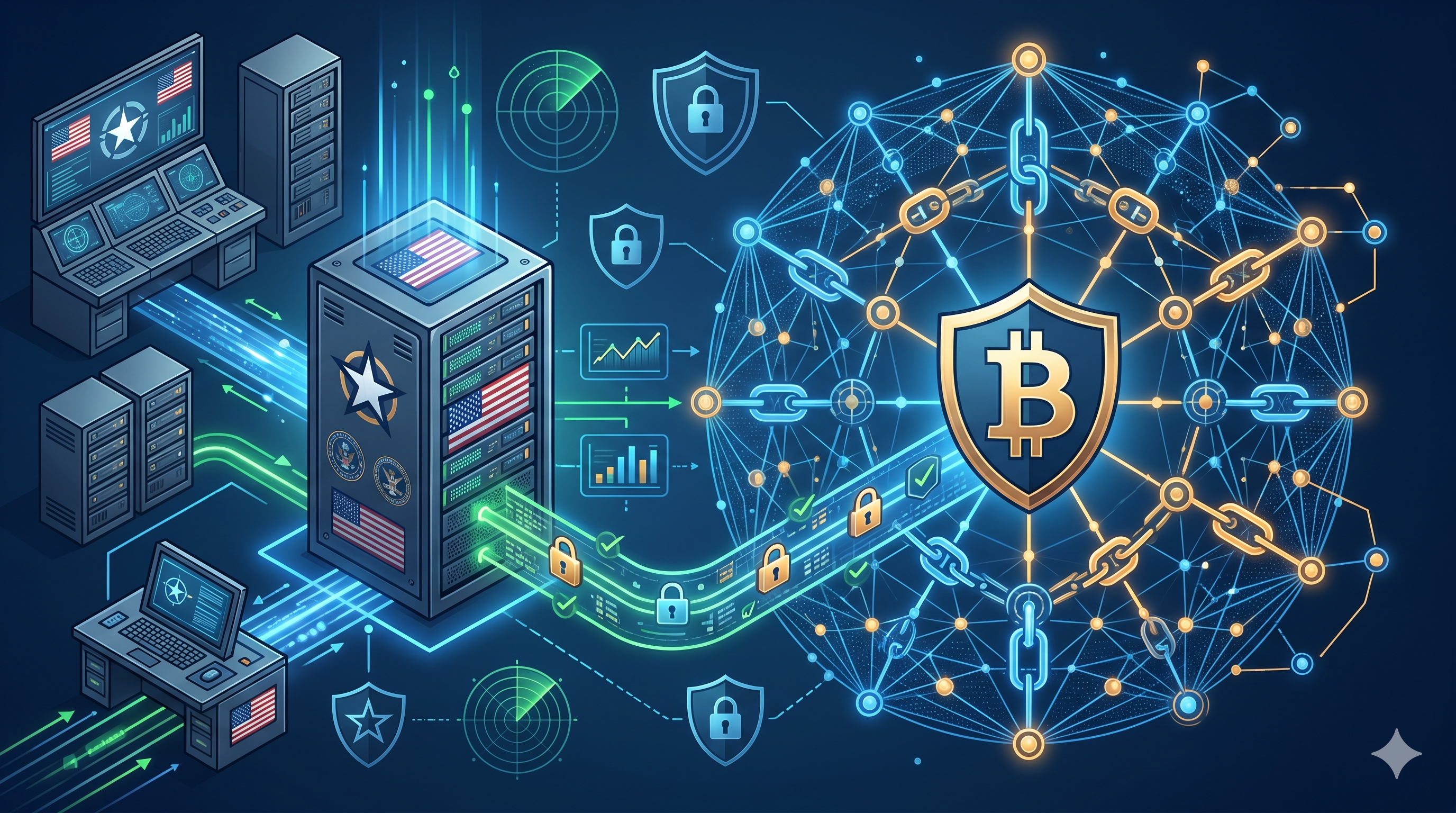
Could the world’s most famous decentralized ledger be the ultimate shield for national defense? As of April 2026, the answer is a resounding yes. In a historic shift for global defense strategy, the United States military has officially confirmed it is operating a live Bitcoin node to conduct high-level network security tests. This transition marks the evolution of Bitcoin from a speculative financial asset into a critical piece of "strategic infrastructure."
During a Senate Armed Services Committee hearing on April 21, 2026, Admiral Samuel Paparo, Commander of the U.S. Indo-Pacific Command (INDOPACOM), revealed that the military is leveraging the protocol’s "zero-trust" architecture to secure data and project power in the digital domain. By moving beyond price charts and into the realm of "Softwar"—a theory popularized by the U.S. Space Force—the Pentagon is testing if Bitcoin’s Proof-of-Work (PoW) can impose physical costs on cyber adversaries, effectively turning bits into a digital fortress.
Key Takeaways
-
Operational Integration: The U.S. military is currently running a Bitcoin node to monitor network activity and conduct operational security tests.
-
National Security Pivot: Military leaders now define Bitcoin as a "computer science tool" and a means of "power projection" rather than just a currency.
-
Strategic Reserves: Recent data estimates the U.S. government controls approximately 328,000 BTC, positioning it ahead of major global competitors like China.
-
Cyber Armor: The Pentagon is exploring "Reusable Proof-of-Work" as a method to verify data authenticity in contested environments where traditional satellites or cables may be compromised.
-
The "Softwar" Era: Military strategists are shifting toward a "physical cost" model of cybersecurity, using Bitcoin’s energy-intensive consensus to deter hackers.
The U.S. Military’s Bitcoin Node: A New Frontier in Cyber Defense
The U.S. military has moved from observation to active participation in the Bitcoin network to enhance its cybersecurity resilience. According to Admiral Samuel Paparo’s April 2026 testimony, the military is not "mining" Bitcoin for profit but is utilizing a node to study the protocol's peer-to-peer, zero-trust properties. This operational test is designed to determine if the decentralized nature of the blockchain can provide a redundant layer of verification for sensitive military communications.
By running a node, INDOPACOM can verify the state of the network independently, ensuring that command-and-control data remains authentic even if central servers are attacked. This reflects a shift in doctrine where security is no longer just a wall (firewalls) but a decentralized consensus that is physically expensive for an enemy to alter. The military’s interest lies specifically in the "truth machine" capabilities of the ledger—creating an unchangeable record of events that prevents adversaries from "wiping their tracks" after a digital intrusion.
Moving Beyond Financial Speculation
The Pentagon's focus is squarely on the protocol's architecture rather than its market value. While the public often focuses on the price of Bitcoin, military leaders are interested in the Proof-of-Work (PoW) mechanism. PoW requires a massive expenditure of physical energy, which creates a "cost to entry" for any entity trying to manipulate the network. In a world where AI can generate infinite spoofed data, the military views Bitcoin as a way to anchor digital information to physical reality.
Power Projection via Blockchain
Admiral Paparo described Bitcoin as a tool for "power projection."() In military terms, this means using a technology to deter threats or respond to crises. By adopting a protocol that no single nation controls, the U.S. is testing a system that functions regardless of centralized interference. This is particularly relevant in the Indo-Pacific theater, where maintaining technological superiority over sophisticated state actors is a top priority for national defense.
The "Softwar" Theory: Why Proof-of-Work is Digital Armor
Bitcoin’s security model is being redefined as a "physical control signal" in an abstract digital world. Based on the "Softwar" thesis developed by Major Jason Lowery of the U.S. Space Force, the military is exploring how Bitcoin can serve as a non-lethal form of defense. The theory posits that by making it computationally and energetically expensive to change data, the Bitcoin protocol functions like a "digital fortress" or a vault.
Traditional software security is often binary—you are either inside the network or outside. However, Bitcoin introduces a third dimension: the undeniable cost of time and energy. For a hacker to "break" a PoW-secured system, they would need to out-spend the entire network in electricity, a feat that is becoming increasingly impossible for even the most well-funded state actors.
Imposing Physical Costs on Cyber Adversaries
The military is testing whether this "physical cost" model can be applied to other sensitive networks. If a cyberattack requires an immense amount of energy to execute, it becomes a deterrent. The goal is to move away from "software-only" security, which is easily replicated, toward "hardware-constrained" security. By leveraging the same principles that keep the Bitcoin network secure, the DoD hopes to create "cyber armor" that is too expensive for any adversary to penetrate.
Zero-Trust Architecture in Warfare
A "zero-trust" model assumes that no part of the network is inherently safe. In a conflict scenario where traditional fiber-optic cables or satellites are jammed, a decentralized network like Bitcoin could provide a fallback for verifying data. Because the ledger is distributed across tens of thousands of nodes globally, it is virtually impossible to take down. This resilience is what makes it an attractive tool for military strategists looking for redundant communication channels.
Global Competition: The Strategic Bitcoin Reserve
The U.S. government’s involvement with Bitcoin is also driven by an escalating geopolitical race. Recent research from April 2026 indicates that the United States currently holds approximately 328,000 BTC, while China is estimated to hold roughly 194,000 BTC. This "arms race" for hashing power and strategic reserves underscores the belief that Bitcoin is a sovereign asset of the 21st century.
The establishment of a "Strategic Bitcoin Reserve" by the U.S. administration in 2025 has set the stage for this military experimentation. As governments begin to view Bitcoin as a strategic asset rather than a commodity, demand becomes structural. Unlike retail investors who may sell during market volatility, governments treat strategic infrastructure as a long-term necessity, which fundamentally changes the liquidity and stability profile of the Bitcoin market.
China’s Strategic Interest
The U.S. is not alone in this realization. Testimony from the House Armed Services Committee revealed that China’s primary monetary think tank has been publishing formal research on Bitcoin as a strategic asset. This competition ensures that Bitcoin is no longer a niche concern; it has become a central pillar of the digital cold war. The military that best harnesses the decentralized power of PoW may hold the upper hand in future cyber conflicts.
Bitcoin’s Evolution into a Strategic Infrastructure
We are witnessing the transition of Bitcoin from a "risk-on" asset to "sovereign-grade" infrastructure. When a Four-Star Admiral describes Bitcoin as "to the good" for national power, it signals to the market that the protocol has reached a level of institutional maturity that few expected a decade ago. This shift moves the conversation away from regulatory hurdles and toward proactive national defense applications.
The resources being directed toward the protocol by the world’s largest military suggest that the "utility" of Bitcoin is expanding. It is no longer just a hedge against inflation; it is a hedge against the vulnerabilities of a centralized internet. For the cryptocurrency market, this means that Bitcoin’s long-term value may be decoupled from simple supply-and-demand dynamics and instead be tied to its role as a foundation for global digital security.
The Intersection of Crypto and National Power
The integration of Bitcoin into military testing suggests a future where decentralized protocols are woven into the fabric of national security. The military's use of a node to monitor "reusable proof-of-work" hints at a future where digital identities, financial transactions, and even military commands are secured by the same underlying mathematics.
This convergence of cryptography and defense is creating a new class of technology: "Defense-Grade Blockchain." As the U.S. military continues its operational tests through the remainder of 2026, the data gathered will likely influence how corporations and other nations secure their own critical infrastructure. The "Bitcoin-as-a-Tool" era is officially here.
How to Trade Bitcoin on KuCoin Amid the National Security Narrative
The U.S. military's Bitcoin node disclosure is exactly the kind of structural, macro-level signal that sophisticated traders track closely — not for short-term noise, but for long-term directional conviction. When a four-star admiral tells Congress that Bitcoin's proof-of-work architecture has applications for power projection, it is not a meme. It is a policy signal with lasting implications for Bitcoin's price floor and institutional demand.
If you want to trade Bitcoin at the center of this evolving national security narrative, KuCoin offers one of the deepest liquidity pools in the market, with BTC spot trading, futures contracts, and automated trading bots to capitalize on volatility. Whether you are looking to accumulate during consolidation phases or hedge around geopolitical developments, KuCoin's suite of tools — including grid trading bots, dollar-cost averaging plans, and a full derivatives desk — gives you the infrastructure to act with precision. With over $1.25 trillion in trading volume in 2025 alone, KuCoin has earned its place as one of the world's most trusted platforms for navigating Bitcoin's transition from speculative asset to strategic infrastructure.
Further Read
Conclusion
The revelation that the U.S. military is actively running a Bitcoin node to test network security marks a watershed moment in the history of decentralized technology. By redefining Bitcoin as a tool of computer science and power projection, the Department of Defense has validated the core principles of the network: its immutability, its transparency, and its unparalleled security through Proof-of-Work. This move elevates the protocol from a financial instrument to a piece of critical national infrastructure, placing it at the center of a geopolitical competition for digital supremacy.
As of April 2026, the U.S. leads this race with a massive reserve of 328,000 BTC and active experimentation in "Softwar" defense strategies. While the military focuses on the protocol's cryptographic resilience, the broader market is feeling the ripple effects of this newfound legitimacy. Bitcoin’s journey from a whitepaper to a Pentagon-tested cybersecurity tool is now complete, signaling a future where the world's most secure network protects not just wealth, but the very systems that underpin modern society.
FAQs
What exactly is a "Bitcoin Node" in a military context?
A Bitcoin node is a computer that runs the Bitcoin software and maintains a full copy of the blockchain to verify every transaction. For the military, running their own node allows them to monitor network health independently, test the protocol's resilience against cyberattacks, and verify data without relying on any third-party or centralized authority.
Does the U.S. military mine Bitcoin?
No, according to Admiral Samuel Paparo's 2026 testimony, the military is not currently mining Bitcoin. Their involvement is strictly focused on operational tests, network monitoring, and utilizing the protocol's cryptographic features for cybersecurity rather than financial gain or block rewards.
How does Bitcoin help protect against "data spoofing"?
Bitcoin uses a "zero-trust" model and an immutable ledger, meaning once data is recorded, it cannot be altered without an impossible amount of computational work. By anchoring military data or commands to a blockchain-like structure, the military can ensure that the information received is exactly what was sent, making it nearly impossible for hackers to "spoof" or forge commands.
What is the "Softwar" theory mentioned by the Space Force?
Softwar is a theory proposed by Major Jason Lowery suggesting that Bitcoin’s Proof-of-Work is a form of digital-age warfare. It argues that by requiring physical energy (electricity) to secure data, Bitcoin creates a "physical cost" for cyberattacks, moving cybersecurity from a software problem to a hardware/energy problem that is much harder for an adversary to overcome.
How does the U.S. Strategic Bitcoin Reserve connect to the military's node experiment?
They are separate programs but share the same strategic logic: treating Bitcoin as durable infrastructure rather than a speculative asset. The reserve focuses on financial positioning, while the node experiment focuses on technical and cybersecurity applications of Bitcoin's protocol. Together, they represent a two-track U.S. government engagement with Bitcoin.
Disclaimer: This article is for informational purposes only and does not constitute financial or investment advice. Cryptocurrency investments carry significant risk. Always conduct your own research before trading.