

Gold, Silver, Funds, Stocks, and Bitcoin: How Should Ordinary Investors Choose?
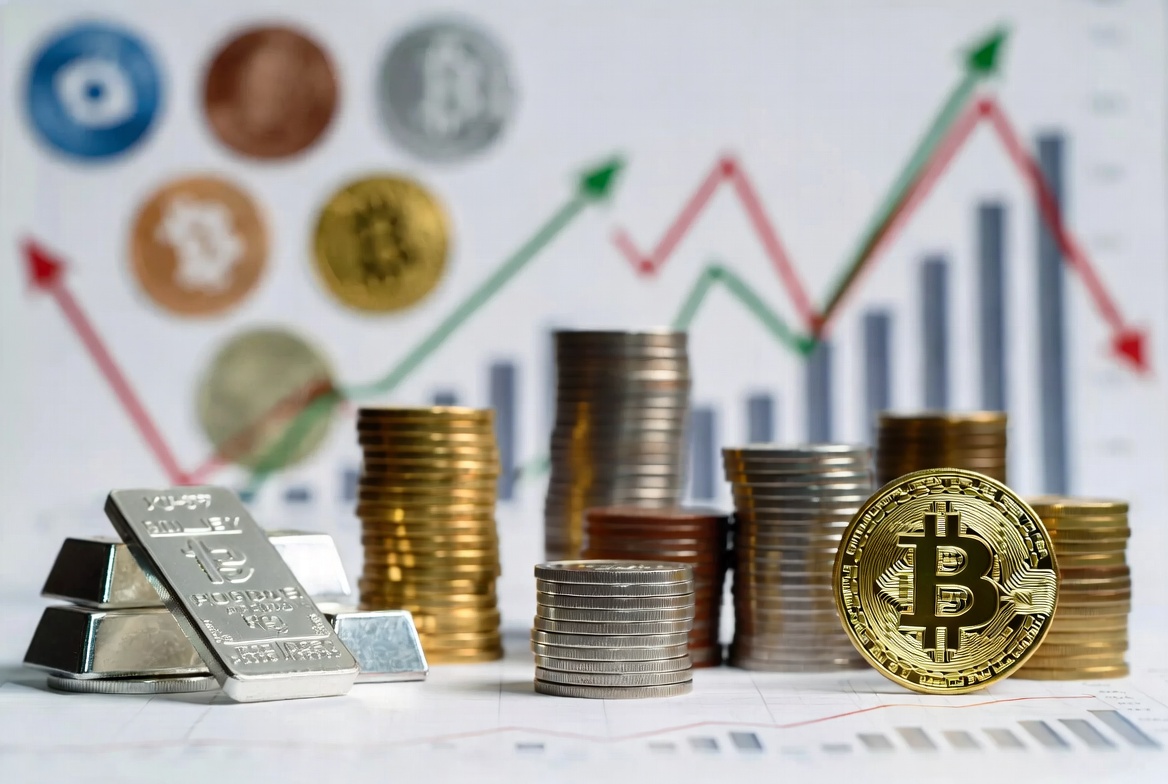
The financial space of March 2026 is a study in contrasts. While traditional safe havens like gold and silver have reached historic highs due to escalating tensions in the Middle East, particularly the ongoing U.S.-Iran conflict, Bitcoin has demonstrated a surprising "decoupling" from traditional risk-on assets.
For the ordinary investor, the question is no longer just to buy or not to buy, but how to strategically allocate capital across five distinct asset classes that each react differently to a "higher-for-longer" interest rate environment where the Federal Reserve has held benchmark rates steady.
Navigating these waters requires a deep understanding of how these asset classes interact in a market where the Federal Reserve has largely taken rate cuts off the table for the first half of 2026. This guide provides the analysis of these five major investment vehicles to help you align your portfolio with your specific risk appetite and time horizon in this unique economic era.
Bitcoin: The Digital Gold and Growth Spearhead
Bitcoin in 2026 has transitioned from a speculative asset to a cornerstone of institutional portfolios. Following the 2024 halving and subsequent years of adoption, BTC has reached a market capitalization of approximately $1.4 trillion. Unlike previous cycles where Bitcoin moved purely in tandem with the Nasdaq, the March 2026 crisis in the Middle East has seen Bitcoin outperform gold, stocks, and the dollar over specific windows during the peak of U.S.-Iran strikes. This resilience is largely attributed to the structural shift caused by spot ETFs. BlackRock’s IBIT and Fidelity’s FBTC alone continue to see significant daily volume, absorbing a large portion of the daily mining supply in 2026.
For the ordinary investor, Bitcoin offers unparalleled asymmetric upside potential, the chance for significant gains that outpace traditional markets, but it comes with the "cost" of extreme volatility. Institutional accumulation is a primary driver now; for instance, major entities continue their aggressive buying spree, aiming for significant percentages of total supply. This institutional floor provides a level of support that didn't exist in previous cycles, yet investors must be prepared for 20-30% drawdowns, which remain common even in structural bull markets. If your investment horizon is five to ten years and you can stomach short-term "paper losses," Bitcoin often serves as the growth engine of a modern portfolio.
For those looking to gain exposure, using a reliable platform is essential for security and ease of use. On KuCoin, investors can utilize tools like Copy Trading to follow experienced traders or engage in Spot Trading with some of the lowest fees in the industry.
For beginners, KuCoin Learn provides exhaustive resources on the mechanics of the Bitcoin halving cycles and how to secure digital assets using cold storage and multi-factor authentication. Always remember that while the "Digital Gold" narrative is strong, Bitcoin’s supply cap of 21 million is its primary value proposition, making it a strictly deflationary asset in an inflationary world.
Expert sentiment suggests that Bitcoin could still reach significant six-figure targets by the end of 2026 if rate relief eventually arrives.
However, investors must be wary of the "Fear & Greed" index, which recently dipped toward "Extreme Fear" following a sharp pullback from recent highs near $76,000.
Gold: The Traditional Anchor in Geopolitical Storms
Gold remains the world's most trusted defensive asset, but its behavior in 2026 has challenged historical norms. After hitting an all-time high near $5,595 per ounce in late January 2026, spot gold has entered a period of cooling, trading around $4,495 in late March. The rally was fueled by massive central bank accumulation, with a vast majority of surveyed central banks expecting to maintain or increase their holdings.
However, as the U.S. Federal Reserve revised its 2026 inflation forecast higher, the prospect of global central banks holding rates high caused gold to shed nearly 15% of its value from its peak by March 22. Gold does not pay dividends or interest, which is its main drawback compared to stocks or staking rewards in crypto. However, its value is that it has zero counterparty risk, it is no one else's liability. For an ordinary investor, gold acts as "portfolio insurance." When geopolitical tensions in the Middle East spiked in early 2026, gold was the first asset to surge, demonstrating its role as a psychological and financial anchor.
Ordinary investors choose gold for its lack of counterparty risk. In a year where major crypto events like TOKEN2049 Dubai were postponed due to regional safety concerns, physical gold provides a tangible sense of security. J.P. Morgan Global Research maintains a bullish long-term outlook, forecasting gold to average $5,055/oz by the final quarter of 2026, with some scenarios projecting as high as $6,300 by year-end. Gold is best suited for those with a low risk appetite who want to protect their principal from a black swan event in the traditional banking or tech sectors. Experts suggest a significant allocation to gold for those seeking a safety first approach as it remains a vital diversifier despite the recent pullback below the key $5,000 mark.
Silver: High-Volatility Industrial and Monetary Hybrid
Silver has been the wildcard of 2026, exhibiting extreme price swings that dwarf even some cryptocurrencies. In March 2026, silver was trading around $69 per ounce, having recently fallen from much higher levels. This repricing is driven by a chronic supply deficit and insatiable demand from the green energy sector, specifically for solar photovoltaics and electric vehicle (EV) electronics. Silver is often called "the poor man's gold", but in 2026, it is better described as a "hybrid" asset. It possesses the monetary qualities of gold but adds a heavy layer of industrial utility, particularly in green energy. Silver is significantly more volatile than gold; for example, it hit an intraday peak of over $121 in January 2026 before crashing back toward the $60s in early March. This volatility makes it a favorite for active traders but a stressful hold for the unprepared.
For investors, silver offers a unique dual identity: it is part monetary and part industrial. This makes it highly sensitive to both inflation and economic growth. However, silver is currently enduring a punishing correction, slipping beneath the psychological $70 level in mid-March due to a resurging US Dollar and rising bond yields. Ordinary investors should consider silver only if they have a 3-7 year horizon and can withstand 20% weekly price drops. It functions as a higher-beta play on the themes that drive gold, with an added "kick" from the global energy transition. Because the silver market is much smaller and less liquid than gold, even small shifts in investor sentiment or industrial demand can lead to explosive price movements.
Stocks and Equities: Innovation vs. Macro Headwinds
The equity market in March 2026 is grappling with surging oil prices and a hawkish Fed that has spooked investors. The S&P 500 recently dipped below its 200-day moving average, a technical breakdown that has historically signaled further downside. Geopolitical tensions in the Strait of Hormuz have placed energy infrastructure under pressure, creating a supply shock that typically weakens corporate growth while raising costs. The "AI boom" that dominated 2024 and 2025 has moved into a show me the money phase, where investors are scrutinizing whether the massive capital expenditures by tech giants are yielding actual profit growth. Furthermore, the U.S.-Iran conflict has sent crude oil prices soaring, acting as a tax on corporate earnings and consumer spending.
Despite these short-term shocks, stocks remain the primary vehicle for capturing human innovation, particularly in AI and biotechnology. Unlike Bitcoin or Gold, stocks represent productive assets that generate earnings. However, the correlation between tech stocks and Bitcoin has strengthened in 2026; while the S&P 500 fell recently, Bitcoin also faced downward pressure as investors moved into cash or bonds. Ordinary investors should view stocks as the "steady engine" of a portfolio, but expect significant headwinds as long as the conflict keeps energy prices elevated. Strategists remain optimistic for the long term, though picking individual winners is harder than it was during the decade of "easy money." The benchmark S&P 500 index has declined in four consecutive weeks as of late March 2026.
Funds and ETFs: The Diversified Safety Net
Mutual Funds and ETFs remain the most practical entry point for the "ordinary investor" who lacks the time to manage individual asset volatility. The rise of "Thematic ETFs" allows users to invest in entire sectors, like AI, Green Energy, or Crypto Infrastructure, with a single click. The emergence of spot Bitcoin ETFs has been a "game changer," with major products absorbing massive liquidity. This allows traditional investors to add crypto exposure without the complexities of managing private keys. For the ordinary investor, funds allow for automatic diversification, which is the only "free lunch" in investing. By spreading capital across hundreds of companies or various asset classes, you reduce the risk of any single failure destroying your portfolio.
However, diversification does not mean immunity from risk. As seen in March 2026, energy supply shocks can pull down broad index funds. Experts suggest that for a balanced portfolio, ordinary investors should combine low-cost S&P 500 ETFs with a 5-10% allocation to commodity or crypto-linked funds to dampen the volatility of the dollar. Those interested in maximizing their idle funds can also explore KuCoin Earn, which offers staking and lending opportunities for various crypto-assets, providing a yield-generating alternative to traditional bond funds. The pause of major IPOs, like Kraken's recently shelved plans in March 2026, highlights the caution prevailing in the broader financial markets.
Risk Appetite and Investment Horizon: The Selection Matrix
Choosing between these assets depends entirely on your personal financial DNA.
|
Asset |
Risk Level |
Expected Horizon |
|
Bitcoin |
Very High |
5–10 Years |
|
Stocks |
Moderate/High |
7–15 Years |
|
Silver |
High |
3–7 Years |
|
Gold |
Low/Moderate |
10–30 Years |
|
Funds |
Low to High |
Variable |
For a Conservative Investor (focus on capital preservation): A 2026 portfolio might look like 50% Gold, 30% Government Bonds/Funds, 15% S&P 500, and 5% Bitcoin. This setup prioritizes the "safety" of bullion while allowing a tiny "moonbag" of crypto for potential upside.
For a Balanced Investor (focus on steady growth): 40% Funds (Equities), 20% Gold, 10% Silver, 20% Stocks, and 10% Bitcoin. This investor benefits from the industrial growth of silver and the tech innovation of stocks, with gold acting as a stabilizer. On KuCoin, such an investor might use KuCoin Earn to stake stablecoins or crypto to generate passive income.
For an Aggressive Investor (focus on wealth creation): 40% Bitcoin, 30% Tech Stocks, 20% Silver, and 10% Emerging Market Funds. This individual is betting on the future of the digital economy and the green energy revolution, accepting high volatility for the chance of significant returns over a few years.
Community Echoes: Sentiment in March 2026
The mood on social platforms like X (formerly Twitter) and Reddit remains divided. The "Gold Bugs" are feeling vindicated by the high prices earlier this year, viewing the current correction as a final "buying opportunity" before the next leg up. Conversely, the Bitcoin community is focused on the "halving effect" and the massive inflows into institutional products, despite the anxiety caused by the Kraken IPO delay in March 2026. Many retail investors express frustration with high energy prices and inflation, leading to a shift in sentiment toward "tangible assets" and decentralized finance (DeFi) as a way to exit the traditional banking system. Security remains a top concern; after the various exchange incidents of years past, the Not your keys, not your coins mantra is stronger than ever. This is why platforms that offer robust security tools, such as KuCoin’s advanced encryption and safety reserves, continue to see high user retention even during market dips.
Experts are sounding a note of caution for 2026. Financial analysts warn that gold has become unpredictable because it is now steered as much by speculation as by fundamentals. Meanwhile, proponents of the "debasement trade" argue that this will continue to be a primary catalyst for both Gold and Bitcoin as long as global debt levels remain unsustainable. Regarding equities, major banks have recently noted technical breakdowns in the S&P 500, citing external shocks in energy markets that have not been fully priced in. The consensus among experts is clear: 2026 is a year for "tactical" investing rather than blind holding. You must be active, informed, and ready to rebalance as geopolitical conditions shift.
Conclusion: Crafting Your 2026 Strategy
The choice between gold, silver, funds, stocks, and Bitcoin isn't a "one-size-fits-all" decision. It is a balance of your need for sleep (low volatility) versus your need for growth (high returns). In the current March 2026 climate, defined by ~$69,000 Bitcoin, ~$4,500 Gold, and a struggling S&P 500, the Three-legged stool approach remains the most robust: use Gold for protection, Stocks/Funds for consistent growth, and Bitcoin as your high-upside digital property.
Before making any move, perform your due diligence.
Use tools like KuCoin Learn to stay ahead of market trends and ensure you are using secure, reputable platforms for your digital asset needs. The most successful investors in 2026 aren't those who predict the exact price of silver or BTC, but those who build a portfolio resilient enough to survive any storm. The market proves that a diversified, risk-aware approach is the only way to thrive in an era of geopolitical and economic transition.
FAQ
1. Is Bitcoin still a good investment at
$70,000? While $70,000 is near historical highs, many analysts point to institutional adoption and the 21-million-supply cap as reasons for long-term growth. However, it remains high-risk compared to traditional assets.
2. Why is gold falling if there is a war?
Markets often "buy the rumor and sell the news." Gold surged in anticipation of conflict; the current dip is a technical correction as traders take profits or sell assets to meet margin calls elsewhere.
3. Is silver better than gold for 2026?
Silver has higher growth potential due to its industrial use in solar panels and green tech, but it is much more volatile. It depends on whether you seek steady protection (Gold) or aggressive growth (Silver).
4. How do high oil prices affect my stock portfolio?
High oil prices increase costs for companies and decrease consumer spending, which usually puts downward pressure on stock prices, especially in the transport and retail sectors.
5. Can I buy gold on a crypto exchange?
Yes, many platforms like KuCoin offer "Gold-backed tokens" (like PAXG) which represent physical gold ownership on the blockchain.
6. What is the "Three-legged stool" formula?
It is a diversification strategy suggesting a mix of Gold (30-40%) for safety, Bitcoin (10-20%) for growth, and the remainder in Stocks/Funds for market exposure.
7. Is the Kraken IPO delay a bad sign for crypto?
It suggests that large firms are being cautious about public listings during high macro volatility, though it doesn't change the underlying utility of the assets.
8. Should I use a Mutual Fund or an ETF?
ETFs are generally preferred in 2026 due to their lower fees and the ability to trade them throughout the day like stocks.
Disclaimer: The information on this page may have been obtained from third parties and does not necessarily reflect the views or opinions of KuCoin. This content is provided for general informational purposes only, without any representation or warranty of any kind, nor shall it be construed as financial or investment advice. KuCoin shall not be liable for any errors or omissions, or for any outcomes resulting from the use of this information. Investments in digital assets can be risky. Please carefully evaluate the risks of a product and your risk tolerance based on your own financial circumstances. For more information, please refer to our Terms of Use and Risk Disclosure.