

The Web 4 Hype: Why 2026 is the Year Human and AI Wallets Become One
2026/05/07 14:39:02
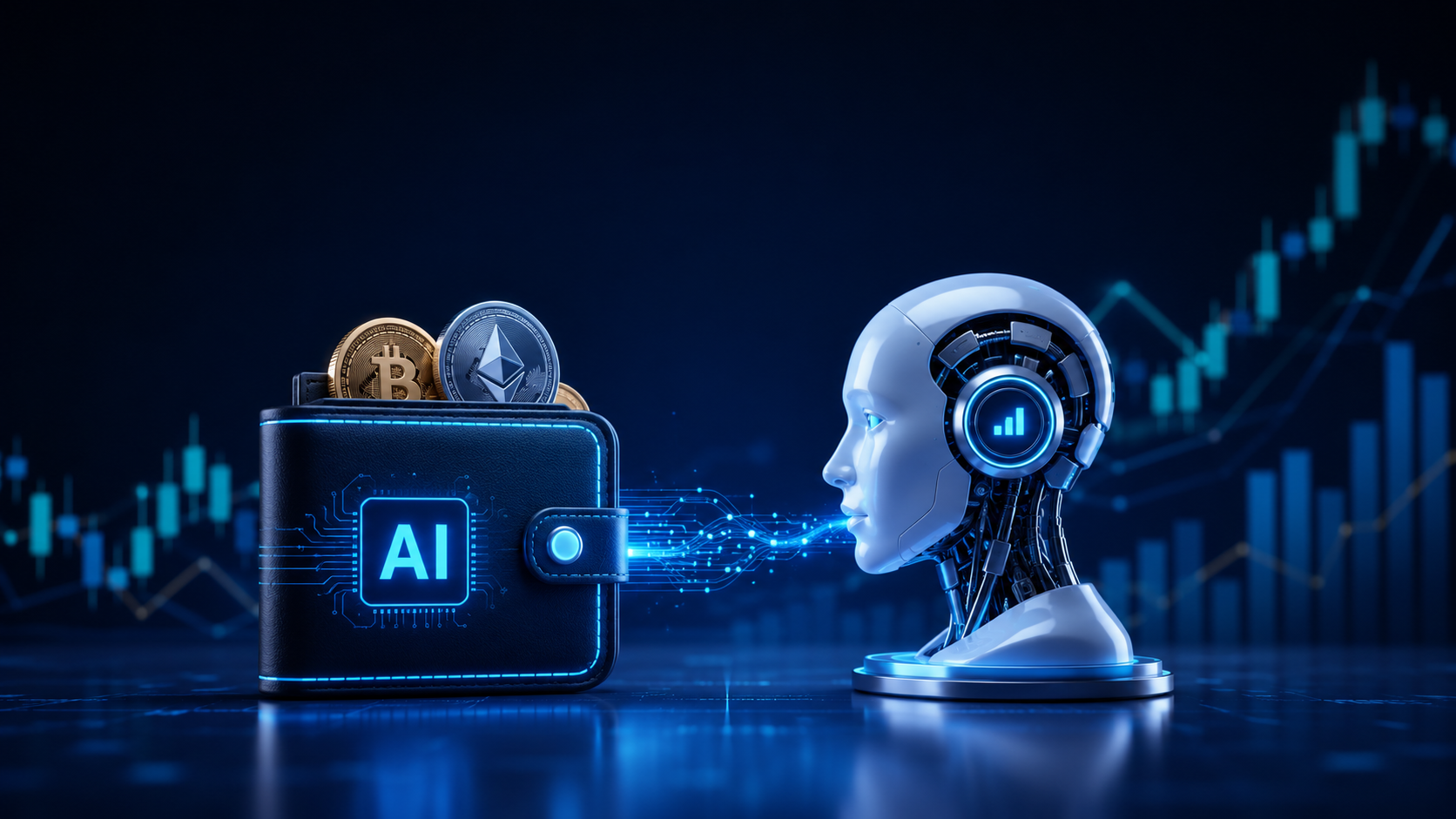
As we navigate through the mid-point of the decade, the global tech community is witnessing a monumental shift in digital architecture. The Web 4 hype in 2026 has officially superseded the speculative bubbles of previous years, moving beyond simple decentralization toward a reality where artificial intelligence and blockchain technology fuse into a single, autonomous financial ecosystem.
This transition marks a historical turning point for crypto exchanges and users alike, as we explore why the Web 4 hype in 2026 is fundamentally redefining the relationship between human intent and machine execution.
Key Takeaways
Before diving into the technical nuances of the current digital revolution, it is essential to understand the high-level shifts occurring in the industry:
-
Autonomy Over Ownership: While Web3 focused on who owns the data, Web4 focuses on who has the power to act upon that data autonomously.
-
The Convergence of Wallets: 2026 is the year human financial identities and AI-driven "agentic" wallets merge into a unified "Financial Digital Twin."
-
Machine-to-Machine (M2M) Economy: The implementation of the x402 protocol has enabled a multi-billion dollar economy where AI agents trade, pay, and earn without human intervention.
-
Web3 as the Bedrock: Decentralized infrastructure remains the non-negotiable foundation that prevents the Web 4 hype from turning into a centralized AI monopoly.
-
Sovereign AI Entities: The rise of "Automatons"—AI agents that must earn their own "keep" to pay for compute resources—is reshaping the labor market and investment strategies.
What is Web 4.0? The Integration of AI Agency and Blockchain
The current Web 4 hype in 2026 is not merely a rebranding of crypto; it is the birth of the Symbiotic Web. For a decade, we viewed the internet as a library of information (Web 1.0), a social playground (Web 2.0), and a marketplace of ownership (Web 3.0). Web 4.0, however, is the internet of Agency. It represents a state where the lines between human users and artificial intelligence programs blur, particularly within the context of financial transactions and digital asset management.
Defining Web 4: The "Agentic" Internet
Web 4 is best defined as the "Agentic Internet." In this framework, the primary users of the web are no longer exclusively humans clicking buttons on a screen. Instead, the web is populated by millions of AI Agents—autonomous programs capable of reasoning, planning, and executing complex tasks. These agents hold their own cryptographic keys, manage their own balances, and interact with smart contracts on behalf of their human "principals." This shift is the driving force behind the massive Web 4 hype in 2026, as it promises to remove the friction of human manual labor from the digital economy.
Beyond Interfaces: Why Autonomy is the Core of Web 4.0
Unlike previous iterations of the web that relied on Graphical User Interfaces (GUIs), Web 4.0 prioritizes "Intent-Based Interfaces." You no longer need to visit a crypto exchange, connect a wallet, and manually swap tokens. Instead, you communicate an intent—"I want to hedge my portfolio against inflation"—and tools like the KuCoin Smart Rebalance Bot use AI-suggested parameters to execute the entire chain of transactions autonomously. This autonomy is the core of Web 4.0, moving us from a world of "tools" to a world of "collaborators."
Web 3 vs. Web 4: The Evolution of Digital Sovereignty
To understand the scale of the Web 4 hype in 2026, one must distinguish it from its predecessor. Web 3.0 solved the problem of trustless ownership through the blockchain. It gave us the ability to hold assets like Bitcoin or Ethereum without a bank. However, Web 3.0 still required a human to sign every transaction, manage private keys, and understand the complexities of DeFi routing. Web 4.0 evolves this sovereignty into trustless execution.
Comparison Table: Ownership (Web3) vs. Executive Power (Web4)
| Feature | Web 3.0 (The Ownership Web) | Web 4.0 (The Agentic Web) |
| Primary Interaction | Human-to-Contract (Manual) | Agent-to-Agent (Autonomous) |
| Asset Management | Self-Custody (Requires active human management) | Delegated Sovereignty (AI manages within human guardrails) |
| Wallet Nature | Passive Vault (Storage focused) | Active Digital Twin (Earnings and execution focused) |
| Transaction Logic | Imperative (Do X, then Y) | Declarative (Achieve Result Z) |
| Economic Unit | Tokenized Assets | AI-driven Economic Output |
Why Web 3 is the Essential Infrastructure for Web 4
It is a common misconception in the current Web 4 hype in 2026 that Web3 has been replaced. In reality, Web 4.0 cannot exist without the decentralized rails of Web3. For an AI agent to be truly autonomous, it cannot be hosted on a centralized server that can be shut down by a single corporation. It needs:
-
Verifiable Identity (DID): To prove it is the authorized agent of a specific human.
-
Permissionless Payments: AI agents cannot open bank accounts at traditional institutions; they need stablecoins and blockchain rails.
-
Transparent Execution: The ability to verify on-chain that an agent followed its human-defined "constitution."
The Rise of Agentic Commerce: How AI Wallets Function in 2026
The practical manifestation of the Web 4 hype in 2026 is found in the way wallets have transformed. They have evolved from simple static addresses into sophisticated "Agentic Wallets." These wallets are equipped with localized Large Language Models (LLMs) that can interpret market data and execute trades in milliseconds. This is not just high-frequency trading; it is the democratization of sophisticated financial strategy, available to every individual through their AI-integrated exchange account.
The x402 Protocol: Machine-to-Machine Micro-payments
A major catalyst for the Web 4 hype in 2026 is the standardization of the x402 protocol. This protocol utilizes the long-dormant HTTP 402 "Payment Required" status code, allowing AI agents to pay each other for services—such as data processing or API access—using sub-cent micro-payments in stablecoins. This has created a vibrant Machine-to-Machine (M2M) economy where your AI wallet can "hire" other AI agents to perform specialized tasks, paying them instantly without ever involving a credit card or a traditional clearinghouse.
Automatons: Self-Sustaining AI Entities and Their Financial "Heartbeat"
The most radical development in 2026 is the emergence of "Automatons." These are sovereign AI entities that live on decentralized networks. Unlike traditional software, an Automaton has a financial "heartbeat"—a wallet balance that it must maintain to pay for its own hosting. This is visible in the AI-crypto projects future, where AI-driven market-making bots dynamically optimize liquidity 24/7.
2026 Roadmap: Predictions for the Web 4 Explosion
As we look toward the remainder of the year, the Web 4 hype in 2026 is expected to manifest in several disruptive ways. We are moving toward a period where the "Machine Economy" will begin to exceed the "Human Economy" in terms of transaction volume and frequency. This is not a future where humans are replaced, but one where our economic reach is exponentially expanded by our AI proxies.
The Emergence of AI "Employers" and Human Gig Workers
In a strange reversal of traditional labor, we are seeing AI agents act as "employers." Because AI agents can manage vast treasuries on-chain, they are increasingly hiring humans to perform "Proof of Physical Work" (PoPW) tasks—such as hardware maintenance, real-world data collection, or creative tasks that AI still struggles to master. In this Web 4 landscape, your next boss might be a smart contract managed by an AI agent that pays you in real-time for every completed micro-task.
From Crypto Wallets to "Financial Digital Twins"
The final stage of the Web 4 hype in 2026 is the total transition from crypto wallets to "Financial Digital Twins." This digital twin is a comprehensive reflection of your financial intent. It knows your risk tolerance, your philanthropic goals, and your long-term retirement needs. It operates in the background of your life—negotiating lower rates on your DeFi loans, automatically rebalancing your portfolio during market volatility, and even finding the best airdrop opportunities without you ever having to check a dashboard.
Conclusion
The Web 4 hype in 2026 represents the most significant paradigm shift since the invention of the blockchain itself. We have moved beyond the era of manual asset management into a new age of "Agentic Commerce," where AI and human financial identities are inextricably linked. By combining the trustless infrastructure of Web3 with the autonomous intelligence of Web4, we are building a global economy that is faster, fairer, and more efficient than ever before. As a leading crypto exchange, we are committed to providing the tools and security necessary for users to navigate this brave new world where their wallets aren't just tools—they are intelligent partners in wealth creation. The Web 4 hype in 2026 is not just a trend; it is the permanent fusion of human desire and machine execution.
FAQ
What exactly is the Web 4 hype in 2026?
The Web 4 hype in 2026 refers to the massive global interest and technological shift toward the "Agentic Web," where autonomous AI agents use blockchain infrastructure to earn, spend, and manage assets independently on behalf of humans.
How is Web 4 different from Web 3?
While Web 3 focuses on decentralized ownership and user-controlled data, Web 4 introduces autonomous execution. In Web 4, the primary users are AI agents that perform transactions and manage wallets without needing constant human approval for every action.
What are AI Wallets or "Agentic Wallets"?
AI Wallets are advanced crypto wallets integrated with AI models. They can interpret a user's financial goals and execute complex on-chain strategies, such as yield farming or trading, autonomously while staying within human-defined safety parameters.
Is my money safe if an AI agent is managing my wallet?
In the 2026 Web 4 ecosystem, security is managed through "Smart Account" technology and granular permissions. You can set strict limits on what an AI agent can do, ensuring it can only access a specific portion of funds for designated purposes.
Will the Web 4 hype in 2026 replace human workers?
Rather than replacing humans, Web 4 is creating a "Symbiotic Economy." AI agents handle repetitive financial and digital tasks, while humans focus on high-level strategy and physical-world tasks, often being paid by AI-managed protocols.
How can I participate in the Web 4 hype in 2026?
To participate, users should look for platforms like KuCoin that support AI-driven trading bots and smart wallet integrations. These tools allow you to deploy your first financial digital twin today.