

Fear Index Falls Back to 33: Has Crypto Market Sentiment Turned Bearish Again?
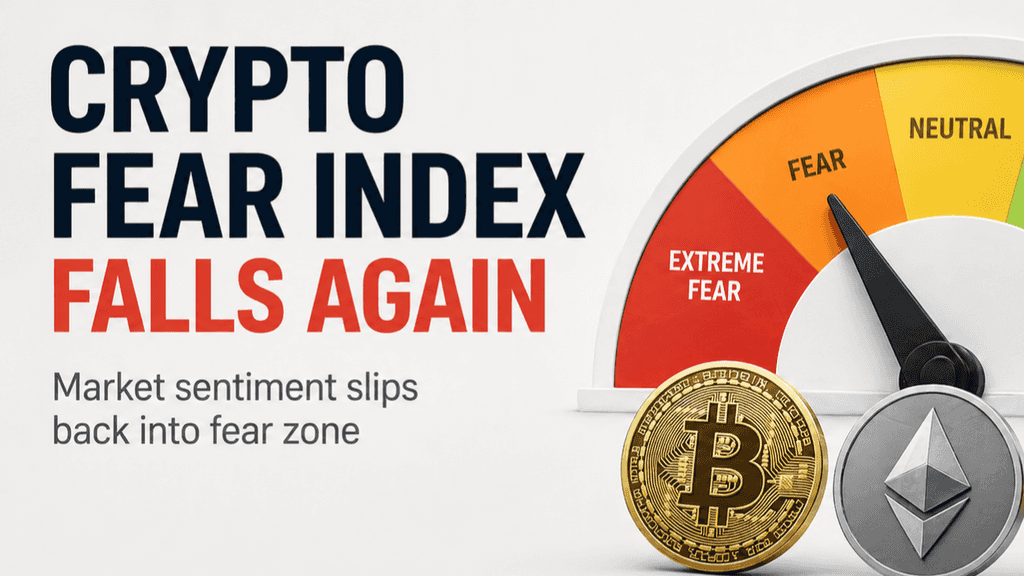
The Crypto Fear & Greed Index has fallen back to 33, pushing market sentiment deeper into the fear zone and raising fresh questions about whether traders are turning bearish again. After a short-lived improvement in confidence, the latest reading suggests that investors are once again becoming cautious about the near-term direction of the crypto market.
A reading of 33 does not represent extreme panic, but it does show that fear is playing a stronger role in market behavior. Traders are less willing to take aggressive risks, buying pressure appears less confident, and many investors may now be waiting for clearer confirmation before entering new positions.
This shift matters because sentiment is one of the strongest forces in the crypto market. Unlike traditional assets, where earnings, cash flows, and macro data often guide long-term valuations, crypto markets are heavily influenced by momentum, liquidity, and investor psychology. When sentiment improves, buyers often return quickly and support rallies. But when fear returns, even small pullbacks can become more intense as traders rush to protect capital.
The latest move back to 33 suggests that the market mood has clearly weakened. The key question now is whether this is the beginning of a broader bearish phase or simply another temporary sentiment setback.
Fear Returns After a Brief Recovery
The drop in the Fear Index shows that the recent improvement in market confidence has faded. Instead of moving closer to neutral territory, sentiment has slipped back into fear, suggesting that traders remain uncertain about the strength of the recovery.
Market sentiment often works like a feedback loop. When prices rise and traders feel confident, more investors are willing to buy. That creates stronger momentum, which can attract even more buyers. But when sentiment weakens, the opposite can happen. Traders become hesitant, buying slows, and sell-offs may face less resistance.
In the current environment, the move to 33 suggests that many investors are not yet convinced that the market has regained strength. They may be watching Bitcoin, Ethereum, and major altcoins closely for signs of stability before taking on more exposure.
Fear can also affect how traders respond to dips. In a bullish market, pullbacks are often seen as buying opportunities. Traders may rush to enter positions because they believe prices will quickly recover. But in a fearful market, dips can look dangerous. Instead of buying weakness, investors may step back and wait, allowing selling pressure to build.
That is why a fall in sentiment can have a real impact on price action. Even if the Fear Index itself does not move the market, it reflects how traders are likely to behave. A reading of 33 suggests that caution is becoming more visible, and that could make the market more vulnerable if prices fail to stabilize.
Fear Index Drops Back Into Caution Zone
A Fear Index reading of 33 places the crypto market in the fear zone. It shows that investors are cautious, but the market has not reached extreme panic.
This reading suggests:
-
Confidence is weaker: Traders are less certain about a recovery.
-
Risk appetite is lower: Investors may avoid aggressive buying.
-
Defensive moves are increasing: Some traders may reduce leverage or move into stablecoins.
-
Altcoins may face pressure: Riskier assets often struggle when sentiment weakens.
-
No full panic yet: The market is fearful, but not in capitulation.
Overall, 33 signals caution, not collapse. Traders may wait for stronger Bitcoin support, better altcoin performance, and higher buying volume before confidence returns.
Has the Bearish Mood Returned?
The fall to 33 suggests that bearish sentiment is returning, but it does not confirm that the market has entered a full bearish trend. Sentiment has clearly weakened, but price action still needs to confirm whether the market is truly breaking down.
This is a crucial point. Sentiment indicators are useful, but they should not be used alone. A fear reading can show that traders are nervous, but prices must confirm whether that nervousness is justified.
If Bitcoin continues to make lower highs, loses major support levels, and fails to recover quickly, the bearish case becomes stronger. If Ethereum and major altcoins also weaken at the same time, it would suggest that selling pressure is spreading across the market.
Volume is another important factor. A decline on low volume may show hesitation, but a decline on strong sell volume can indicate real pressure. If prices fall while trading volume increases, it may suggest that more participants are actively exiting positions.
On the other hand, if prices stabilize and buyers defend important support zones, the drop in sentiment may prove temporary. Crypto markets often swing between fear and neutral sentiment before choosing a stronger direction. A reading of 33 could simply reflect short-term uncertainty rather than the start of a deeper decline.
For now, the most accurate interpretation is that sentiment has turned defensive again. The market is not showing strong confidence, but it has not necessarily entered a confirmed bearish phase. Traders should watch whether fear continues to deepen or whether buyers step in to prevent further weakness.
This Sentiment Drop Matters
The move back into fear matters because sentiment can influence how traders react to the market. When confidence is strong, investors are more willing to buy dips, hold through volatility, and take risks in altcoins. When fear rises, traders often become more careful.
In a fearful market, investors may:
-
Sell faster during pullbacks.
-
Wait longer before entering new trades.
-
Avoid risky altcoins and speculative tokens.
-
Demand stronger confirmation before buying.
-
React more sharply to negative news.
Fear can also affect liquidity. If fewer traders are willing to buy aggressively, even small sell-offs can have a bigger impact on price, especially in altcoins.
At 33, the Fear Index shows caution, but not extreme panic. This means traders should be careful about assuming the market has already bottomed.
Bitcoin Remains the Key Market Signal
Bitcoin will likely decide whether the current fear reading turns into a deeper bearish phase or a temporary setback. As the largest and most important crypto asset, Bitcoin often sets the tone for the broader market.
If Bitcoin holds key support levels, sentiment may begin to recover. Traders often look to Bitcoin first for confirmation that risk appetite is returning. A strong Bitcoin rebound can help restore confidence and encourage investors to move back into altcoins.
However, if Bitcoin breaks below important support, the Fear Index could fall further. A decisive breakdown would likely increase anxiety across the market and could push sentiment closer to extreme fear.
Bitcoin’s price structure is especially important. If it continues to form lower highs and lower lows, traders may interpret that as a bearish trend. But if Bitcoin stabilizes, consolidates, and begins reclaiming resistance, the bearish mood may fade.
Ethereum and major altcoins are also important, but they often follow Bitcoin’s lead during uncertain periods. If Bitcoin is weak, altcoins usually struggle. If Bitcoin stabilizes but altcoins continue falling, that may show that risk appetite remains fragile.
This is why traders should not look at the Fear Index in isolation. A reading of 33 is meaningful, but it becomes much more useful when combined with price action, volume, and market structure.
Altcoins Could Face More Pressure
When sentiment falls into fear, altcoins often face greater pressure than Bitcoin. This happens because altcoins are generally viewed as higher-risk assets. During uncertain periods, traders may reduce exposure to smaller tokens first and move toward Bitcoin, stablecoins, or cash.
If the bearish mood continues, altcoin underperformance could become one of the clearest signs that risk appetite is weakening. Traders may avoid speculative tokens, reduce exposure to meme coins, and focus only on assets with stronger liquidity.
This does not mean every altcoin will fall equally. Stronger projects may hold up better, especially if they have active ecosystems, strong narratives, or major upcoming catalysts. But in a fearful market, broad altcoin rallies become harder to sustain.
Weak sentiment can also reduce demand for new token launches and speculative narratives. When traders are confident, they may chase new opportunities aggressively. When fear rises, they become more selective and less willing to take chances.
This makes the current reading of 33 especially important for altcoin traders. It suggests that the market is not in a strong risk-on phase. Until sentiment improves, altcoin rallies may remain fragile and vulnerable to quick reversals.
Could Fear Become a Contrarian Signal?
A falling Fear Index is usually interpreted as negative, but fear can sometimes become a contrarian signal. When too many investors become bearish, selling pressure may become exhausted. If prices stop falling despite weak sentiment, that can indicate that the market is preparing for a rebound.
However, not every fear reading is a buying signal. A reading of 33 shows caution, but it is not extreme enough to clearly suggest capitulation. Extreme fear readings are more commonly associated with moments when panic selling has already done significant damage.
At 33, the market is fearful but not fully distressed. That means there may still be room for sentiment to worsen if price action weakens further. Traders should be careful about assuming that fear alone means the market is near a bottom.
For fear to become a stronger reversal signal, several things would need to happen. Bitcoin would need to hold key support. Selling volume would need to fade. Altcoins would need to stop making deeper lows. The Fear Index would also need to stabilize or begin moving back toward neutral territory.
If those signals appear together, the current fear reading could eventually be seen as part of a bottoming process. But without confirmation, fear may simply reflect a market that is still vulnerable.
6 Key Signals That Could Confirm More Crypto Market Weakness
The move back into fear may be temporary, but traders need confirmation before calling it a deeper bearish phase. These six key signals could show whether crypto market weakness is becoming more serious.
-
Fear Index Drops Below 25
If the Fear Index falls below 25, sentiment would move into extreme fear. This would show that investor confidence has weakened sharply and that panic is becoming more visible in the market.
-
Bitcoin Breaks Major Support
Bitcoin remains the main signal for the wider crypto market. If Bitcoin loses major support levels and fails to recover quickly, selling pressure could increase across altcoins and other riskier assets.
-
Recovery Attempts Stay Weak
Weak rebounds are another warning sign. If every bounce fades quickly, it may show that buyers lack confidence. Failed recovery attempts can also encourage more traders to sell into rallies.
-
Sell Volume Starts Rising
Price declines become more concerning when they happen with higher sell volume. Rising sell volume suggests that more traders are actively exiting positions, not just waiting on the sidelines.
-
Altcoins Underperform Bitcoin
If altcoins fall harder than Bitcoin, it usually means risk appetite is weakening. Traders often reduce exposure to smaller and more volatile assets first when market sentiment turns defensive.
-
Negative Macro or Regulatory News Increases
Interest rate concerns, liquidity pressure, inflation data, regulatory headlines, or latest crypto news can deepen fear. In a cautious market, negative news can have a stronger effect and push sentiment even lower.
Together, these signals would make the bearish case stronger. If only one appears, the market may still stabilize. But if several happen at the same time, crypto could face more downside pressure.
What Needs to Happen for Sentiment to Recover?
For sentiment to recover, the Fear Index needs to move back toward neutral territory. A move toward 45 would suggest that investors are becoming more balanced. A move above 50 would indicate that confidence is returning and that traders are becoming more willing to take risks again.
But the index alone is not enough. Price action must also support the recovery. Bitcoin needs to hold support and begin reclaiming resistance levels. Ethereum and major altcoins need to show stronger stability. Volume needs to improve on upward moves, not just during sell-offs.
A recovery in sentiment would likely require several signs to appear together. Bitcoin would need to stop falling. Buyers would need to defend key levels. Altcoins would need to show less weakness. Volatility would need to cool. Macro conditions would need to become less threatening.
If these factors improve, traders may become more comfortable taking risk again. That could help the Fear Index rise and support a broader market recovery.
However, if prices remain unstable and the index continues falling, sentiment may stay weak. In that case, traders could remain defensive, and the market may need a stronger catalyst to regain momentum.
Conclusion
The Fear Index falling back to 33 shows that crypto sentiment has weakened again. Traders are more cautious, risk appetite is lower, and the market remains vulnerable to further downside.
However, this reading does not confirm extreme panic. The next move will depend on whether Bitcoin holds key support, altcoins stabilize, and buying volume returns.
FAQs
What does the Crypto Fear & Greed Index reading of 33 mean?
A reading of 33 means crypto market sentiment is in the fear zone. Traders are more cautious, risk appetite is weaker, and investors may be less willing to buy aggressively. However, 33 does not signal extreme panic.
Has crypto sentiment turned bearish again?
Sentiment has turned more defensive, but a confirmed bearish trend still depends on price action. If Bitcoin loses key support levels and selling volume rises, the bearish case becomes stronger.
Is a Fear Index reading of 33 bad for crypto?
It is not necessarily bad, but it shows weaker confidence. A reading of 33 suggests traders are worried and may be reducing risk. This can make the market more vulnerable to sell-offs if prices fail to stabilize.
Does 33 mean the market is in extreme fear?
No. Extreme fear usually appears at lower readings, often below 25. A reading of 33 shows fear, but not full panic or capitulation.
Why did the Fear Index fall back to 33?
The index may have fallen because traders are reacting to weak price action, failed rebounds, lower risk appetite, macro uncertainty, or concerns about Bitcoin and altcoin momentum.
Could this be a buying opportunity?
It could become one, but 33 is not extreme enough to clearly signal capitulation. Traders usually look for price stabilization, stronger volume, and support holding before treating fear as a reversal signal.
What should traders watch next?
Traders should watch Bitcoin support levels, altcoin performance, trading volume, volatility, and whether the Fear Index drops below 25 or recovers toward neutral territory.
What would confirm a stronger bearish trend?
A stronger bearish trend would be confirmed if Bitcoin breaks major support, altcoins underperform sharply, rebounds remain weak, and sell volume increases. A continued fall in the Fear Index would add to bearish pressure.
What would help sentiment recover?
Sentiment could recover if Bitcoin stabilizes, buyers defend key levels, altcoins stop weakening, market volatility cools, and the Fear Index moves back toward 45 or higher.
Is the crypto market in panic mode now?
Not yet. The current reading shows caution and fear, but not panic. The market is defensive, but traders still need price confirmation before calling it a deeper bearish phase.
Disclaimer
The information provided on this page may originate from third-party sources and does not necessarily represent the views or opinions of KuCoin. This content is intended solely for general informational purposes and should not be considered financial, investment, or professional advice. KuCoin does not guarantee the accuracy, completeness, or reliability of the information, and is not responsible for any errors, omissions, or outcomes resulting from its use. Investing in digital assets carries inherent risks. Please carefully evaluate your risk tolerance and financial situation before making any investment decisions. For further details, please consult KuCoin’s Terms of Use and Risk Disclosure.