

USD1 Stablecoin: The Rising Dark Horse in Cryptocurrency and Its Ecosystem
Introduction
In the ever‑evolving world of cryptocurrency, new projects constantly emerge. Some promise the moon and fade quickly. Others stick around and quietly carve out meaningful roles in the broader digital finance landscape.
In recent years, stablecoins, digital assets designed to hold a stable price, have become foundational to how people use cryptocurrencies. They act as bridges between volatile crypto tokens and the real‑world dollar. Among these digital dollars, one name has begun to attract attention as an unexpected contender: USD1.
USD1’s growth has been rapid since its introduction. This article explains what USD1 is, reviews its development and structure, explores how it works, and provides context around why it’s gaining traction. By the end, you’ll have a clear understanding of this “dark horse” stablecoin and how it fits into the wider world of crypto.
What Is USD1 Stablecoin?
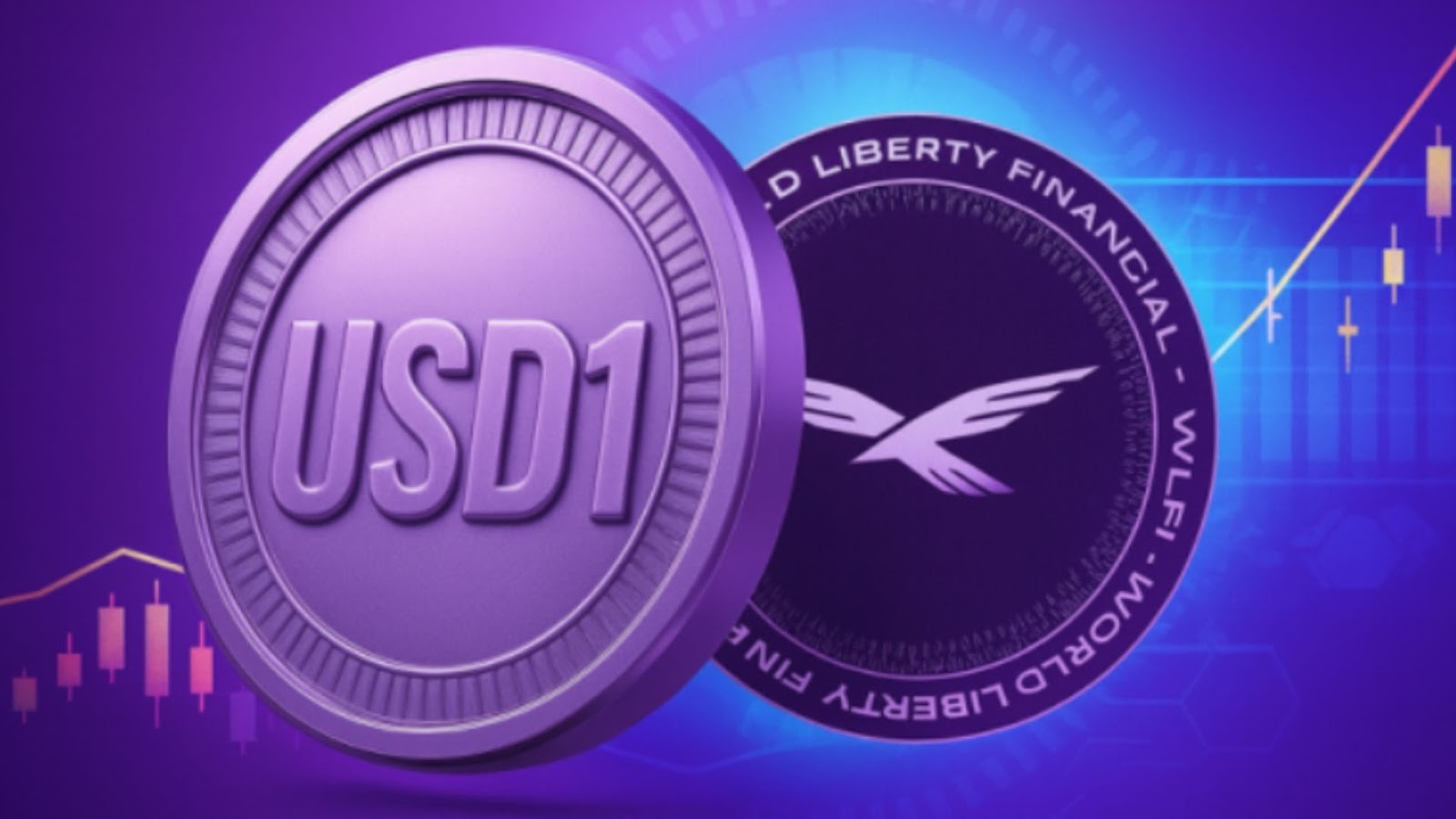
USD1 (USD1) is a type of stablecoin, a digital token that aims to maintain a consistent value equal to one U.S. dollar. In contrast to volatile cryptocurrencies like Bitcoin or Ether, stablecoins are designed to maintain stable prices so people can trade, save, or make payments without worrying about sharp price swings. They are critical tools in decentralized finance (DeFi) and crypto markets.
USD1 Stablecoin is issued within the World Liberty Financial ecosystem and reportedly backed by real-world assets, including cash and short-term U.S. government securities. This structure is designed to help maintain its dollar peg.
From the outset, USD1 has been positioned as a dark horse stablecoin, aiming to serve both everyday DeFi users and larger institutional players. Because its backing is said to include regulated deposits and treasury instruments, the intention is to inspire confidence among a wide range of participants.
Over time, the USD1 token has reportedly expanded across multiple blockchains, including Ethereum, BNB Chain, and Solana. This multi-chain approach is one of the reasons it is often described as a dark horse contender, quietly building reach across different ecosystems.
History and Development
USD1’s entry into crypto markets happened in 2025, when its issuer, World Liberty Financial, introduced it as a stablecoin backed 1:1 by U.S. dollars and dollar‑linked assets. From day one, the design focused on transparency, institutional readiness, and regulatory compliance, with reserves held by reputable custodians.
What set the USD1 token apart early on was its rapid market presence. Within months of launch, it attracted significant interest and liquidity, climbing into the top tiers of stablecoin market capitalizations far faster than most new entrants.
Market observers note that part of USD1’s momentum came from large partnerships and use cases, including major investment deals that selected USD1 as a settlement token. These high‑profile collaborations helped boost market confidence and adoption beyond casual retail traders.
That said, the stablecoin has not been without its challenges. Like all digital financial instruments, particularly newer ones, USD1 has faced scrutiny and testing from market pressures. At times, market conditions and social‑media events have briefly pushed its price slightly below the intended $1 peg, though these movements were small and short‑lived.
Project Mission and Vision
The vision of USD1 is rooted in a practical reality: crypto markets need reliable dollar‑equivalent tokens to function smoothly. Without stablecoins, everyday crypto trading, lending, borrowing, and decentralized applications would be far harder to use due to price volatility. USD1token aims to fill that role while offering strong reserve backing and broad access across varied blockchain environments.
Unlike algorithmic stablecoins (which rely on internal rules to adjust supply and price), USD1 follows a classic “reserve‑backed” approach. This means every token issued is designed to be backed by a corresponding pool of assets, and holders have confidence they can redeem USD1 for its dollar equivalent when markets allow.
The broader mission within its ecosystem context is two‑fold:
-
Provide a trustworthy digital dollar alternative: one that doesn’t fluctuate wildly and can be used for trading, payments, and settlement.
-
Support a larger ecosystem of DeFi and blockchain integration: where USD1 serves not just as a token but as infrastructure, enabling liquidity, lending, and cross‑chain activity.
By positioning itself this way, USD1 Stablecoin seeks to complement existing stablecoins and bring fresh utility to markets that increasingly demand fast, transparent, and interoperable digital assets.
Key Features and Innovations
USD1 introduces several features that contribute to its reputation as a dark horse stablecoin, although some remain unverified:
1. Reserve‑Backed Stability
One of the most important aspects of USD1 tokens is its reserve-backed stability. Unlike algorithmic stablecoins, which attempt to maintain a fixed price through supply manipulation or complex financial mechanisms, USD1 maintains its $1 peg through tangible financial assets. Each USD1 token is supported by a combination of cash, short-term U.S. Treasury securities, and other liquid, low-risk assets held in regulated custody.
This approach provides a transparent and reliable reference point for the token’s value. Users know that for every USD1 token in circulation, there is an equivalent amount of liquid assets held securely by trusted custodians. This is particularly important during periods of market volatility, when less-backed stablecoins may experience price swings.
The reserve-backed model not only reassures retail users but also provides institutions and large investors with confidence that USD1tokens can be used for transactions, settlements, and treasury management without exposing them to undue risk. The combination of a stable value and high-quality backing makes USD1 a dependable medium of exchange and store of value in the digital asset ecosystem.
Beyond backing, USD1 Stablecoin also places strong emphasis on auditing and transparency. Regular reporting and independent audits ensure that users can verify the reserves, reinforcing trust and credibility. In a market where trust is paramount, this feature sets USD1 apart from competitors that may lack verifiable backing or transparency in their reserve management.
2. Multi‑Chain Availability
Another key innovation of USD1 is its multi-chain availability. In contrast to stablecoins that are limited to a single blockchain ecosystem, USD1 is designed to operate seamlessly across several major networks, including Ethereum, Smart Chain (BSC), and Solana. This multi-chain functionality allows users to choose the blockchain environment that best suits their needs, whether for trading, lending, or integrating with decentralized applications (dApps).
Multi-chain deployment is more than a technical feature; it is a strategic innovation that addresses a critical limitation faced by many stablecoins. Users often face high transaction fees or network congestion on a single blockchain, but USD1’s presence across multiple networks allows them to switch chains without losing the peg or liquidity. This flexibility significantly broadens its potential user base and integrates USD1 more fully into the growing DeFi and cross-chain ecosystems.
Furthermore, developers building decentralized platforms can integrate USD1 more easily because it is already available on several of the most widely used blockchains. This interoperability accelerates adoption and allows USD1 to function not only as a transactional asset but also as a base layer for liquidity pools, lending protocols, and other DeFi infrastructure.
3. Institutional Focus and Integration
USD1 tokens is not just designed for casual or retail users. Its architecture and operational design are intentionally tailored to meet the needs of institutional players. This includes banks, hedge funds, corporate treasuries, and cross-border settlement systems that require a stable, liquid, and regulated digital dollar equivalent.
By offering an asset that combines both stability and transparency, USD1 positions itself as an attractive option for treasury management, cross-border payments, and digital settlements. Some early partnerships and market integrations reflect this institutional ambition, demonstrating USD1’s ability to operate at scale and meet rigorous compliance requirements.
This institutional focus is significant because many stablecoins struggle to gain traction with larger players due to regulatory uncertainty or concerns about the transparency of backing. USD1 addresses these issues head-on, offering clear reserve reporting, third-party audits, and robust infrastructure. The result is a stablecoin that appeals to both everyday DeFi participants and professional finance actors, bridging the gap between traditional finance and digital assets.
4. Transparent Custody
Transparency is a recurring theme in USD1’s design, particularly regarding how reserves are stored and audited. Reserves are held with established custodians, which means they are secured under regulated conditions that meet high industry standards. This is a crucial innovation because the lack of trust in reserve backing has undermined the credibility of several other stablecoins in the past.
In addition to secure custody, USD1 Stablecoin supports regular third-party audits that allow anyone to verify the amount and composition of the reserves. This level of openness builds confidence among users, exchanges, and institutions, signaling that USD1 operates in a fully transparent and responsible manner.
Transparent custody also plays a critical role in compliance. Regulatory bodies and institutional users often require clear reporting and assurance that assets are securely held and not subject to undue risk. USD1’s approach addresses these needs, making it a trustworthy choice for participants across different jurisdictions and use cases.
Moreover, this transparency extends to operational processes and governance. Updates to the protocol, decisions on reserve allocation, and audits are documented and publicly available, reinforcing USD1’s commitment to openness. Users can engage with the stablecoin ecosystem knowing that accountability and clarity are built into its foundation.
TL;DR
USD1 tokens are a stablecoin designed to hold a steady value equal to one U.S. dollar. It is backed by real dollar reserves and short‑term U.S.
Treasuries are built for use across blockchains and markets. Born within a growing crypto ecosystem, USD1 Stablecoin has quickly become one of the larger stablecoins by market size and utility.
Project Features
USD1 tokens are not just another stablecoin; they are a carefully engineered digital asset designed to meet the demands of both everyday users and professional participants in the cryptocurrency ecosystem. The features below highlight why USD1 is gaining traction and how it differentiates itself in the crowded stablecoin market.
1. 1:1 Dollar Peg
At the core of USD1 is its 1:1 dollar peg, meaning each USD1 token is designed to maintain a value of 1 U.S. dollar. This is achieved by backing every token with real-world USD assets, including cash and short-term U.S. Treasury securities. The 1:1 peg provides users with confidence that the value of USD1 will remain stable, even in volatile cryptocurrency markets.
This feature is particularly important for traders and investors who need a safe, stable asset to store value, settle transactions, or move funds across exchanges without the risk of sudden price swings. Unlike purely algorithmic stablecoins, which rely on market mechanics to maintain their peg, USD1’s backing with tangible assets creates a more reliable foundation.
2. Multi‑Chain Deployment
USD1 Stablecoin is designed to operate across multiple major blockchains, including Ethereum, Binance Smart Chain, and Solana. This multi-chain deployment allows users to transact on their preferred blockchain, providing flexibility and accessibility.
By being available across multiple networks, USD1 avoids the limitations of stablecoins tied to a single blockchain. Users can choose the blockchain that suits their needs, whether it is for lower transaction fees, faster confirmation times, or integration with specific decentralized applications (dApps). Multi-chain support also encourages broader adoption among developers, enabling them to integrate USD1 across DeFi platforms, liquidity pools, and other financial services without being restricted to a single network.
3. Institutional‑Ready Design
USD1 tokens are built with an institutional focus in mind. While it is accessible to retail users, its structure, compliance measures, and backing assets are tailored to meet the needs of banks, hedge funds, and corporate treasuries.
Institutional participants can use USD1 for cross-border payments, digital settlements, or treasury management. This dual-purpose design serving both retail and institutional users makes USD1 a versatile stablecoin capable of operating at scale. Its adoption by larger financial actors also strengthens liquidity and reinforces confidence in the token’s stability and reliability.
4. Reserve Transparency
Transparency is a defining characteristic of USD1. The reserves backing the token are held by regulated custodians, and third-party audits are conducted to verify these holdings.
This ensures that all USD1 tokens in circulation are fully backed by secure, liquid assets. Users can access information about the reserves, promoting trust and confidence in the stablecoin. In a market where reserve mismanagement has undermined some stablecoins, USD1’s transparent custody structure provides a significant advantage, assuring both retail and institutional users of its reliability.
5. DeFi Ecosystem Support
USD1 is designed to integrate seamlessly into the DeFi ecosystem, functioning as a settlement token, liquidity anchor, and base asset for decentralized protocols.
Its stability and broad accessibility allow developers to build lending platforms, liquidity pools, and other financial services with a dependable digital dollar. Users can also participate in DeFi activities such as borrowing, lending, and yield farming with USD1, without worrying that volatility will erode their capital. This integration strengthens both the token’s utility and its position in the wider decentralized finance ecosystem.
Tokenomics of USD1
The tokenomics of USD1 are deliberately designed to prioritize stability, transparency, and utility over speculative price growth. Unlike volatile cryptocurrencies, which can experience dramatic swings in value driven by market sentiment or speculation, USD1 aims to serve as a dependable digital dollar that maintains its value and serves as a reliable medium of exchange in both retail and institutional settings. Understanding USD1’s tokenomics requires examining the peg mechanism, backing assets, custody, market use, and the liquidity infrastructure that supports it.
Peg Mechanism
At the heart of USD1 is its 1:1 dollar peg, which ensures that one USD1 token is always intended to equal one U.S. dollar. This peg is maintained through a reserve of high-quality financial assets, primarily cash and short-term U.S. Treasury securities. By linking each token directly to real-world U.S. dollar assets, USD1 avoids the volatility that affects other cryptocurrencies and provides a stable, predictable reference point for users, traders, and institutions.
This approach is particularly important in decentralized finance (DeFi) applications, where stablecoins serve as the foundation for lending, borrowing, and liquidity pools. A stable and reliable token like USD1 reduces risk for participants and encourages broader adoption across ecosystems where price stability is essential.
Backing Assets
The value of USD1 Stablecoin is further reinforced by carefully chosen backing assets. In addition to cash reserves, USD1 is supported by short-term government securities and regulated dollar deposits. These assets are low-risk, highly liquid, and well recognized in global financial markets.
The combination of cash and government securities ensures that USD1 maintains its stability even during periods of market turbulence. For example, if there is a sudden surge in demand for USD1, the reserves can be tapped to meet redemption requests, helping maintain the token’s peg and providing users with confidence that each token is fully backed by tangible assets.
Custody and Transparency
USD1’s backing assets are held in institutional-grade custody, with regular audits and transparent reporting expected. This level of oversight is crucial for building trust among both retail users and institutional investors. By providing verifiable evidence of the reserves, USD1 ensures that its 1:1 peg is credible and secure, distinguishing it from other stablecoins that may lack transparency or sufficient reserve coverage.
Third-party audits play a vital role in this process, allowing independent verification of asset holdings and reinforcing confidence in the token’s financial integrity. For participants in DeFi and broader crypto markets, this transparency is essential for informed decision-making and risk management.
Market Use and Liquidity
Unlike governance or utility tokens, USD1 is not designed for speculative investment or price appreciation. Its primary function is to circulate as a medium of exchange through trading, decentralized finance platforms, and settlement of digital transactions.
Liquidity for USD1 Stablecoin is supported across both centralized and decentralized exchanges, enabling smooth trading and seamless integration into various crypto ecosystems. This dual-channel availability ensures that USD1 can be used for a wide range of purposes, including cross-border payments, DeFi operations, and corporate treasury management, while maintaining easy convertibility to U.S. dollars.
In essence, USD1’s tokenomics are simple yet robust: each token equals one dollar, backed by secure, liquid reserves and supported by transparent custodial practices. Its design emphasizes stability over speculation, ensuring that USD1 functions as a reliable digital dollar for both everyday users and institutional participants. By combining strong asset backing, audit transparency, and liquidity across multiple platforms, USD1 provides a trustworthy stablecoin solution in an increasingly complex cryptocurrency landscape.
Conclusion
Stablecoins like USD1 play a practical role in cryptocurrency markets. They act as conduits between volatile digital assets and the steady value of world currencies. USD1 is distinctive because of its swift adoption, institutional focus, and multi‑chain accessibility.
As the crypto ecosystem continues to mature, having a variety of stablecoin options strengthens the infrastructure that traders, developers, and everyday users rely on. USD1’s growth suggests an appetite for stablecoins backed by transparent reserves and designed for both retail and institutional use.
If you’re exploring cryptocurrency or decentralized finance, understanding how stablecoins function and how USD1 fits into that landscape can sharpen your perspective on digital assets and their real‑world applications.
Frequently Asked Questions (FAQs)
1. What makes USD1 different from other stablecoins?
USD1 emphasizes reserve backing with regulated assets and multi‑blockchain support, aiming to be broadly used in both DeFi and institutional contexts.
2. Can USD1 ever lose its dollar peg?
Like all stablecoins, minor price deviations can happen during market stress, but the design aims to keep it close to $1 with backing assets.
3. How is USD1 Stablecoin backed?
Reserves include U.S. dollar deposits and short‑term government securities held by regulated custodians.
4. Where can USD1 be used?
It’s widely used in crypto trading, as a settlement token, and within DeFi protocols.
5. Is USD1 audited?
The project supports third‑party audits of its reserves to maintain transparency.
6. What blockchains is USD1 available?
USD1 runs on multiple chains, including Ethereum, Binance Smart Chain, Solana, and others.
7. Is USD1 suitable for beginners?
USD1 is relatively easy to use for stable value storage, but like all crypto assets, it carries adoption and technical risks.
8. Will USD1 continue to grow?
Its expansion depends on market adoption, on‑chain integration, and reserve transparency over time.