

How High Will XRP Go After the Lawsuit? Details Explained
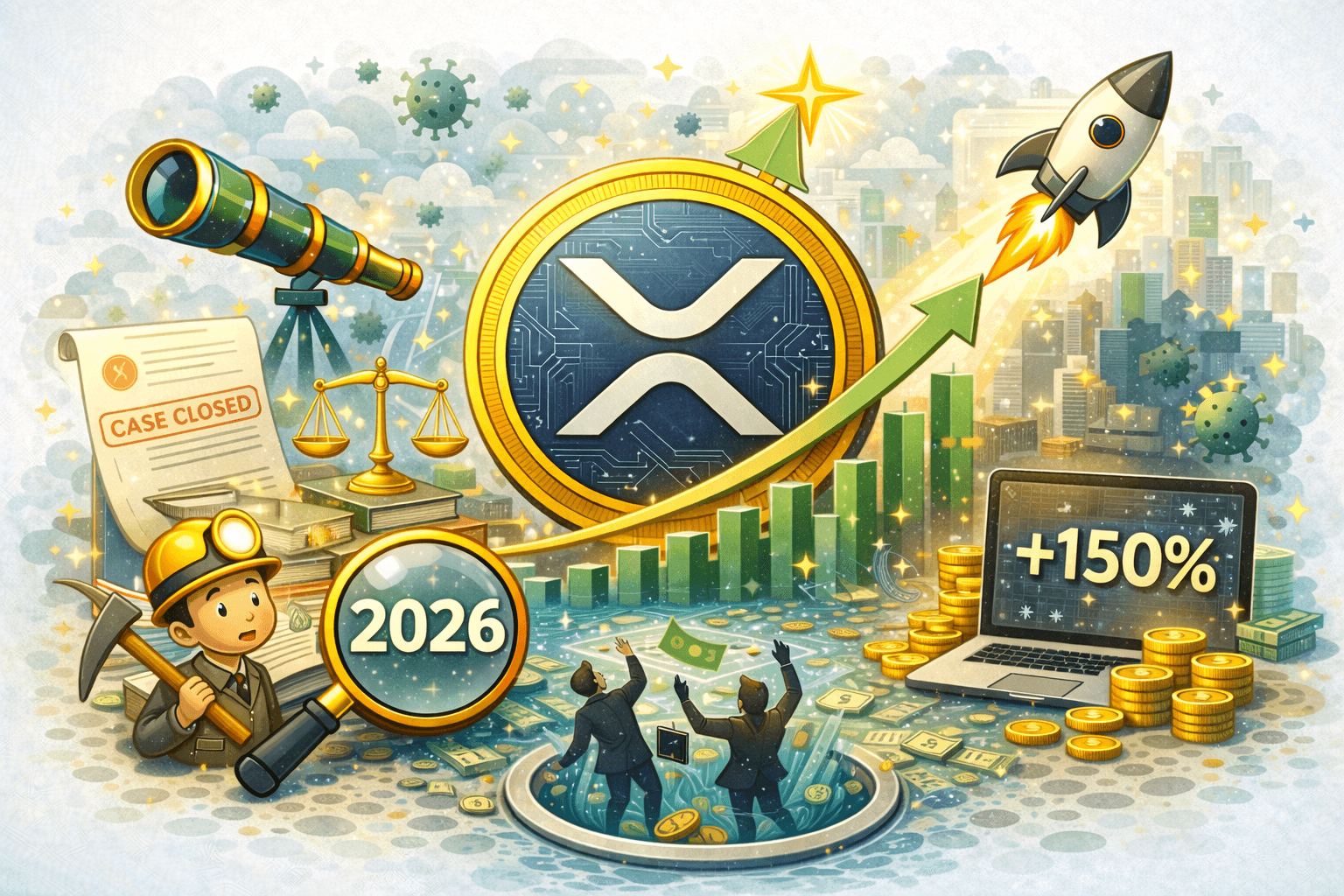
The legal battle between Ripple Labs and the U.S. Securities and Exchange Commission (SEC) has been the most significant regulatory event in the history of digital assets. For years, the uncertainty surrounding the classification of XRP acted as a "price ceiling," suppressing institutional adoption and preventing the asset from reaching its full market potential. In March 2026, the industry is navigating a post-lawsuit environment where regulatory clarity is finally a reality.
Understanding the trajectory of XRP requires more than just speculative charts; it requires a deep dive into the legal outcomes, institutional demand, and the technical utility of the XRP Ledger (XRPL). While many associate digital assets with Ripple mining, it is essential to remember that XRP's value is driven by consensus-based liquidity and its role as a global bridge currency. For those interested in trading or accessing the token's markets, the following analysis explores the factors that will define the next chapter for XRP.
What is XRP?
XRP is a digital asset native to the XRP Ledger (XRPL), an open-source, decentralized blockchain technology. Unlike assets that rely on proof-of-work (mining), the XRPL uses a consensus protocol to validate transactions in three to five seconds. Its primary purpose is to serve as a bridge asset for cross-border payments, allowing financial institutions to move value instantly without the need for pre-funded accounts in foreign jurisdictions.
What is the XRP Lawsuit?
The lawsuit began in December 2020 when the SEC filed a complaint against Ripple Labs and its top executives. The agency alleged that Ripple raised over $1.3 billion through an unregistered securities offering of XRP. This legal challenge fundamentally questioned whether XRP was a currency or a security a distinction that determined how it could be traded, listed on exchanges, and utilized by banks in the United States.
What Happened with the XRP Lawsuit?
The litigation concluded with a series of landmark rulings that provided the industry with a long-awaited "legal playbook." The resolution was reached in stages:
-
The Summary Judgment: In July 2023, Judge Analisa Torres ruled that XRP is not a security when sold to the general public on digital asset exchanges. However, she found that certain direct sales to institutional investors did constitute securities transactions.
-
The Final Settlement: By August 2025, the case officially reached its conclusion. Both Ripple and the SEC withdrew their respective appeals, leaving the 2023 ruling intact as the final judgment. Ripple was ordered to pay a civil penalty of approximately $125 million, a figure significantly lower than the SEC’s original multi-billion dollar demand.
-
Regulatory Clarity: The end of the appeals process established that XRP has a unique status in the U.S.—it is currently the only digital asset with a clear court-mandated distinction between retail and institutional sales.
How High Will XRP Go After the Lawsuit?
With the legal "overhang" removed, market analysts in early 2026 have shifted their focus to price discovery based on fundamentals rather than court dates. Projections vary significantly based on whether the focus is on technical analysis or structural adoption.
Institutional Projections
Major financial institutions have begun modeling XRP's price based on its role in the "tokenization of everything." Standard Chartered, for instance, has maintained a long-term target of $8.00, citing the influx of spot ETF capital and the token's integration into global settlement layers. Other conservative estimates from Wall Street analysts suggest a base case of $2.45 to $3.50, representing a steady growth curve as market data and trading pairs become more liquid.
The Tokenization Thesis
The most aggressive targets—some reaching above $200—are based on "mechanical math" rather than typical trading patterns. This thesis suggests that if the XRP Ledger captures even 1.75% of the projected $200 trillion market for tokenized real-world assets (RWA), the liquidity requirements alone would push the price of XRP into the hundreds of dollars. While these figures are mathematically possible within the protocol's architecture, they rely on a level of adoption that has not yet been fully realized.
What Could Drive XRP Higher After the Lawsuit?
The resolution of the lawsuit has unlocked several catalysts that were previously blocked by legal risk:
-
Spot ETF Approvals: Following the final judgment, several asset managers received approval for spot XRP ETFs. These products allow institutional capital to flow into XRP through traditional brokerage accounts, creating a consistent source of "buy pressure."
-
Re-listing on Global Exchanges: The legal clarity prompted exchanges that had previously delisted XRP to restore trading. Increased accessibility naturally leads to higher volume and liquidity.
-
RLUSD and Stablecoin Integration: Ripple’s introduction of its USD-pegged stablecoin (RLUSD) on the XRP Ledger has created new use cases. XRP serves as the "gas" and the bridge for these stablecoin transactions, increasing its organic utility.
-
Infrastructure Partnerships: Institutional post-trade clearing houses have begun connecting to the XRPL. This allows for the settlement of traditional securities—like stocks and bonds—directly on the ledger, requiring XRP for transaction fees and liquidity.
What Could Hold XRP Back After the Lawsuit?
Despite the positive legal outcome, several factors could dampen the upward momentum of XRP:
-
Escrow Releases: Ripple still holds a significant portion of the total XRP supply in escrow. The monthly release of 1 billion tokens ensures that new supply continues to enter the market, which can act as a natural drag on price if demand does not keep pace.
-
Macroeconomic Headwinds: Like all digital assets, XRP is sensitive to interest rate decisions by the FOMC and global inflation data. A broader "risk-off" environment in traditional markets often leads to a sell-off in altcoins.
-
Competition in Payments: While Ripple was a first-mover in blockchain-based cross-border payments, other protocols and centralized "FedNow" style systems are competing for the same market share.
-
Execution Risk: The high price targets of $8.00 or higher depend on Ripple successfully converting its pilot programs with central banks into full-scale, daily production volume.
Traders looking to deepen their understanding of these risks can read more through research resources that track on-chain metrics and holder concentration.
Summary
The conclusion of the Ripple vs. SEC lawsuit marks a watershed moment for the entire digital asset industry. By removing the threat of being classified as an unregistered security in the retail market, XRP has entered a phase of institutional maturity. While the speculative "hype cycles" of the past may still trigger volatility, the long-term value of the asset is now tethered to its utility in the "Internet of Value."
As we move through 2026, the success of XRP will be measured by its ability to maintain key support levels—currently identified by technical analysts around the $1.80 mark—and its success in capturing the tokenized asset market. Staying informed via platform updates and announcements is essential for anyone navigating this newly regulated landscape.
The legal war is over; the battle for global utility has just begun.
Sign up for KuCoin today to buy, sell, and manage your entire crypto portfolio in one simple dashboard. Register Now!
FAQs
Is XRP now officially non-security?
Yes, under the final judgment from the U.S. District Court, XRP itself is not a security. Specifically, its programmatic sales on public exchanges are not considered securities transactions. However, the court ruled that certain historic direct sales to institutions were unregistered securities offerings.
How did the $125 million penalty affect Ripple?
The penalty was significantly lower than the SEC’s requested $2 billion. Ripple characterized the outcome as a victory, as it allowed the company to resolve the litigation and focus on expanding its international business without the burden of ongoing legal disputes.
Can XRP reach $10 in 2026?
While some institutional analysts like Geoffrey Kendrick have set targets as high as $8.00 based on ETF inflows and regulatory clarity, reaching $10 would require a significant increase in the broader crypto market cap or a major surge in the tokenization of real-world assets on the XRPL.
Why does Ripple still have XRP in escrow?
The escrow system was created to provide transparency and predictability to the XRP supply. By locking up the majority of its holdings and releasing them on a set schedule, Ripple prevents a sudden "dump" of tokens that could destabilize the market.
What is the role of the RLUSD stablecoin in XRP's price?
RLUSD is a stablecoin launched by Ripple to complement XRP. While RLUSD provides price stability for payments, XRP is still required to pay transaction fees on the ledger and acts as the primary bridge currency for swapping between different stablecoins and fiat currencies.
Further reading
Disclaimer: The information on this page may have been obtained from third parties and does not necessarily reflect the views or opinions of KuCoin. This content is provided for general informational purposes only, without any representation or warranty of any kind, nor shall it be construed as financial or investment advice. KuCoin shall not be liable for any errors or omissions, or for any outcomes resulting from the use of this information. Investments in digital assets can be risky. Please carefully evaluate the risks of a product and your risk tolerance based on your own financial circumstances. For more information, please refer to our Terms of Use and Risk Disclosure.