

Michael Burry Warns of a 1987-Style Crash: Could U.S. Stocks and Bitcoin Fall Together?
2026/08/05 16:25:00
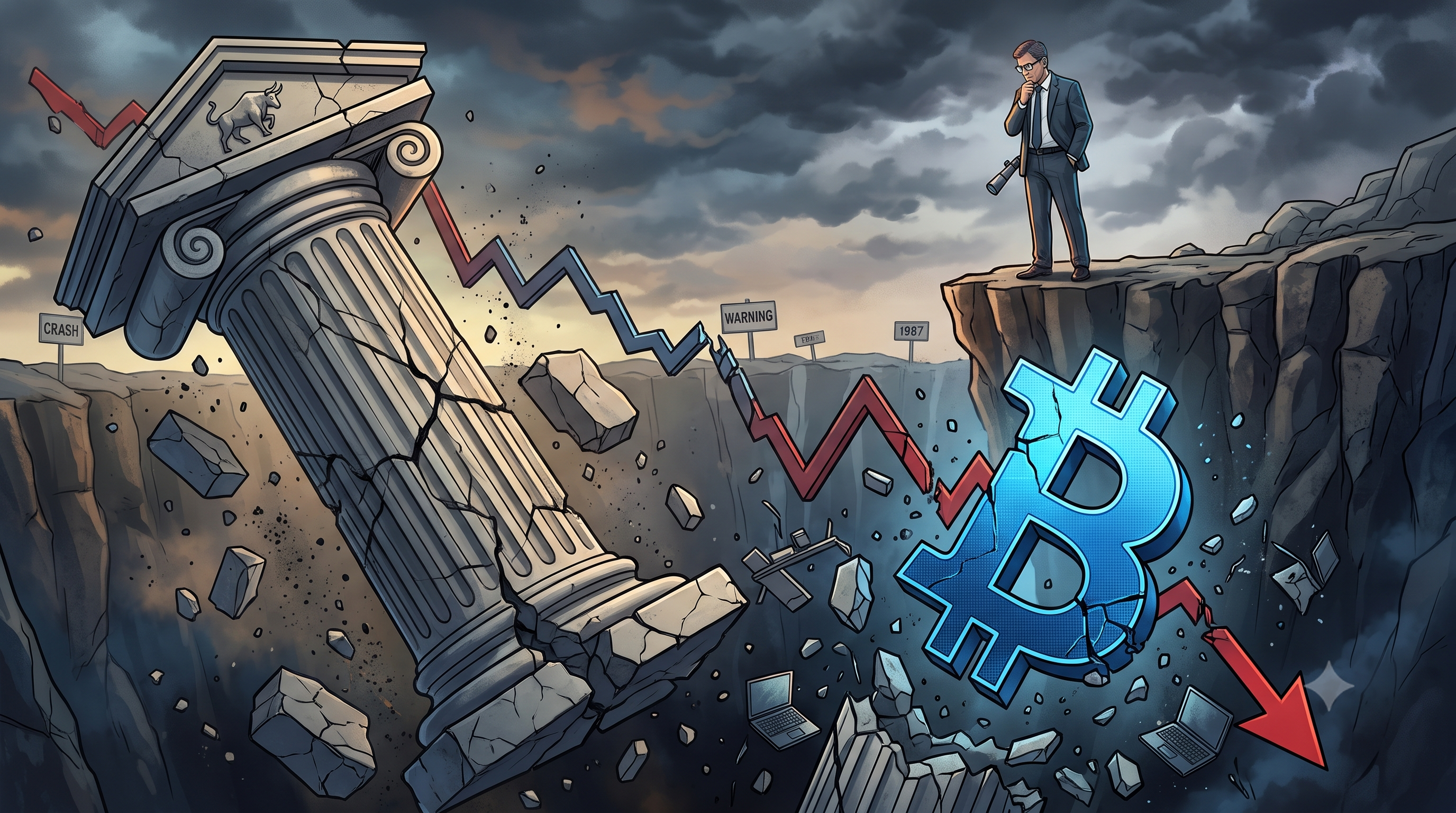
Michael Burry is once again challenging Wall Street’s dominant narrative. The investor known for betting against the U.S. housing market before the 2008 financial crisis believes American stocks may be approaching a major top. His latest warning is not simply that valuations are high. He is concerned that automated trading, volatility-sensitive funds and crowded positions could transform an ordinary correction into a disorderly sell-off resembling the market mechanics of 1987.
That possibility matters far beyond traditional finance. Bitcoin is now held by hedge funds, exchange-traded funds, public companies and investors who also own technology stocks. During a sudden liquidity shock, those connections could cause U.S. equities and cryptocurrencies to fall together. Bitcoin might eventually benefit from lower interest rates or emergency liquidity, but its first reaction could look more like a leveraged risk asset than digital gold. The central question is therefore not whether Burry can predict the exact date of another crash. It is whether he has identified a market structure capable of transmitting panic from Wall Street to crypto within hours.
What Did Michael Burry Actually Say?
Burry did not announce a precise crash date, nor did he claim that the Dow Jones Industrial Average must repeat the 22.6% one-day decline recorded on Black Monday. His argument is more conditional. He believes the U.S. market may be near an important top, while acknowledging that record prices and fear of missing out could still attract buyers before a reversal begins.
The most important part of his warning concerns forced selling. Burry estimated that volatility-sensitive strategies oversee roughly $500 billion. In his scenario, even an initial decline of around 2.5% in the S&P 500 could cause some of these funds to reduce their equity exposure significantly. The first wave of selling could raise volatility, which would then force additional strategies to cut risk. He warned that the resulting feedback loop could create what he called a “bloody mess.”
That distinction is crucial. Burry is not arguing that one disappointing earnings report will suddenly destroy the U.S. economy. He is warning that a modest decline could interact with automated strategies, stop-loss orders and shrinking liquidity in a way that produces an exaggerated market reaction.
His thesis is therefore about both valuation and structure. Expensive markets can decline gradually without creating a crisis. The more dangerous situation arises when expensive assets are held by investors and algorithms that may all attempt to exit at the same time.
Why Burry Thinks U.S. Stocks Are Near a Top
The first part of Burry’s concern is the concentration of investor enthusiasm around artificial intelligence. AI has generated genuine revenue growth, enormous demand for advanced chips and unprecedented data center construction. However, stock prices reflect expectations about the future, not only current demand. When expectations become extremely optimistic, companies can produce strong results and still disappoint the market.
Burry also questions whether the financial returns from AI infrastructure will ultimately justify the amount being spent. Technology companies are committing large sums to accelerators, servers, networking equipment, power systems and data centers. Those investments carry depreciation, financing, electricity and maintenance costs. If revenue from AI services develops more slowly than infrastructure spending, investors may reconsider the valuations assigned to the entire supply chain.
Rapid hardware development creates another challenge. A highly expensive accelerator or data center system may remain physically functional for years, yet become economically outdated much sooner if the next generation delivers substantially better performance per dollar or per watt. That possibility makes the profitability of today’s capital expenditure harder to calculate.
Finally, the same companies dominating the AI trade also have a large influence on major stock indexes. A reversal in semiconductor and mega-cap technology shares would not remain isolated within one industry. It could weaken index performance, passive funds, options markets and investor sentiment at the same time.
Why the 1987 Comparison Matters
Black Monday occurred on October 19, 1987, when the Dow Jones Industrial Average fell 22.6% in a single trading session. The crash had multiple causes, but program trading and a strategy known as portfolio insurance were widely viewed as important amplifiers. Portfolio insurance attempted to control losses by selling stock-index futures as markets declined. When many institutions followed similar rules simultaneously, falling prices generated more selling rather than attracting buyers.
Burry’s comparison focuses on that feedback mechanism. The modern market does not use the same portfolio-insurance systems, but it contains other strategies that adjust exposure according to volatility, momentum and market trends.
| 1987 Market Structure | Possible Modern Equivalent |
| Portfolio insurance | Volatility-targeting and risk-parity strategies |
| Program selling of index futures | Algorithmic selling across futures, ETFs and options |
| Falling prices required additional hedging | Rising volatility forces funds to reduce exposure |
| Limited liquidity during heavy selling | Multiple strategies attempt to exit simultaneously |
| Panic spread across connected markets | Equity weakness reaches credit, currencies and crypto |
There are also major differences. Modern markets have circuit breakers, more developed risk-management systems and institutions prepared to supply emergency liquidity. Information moves faster, and regulators can temporarily pause trading during extreme declines. These safeguards may reduce the probability of an exact replay of 1987.
They cannot, however, eliminate the underlying problem of crowded positioning. A trading halt may slow the process, but it does not remove redemption requests, margin calls or the need for leveraged investors to cut risk. The real lesson from 1987 is not that history must repeat point for point. It is that risk-control systems can become sources of instability when too many participants use similar rules.
How a Small Decline Could Become a Large Sell-Off
Imagine that the S&P 500 declines because of an earnings disappointment, an unexpected inflation report or weaker guidance from a major AI company. A fall of 2% or 3% would normally be considered a routine correction. However, that decline also raises realized and implied volatility.
Volatility-targeting funds generally seek to maintain a relatively stable level of portfolio risk. When measured volatility rises, they may lower their stock exposure. Trend-following strategies can also begin selling if an index breaks important momentum levels. Options dealers may need to adjust their hedges, while leveraged investors face higher margin requirements.
The selling sequence can then become self-reinforcing:
Initial decline → Higher volatility → Systematic funds reduce exposure → Prices fall further → Stop-losses and margin calls activate → Liquidity deteriorates
The problem is not that every strategy reacts at exactly the same price. It is that many can react in the same direction over a relatively short period. Buyers may step away because they do not know how much forced selling remains, leaving each new order to produce a larger price movement.
Burry has also suggested that modern market recoveries may be faster because automated systems can accelerate both selling and subsequent risk rebuilding. A crash-like decline could therefore be followed by a violent rebound. That would make timing the event extremely difficult even for investors who correctly identify the underlying vulnerability.
Why AI and Semiconductor Stocks Are at the Center
Burry has placed particular attention on semiconductor shares, including the iShares Semiconductor ETF, or SOXX. He reportedly established bearish positions after arguing that the sector had become unusually expensive relative to sales and excessively extended above long-term price trends.
The timing attracted attention after SOXX declined about 21% during July 2026. Semiconductor companies such as Micron, Intel and Marvell also experienced substantial monthly losses, although many remained sharply higher for the year. The movement demonstrated how quickly momentum can reverse in a sector that had previously attracted intense investor enthusiasm.
Semiconductors are especially important because their valuations depend on expectations for years of AI capital expenditure. If cloud providers reduce spending, delay facilities or become more selective about hardware, the effects could spread across chips, memory, networking and power infrastructure.
Still, semiconductor weakness does not prove that the AI cycle has ended. A sector can undergo a major valuation correction while its revenue continues to grow. The more defensible conclusion is that AI-related stocks have become a potential source of market instability because expectations, index weight and investor positioning are all unusually high.
Could U.S. Stocks and Bitcoin Fall Together?
The Liquidity Channel
During a sudden market shock, investors do not always sell the assets they dislike most. They often sell the assets that are easiest to trade. Bitcoin operates continuously across global exchanges and has significantly greater liquidity than most cryptocurrencies. A fund facing losses or margin pressure elsewhere may therefore sell BTC to raise dollars quickly, even when its long-term view of Bitcoin has not changed.
The Sentiment Channel
Bitcoin’s relationship with stocks varies over time, but institutional adoption has connected it more closely to the traditional financial system. Research and market analysis have found that Bitcoin has frequently maintained a stronger relationship with equities than with commodities or gold, although the strength of that correlation changes across market regimes.
A sharp Nasdaq decline would signal that investors are abandoning high-duration, high-volatility assets. Crypto funds, retail traders and market makers could respond by reducing exposure. Bitcoin might decline first, followed by Ethereum and then less-liquid altcoins. What begins as a Wall Street event could rapidly become a broad risk-off move.
The Leverage Channel
Crypto markets add a mechanism that traditional equity markets do not reproduce in exactly the same form: continuous liquidation through perpetual futures. When BTC declines, leveraged long positions may fall below their maintenance-margin requirements. Exchanges then close those positions automatically, creating additional market sell orders.
This means the transmission can run in both directions. Weak equities create crypto selling, crypto selling triggers liquidations, and liquidation data frightens investors already concerned about global risk. Because crypto trades through weekends and overnight U.S. hours, it may also become the first market to express fear when traditional exchanges are closed.
Is Bitcoin a Safe Haven or a Risk Asset?
Bitcoin can behave differently depending on the stage of a crisis. During the immediate shock, demand for cash and collateral often dominates long-term monetary narratives. Investors sell volatile assets, reduce leverage and seek the currency in which their liabilities are denominated. Under those conditions, Bitcoin is likely to trade as a risk asset.
The second stage depends on the policy response. If central banks lower interest rates, expand liquidity or take emergency steps to stabilize markets, financial conditions may become more supportive of Bitcoin. Research has shown that market and funding-liquidity shocks can help explain changes in Bitcoin volatility, reinforcing the importance of broader financial conditions.
The longer-term stage is different again. A crisis that leads to currency debasement, rising sovereign debt concerns or distrust in financial intermediaries could strengthen Bitcoin’s digital-gold narrative. Its fixed issuance schedule and non-sovereign structure may become more attractive after the initial panic has passed.
Bitcoin can therefore fail as an immediate crash hedge while benefiting from the monetary response that follows. That is not necessarily contradictory. Gold itself can decline temporarily during a severe liquidity event before recovering as investors reassess policy, inflation and currency risk.
Three Ways the Market Could React
Burry’s warning represents one possible path, not the only one. A useful framework is to consider how different levels of stress could affect stocks and cryptocurrencies.
| Scenario | U.S. Stocks | Bitcoin | Altcoins |
| Normal correction | Gradual decline followed by stabilization | Temporary pullback with limited liquidation | Larger but manageable losses |
| Quant-driven sell-off | Rapid decline and volatility spike | Sharp initial fall as liquidity tightens | Severe losses and cascading liquidations |
| Policy-led recovery | Rebound after intervention or easier conditions | Potentially strong recovery | Uneven rebound led by higher-quality assets |
Scenario 1: A Normal Correction
The first scenario is a conventional 5% to 10% equity correction. AI stocks lose some of their valuation premium, but earnings remain solid, credit markets function normally and economic expectations do not collapse. Bitcoin probably declines with risk appetite, while leverage is reduced without causing systemic damage. This outcome would challenge the most dramatic interpretation of Burry’s warning without necessarily disproving his concerns about valuation.
Scenario 2: A Quant-Driven Liquidity Event
In the second scenario, a modest decline triggers volatility strategies, trend funds and leveraged portfolios to sell simultaneously. Equity indexes fall quickly, market depth weakens and correlations rise as investors sell almost everything. Bitcoin could experience a larger percentage decline than the S&P 500 because of its higher volatility and the speed of crypto liquidations. Lower-cap altcoins would likely suffer the most because they combine thin liquidity with speculative positioning.
Scenario 3: A Fast Policy Reversal
The third scenario begins with a severe decline but changes when policymakers provide liquidity or signal easier financial conditions. Stocks recover as funding stress falls. Bitcoin may rebound particularly strongly because it responds both to renewed risk appetite and expectations of greater monetary liquidity. Altcoins could recover as well, although projects with weak liquidity or excessive token supply may remain below their previous levels.
Warning Signs Crypto Investors Should Watch
No single indicator can confirm that a 1987-style event is beginning. A higher VIX may reflect ordinary hedging, and a weak semiconductor session may represent normal profit-taking. The risk becomes more serious when traditional and crypto indicators deteriorate together.
Key signals include:
-
A simultaneous breakdown in the S&P 500, Nasdaq and semiconductor indexes;
-
A rapid volatility increase accompanied by weaker market liquidity;
-
High-yield credit spreads widening as the U.S. dollar strengthens;
-
Bitcoin falling while funding rates and open interest remain elevated;
-
Sustained crypto ETF outflows and rapid deterioration in altcoins relative to BTC;
-
Large liquidation clusters appearing during U.S. equity-market weakness.
The combination matters more than any isolated number. Falling stocks, a stronger dollar and widening credit spreads would suggest a broader reduction in risk rather than rotation between industries. If Bitcoin then loses important price levels while leverage remains high, the probability of cascading liquidations would increase.
Investors should also observe how markets respond to positive news. When strong earnings or favorable inflation data fail to generate durable gains, it can indicate that buyers are becoming exhausted. Conversely, rapid recovery after negative news would suggest that liquidity and risk appetite remain resilient.
How Crypto Investors Can Prepare
Preparing for a tail-risk event does not require predicting the exact date of a crash or opening aggressive short positions. The objective is to avoid a situation in which temporary volatility forces permanent losses.
A practical framework includes:
-
Reducing leverage that cannot survive a sharp intraday decline;
-
Separating long-term spot holdings from short-term trading positions;
-
Avoiding excessive concentration in AI tokens and high-beta altcoins;
-
Maintaining enough liquidity to avoid selling during forced liquidations;
-
Defining rebalancing and risk limits before volatility rises;
-
Reviewing counterparty exposure across exchanges, custodians and stablecoins.
Direct short selling carries its own dangers. Markets can rally far beyond what fundamentals appear to justify, and put options lose value as time passes. Even an investor who correctly identifies a bubble may lose money by choosing the wrong maturity, strike price or position size.
Defensive positioning can therefore be simpler than attempting to profit from a crash. Smaller positions, lower leverage and more liquid holdings reduce dependence on perfect timing. Investors should also distinguish between a change in long-term Bitcoin fundamentals and a short-term decline caused by global deleveraging.
Final Verdict
Michael Burry’s warning should not be interpreted as proof that another Black Monday is imminent. He has not supplied a precise date, and the modern market differs significantly from the financial system of 1987. Corporate earnings may remain resilient, AI investment could generate stronger returns, and policymakers possess tools capable of limiting a liquidity crisis.
The warning nevertheless highlights a real vulnerability. Volatility-sensitive funds, passive investment, leveraged strategies and concentrated technology positions can create a market in which selling produces more selling. If that cycle begins, Bitcoin is unlikely to remain completely separate from Wall Street. During the first stage of a liquidity shock, U.S. stocks and BTC could fall together as investors raise cash and crypto liquidations accelerate.
Bitcoin’s longer-term response would depend on what happens next. Emergency liquidity, lower rates or renewed concerns about fiat currencies could eventually support a powerful recovery. The immediate lesson for crypto investors is therefore not to bet everything on either a crash or a rescue. It is to recognize that digital assets are increasingly connected to the same liquidity system that drives global stocks.
|
KuCoin is celebrating its 9th anniversary with a special platform campaign filled with exclusive rewards, trading activities, and limited-time offers. Don’t miss the chance to participate and enjoy the benefits as the exchange marks nine years of growth and innovation. Visit the official campaign page now:
|

FAQs
Did Michael Burry predict the exact date of the next market crash?
No. Burry described a possible market structure and a potential forced-selling scenario. He did not provide a confirmed date for a crash or guarantee that the market would reproduce the exact decline experienced in October 1987.
What is a volatility-targeting fund?
A volatility-targeting fund adjusts its market exposure to maintain a chosen level of portfolio risk. When volatility is low, it may hold more stocks or leverage. When volatility rises, the model may reduce exposure, potentially adding to selling pressure during a decline.
Can circuit breakers prevent another Black Monday?
Circuit breakers can pause trading and give investors time to process information, but they cannot eliminate losses or the need for funds to reduce leverage. Selling pressure can return after trading resumes or move into related markets that remain open.
Does holding stablecoins eliminate crash risk?
Stablecoins reduce exposure to cryptocurrency price fluctuations but introduce different risks. These include loss of the currency peg, reserve quality, issuer solvency, exchange failure, custody problems and regulatory restrictions. Their safety depends on both the stablecoin and how it is held.
Why could altcoins fall more than Bitcoin during a panic?
Altcoins generally have lower liquidity, smaller market capitalizations and greater dependence on speculative demand. Many also carry high leverage or concentrated token ownership. When investors reduce risk, limited buying depth can cause altcoin prices to fall much faster than BTC.
Disclaimer: This content is for informational purposes only and does not constitute investment advice. Cryptocurrency investments carry risk. Please do your own research (DYOR).