

What is Bitgo Wallet? A Complete Guide
2026/03/20 15:00:02
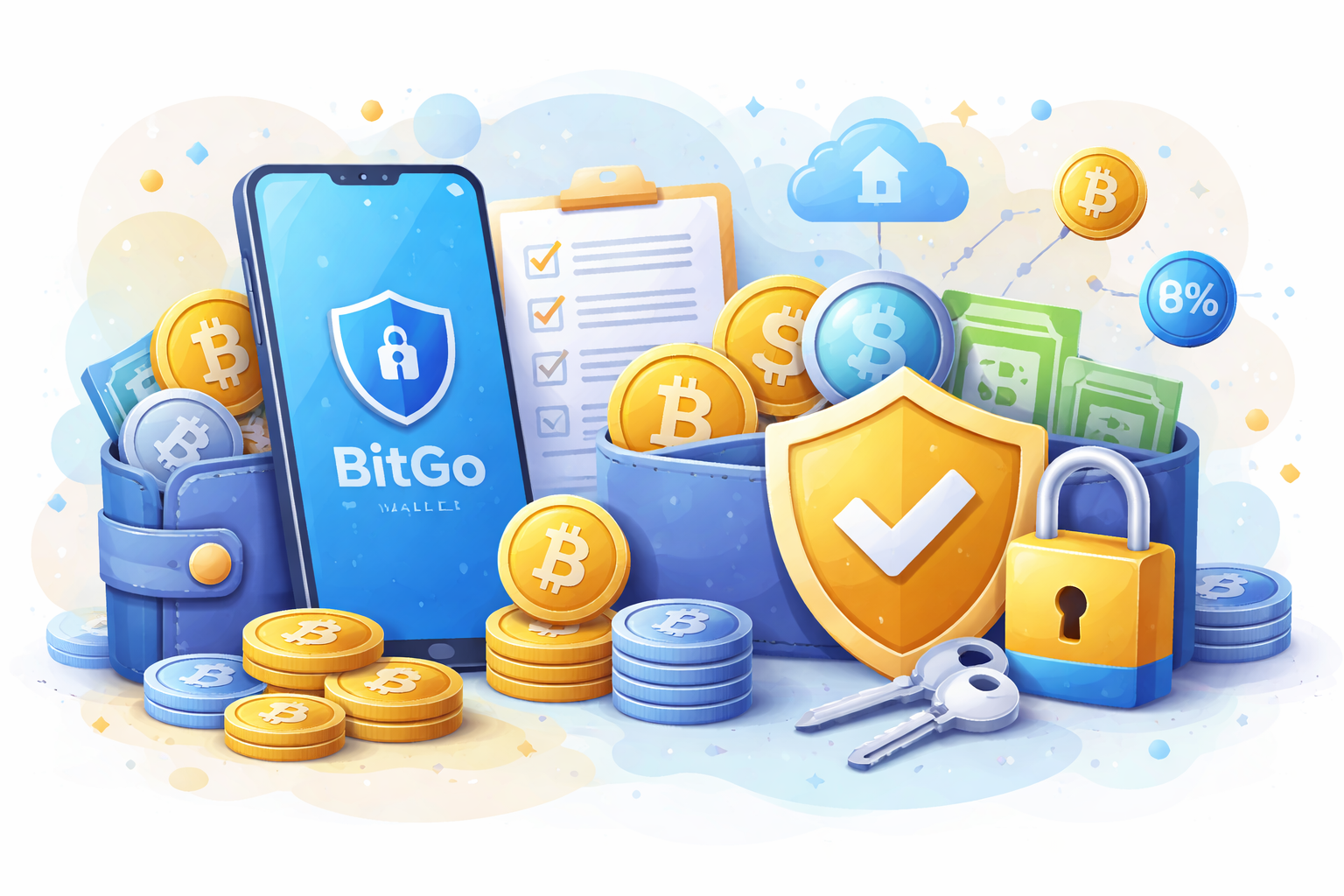
The digital asset landscape is characterized by its rapid evolution and the recurring phenomenon of crypto bubbles, which often drive significant market volatility. As institutional participation increases, the need for secure, regulated, and scalable storage solutions has become a primary concern for participants seeking to safeguard their holdings from both external threats and internal operational failures. Digital asset custody is no longer a peripheral technical concern but a core requirement for fiduciary responsibility in a global economy.
The following guide explores the technical architecture and functional capabilities of a prominent institutional-grade storage solution. By understanding the mechanics of BitGo Wallet, users can better navigate the complexities of the blockchain ecosystem and manage the risks associated with crypto bubbles and market shifts.
Key Takeaways
-
BitGo Wallet utilizes multi-signature (multisig) and Threshold Signature Scheme (TSS) technology to eliminate single points of failure.
-
The platform caters primarily to institutional clients, offering qualified custody and regulated trust services under bank-level oversight.
-
Users can choose between self-custodial, cold storage, and hot wallet configurations based on their specific liquidity and governance needs.
-
The "2-of-3" key management system ensures that no single party, including the platform itself, can authorize a transaction independently.
-
Integrated policy engines allow organizations to set automated guardrails, such as transaction limits and address whitelisting, to maintain operational control.
-
Identifying the late stages of crypto bubbles is essential for determining when to move assets into long-term cold storage to preserve capital.
What Is BitGo Wallet?
BitGo Wallet is a specialized digital asset storage platform that focuses on providing high-security infrastructure for institutions and high-net-worth individuals. Founded in 2013, the company is recognized for commercializing multi-signature technology, which has since become a standard for securing large-scale cryptocurrency holdings. Unlike standard consumer wallets, this platform is built to handle the rigorous compliance and operational requirements of regulated financial entities, making it a foundational piece of the digital asset economy.
The architecture is designed to prevent the total loss of funds in the event that a single private key is compromised. In the context of the recurring cycles of crypto bubbles, where asset valuations can fluctuate violently, having a structured custody solution is a prerequisite for professional risk management. The service operates under a qualified custodian model, meaning it adheres to strict regulatory standards regarding the segregation and protection of client assets, ensuring they are bankruptcy-remote and never commingled.
For those trading or accessing the token's markets globally, BitGo acts as a technical layer of security. It supports a vast array of digital assets across multiple blockchain protocols, ensuring that users can manage a diverse portfolio from a single, auditable interface. This centralization of security protocols reduces the operational overhead often associated with managing multiple individual wallets across different networks, providing a unified framework for asset management.
How does BitGo Wallet work?
The core functionality of the wallet rests on the principle of distributed authorization, ensuring that no single individual or device holds the power to move funds. This is achieved through two primary cryptographic methods that adapt to the specific requirements of different blockchain networks.
The Multi-Signature (Multisig) Mechanism
In a standard multisig setup, the wallet is governed by a 2-of-3 key structure. This means three separate private keys are generated for every wallet:
-
The User Key: Held by the client and used to initiate and sign transactions.
-
The BitGo Key: Held by the platform to provide a co-signature after verifying the transaction against pre-set policies.
-
The Backup Key: Held offline or by a third-party partner to act as an emergency recovery tool if the user loses their primary key.
Threshold Signature Scheme (TSS)
For blockchains that do not natively support multisig, BitGo utilizes Threshold Signature Scheme (TSS) technology. TSS uses Multi-Party Computation (MPC) to create a single digital signature from multiple "key shares." Unlike multisig, where multiple full keys are visible on the blockchain, TSS signatures appear as a single signature, which can reduce transaction costs and increase privacy. This is particularly useful when analyzing market data and trading pairs for assets that require high-frequency movement. TSS allows for the same 2-of-3 security logic while remaining protocol-agnostic.
Key Features of BitGo Wallet
The platform offers a suite of tools designed to provide both security and operational flexibility for professional users, moving beyond simple storage to a comprehensive management suite.
-
Qualified Custody: Assets are held in cold storage within a regulated trust company. This status provides a higher level of legal protection and fiduciary oversight compared to standard exchange wallets.
-
Automated Policy Engine: Users can define custom rules for transactions, such as daily spending limits, video identity verification for large transfers, and multi-user approval workflows. This ensures that operational behavior remains consistent and auditable.
-
Cross-Chain Support: The infrastructure supports over 1,500 digital assets, including major protocols and emerging tokens, allowing for portfolio diversification without sacrificing security.
-
Off-Exchange Settlement: Through the Go Network, institutions can trade and settle assets while keeping them in regulated, qualified custody. This reduces counterparty risk during the volatile periods common to crypto bubbles.
-
Staking and DeFi Access: Recent integrations allow self-custodial wallets to connect to decentralized applications. This enables users to earn rewards on their holdings or participate in governance directly from their secure environment.
Pros and Cons of using BitGo Wallet
Selecting a custody provider requires a careful balance between the protective measures offered and the speed at which a user needs to interact with the market.
| Feature | Advantage | Disadvantage |
| Security Architecture | Eliminates single points of failure via 2-of-3 keys. | Requires more steps to execute a single transaction. |
| Regulatory Status | Regulated as a trust bank, providing institutional peace of mind. | KYC and onboarding processes are more rigorous than retail wallets. |
| Insurance Coverage | Offers dedicated insurance coverage against loss or theft. | Premiums and service fees can be high for smaller portfolios. |
| Asset Diversity | Broad support for various tokens and standards. | The complexity of managing many assets can overwhelm beginners. |
While the platform provides exceptional protection against external hacks, the operational friction required to move funds out of qualified custody may be a drawback for active day traders. During the peak of crypto bubbles, where exit liquidity is a priority, the time-lock or multi-approval features could delay a quick response to market changes. For deep research on how these trade-offs affect long-term returns, traders often utilize further reading and research resources to stay informed on the evolving landscape of digital asset security.
BitGo Wallet Alternatives
When evaluating the infrastructure for digital asset management, it is necessary to consider different architectural approaches that cater to specific operational needs.
Institutional Infrastructure
For organizations seeking an alternative to the 2-of-3 multisig model, some platforms focus entirely on MPC technology. These solutions often provide lower latency for high-frequency trading because they do not require multiple on-chain signatures, making them more cost-effective in terms of gas fees. These are typically used by hedge funds and market makers who require rapid execution across a vast number of chains simultaneously.
Retail and Hardware Solutions
Individual investors who find the enterprise suite too complex often turn to hardware wallets. These devices provide the user with full control over their private keys but lack the institutional-grade "checks and balances" such as role-based access control or managed backup services. While suitable for smaller amounts, these are generally considered insufficient for corporate treasuries that must protect against the systemic risks posed by crypto bubbles and potential internal human error.
Is BitGo Wallet Safe to Use?
Safety is the defining characteristic of this platform, supported by over a decade of operational history and multiple layers of cryptographic defense. The 2-of-3 key structure ensures that even if a user's computer is compromised, an attacker cannot steal funds without also gaining access to either the BitGo server key or the physical backup key. This redundancy is the primary defense against the types of exploits that often occur during the height of crypto bubbles, when security is often overlooked in favor of rapid gains.
The platform undergoes regular third-party audits, including SOC 2 Type 2 certifications, which verify that internal controls and security protocols are being followed. Furthermore, the use of bank-grade physical vaults for cold storage keys provides a physical layer of security that digital-only wallets cannot match. This approach prevents automated attacks and ensures that the "invisible foundation" of the assets remains intact even during extreme market stress.
For those concerned about platform-specific risks, staying updated through platform updates and announcements is critical. While no system is perfectly infallible, the combination of cold storage, multisig, and a regulated trust structure makes this one of the most resilient storage solutions in the current financial ecosystem. The safety of the platform is further bolstered by the policy engine, which allows users to set their own risk tolerance levels and automated guardrails.
Summary
BitGo Wallet remains a cornerstone of the institutional digital asset infrastructure, offering a regulated and cryptographically secure environment for managing wealth. By pioneering multi-signature technology and evolving to include MPC and TSS solutions, it provides a robust defense against the volatility and systemic failures often associated with crypto bubbles. While the complexity and cost may be higher than retail-focused wallets, the peace of mind provided by qualified custody and distributed key management is indispensable for professional participants. As the industry continues to mature, such layered security models will be essential for the long-term stability of the blockchain economy.
Sign up for KuCoin today to buy, sell, and manage your entire crypto portfolio in one simple dashboard. Register Now!
FAQs
What happens if I lose my private key?
If you lose your primary user key, you can still recover your funds using the backup key. Because BitGo uses a 2-of-3 system, any two keys can authorize a transfer. Typically, the user would combine the backup key with the BitGo server key to move the funds to a new, secure address, ensuring that access is never permanently lost.
Is BitGo Wallet appropriate for a beginner?
The platform is primarily designed for enterprises, developers, and institutional investors. While individuals can use it, the setup process and the focus on "policies" and "multi-user approvals" can be more complex than standard mobile wallets. Beginners may find the interface more technical than expected, though the safety benefits are significant.
How does BitGo protect against crypto bubbles?
While BitGo cannot prevent the formation of crypto bubbles, its infrastructure allows institutions to manage risk during these periods. Features like off-exchange settlement enable users to trade without exposing their entire balance to the risks of exchange-specific hacks or liquidity crises that often occur when market sentiment shifts rapidly.
Do I need to hold the asset to shorten it using BitGo?
BitGo is primarily a custody and wallet provider. While it offers prime brokerage services that may allow for more complex trading strategies, the core wallet function is for asset storage. Trading activities such as shorting would typically involve using the BitGo infrastructure to interact with the broader market while keeping the majority of assets in a secure, cold-storage environment.
How does multisig differ from MPC?
Multisig requires multiple independent signatures to be recorded on the blockchain, providing a transparent audit trail. MPC (used in TSS) splits a single key into shares and signs the transaction off-chain, resulting in a single on-chain signature. Both achieve the 2-of-3 security goal, but MPC is more protocol-agnostic and can be more cost-efficient for certain networks.
Further reading
Disclaimer: The information on this page may have been obtained from third parties and does not necessarily reflect the views or opinions of KuCoin. This content is provided for general informational purposes only, without any representation or warranty of any kind, nor shall it be construed as financial or investment advice. KuCoin shall not be liable for any errors or omissions, or for any outcomes resulting from the use of this information. Investments in digital assets can be risky. Please carefully evaluate the risks of a product and your risk tolerance based on your own financial circumstances. For more information, please refer to our Terms of Use and Risk Disclosure.