

What is RWA (Real-World Assets) in Crypto?
2026/03/19 18:30:02
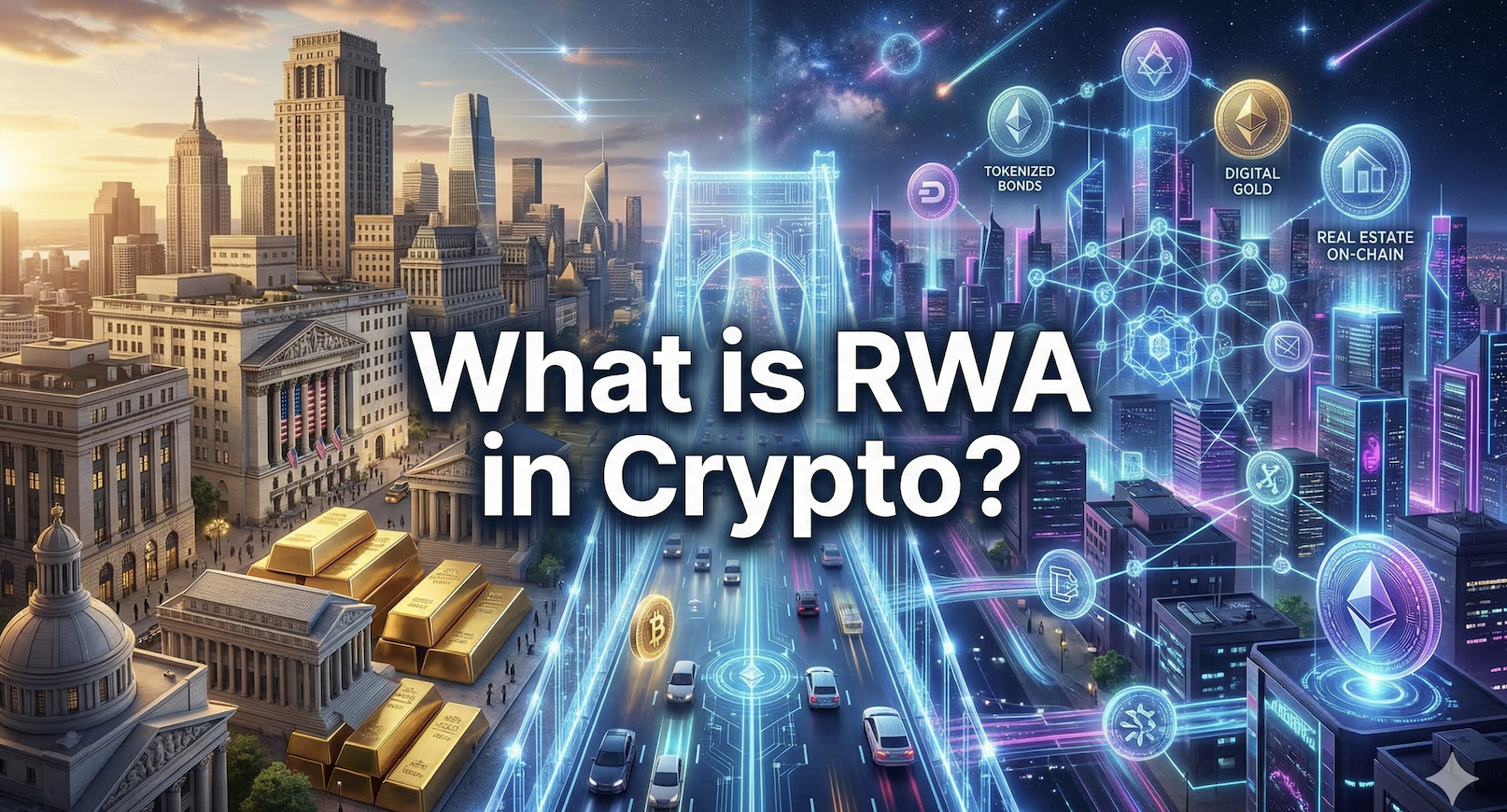
The cryptocurrency landscape is no longer just about digital-native tokens like Bitcoin or Ethereum. A massive shift is underway, bringing tangible, traditional value on-chain. This movement is driven by Real-World Assets (RWAs). From tokenized real estate to government treasuries, RWAs are fundamentally changing how we invest, trade, and view ownership.
This comprehensive guide explores what RWAs are, how they work, and why they represent the next major evolution in decentralized finance (DeFi).
Key Takeaways
-
Real-World Assets (RWAs) are tangible or intangible traditional assets like real estate, bonds, art, represented as digital tokens on a blockchain.
-
RWAs serve as the crucial link connecting the massive liquidity of Traditional Finance (TradFi) with the speed and transparency of Decentralized Finance (DeFi).
-
The tokenization trend spans across multiple sectors, prominently featuring U.S. Treasuries, real estate, commodities, and high value collectibles.
-
Tokenizing assets democratizes investment by enabling fractional ownership, lowering barriers to entry, and providing 24/7 global market liquidity.
-
RWAs introduce stable, real-world yields (like rental income or bond interest) into the volatile crypto ecosystem, attracting institutional investors.
-
The widespread adoption of RWAs faces significant hurdles, primarily revolving around strict regulatory compliance, KYC requirements, and secure physical asset custody.
Understanding the Basics of RWA
What is RWA Crypto?
Real World Assets (RWA) refer to the technological process of tokenizing tangible physical assets and traditional off-chain financial instruments onto a blockchain. This innovative mechanism converts ownership rights to physical assets, such as real estate, government bonds, fine art or commodities, into digital tokens.
In essence, RWA allows these traditional assets to interact seamlessly with Decentralized Finance (DeFi), bringing real-world value into decentralized ecosystems and expanding crypto use cases beyond mere speculation.
Market Capitalization and Sector Statistics
While fiat-backed stablecoins naturally dominate the lion's share with a staggering valuation of $224.9 billion, the broader ecosystem is experiencing explosive, diversified growth. Other key categories include tokenized treasuries hitting $5.6 billion, commodity-backed tokens reaching $1.9 billion, and active private credit loans standing at $558.3 million.
The Mechanics of Tokenization
How Does Tokenization Work?
Tokenization is the complex process of converting ownership rights of a real-world asset into a digital token leveraging smart contracts. Generally, the process involves three fundamental stages:
-
Off-Chain Structuring: The asset is legally isolated within a protective wrapper like a Special Purpose Vehicle (SPV), managed by regulated entities, and physically safeguarded by a licensed custodian.
-
Data and Valuation: Experts and appraisers verify the asset's fair market value and legal title, which is crucial for establishing the token's legitimacy.
-
On-Chain Token Issuance: Smart contracts "mint" digital tokens on the blockchain. These tokens can be Fungible Tokens (interchangeable, like dollars) or Non-Fungible Tokens (NFTs) representing unique items.
Tokenizing a U.S. Treasury Bond
A prime example is tokenized treasuries, driven by financial giants like BlackRock with its BUIDL fund. BlackRock purchases U.S. Treasury securities and places them in a dedicated fund safeguarded by BNY Mellon. They then issue the BUIDL token, passing the yield generated by the underlying bonds directly to token holders, thereby transforming a traditional financial instrument into a programmable digital asset.
Core Categories of Tokenized Assets
The RWA ecosystem is highly diverse, covering multiple traditional asset classes. Here are the most prominent categories:
-
Fiat-Backed Stablecoins: Tokens pegged 1:1 to real-world fiat currency, dominating the sector with players like USDT and USDC accounting for 93.5% of issuance.
-
Tokenized Treasuries: Letting holders earn yield from government bonds on the blockchain. This sector surged by 539% to hit $5.6 billion by April 2025.
-
Commodity-Backed Tokens: Physical commodities like silver, oil, or gold brought on-chain. Tether Gold (XAUT) and PAX Gold (PAXG) make up 84% of this $1.9 billion market.
-
Private Credit / Debt: Providing loans and debt instruments to real-world businesses using crypto capital, especially in emerging markets.
-
Tokenized Stocks and Real Estate: Tokenizing corporate equity or offering fractional ownership of residential, commercial, or industrial properties.
The Value Proposition of RWA
As the crypto market matures, investors are increasingly demanding assets backed by real, tangible value. RWA connects blockchain innovation with regulated finance, offering stability and yield that pure crypto assets often lack, which in turn makes DeFi much more attractive to massive institutional players.
Benefits of Tokenizing Real World Assets:
-
Unlocking New Sources of Yield: RWAs provide stable returns that are less correlated with the extreme volatility of native crypto markets.
-
Clear Records for Transparency: Blockchain acts as a secure, immutable ledger, offering unparalleled transparency regarding who owns what and the asset's history.
-
Less Paperwork, More Automation: Smart contracts automate dividend payments and ownership transfers, drastically reducing middlemen, lowering costs, and enhancing efficiency.
Tokenization severely alters traditional investment structures. It enables Fractional Ownership, meaning high-value assets like an entire apartment building or fine art can be divided into affordable digital fractions. Furthermore, it provides Global Accessibility, breaking down geographic borders and traditional market hours.
Top RWA Crypto Projects and Protocols to Watch
To truly understand the real-world asset landscape, it is helpful to look at decentralized platforms actively building the infrastructure. Several pioneering protocols are leading the charge in bridging TradFi and DeFi. Here are some of the standout projects in the RWA sector:
Chainlink (LINK): While not an RWA issuer itself, Chainlink is the backbone of the entire tokenization movement. Blockchains cannot inherently access off-chain data. Chainlink’s decentralized oracle networks provide the secure, real-time pricing data and verifiable proof of reserves required to ensure that a digital token accurately reflects the value and existence of the physical asset it represents.
Ondo Finance (ONDO): Ondo Finance has quickly emerged as a heavyweight in the tokenized U.S. Treasuries market. It provides a platform where investors can access institutional-grade financial products, such as short-term US government bond funds, on the blockchain. Ondo aims to make high-quality, yield-bearing assets accessible to a broader crypto audience.
MakerDAO (MKR): MakerDAO, the protocol behind the DAI stablecoin, is one of the earliest adopters of RWAs. To ensure the stability of DAI and generate consistent protocol revenue, MakerDAO has diversified its collateral base beyond volatile cryptocurrencies by actively purchasing billions of dollars worth of real-world assets, including U.S. Treasury bills and corporate debt.
Centrifuge (CFG): Centrifuge is an on-chain credit protocol designed to finance real-world businesses. It allows companies to tokenize their physical assets, such as unpaid invoices, real estate, or trade credit, and use them as collateral to borrow money directly from DeFi liquidity pools. This eliminates traditional banking intermediaries and lowers the cost of capital for small and medium-sized enterprises.
Risks, Challenges, and Regulatory Hurdles
The biggest hurdle for RWAs is regulatory uncertainty. Because these tokens represent real-world assets, they are often classified as securities by bodies like the SEC. Strict KYC (Know Your Customer) and AML (Anti-Money Laundering) procedures must be enforced, which clashes with the anonymous nature of traditional DeFi.
Unlike pure crypto tokens, an RWA is tied to a physical object. If a tokenized house burns down, or the custodian holding the gold goes bankrupt, the digital token loses its value. Bridging the legal enforcement of real-world property rights with on-chain digital ownership remains a complex challenge.
What Does This Mean for You
For everyday investors, RWA crypto means opening up a new world of possibilities, allowing you to own a 1/50th share of a skyscraper or art piece. However, beginners must prioritize platform compliance and asset transparency. It is crucial to read whitepapers, confirm the underlying asset is verifiable, and strictly avoid platforms offering anonymous RWA products or unrealistic returns. Ready to explore the future of tokenized assets and build a diversified portfolio? Create your KuCoin account to start trading safely on a globally trusted exchange.
Conclusion
Real-World Assets (RWAs) are fundamentally reshaping the cryptocurrency ecosystem. By merging the reliability and scale of traditional finance with the speed and transparency of blockchain technology, RWAs are laying the groundwork for the next generation of global markets. While regulatory and custody challenges remain, the potential to tokenize the world's illiquid assets is too massive to ignore. The RWA narrative is not just a fleeting trend; it is the bridge to mass institutional crypto adoption.
FAQs
What is the best example of an RWA in crypto?
Stablecoins like USDT and USDC are the earliest and most common examples of RWAs, as they are digital tokens backed 1:1 by real-world fiat currency (US dollars) held in bank accounts.
Is RWA a good investment?
RWAs offer a way to diversify a crypto portfolio with stable, real-world yields, reducing exposure to high crypto volatility. However, they carry unique risks, including regulatory compliance and counterparty custody risks, so thorough research is essential.
Can anyone buy RWA tokens?
Unlike permissionless DeFi tokens, many RWA platforms require users to pass strict KYC and AML identity verification processes due to real-world securities laws, restricting access based on jurisdiction and investor accreditation.
Is Bitcoin considered an RWA?
No. Bitcoin is considered a native crypto asset. Its value is derived entirely from its own blockchain network and supply-demand dynamics, rather than from any underlying off-chain physical asset.
What is the difference between an RWA and an NFT?
RWAs are specifically backed by off-chain assets with verifiable value, whereas many NFTs (like digital art and collectibles) have subjective value not tied to a physical asset.