


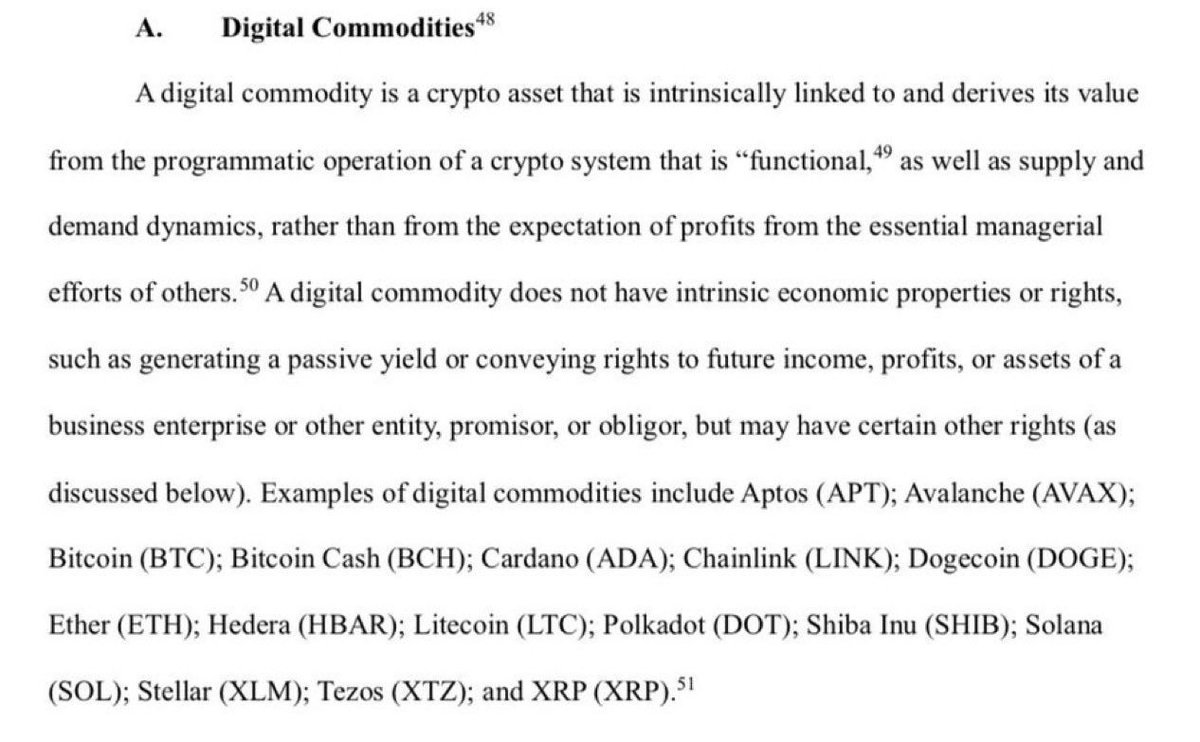
🚨 The SEC and CFTC have officially classified $BTC, $ETH, $SOL, and $XRP as commodities. Crypto Twitter is celebrating: “Bullish!” “Less SEC oversight!” “Institutional adoption!” Do you know what happens when an asset is classified as a commodity rather than a security? Pension funds are now permitted to buy it—without special approval. These aren’t hedge funds with $500 million in AUM. These are the largest capital pools in the world—$60 trillion globally, managed by institutions that until last week said: “Crypto? Too regulatorily uncertain.” That argument is now off the table. Do the math: If just 0.5% of that $60 trillion flows into Bitcoin, Ethereum, Solana, or XRP—that’s $300 billion. That’s more than the entire current market value of Ethereum. And I’m not talking about “someday.” Pension funds in the U.S., Canada, Australia, and the UK already have commodity allocations—gold, oil, agriculture. The infrastructure is in place. Compliance teams know the process. The only thing missing is the internal approval. The biggest door ever opened for institutional capital—while retail sells. I’m not buying because the chart looks nice. I’m buying because the rules of the game are fundamentally changing—and the market hasn’t realized it yet. You don’t need to understand everything in these 68 pages. You just need to understand one thing: Pension funds are the largest buyers crypto has ever seen—and they’ve just been given the green light.

Share


Source:Show original
Disclaimer: The information on this page may have been obtained from third parties and does not necessarily reflect the views or opinions of KuCoin. This content is provided for general informational purposes only, without any representation or warranty of any kind, nor shall it be construed as financial or investment advice. KuCoin shall not be liable for any errors or omissions, or for any outcomes resulting from the use of this information.
Investments in digital assets can be risky. Please carefully evaluate the risks of a product and your risk tolerance based on your own financial circumstances. For more information, please refer to our Terms of Use and Risk Disclosure.