





This event focused on "New Trends in On-Chain Assets: RWA, AI, and Institutional Profit Strategies," bringing together over ten industry experts from global asset management, blockchain infrastructure, RWA issuers, and investment institutions to engage in multiple high-quality sessions and panel discussions on tokenized assets, on-chain treasury strategies, AI-driven investment paradigms, and macro institutional allocation.Article author and source: Theoriq
The industry event "Onchain Allocators: RWA Vaults, AI and Institutional Yield," co-hosted by Theoriq and ME Group, concluded successfully in Hong Kong on April 22. The event focused on "New Trends in Onchain Assets: RWA, AI, and Institutional Yield Strategies," bringing together over ten industry experts from global asset management, blockchain infrastructure, RWA issuers, and investment institutions to engage in multiple high-quality presentations and panel discussions on cutting-edge topics such as tokenized assets, onchain vault strategies, AI-driven investment paradigms, and macro institutional allocation.
The New Paradigm of Strategy and AI Integration
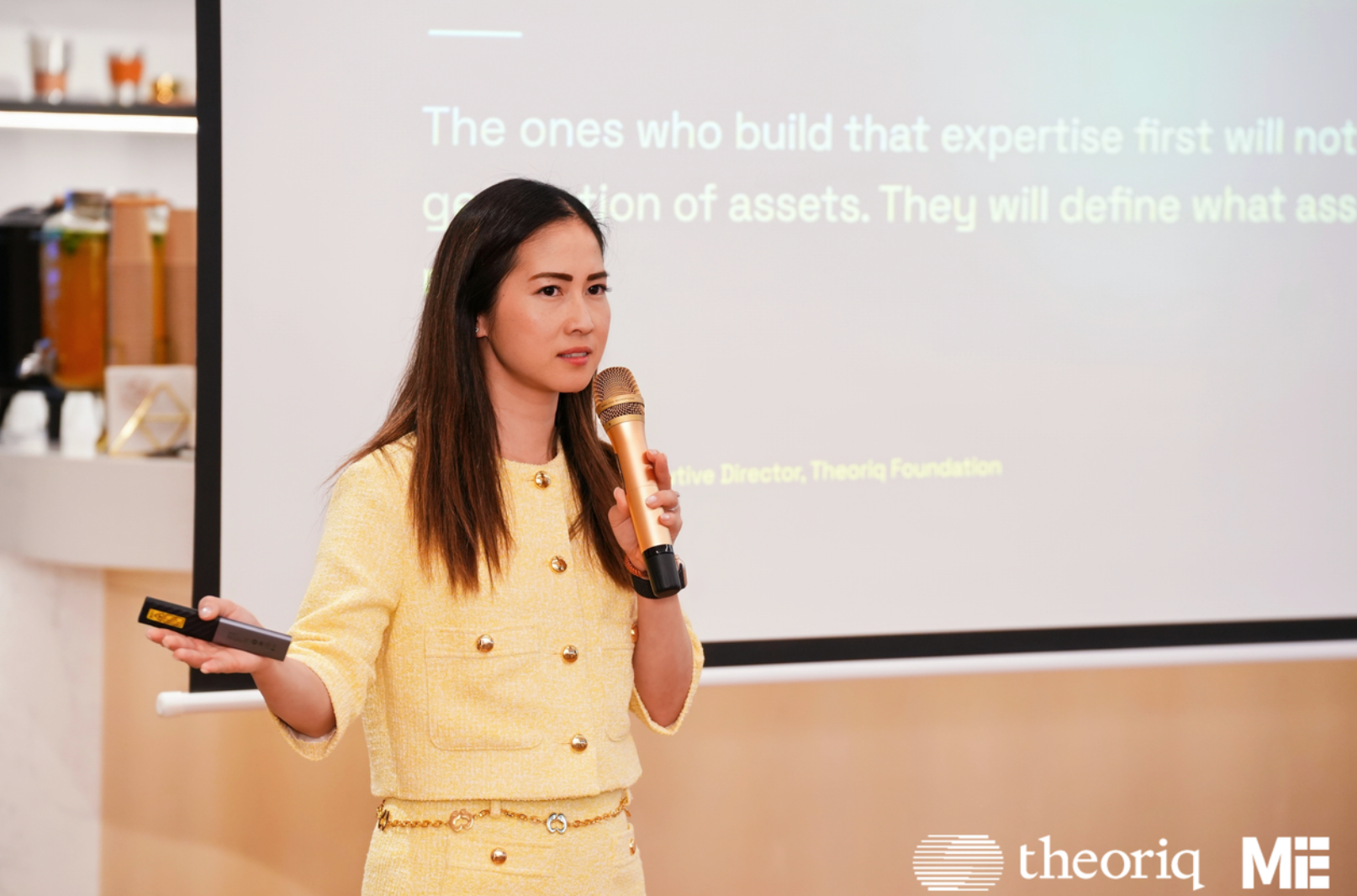
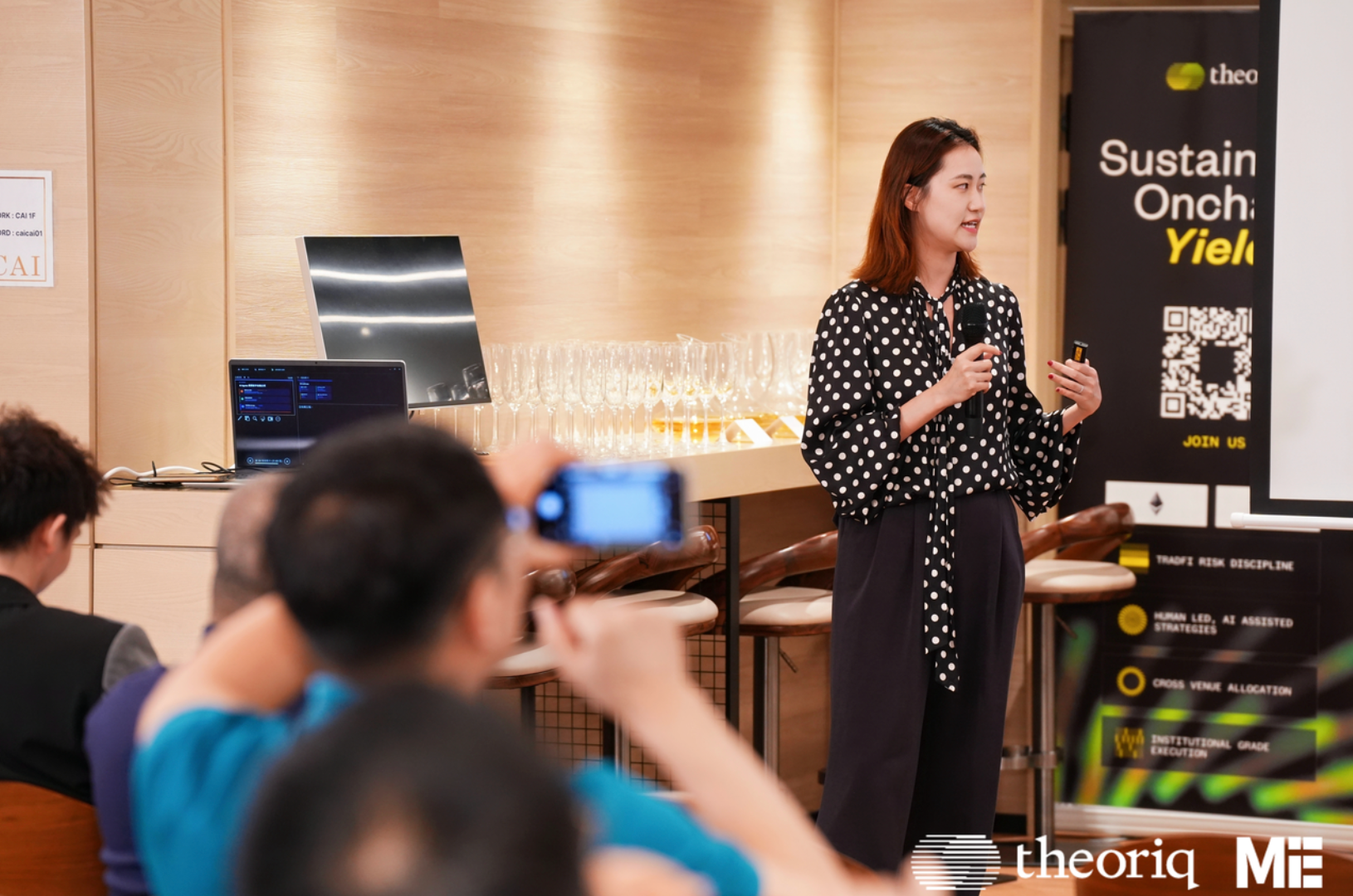
At the start of the event, Pei Chen, Chief Operating Officer of Theoriq, delivered the opening speech titled "Efficient Allocation of Tokenized Assets: Treasury Strategies Beyond ETH and Stablecoins." She noted that the explosive growth of on-chain assets is giving rise to a new role—the asset strategist. Unlike in 2019 when DeFi was just emerging, today’s multi-chain ecosystem, complex interest rate models, and ever-evolving protocols make it impossible for human strategists to effectively monitor all risks in real time. AI is becoming an indispensable collaborator for strategists, playing a critical role in strategy discovery, data analysis, and real-time risk management.
Pei Chen also provided a systematic overview of Theoriq’s two treasury products:
- Ethereum Vault: Achieved an annualized return of 3.5% in the first quarter through strategies such as lending spread, principal token (PT) time decay, and cross-platform stablecoin arbitrage, with a maximum drawdown of only 2.21%.
- Gold Vault (XAUT): Delivering annualized returns of over 3.5% for institutions and high-net-worth individuals by leveraging on-chain gold as collateral, combined with cross-platform stablecoin yield enhancement, PT term returns, and efficient capital cycling.
She emphasized that gold, as a traditional safe-haven asset, has for the first time gained the ability to generate yield after being moved on-chain—a structural innovation impossible in off-chain finance.
Institutional configuration, compliance practices, and AI-driven
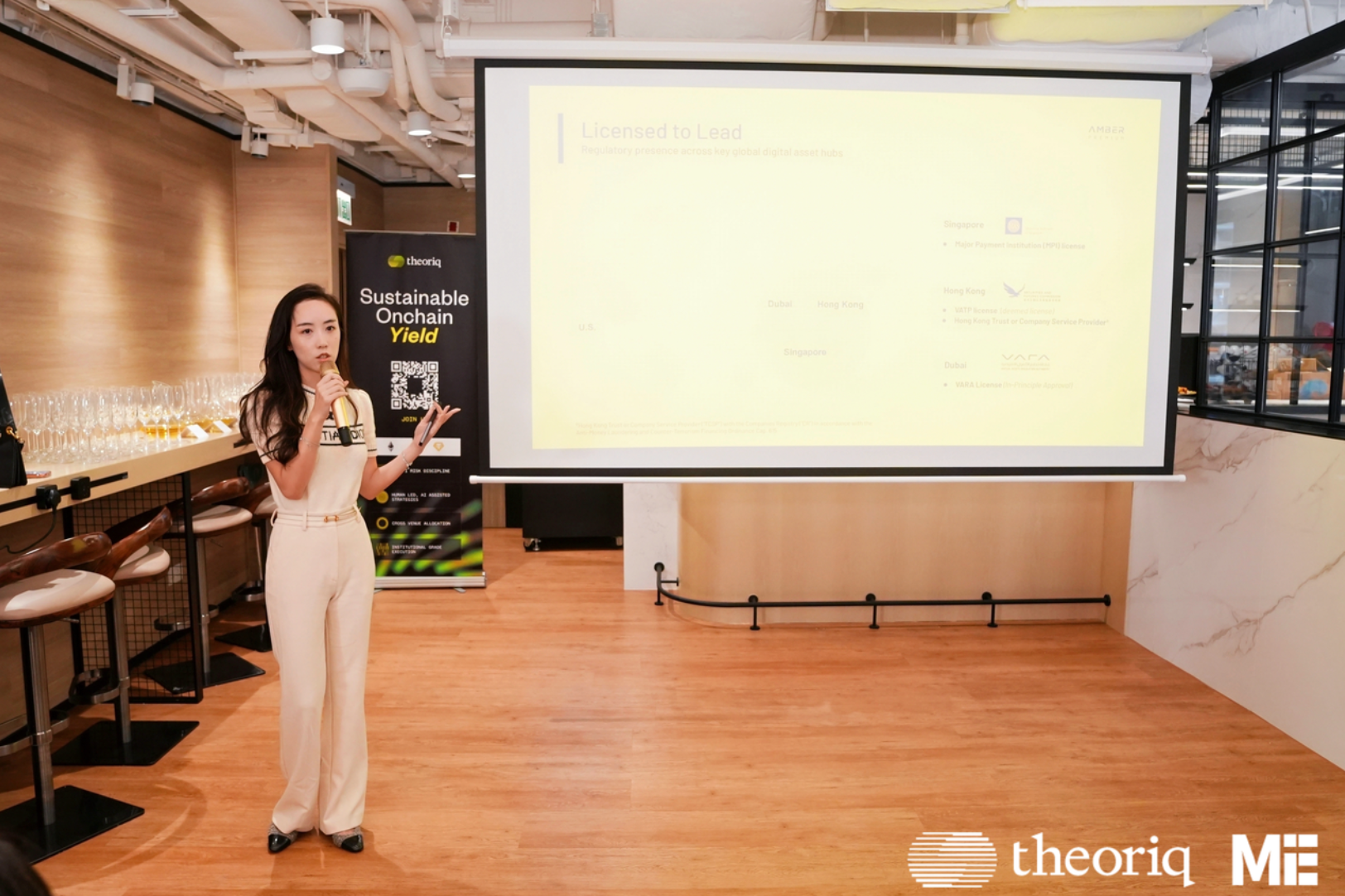
At the event, several speakers delivered keynote presentations on institutional allocation, compliance practices, and AI-driven solutions. Selina Su, Vice President of Amber Premium, shared macro and institutional strategy insights for the new era of digital assets. She noted that the drawdown幅度 of Bitcoin in each bull-bear cycle is narrowing, signaling increasing market maturity; traditional institutions such as the Harvard Endowment Fund have already incorporated Bitcoin into their long-term asset allocation. The long-term rolling correlation between Bitcoin and traditional assets is only approximately 0.36, demonstrating significant diversification value. Based on these trends, Amber provides institutional clients with a one-stop digital asset private banking service—from over-the-counter trading and asset management to structured products and Visa cards—helping institutions effectively manage cash flow and implement strategic positioning such as buying Bitcoin at discounts in volatile markets.
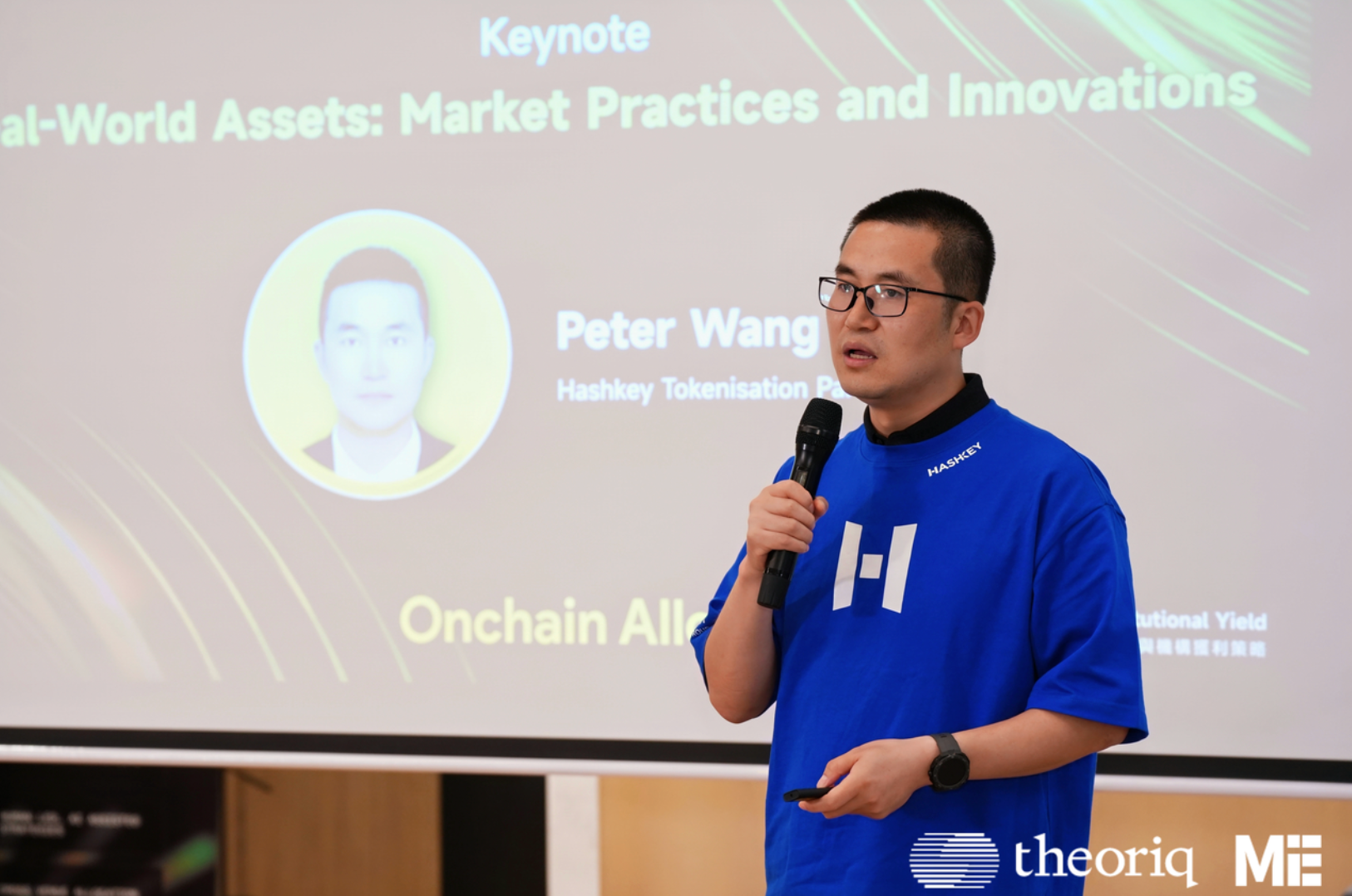
Peter Wang, Partner at HashKey Tokenisation, addressed the market practices and innovations surrounding real-world assets, clarifying the fundamental distinction between “information on-chain” and “assets on-chain.” He noted that the current market capitalization of truly tokenized assets stands at approximately $29.1 billion, with U.S. Treasury tokenization accounting for about 46% (primarily used in yield-bearing stablecoins), commodities (led by gold) ranking second, and private credit (such as real estate) in third place. He also systematically outlined the compliance pathways and regulatory challenges across different jurisdictions, including Hong Kong, the BVI, and the United States, and cautioned the industry: “Tokenization is not a panacea for liquidity; if the underlying asset lacks liquidity, it will not gain liquidity simply by being tokenized.”
Iris Sun, Investment Director of Pando Finance, spoke on how AI-driven on-chain portfolios are building a new ecosystem for digital asset investing. She shared that Pando is currently developing a compliant asset management infrastructure powered by AI Agents, including tokenized funds (lowering entry barriers, enabling 24/7 trading, and providing on-chain performance transparency), AI Agent-managed dedicated accounts and an API ecosystem, as well as strategies integrating active U.S. ETFs with digital asset ETPs. She believes that in the future, every investor will have a personalized AI wealth management expert, and compliant custody and licensing will form the foundation of AI Agent financial sovereignty.
Tokenized Precious Metals and the New Paradigm of AI Agents
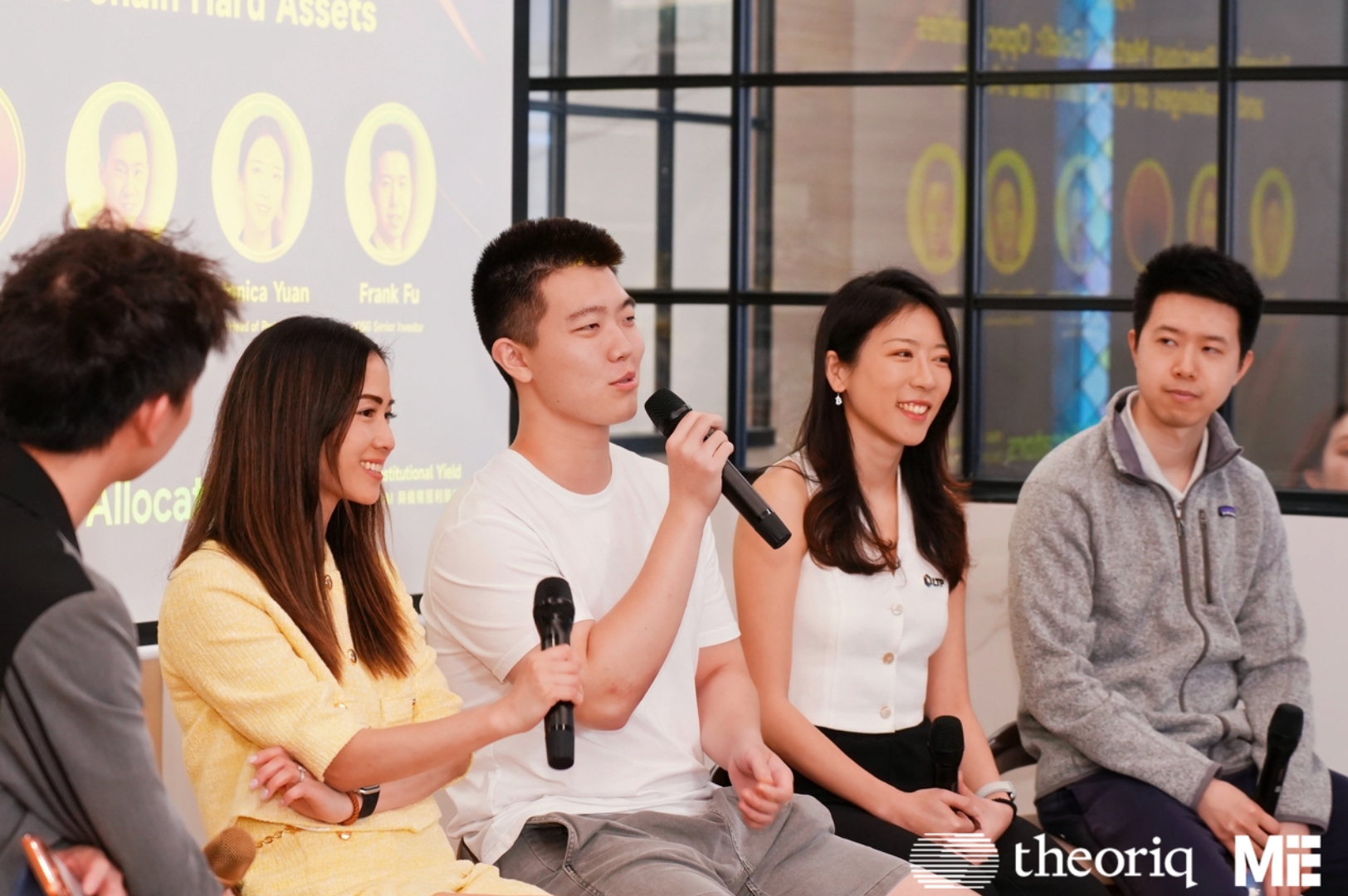
At two roundtable discussions, the topics focused on “Tokenized Precious Metals” and “AI Agent-Driven New Paradigms in DeFi.” The first roundtable was moderated by Vito Luo, President of ME Group, and featured panelists including Pei Chen, Chief Operating Officer of Theoriq, Cynic, Analyst at CGV, Monica Yuan, Head of Partnerships at LTP, and Frank Fu, Senior Investment Manager at IOSG. The panelists agreed that the current market cap of tokenized gold represents only a tiny fraction of the total gold market, leaving significant growth potential; its greatest innovation lies in transforming gold from a “non-yielding asset” into “yield-generating DeFi collateral.” The on-chain gold lending market has already reached nearly $100 million, providing a liquidity foundation for vault strategies. However, challenges remain centered on auditing the authenticity of underlying assets, redemption pathways, and the trust costs associated with issuers.
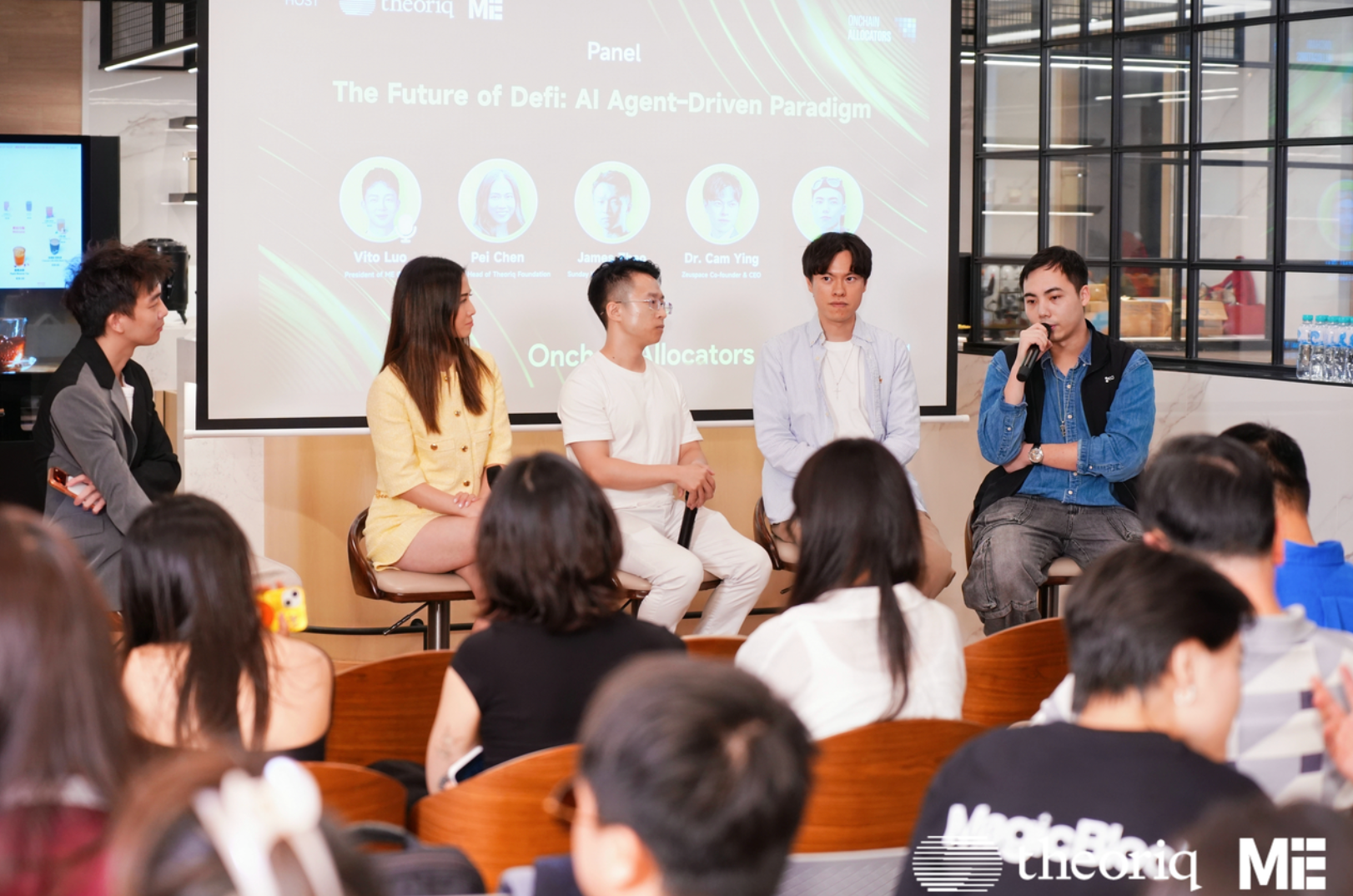
The second panel, moderated by Vito Luo, featured guests Pei Chen, Chief Operating Officer of Theoriq; James Zhao, Partner at Sunday Venture Studio、Dr. Cam Ying, Co-founder and CEO of Zeuspace; and Daryl Xu, CEO of OOKC Labs. During the discussion, several guests noted that current AI agents still lack the ability to “take responsibility for their actions,” with the absence of credit systems and native assets being the primary bottleneck. In terms of risk control, the most practical approach at this stage is tiered permissions, partial authorization, and final human approval. James Zhao proposed a three-layer valuation model from an investment perspective: how much capital the agent can control, how many other agents it can coordinate, and whether its operations are sustainable. Regarding regulatory challenges, the guests recommended that licensed institutions proactively transparentize decision records and clearly define the boundaries of responsibility between humans and AI to address the SEC’s concerns about “black box” decision-making.
Conclusion
The event concluded with lively and free-flowing discussions. The Theoriq team noted that strategy management for on-chain assets remains a vast blue ocean, and teams capable of simultaneously understanding both the “asset layer” and the “strategy layer” will have the opportunity to redefine industry standards for digital asset management. Attendees generally agreed that RWA provides “authenticity” to underlying assets, while AI imparts “intelligence” to strategy execution—their deep integration is unlocking the next decade of on-chain asset management.