



Original Title: "Raising $82.5 Million in Follow-on Financing, What Is Superstate"
Original Author: ChandlerZ, Foresight News
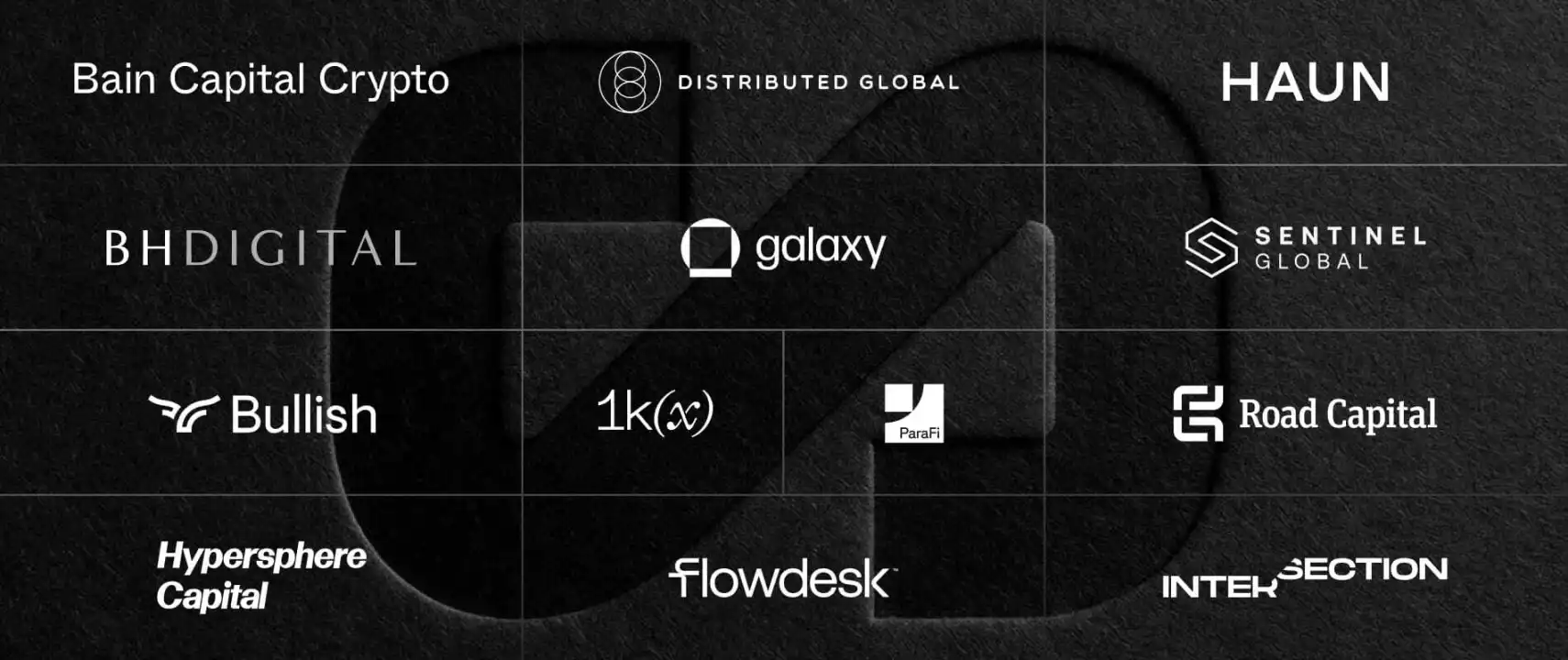
On January 22, Superstate, the RWA tokenization asset management platform founded by Compound founder Robert Leshner, announced the completion of an $82.5 million Series B funding round. The round was led by Bain Capital Crypto and Distributed Global, with participation from Haun Ventures, Brevan Howard Digital, Galaxy Digital, Sentinel Global, Bullish, Hypersphere Capital, Flowdesk, and Intersection, as well as existing investors 1kx, ParaFi, and Road Capital.
According to official statements, this round of funding will be used to expand its business from tokenized treasury product offerings to a fully on-chain stock issuance layer on Ethereum and Solana. Additionally, the company will continue to invest in regulated market infrastructure, including compliant issuance, settlement, and shareholder record-keeping systems, and will expand its Opening Bell platform and transfer agent infrastructure to support more issuers and distribution channels.
"Superstate" is a term that can have different meanings depending on the context in which it is used. Here are a
In 2023, Compound founder Robert Leshner filed documents with the U.S. Securities and Exchange Commission (SEC) regarding a new company called "Superstate," which would use Ethereum as a secondary record-keeping tool to create a short-term government bond fund. The Superstate fund would invest in "ultra-short-term government securities," including U.S. Treasury bills, government agency securities, and other government-supported instruments, and would rely on traditional Wall Street "transfer agents" to maintain ownership records for fund holders.
In June, Superstate announced the completion of a $4 million seed round led by ParaFi, Cumberland, and 1kx.
In the same year in November, Superstate completed the first round of its Series A funding, raising a total of $14 million, led jointly by Distributed Global and CoinFund, with participation from Breyer Capital, Galaxy, Arrington Capital, Road Capital, CMT Digital, Folius Ventures, Nascent, Hack VC, Modular Capital, and Department of XYZ.
In February 2024, a tokenized fund holding short-term U.S. Treasury bonds was launched. In July, Superstate introduced a new tokenized fund, the Superstate Crypto Carry Fund (USCC), which will generate returns by employing a "cash and arbitrage" investment strategy. The fund will purchase spot Bitcoin and Ethereum while maintaining equivalent short positions or selling BTC and ETH futures to generate income for holders. Its spot assets are held by custodial partner Anchorage Digital.
The Tokenization Development of Superstate
In March 2025, Superstate announced that its digital transfer agent, Superstate Services LLC, has registered with the SEC, a move aimed at connecting tokenized assets with the existing financial regulatory framework.
After this turning point, Superstate's progress has accelerated rapidly, benefiting from the U.S.-led push toward RWA (Real-World Asset) tokenization. The company first launched the Opening Bell platform, which allows publicly traded stocks registered with the SEC to be issued and traded directly on blockchain networks, initially supporting Solana. Opening Bell supports natively issued, regulation-compliant stocks that can directly interact with crypto wallets, DeFi protocols, and on-chain markets.
Subsequently, multiple companies have chosen to issue tokenized stocks on Superstate, including Galaxy's tokenized stock GLXY. Exodus, a U.S.-listed self-custody wallet company, also plans to collaborate with Superstate to create common stock tokens that digitally represent its Class A shares. Forward Industries (FORD), a Solana treasury company, intends to tokenize its holdings of Forward Industries common stock. It also plans to partner with Drift, Kamino, and Jupiter Lend (Solana's three largest lending protocols) to use the tokenized FORD stocks as eligible collateral. SharpLink Gaming, an Ethereum treasury company, has partnered with Superstate to issue tokenized stocks SBET directly on the Ethereum blockchain.
By the end of 2025, Superstate will launch a new blockchain-based service for direct issuance programs on Ethereum and Solana. This service will enable companies to raise capital by issuing on-chain securities, including tokenized versions of their existing U.S. Securities and Exchange Commission (SEC)-registered stocks or new stock classes. The first issuers are expected to go live in 2026. Investors will pay in stablecoins and receive tokenized assets in return.
The B-round financing at the start of 2026 has brought Superstate's total funding to over $100 million. According to its official website, its current assets under management (AUM) have exceeded $1.2 billion.
The tokenization process in 2026
The main direction of capital market infrastructure in 2026 is clear: faster settlement, higher liquidity, greater transparency, and reduced capital occupation. Tokenization is moving from concept to practice at this moment because blockchain is aligning the issuance, distribution, custody, settlement, and reuse of assets into a single programmable data and process framework. Participants are now making decisions based on efficiency and verifiable outcomes.
The capital-raising side will first see the emergence of on-chain incremental channels. In the short term, a dual-track model where traditional markets and on-chain markets coexist is more common. Traditional trading platforms will handle deep liquidity, while on-chain markets offer more direct access, faster distribution and settlement, and more flexible issuance and organizational methods. As compliant modules become more mature, such on-chain fundraising will expand from a few pilot cases to more scenarios, including IPOs, additional offerings, and secondary offerings.
The key change on the asset side is functional realization. Tokenized real-world stocks and funds will not merely remain at the level of ownership certificates, but will gradually enter DeFi's collateral, lending, and portfolio strategy systems. This transition allows traditional assets to move from isolated account structures to composable on-chain capital markets, thereby improving capital efficiency. However, this also simultaneously raises the requirements for compliance, risk control, liquidation responsibilities, and technical security.
Stablecoins will become the engine driving demand for tokenized funds. As the scale of stablecoins expands, both issuers and holders will increasingly seek high-liquidity, auditable, risk-controlled, and yield-generating on-chain assets. Tokenized short-duration treasury funds and money market products will thus become standard components for on-chain cash management and collateralization. On the institutional side, custodial DeFi vaults will serve as the primary entry point, encapsulating multi-chain, multi-protocol operations and 24/7 risk control into usable strategy interfaces, thereby reducing institutional operational and management costs.
The distribution side will continue to consolidate around super-entrances. Wallets and trading platforms are integrating payment, trading, income generation, investment, and custody into a single product interface, with tokenized assets serving as the connecting element that helps users manage cash and long-term investments within the same system. For issuers and asset managers, changes on the distribution side are even more critical. Those who can proactively adapt to tokenized formats, compliant transfer mechanisms, and on-chain availability will more easily gain access to the supply pools of these entrances and capture new growth opportunities.
Companies like Superstate could become the first to benefit significantly from the U.S.-driven tokenization of real-world assets (RWA). However, the connection between these companies and ordinary investors remains relatively weak in the short term. This is because early products are primarily targeted at institutional and accredited investors, while ordinary users mainly encounter them indirectly through wallets and trading platforms. As a result, what they truly perceive is often not the tokenization itself.
Click to learn about BlockBeats' job openings.
Welcome to join the official Lulin BlockBeats community:
Telegram Subscription Group:https://t.me/theblockbeats
Telegram discussion group:https://t.me/BlockBeats_App
Official Twitter account:https://twitter.com/BlockBeatsAsia