





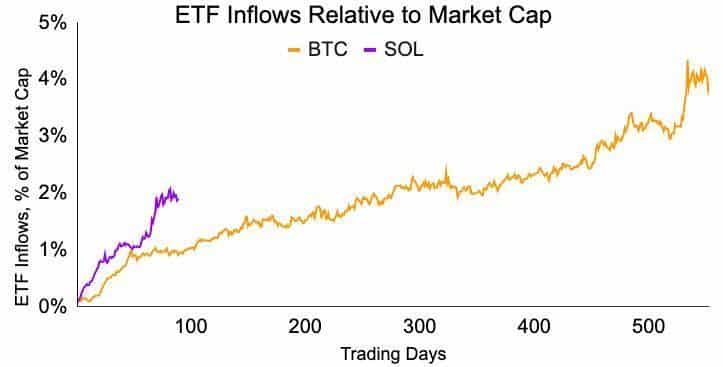
U.S. Spot Solana ETFs are close to hitting $1 billion in inflows, or 2% of their market cap, having debuted last October.
That’s only 18 weeks taken to climb to its current levels.
In contrast, Brian Rudick, chief strategy officer at Solana treasury firm Upexi, noted that it took U.S. Spot BTC ETFs 55 weeks to reach 2% of their market cap.
In other words, SOL has seen relatively high institutional demand despite a bear market.
Source: X/Upexi
Worth pointing out, however, that BTC ETF flows have mixed institutional players, with hedge funds hunting for basis trade (yield) as major drivers of outflows during risk-off sentiment.
So, how does that apply to SOL ETFs and the altcoin’s price?
Institutional bet on SOL: Conviction or speculation?
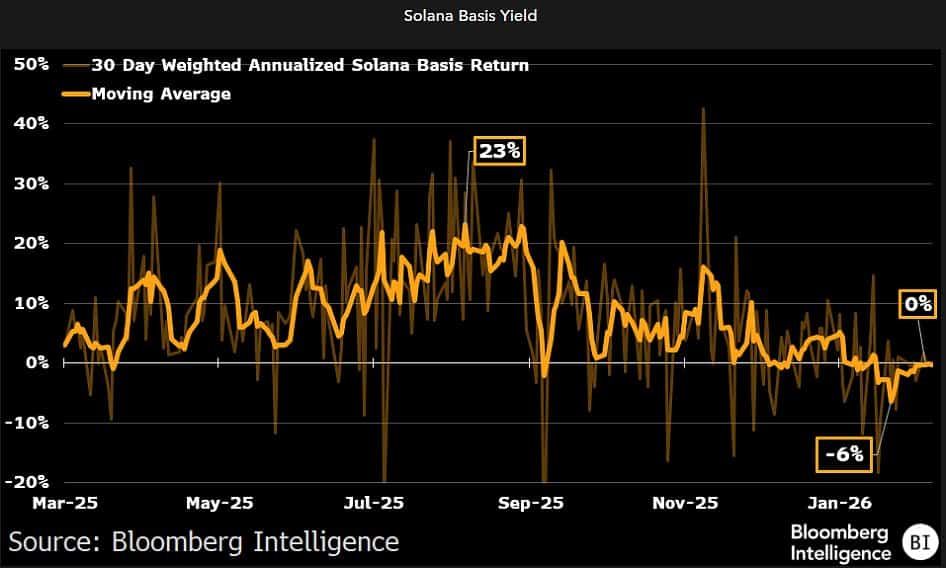
According to Bloomberg ETF analyst James Seyffart, basis trade hunting or institutional speculation is not particularly prevalent across SOL ETFs.
Unlike last July, when SOL basis trade was a whopping 23%, the yield shrank after the products debuted in October. In fact, the yield dropped to -6% in early 2026, yet overall ETF inflows rose to nearly $1 billion.
Source: Bloomberg
Seyffar added,
“The basis of Solana has been extremely low so far in 2026. This means the Solana basis trade is likely not contributing to the inflows.”
In fact, according to 13F filings with the SEC, institutions controlled 50% of assets under management (AUM), underscoring the massive interest in a young product, Seyffart highlighted.
Impact on SOL’s price
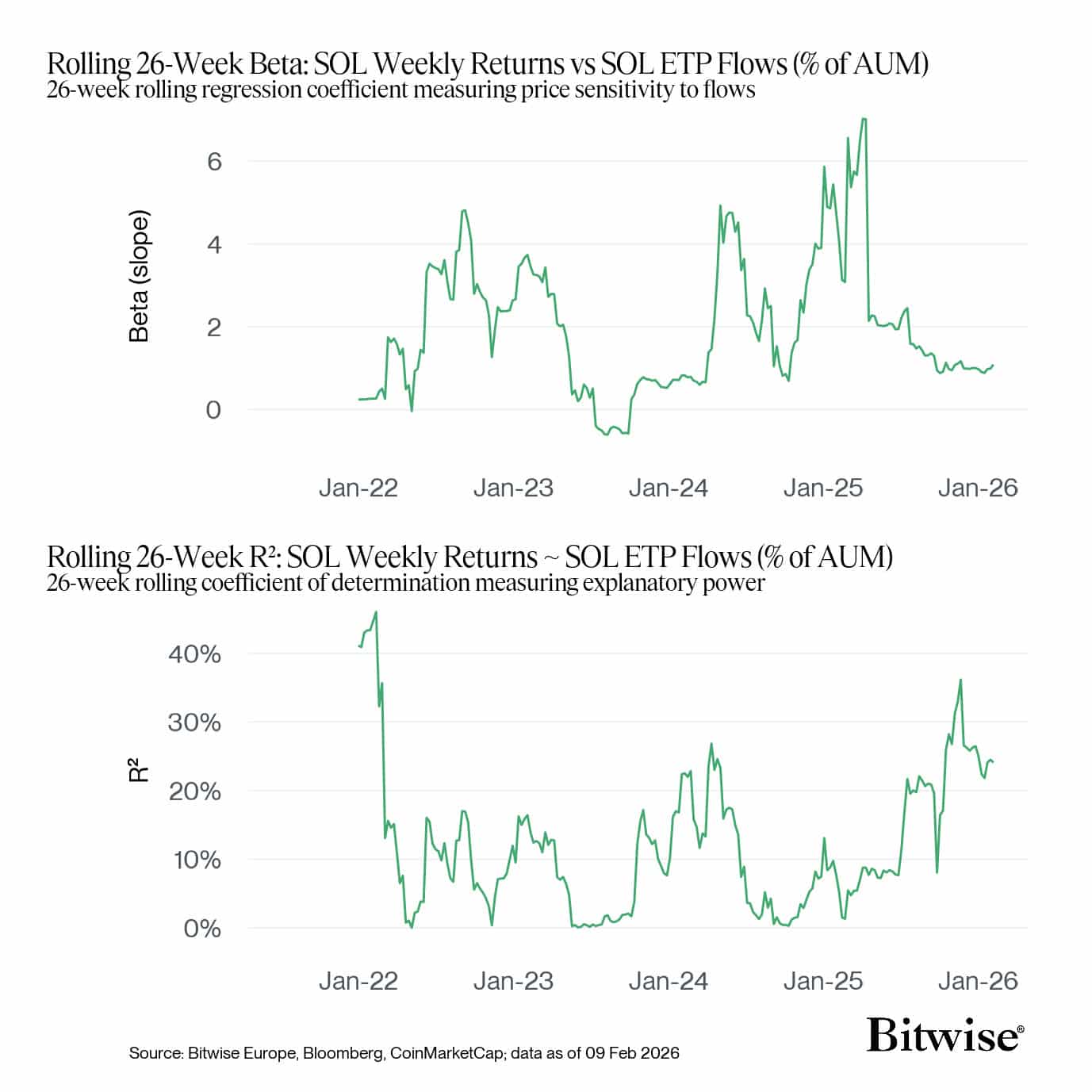
That said, SOL’s price has been in lockstep with broader market sentiment despite the impressive ETF inflows. Even so, Bitwise found that Spot ETF flows now account for 25% of SOL’s price variance.
Source: Bitwise
Put differently, a quarter of SOL’s price moves are now directly determined by ETF flows.
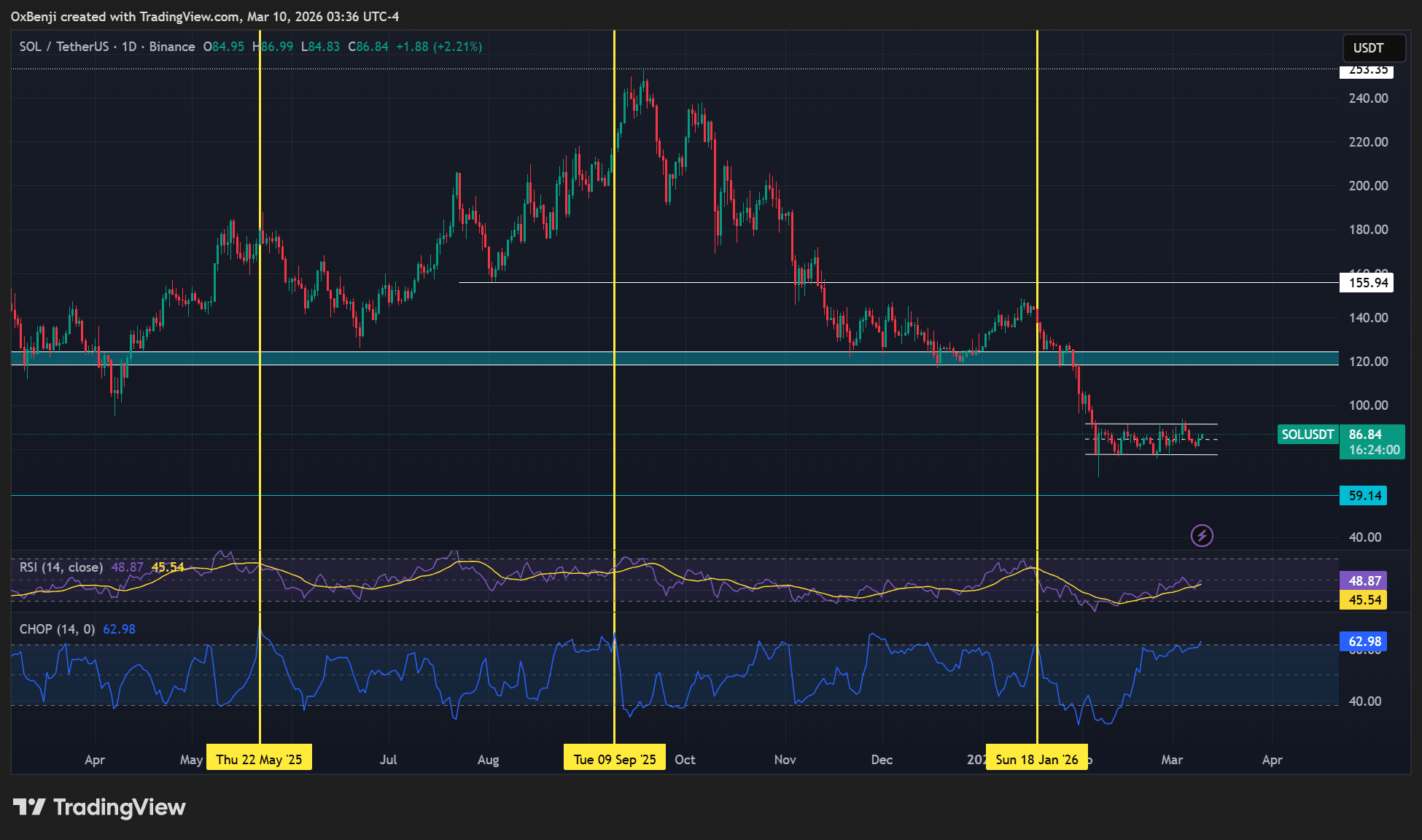
In the past three days, SOL ETFs have seen three consecutive days of outflows totalling $16 million. Over the same period, the altcoin’s price dropped from $92 to $80.
However, it had recovered to $87 at press time, marking an 8% rally as BTC reclaimed $70K while oil prices retraced its recent gains.
But most importantly, SOL’s Choppiness Index was flashing a potential breakout signal. The index value was above 60, a level that marked bullish or bearish breakouts in the past (yellow lines).
If the RSI reclaims 50 and advances northwards alongside renewed ETF inflows, SOL could front a bullish breakout and eye $100.
Conversely, another fakeout and weak institutional flows could drag it below $80.
Source: SOL/USDT, TradingView
Final Summary
- SOL ETFs reached $1 billion in 18 weeks, or 2% of market cap, compared to BTC ETFs, which took 55 weeks to hit the same milestone.
- The choppiness index suggested SOL could be nearing a range breakout, but it was unclear whether $100 or $78 was the next target.