





Author: Marcel Deer
Compiled by: Tim, PANews
What is the Bitcoin CME gap?
A CME gap is a price gap that appears on the CME Bitcoin futures chart when the price of Bitcoin fluctuates between Friday's closing price and Monday's opening price. Because Bitcoin prices continue to fluctuate during the CME's weekend closure, this gap appears on the chart when trading resumes. These gaps often attract significant market attention because they are typically filled after the market reopens.
Let's look at an example. If Bitcoin closes at $109,880 on the CME on Friday, and the price rises over the weekend, the market could open at $110,380 on Monday. This would create a $500 gap.
Since there is no trading activity during this period, it will appear as a blank area on the chart.
CME gaps can be mainly divided into two categories:
- An upward gap indicates that Bitcoin's opening price on Monday is higher than its closing price on Friday, suggesting buying interest over the weekend.
- Downward gap: This refers to a gap where Bitcoin's opening price on Monday is lower than its closing price on Friday, indicating selling pressure over the weekend.
Why is the Bitcoin CME gap important?
CME gaps are just blank areas on the chart, but why are they important to traders?
First, CME Bitcoin futures are a primary channel for traditional financial participants such as institutional investors, hedge funds, and pension funds. Unlike traditional cryptocurrency exchanges, these institutions can invest in Bitcoin safely and compliantly in a regulated environment like CME.
This is thanks to the CME's regulation by the U.S. Commodity Futures Trading Commission, which provides a clear legal framework for large institutions. Because CME Bitcoin futures are settled in cash, investors do not need to directly hold or handle physical Bitcoin, thus avoiding risks associated with asset custody and private key management.
Furthermore, as a long-established derivatives trading platform, the CME Group's business scope extends far beyond cryptocurrencies. Major institutions are already familiar with CME's operating mechanisms, and its liquidity advantages further help investors execute large transactions efficiently.
How does the CME gap affect BTC price movements?
When large sums of money are involved, CME gaps can present opportunities for seasoned market participants. These gaps help in understanding past market performance and assist traders in judging short-term prices.
BTC tends to fill these CME gaps in a relatively short period of time, which could trigger several chain reactions:
When the CME market reopens and liquidity returns, a price correction may occur.
CME gaps can serve as strong support or resistance levels, helping traders effectively identify potential breakout or rebound zones.
If BTC fails to quickly fill the gap, it could indicate strong momentum in the opposite direction. When the price moves away from, rather than towards, the gap, it warrants close monitoring.
Recent Examples of CME Gaps
Because this phenomenon occurs every weekend, CME gaps appear frequently.
Here is an example:
On November 18, 2025, Bitcoin filled the anticipated $92,000 CME gap. Analysts pointed out that after the gap was filled, the downside potential for BTC in the short term appears to be limited.
This is because the gap was filled almost immediately after the market opened, indicating that the market may have formed a support zone after a week of downward selling pressure.
While near-instantaneous gap filling can provide traders with a clearer direction, such rapid market reactions do not always occur.
For example, on July 25, 2025, the CME Bitcoin futures market opened with a significant gap of $1,770, but this gap remained unfilled for more than 16 hours.
This rare delay in covering the shortfall has sparked market concerns among traders, creating psychological pressure for both institutional and retail investors and exacerbating uncertainty in investment decisions.
In short, this gap adds extra risk, making Bitcoin's short-term volatility more difficult to predict.
How to trade using Bitcoin CME gaps?
If CME gaps can provide some useful market information, then they can serve as a reference for trading decisions.
The first step is to identify the gap. This requires looking at the CME Bitcoin futures chart and locating the price gap.
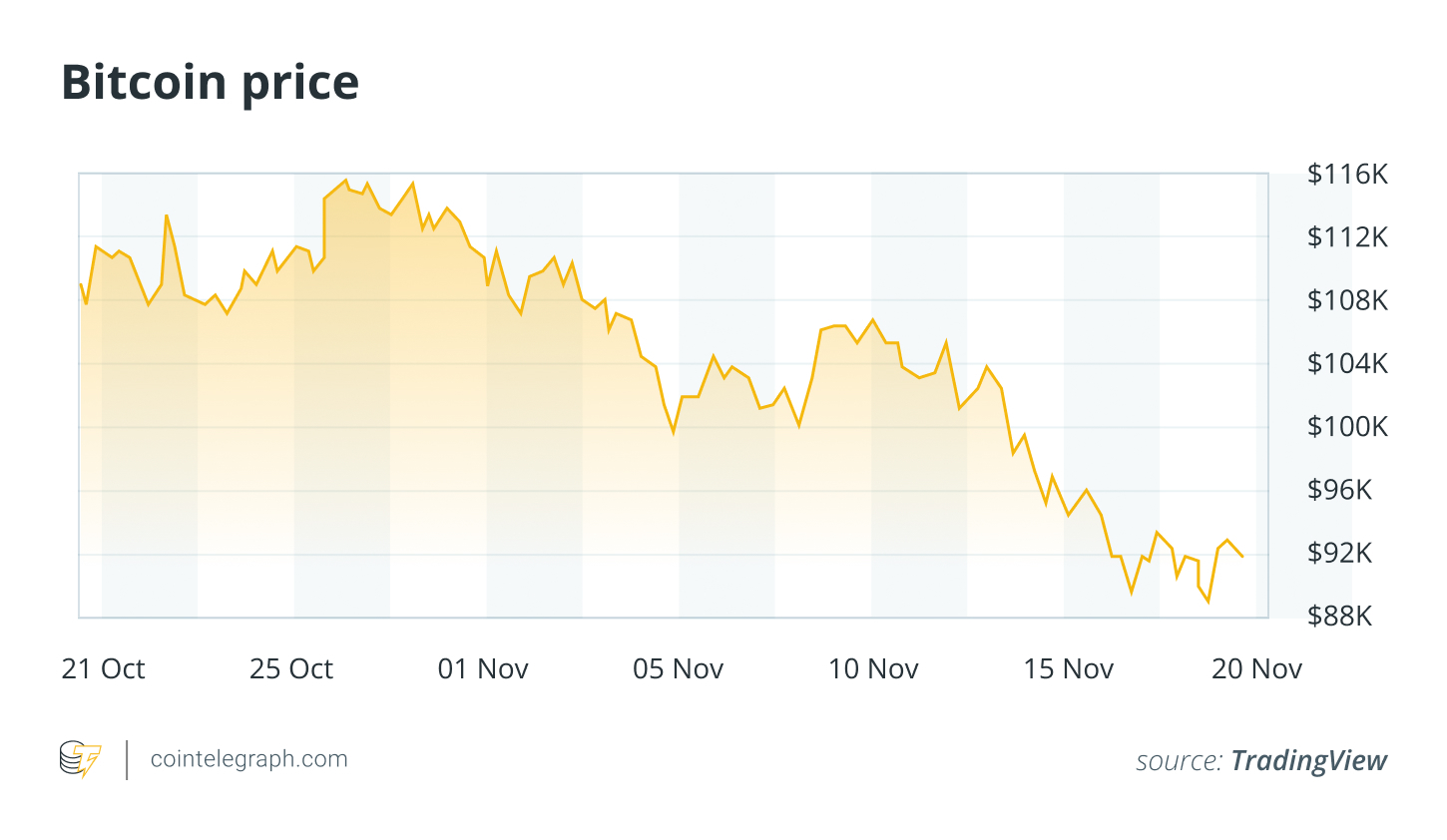
Bitcoin price snapshot
Traders can often find clues about price direction by looking at charts:
- When the price of BTC is above the gap, some traders will look for signs that the price may fall back to the gap.
- When the BTC price is below the gap, they may be watching for signals that the price will move upwards to fill the gap.
These are merely commonly observed phenomena, not inevitable outcomes. It's important to remember that all trading involves risk, and actual price movements may vary depending on the overall market environment.
Risk management is crucial in any trading strategy, and many traders consider position sizing and stop-loss settings as important components of their overall strategy.
Three additional factors to consider:
- Gap size: Larger gaps can create wider price ranges, which some traders find important when assessing market behavior.
- Trading volume: Large gaps usually require large trading volume to support price movements, thus reducing the likelihood of a trend reversal.
- Market environment: In volatile markets, gaps are usually more likely to be filled; while in strong trending markets, gaps may take longer to be filled.
Traders need to know that while over 98% of gaps are eventually filled, the timeframes vary. Some gaps are filled within hours, while others may take months. For example, the gap between $78,000 and $80,700 that appeared in November 2024 took nearly four months to be filled.