




Cardano’s native token has experienced a prolonged downturn over the past several months, reflecting sustained weakness across the broader crypto market.
However, the accumulation efforts of large investors suggest a rebound may be approaching.
Buying During the Decline
The crypto analytics platform Santiment revealed that Cardano investors holding between 100K and 100 million ADA have purchased almost 820 million coins over the last six months. At current rates, the acquired stash exceeds $220 million. The collective holdings of these whales and sharks have risen to 25.36 billion tokens, representing nearly 70% of ADA’s circulating supply.
The accumulation comes at a time when Cardano’s native token has been struggling, shedding a significant portion of its value. Towards the end of August, ADA traded around $0.90, whereas it is currently worth roughly $0.27 (per CoinGecko’s data), representing a 70% decline.
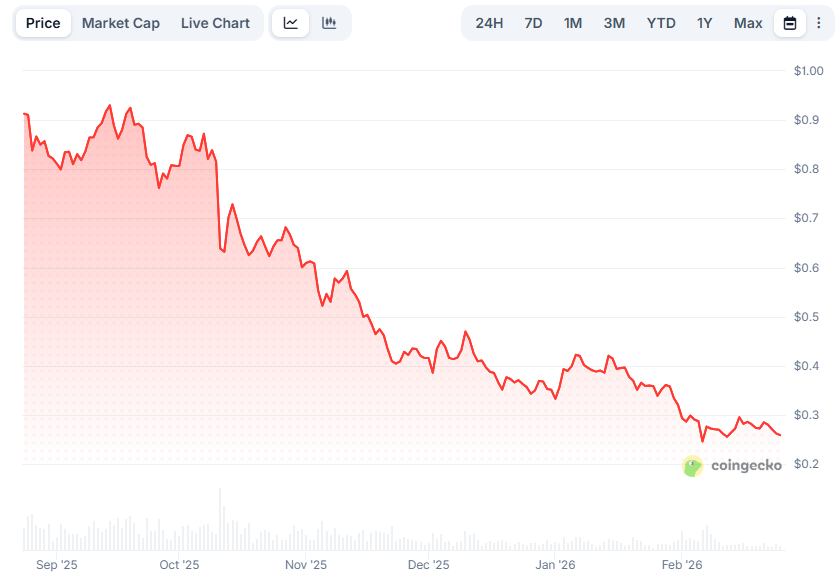
Stacking coins during downturns is a common approach among whales, as they often view lower prices as great buying opportunities. This development reduces ADA’s circulating supply, which can be followed by a rally (assuming demand remains stable or heads north). Last but not least, large investors are viewed as experienced market players who may have access to deeper insights, so their actions are rarely considered irrational.
Some technical indicators lean toward a bullish outlook. ADA’s Relative Strength Index (RSI) has plunged below 30 on a weekly scale, signaling that the token has entered oversold territory and could be due for a resurgence. The metric runs from 0 to 100 and helps traders identify potential reversal points by measuring the speed and magnitude of price changes. Ratios under 30 are considered buying opportunities, while anything above 70 is a bearish zone.
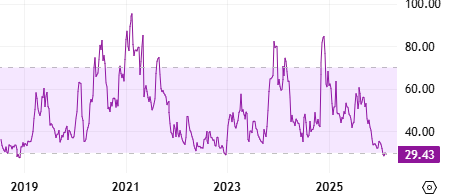
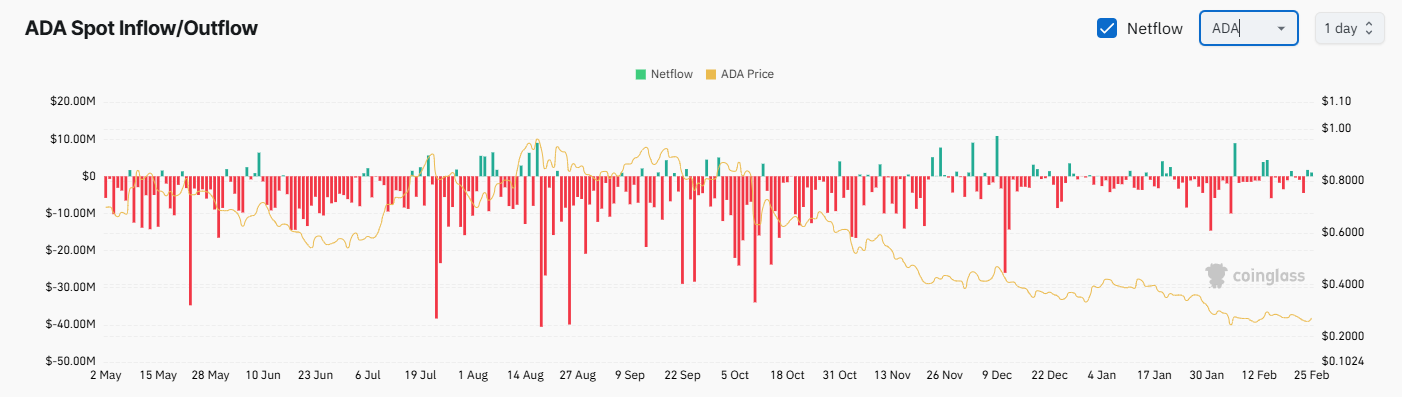
ADA’s recent exchange netflow is the next factor in focus. Over the past several weeks, outflows have dominated inflows, signaling that investors have been abandoning centralized platforms and shifting to self-custody. This, in turn, reduces the immediate selling pressure.
Price Predictions
Some market observers are optimistic that Cardano’s native token might indeed be gearing up for a jump. X user Bitcoinsensus hinted at a potential shift in the monthly structure, predicting a recovery in the coming months and an ascent to a new all-time high by the end of 2026.
“Historically, major expansions followed prolonged compression phases – structure now at a key transition zone,” they added.
Crypto Tony stands on the opposite corner. The trader argued that ADA “looks weak at the range low,” asking their 550,000+ followers when a crash to zero might arrive.
The post 820,000,000 ADA in 6 Months: Why Cardano Whales Are Buying the Dip in Bulk appeared first on CryptoPotato.