



The cryptocurrency market is currently facing a confusing situation that has left even experienced traders unsure about what comes next. On the surface, things look positive.
At the time of writing, Bitcoin [BTC] climbed back to around $72,842, recording a 2.46% gain in the last 24 hours. However, just a week ago, Bitcoin had slipped close to the $63,000 level, leaving traders confused about where the asset might head next.
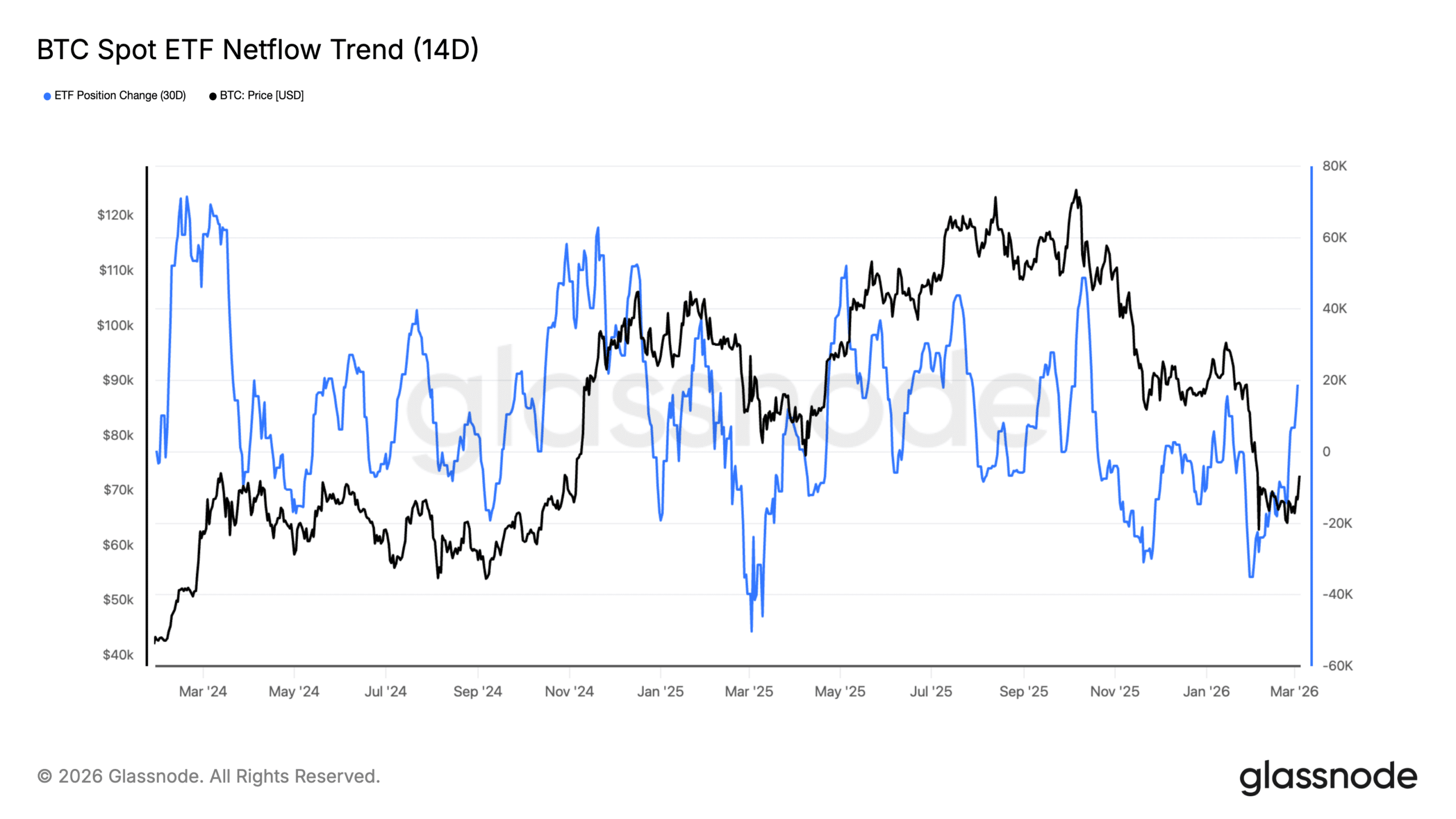
The unusual behavior in the market becomes even clearer when we look at ETF data. According to data from Glassnode, the 14-day netflow trend for Bitcoin has finally started rising again, suggesting that the heavy selling pressure seen in early 2026 is beginning to fade.
Source: Glassnode
On the 4th of March, U.S. Spot Bitcoin ETFs recorded about $461.9 million in net inflows. A large part of this came from BlackRock’s IBIT ETF, which alone attracted $306.6 million.
A market moving at different speeds
That said, while Bitcoin was attracting strong inflows, the situation seemed more mixed for other major cryptocurrencies.
Ethereum [ETH] spot ETFs also saw inflows, bringing in $169.4 million on the same day. Interestingly, Grayscale’s mini ETH trust led the inflows with $59.5 million. However, the buying interest in Ethereum looked less confident compared to Bitcoin.
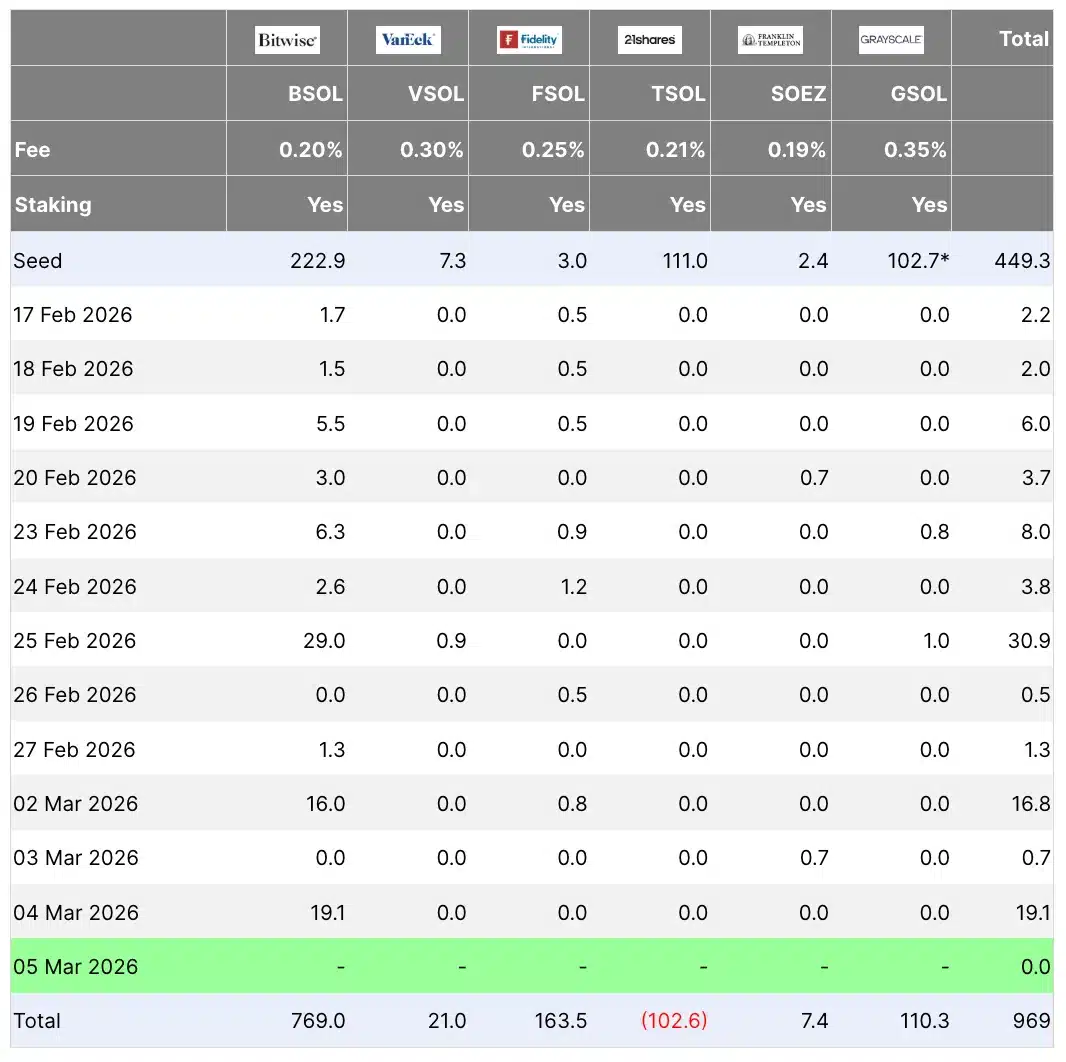
On the flip side, Solana [SOL] was showing a different trend. Even during the recent market weakness, SOL ETFs continued to see inflows, pulling in $19.1 million on the 4th of March.
Source: Farside Investors
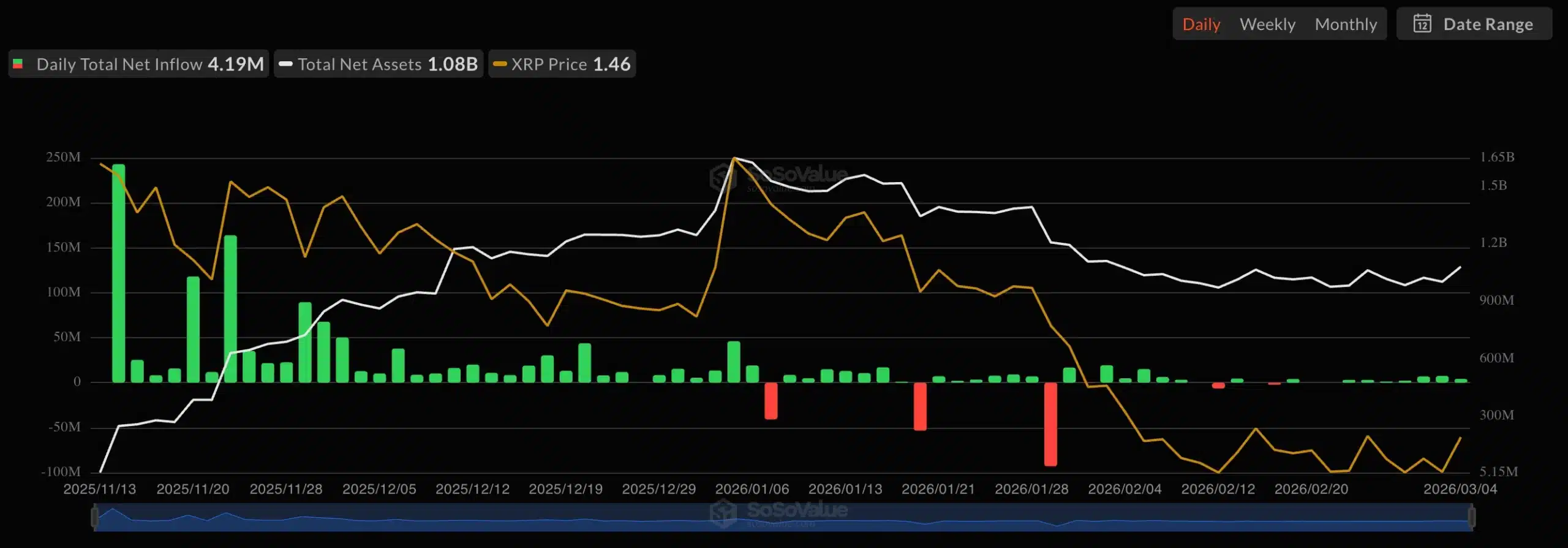
Ripple’s [XRP] situation appears more cautious compared to other major assets. Its ETF recorded $4.19 million in inflows, continuing the broader trend of positive flows seen over the past few weeks, with only a few brief interruptions.
Source: SoSoValue
A note of caution
Even though these numbers look positive, Glassnode warns that institutional demand is still cautious rather than aggressive. The current inflows may simply reflect large investors buying coins that others are selling during uncertain times.
“Institutional demand remains tentative, but early re-accumulation signs are emerging.”
In other words, the market may be entering a phase of slow accumulation, not the beginning of a massive rally just yet.
Moving forward, the $72,000 level is the line in the sand. If Bitcoin can flip this former resistance into support, it may finally prepare itself for a rally.
However, with “Fear” still lingering in retail sentiment, this hike feels more like a relief rally than a structural shift.
Final Summary
- Institutional ETF flows are supporting Bitcoin’s recovery, but mixed performance among Ethereum, Solana, and XRP highlights a divided market.
- The numbers suggest institutions are slowly stepping back in, but the broader market is still waiting for a clearer signal.