



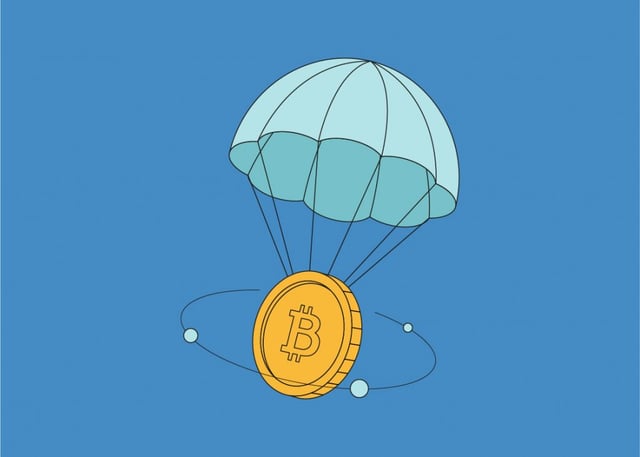
In the rapidly evolving world of Web3, Airdrop has become a hot topic. You might have seen people on social media sharing how they received significant amounts of cryptocurrency through a Web3 Airdrop, or perhaps you're curious about these "freebies from the sky." Simply put, a Web3 Airdrop is when a project freely distributes its own cryptocurrency (tokens) or Non-Fungible Tokens (NFTs) to users' digital wallets. It's more than just a marketing tactic; it embodies the decentralized spirit of Web3.
What is a Web3 Airdrop? A Deep Dive into its Essence and Core Drivers
Imagine a new tech company that, to quickly promote its innovative product, decides to give away free company shares or exclusive membership access to all early registered users. The concept of a Web3 Airdrop is analogous, but its mechanics and deeper implications are more thoroughly realized within a decentralized network.
Within the vast and ever-evolving Web3 ecosystem, whether it's nascent blockchain projects, decentralized applications (dApps), or metaverse platforms, they strategically conduct Web3 Airdrops. Through this method, they freely send native digital assets (such as governance tokens, utility tokens, or limited edition NFTs) to crypto wallets that meet specific criteria. These criteria can be as straightforward as holding a certain cryptocurrency or NFT at a specific point in time, or they might require you to complete a series of predefined tasks, such as following the project's official social media accounts, retweeting key posts, actively participating in project community discussions (like on Discord or Telegram groups), signing up for email updates, or even testing the beta version of their decentralized application.
Why would these Web3 projects choose to "give away" valuable digital assets for free? This isn't just an act of charity; it encompasses multiple strategic objectives that collectively drive Web3 Airdrops to become a unique and highly effective growth engine:
1.Maximize Market Promotion and Brand Exposure: This is the most direct and significant purpose of a Web3 Airdrop. By freely distributing tokens, projects can quickly generate buzz and gain viral spread within the vast global crypto community. This method is often more cost-effective and interactive than traditional paid advertising, as users don't just see an ad—they directly acquire "tradable assets."

2.Efficient User Acquisition and Incentivization: A Web3 Airdrop is a powerful tool for attracting new users to try and deeply engage with their ecosystem. By providing tangible digital asset incentives, users are more motivated to explore, experience, and use the project's products or services. This "give first, then reward" model helps lower the barrier to entry for users and stimulates their curiosity and willingness to participate.
3.Foster Community Building and Decentralized Governance: This touches upon the core ethos of Web3. Through a Web3 Airdrop, a project's native tokens are widely distributed to thousands, or even millions, of different user wallets, thereby effectively achieving the decentralization of token ownership. Users who hold the project's governance tokens will gain the right to participate in decisions regarding the project's future direction (e.g., voting on proposals), which significantly enhances community cohesion, sense of belonging, and the project's censorship resistance. A community-driven project is typically more resilient and vibrant.
4.Reward Early Supporters and Loyal Users: For those loyal users who showed trust, invested time in testing, actively provided feedback, or long-term held specific crypto assets during the project's nascent stages, a Web3 Airdrop is an excellent way for the project to express gratitude and give back. This strategy not only solidifies the loyalty of existing user bases but also encourages them to become project ambassadors.
5.Provide Initial Liquidity Fuel: For many emerging blockchain projects, establishing sufficient trading liquidity on decentralized exchanges (DEXs) is crucial. By widely distributing tokens to a large number of users, a Web3 Airdropcan indirectly encourage these users to contribute tokens to liquidity pools, thereby providing the necessary depth for token trading.
Decoding the Diverse Operational Types of Web3 Airdrops
Web3 Airdrops are not uniform; they have evolved into various operational models based on the project's specific goals and design strategies. Understanding these types will help you participate more effectively and identify potential airdrop opportunities:
-
Snapshot Airdrop:
-
This is perhaps the most common and often "passive" form of Web3 Airdrop. The project sets a specific point in time (the "snapshot time"). At this exact moment, they scan and record all wallet addresses on the blockchain that hold a certain cryptocurrency (e.g., ETH, SOL, etc.) or specific NFTs. As long as your wallet met the defined criteria at the time of the snapshot (e.g., holding a certain minimum quantity), you'd be eligible to receive the airdrop. The characteristic of this airdrop is that you typically don't need to perform any active operations; simply holding the relevant assets is enough.
-
Bounty Airdrop:
-
This type of Web3 Airdrop requires users to actively complete specific tasks set by the project to earn rewards. These tasks might include:
-
Following the project's official accounts on social media platforms like Twitter, Telegram, and Discord, and resharing project tweets.
-
Joining the project's official community groups and actively participating in discussions.
-
Filling out user surveys and providing feedback.
-
Participating in the project's testnet activities, experiencing its decentralized application (dApp), and submitting bug reports.
-
Creating content for the project (e.g., articles, videos).
-
Upon completion of the tasks, users typically need to submit relevant proof (such as screenshots, links, or forms) for the project to verify and distribute the Web3 Airdrop rewards.
-
-
Holder Airdrop:
-
This type of Web3 Airdrop is often used to reward loyal users who have long-term held a specific cryptocurrency or NFT. Unlike snapshot airdrops, there might not be a clearly announced snapshot time. Instead, at some point, the project directly sends tokens to the wallets of these holders based on on-chain data. It aims to reward those who have made long-term contributions or shown trust in the ecosystem.
-
Volume/Interaction Airdrop:
-
Some Web3 Airdrops allocate rewards based on a user's historical trading volume, number of interactions, staking quantity, or activity level on a specific decentralized application (dApp). For example, if you've conducted a large volume of transactions on a particular decentralized exchange, or provided significant liquidity in a certain DeFi protocol, you might be eligible to receive a Web3 Airdrop from that protocol. These airdrops aim to incentivize and reward core users who are deeply engaged with the project's ecosystem.
-
Ecosystem Incentive Airdrop:
-
Large blockchain ecosystems (such as Ethereum, Solana, Arbitrum, etc.) sometimes conduct Web3 Airdrops to protocols and users active on their chains to promote the prosperity and development of their ecosystem. These airdrops are typically large-scale and designed to attract more developers and users to that ecosystem.
How to Safely Participate in a Web3 Airdrop? Your Essential Guide to Getting Free Crypto
While a Web3 Airdrop offers an exciting opportunity to obtain crypto assets for free, it also carries potential risks. To ensure the security of your digital assets, here are crucial points you must remember before participating in any Web3 Airdrop:
1.Use a Dedicated "Airdrop-Specific" Wallet:
This is the most vital step to protect your core assets. Never use your main wallet, which stores significant amounts of cryptocurrency or valuable NFTs, for participating in airdrops. Instead, create a brand new, secondary wallet specifically for airdrops and interacting with unfamiliar dApps. This way, even if you unfortunately encounter phishing scams or malicious smart contracts, you can minimize potential losses.
2.Rigorously Verify Information Sources and Beware of Phishing Scams and Suspicious Links:
-
Only obtain information from official channels: Any information about a Web3 Airdrop, whether it's a notification, participation link, or rule explanation, must be verified through the project's official channels(official website, official Twitter account – check for blue tick verification, official Discord server – pay attention to admin roles, official Telegram groups).
-
Do not click suspicious links: Be immediately wary of any unknown links sent via private message or those that appear too good to be true. Especially, never click on or interact with links that ask for your seed phrase or private key, or display unusually high permission requests after connecting your wallet (e.g., "allow transfer of all your assets"). Legitimate Web3 Airdrops will never ask for your private key or seed phrase in any form.
-
Carefully check the URL: Phishing websites often have URLs that look extremely similar to official ones but with subtle differences (e.g., an extra letter, a missing dot, transposed letters). Always double-check every character of the URL before clicking.
3.Understand Wallet Authorization Risks:
When you connect your wallet to a Web3 website, the site usually requests your authorization. You must carefully inspect the content of the authorization pop-up. Ensure you only grant necessary permissions (e.g., "view your account address," "read your balance"), and not permissions that allow arbitrary transfer of your digital assets. If you see phrases like "allow unlimited token transfers" or "approve all assets," immediately decline the authorization. When in doubt, it's better to forego the airdrop than to grant risky permissions.
4.Be Aware of Gas Fees for On-Chain Transactions:
When claiming a Web3 Airdrop or completing certain on-chain tasks, you might need to pay a small Gas fee (i.e., the cost of transactions on the blockchain network). This is a normal operating cost for the blockchain network. However, if the fees seem unusually high, or the claiming process involves multiple complex and unnecessary transactions, exercise caution.
5.Have Realistic Expectations for Airdrop Value, Avoid Blind Investment:
Not all Web3 Airdrop tokens will end up having high value. In fact, many airdropped tokens might have low prices or even be worthless in the long run. View airdrops as potential surprises or extra rewards, not guaranteed profits. Do not invest significant money or time costs solely for the pursuit of airdrops.
6.Continuously Learn and Research:
Actively follow crypto news and Web3 community developments. Learn basic blockchain knowledge and security best practices. Understand the project's background, team, technical capabilities, and whitepaper to conduct preliminary due diligence and assess its feasibility and potential.
The Future Outlook of Web3 Airdrops: From "Token Drops" to Precise Empowerment
Web3 Airdrop is not just a fleeting marketing tool; it's constantly evolving and poised to play a more central and intelligent role in the future decentralized world. With advancements in blockchain technology and the maturation of the Web3 ecosystem, we can expect to see:
-
More Precise Airdrop Strategies: Future Web3 Airdrops will move beyond simple "token drops" and utilize on-chain behavioral data (e.g., dApp usage frequency, transaction volume, governance participation activity, types of NFTs held) for more precise user profiling. Projects will be able to identify and reward users who genuinely contribute, are high-value, and have long-term potential, thereby improving the efficiency and return on investment of airdrops.
-
Integration of Airdrops with Decentralized Identity (DID): Current Web3 Airdrops face a major challenge with "Sybil attacks" (where a single user creates numerous fake wallets to claim multiple airdrops). Decentralized Identity (DID) systems hold promise in solving this issue by providing users with a verifiable, unique on-chain identity, ensuring the fairness of Web3 Airdrops and rewarding genuine, distinct individuals.

-
Airdrops Becoming a Standardized Web3 User Acquisition Mechanism: As Web3 applications become more widespread and user experience improves, Web3 Airdrops may evolve into a standardized and universal mechanism for user acquisition and incentivization, much like "free trials," "new user sign-up bonuses," or "referral rewards" are common in Web2. It will become an indispensable part of decentralized business models.
-
Professionalization of the Airdrop Ecosystem: The future will see the emergence of more specialized Web3 Airdrop aggregation platforms, airdrop analysis tools, and airdrop service providers. These will help users discover and participate in potential airdrops, while also assisting projects in executing their airdrop strategies more efficiently.
A Web3 Airdrop is more than just the secret to getting free cryptocurrency; it's an important window into understanding the spirit of Web3, participating in the decentralized ecosystem, and potentially gaining early advantages in the digital world. By learning and participating cautiously, you too can catch this fast train to the future of Web3 and unlock the endless possibilities of digital assets.
