
What is the Difference Between KYC vs. No-KYC Exchanges?
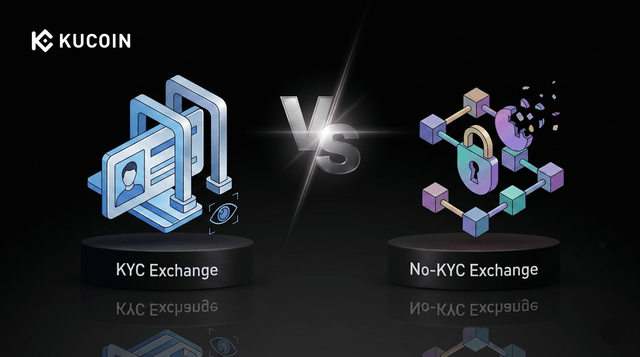
Key Takeaways
-
Regulatory Framework: KYC (Know Your Customer) is a mandatory identity verification process used by regulated financial institutions to prevent money laundering, while Non-KYC platforms allow for anonymous asset interaction.
-
Account Security: KYC-compliant platforms provide enhanced account recovery options and asset protection through verified legal identities, whereas Non-KYC platforms prioritize data privacy but lack formal recovery mechanisms.
-
Fiat-to-Crypto Integration: Regulated exchanges typically offer extensive fiat currency support and banking integration, while Non-KYC environments are generally restricted to crypto-to-crypto transfers.
-
Operational Risk Profile: Non-KYC exchanges present higher risks related to counterparty reliability and regulatory shutdowns, whereas KYC exchanges operate within established legal and compliance boundaries.
In the global digital asset ecosystem, the methodology by which users access and trade assets is categorized into two primary models: Know Your Customer (KYC) and Non-KYC exchanges. The distinction between these models is fundamental to how an entity manages data privacy, regulatory obligations, and counterparty risk.
The topic of "KYC vs. Non-KYC Exchanges: Privacy and Risk" centers on the trade-off between individual financial anonymity and the security provided by institutional oversight. As the industry matures, the architectural differences between these platforms dictate the level of legal protection, the volume of trade permitted, and the availability of advanced financial services. Participants navigating the crypto markets must evaluate these structural differences to align their storage and trading activities with their specific risk tolerance.
KYC Exchanges: Identification and Compliance
KYC is a standard procedure in the financial services industry that requires institutions to verify the identity and address of their clients. In the context of cryptocurrency, this involves the submission of government-issued identification, proof of residence, and occasionally biometric data.
-
Technical Implementation of Identity Verification
KYC exchanges utilize specialized software to verify the authenticity of documents and perform liveness checks. This data is then screened against global watchlists, including anti-money laundering (AML) and counter-terrorism financing (CTF) databases. This process ensures that the platform is not facilitating illicit financial activities.
-
Risk Mitigation and Asset Recovery
The primary security advantage of a KYC exchange is the established link between a digital account and a physical identity. This link provides several layers of protection:
-
Account Recovery: If a user loses access to their credentials or two-factor authentication (2FA), the exchange can restore access through a secondary identity verification process.
-
Legal Recourse: In the event of fraudulent activity or a security breach, verified users have a clear legal standing to seek compensation or cooperate with law enforcement.
-
Regulatory Oversight: Regulated platforms are often required to maintain insurance funds and adhere to strict capital reserve requirements, reducing the risk of insolvency.
Non-KYC Exchanges: Privacy and Decentralization
Non-KYC exchanges refer to platforms that allow users to trade digital assets without providing personal identification. These typically include decentralized exchanges (DEXs) and certain peer-to-peer (P2P) marketplaces that operate outside of centralized jurisdictional oversight.
-
Financial Privacy and Data Sovereignty
The core appeal of Non-KYC platforms is the preservation of financial privacy. Users interact with the platform using only their wallet addresses, ensuring that their real-world identity is not directly linked to their blockchain activity. This architecture prevents personal data from being stored in centralized databases, which can be targets for data breaches or unauthorized government surveillance.
-
Operational Vulnerabilities and Counterparty Risk
While prioritizing privacy, Non-KYC environments introduce specific operational risks:
-
Limited Recovery Options: Without a verified identity, the loss of private keys or login credentials typically results in the permanent loss of assets.
-
Higher Exposure to Fraud: The absence of identity verification can attract malicious actors, increasing the prevalence of wash trading, market manipulation, and fraudulent token listings.
-
Regulatory Instability: Non-KYC platforms are frequently subject to sudden regulatory actions, which can lead to domain seizures, liquidity freezes, or the abrupt termination of services.
Comparative Analysis: Technical and Security Trade-offs
| Feature | KYC Exchanges | Non-KYC Exchanges |
| Verification Requirement | Government ID / Biometrics | None / Email Only |
| Fiat On-Ramps | Supported (Bank, Card) | Not Supported / Limited |
| Withdrawal Limits | High (Based on Tier) | Low / Restricted |
| Privacy Protection | Data stored by exchange | Complete Anonymity |
| Asset Recovery | Verified Recovery Process | No Recovery Available |
| Regulatory Compliance | High (Global Standards) | Low / Exempt |
Within the KuCoin ecosystem, the implementation of KYC is a standard procedure designed to ensure a secure and transparent trading environment. The KuCoin lite version provides a streamlined interface that integrates these compliance standards to protect users from systemic risks. For updates on how international regulations affect platform access, users often refer to official announcements.
Risk Assessment in Global Jurisdictions
The risk profile of an exchange is heavily influenced by the jurisdiction in which it operates. KYC exchanges are generally licensed and audited by financial regulators, providing a layer of institutional trust. In contrast, Non-KYC platforms often operate in gray areas or through decentralized protocols that lack a central point of accountability.
Institutional vs. Retail Preferences
Institutional participants almost exclusively utilize KYC-compliant exchanges to meet their internal fiduciary duties and regulatory reporting requirements. Retail participants may choose between the two based on their need for either ease of access (KYC) or total privacy (Non-KYC). However, as global financial standards continue to align, the availability of high-liquidity Non-KYC venues has significantly decreased, leading to a migration toward regulated platforms for high-volume trading.
Conclusion
The distinction between KYC and Non-KYC exchanges is defined by the balance of risk and privacy. KYC exchanges provide a structured environment with legal protections, account recovery services, and full integration with the traditional banking system. Non-KYC platforms offer a decentralized and private experience that aligns with the original ethos of blockchain technology but requires the user to manage significant operational and security responsibilities independently.
For the majority of participants, the security and reliability of a KYC-compliant platform outweigh the privacy benefits of anonymous trading. By integrating identity verification, platforms can foster a safer ecosystem that discourages illicit activity while providing the necessary infrastructure for complex financial transactions and long-term asset preservation.
FAQs
Can I trade on a KYC exchange without verification?
Most regulated exchanges allow for limited activities, such as viewing markets or minimal deposits, but full trading functionality, fiat withdrawals, and higher volume limits are generally restricted until the KYC process is completed.
Is my personal data safe with a KYC exchange?
Regulated exchanges employ high-level encryption and data protection protocols to secure user information. However, no centralized database is entirely immune to risks, which is why some users prefer the data-free nature of Non-KYC platforms.
Why are Non-KYC exchanges becoming less common?
International bodies, such as the Financial Action Task Force (FATF), have introduced guidelines that require virtual asset service providers to collect user data. To remain operational and maintain banking relationships, most exchanges have adopted these KYC standards.
Does KYC prevent hacking?
KYC does not prevent a platform from being targeted by hackers, but it does allow the platform to identify affected users and facilitate the return of recovered funds through a verified identity process.
Which exchange type is better for beginners?
KYC exchanges are typically better for beginners because they provide more comprehensive customer support, easier account recovery, and the ability to purchase assets directly with fiat currency.
Create your free KuCoin account today to access over 700+ global crypto assets and the latest gems. Sign Up Now!
Further reading:


