
What is AMM in crypto?
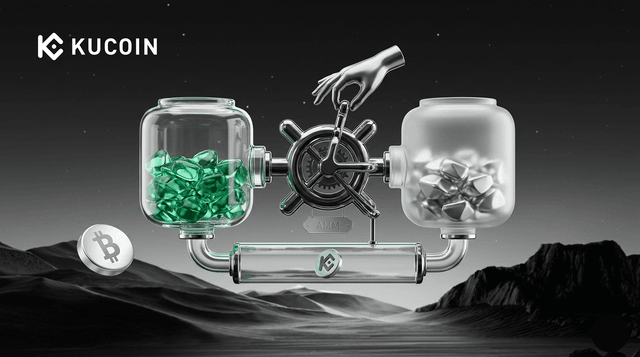
The birth of Decentralized Finance (DeFi) has reshaped global financial structures, proving that markets can operate autonomously without traditional intermediaries. In traditional stock markets and centralized crypto platforms, trading relies heavily on an order book model where buyers and sellers wait to be matched. However, early decentralized architectures struggled with thin liquidity and slow processing times under this framework. To eliminate these critical friction points, developers engineered a groundbreaking protocol: the Automated Market Maker, or AMM.
Key Takeaways
-
An Automated Market Maker (AMM) is a decentralized protocol that enables trustless, peer-to-smart-contract cryptocurrency trading without traditional order books.
-
AMMs replace human market makers with crowdsourced liquidity pools and deterministic mathematical formulas to price assets dynamically.
-
The foundational constant product formula ensures that a trading pool preserves mathematical equilibrium during open-market token swaps.
-
Liquidity providers face unique structural risks when funding AMM pools, including smart contract software exploits and impermanent loss.
Defining the Automated Market Maker (AMM) Concept
An Automated Market Maker (AMM) is a decentralized exchange (DEX) protocol that utilizes algorithmic code and crowdsourced token repositories to facilitate peer-to-smart-contract digital asset trading. In a conventional financial market, trading requires a continuous alignment of bids and asks overseen by professional market-making institutions that supply liquidity to order books.
Instead of relying on these traditional matching models, an AMM allows the Web3 ecosystem to run algorithmic, non-custodial marketplaces directly on top of public blockchain ledgers. Rather than being determined by centralized servers, transaction speeds and finality depend entirely on the underlying blockchain network.
How Does an AMM Work Dynamically?
The operational life cycle of an AMM revolves around two critical components: crowdsourced asset vaults called liquidity pools, and a core pricing mechanism governed by pure mathematics.
The Role of Liquidity Providers
Because an AMM lacks a centralized entity to seed order books, it relies on daily crypto users known as Liquidity Providers (LPs). LPs voluntarily lock up their personal crypto assets into the protocol's smart contracts. A standard pool requires depositing a pair of tokens in equal value proportions (for example, ETH and USDT). In return for locking their capital to facilitate smooth global trading, LPs receive a proportional share of the transaction fees generated by that specific asset pool.
The Constant Product Pricing Formula
To price tokens dynamically without an order book, the foundational AMM protocol utilizes a unique mathematical equation known as the Constant Product Formula:
x × y = k
Where x represents the absolute quantity of Token A in the pool, y represents the absolute quantity of Token B, and k is a fixed constant that must remain unchanged.
When a user deposits Token A into the contract to buy Token B, the supply of Token A increases while Token B decreases. To keep k identical, the smart contract's internal algorithm automatically drives up the relative price of Token B and pushes down the price of Token A. This deterministic model ensures that the pool can execute trades continuously, regardless of how large or volatile the transaction is.
Order Books vs. AMM Protocols: Structural Analysis
Understanding the operational variations between centralized matching engines and decentralized mathematical pools is vital for designing a resilient investment strategy.
| Trading Metric | Centralized Order Books | Automated Market Makers |
| Counterparty Type | Peer-to-peer (matching human buyers and sellers). | Peer-to-smart-contract (trading against code). |
| Pricing Engine | Determined dynamically by user bids and asks. | Governed strictly by deterministic math equations. |
| Asset Vetting | Strict platform compliance and research review. | Permissionless; anyone can launch an AMM pool. |
| Identity Safeguards | Mandatory KYC compliance frameworks. | Anonymous; requires only a secure wallet link. |
| Execution Friction | Highly efficient with minimal price slippage. | Subject to high slippage in low-liquidity pools. |
Critical Strategic Risks for AMM Participants
While the autonomy and passive income opportunities of an AMM protocol are highly compelling, operating in this environment introduces unique structural risk vectors:
Impermanent Loss (IL)
Impermanent loss represents the primary financial risk for liquidity providers funding AMM contracts. It occurs when the price ratio of your deposited tokens diverges significantly from the moment you locked them into the pool. If one token surges in value externally, arbitrage traders will buy it cheaply from the pool until its internal ratio matches global market prices. If an LP withdraws their capital during this price divergence, their paper losses become permanently locked in.
Smart Contract and Oracle Exploits
Because AMMs run entirely on public code lines, they are primary targets for malicious cyber actors. If a hacker uncovers a logic error within the contract's code or executes a flash loan to artificially manipulate a pool's token ratio, they can drain the crowdsourced vaults completely, leaving liquidity providers holding worthless balances.
Conclusion
Automated Market Makers are among the most significant structural innovations in blockchain history, proving that liquid financial marketplaces can run sustainably using open-source mathematical algorithms rather than centralized human intermediaries. By matching users directly with smart contract vaults, AMM protocols provide constant, global, and permissionless trading access while opening up crowdsourced yield opportunities. However, navigating these networks demands alert risk management regarding codebase security and impermanent loss.
FAQs
What causes price slippage when trading on an AMM?
Slippage occurs when a large trade changes the token ratio within a liquidity pool. In smaller or low-liquidity pools, large swaps alter the algebraic pricing formula significantly, forcing the final execution price to drift from the expected rate.
Can I lose my principal investment while funding an AMM?
Yes. If the underlying digital assets you deposit suffer a prolonged market crash, or if the protocol's underlying smart contracts are breached by an exploit, the total fiat value of your principal portfolio can drop significantly.
What is an arbitrage trader's role in an AMM?
Arbitrage traders continuously track price differences between an AMM pool and external markets. When prices drift, they execute quick trades to buy undervalued assets or sell overvalued ones, bringing the AMM's internal token ratio back into alignment.
Are AMM transactions entirely free of network fees?
No. Swapping assets on an AMM requires executing complex smart contract logic directly on-chain, meaning users must pay standard native blockchain network gas fees to validators alongside the protocol's basic trading fee.
How can I trade top DeFi tokens safely on KuCoin?
You can easily purchase, sell, and manage an extensive catalog of the world's leading decentralized finance and AMM ecosystem tokens by accessing the deeply liquid spot and futures trading markets natively on KuCoin.
Further Reading:


