

WLFI Proposal Controversy: Decoding the 62.2 Billion Locked Tokens and 4.5 Billion Burned Plan
Thesis Statement
On April 15, 2026, World Liberty Financial introduced a governance proposal that caused a significant stir within its community. The team outlined fresh rules for more than 62 billion locked WLFI tokens, introducing structured vesting periods and a voluntary burn mechanism for insiders. The official World Liberty Fi account posted the plan directly on X, quickly garnering thousands of replies. Some holders praised the move as evidence of long-term commitment, while others criticized it as coercive and unfair after months of waiting.
The proposal aims to replace indefinite token locks with clear timelines that tie major holders' participation in governance for years while permanently removing supplies to ease future selling pressure. At its core, the project, closely tied to the Trump family and focused on building USD1 stablecoin products, lending markets, and cross-chain tools, aims to demonstrate its team's and early backers' long-term commitment rather than their pursuit of quick exits. Yet the details have split opinions sharply, raising questions about control, fairness after 550 days of existing locks, and whether everyday holders will finally see liquidity or face even tighter restrictions.
The Shocking Announcement That Rocked WLFI Holders Overnight
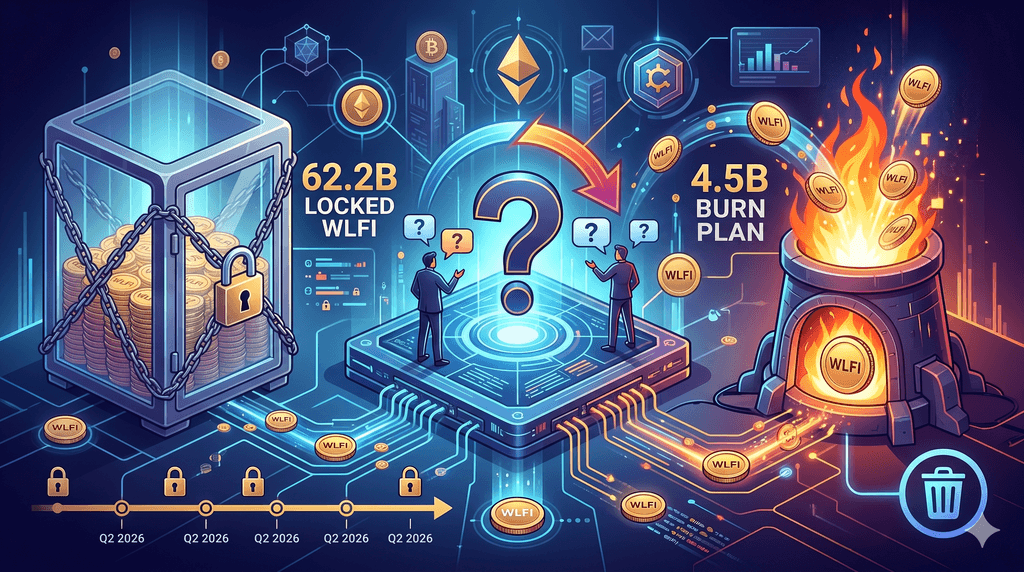
World Liberty Financial revealed the governance proposal through a detailed thread on X, framing it as one of the strongest alignment signals in DeFi history. In a matter of hours, the post racked up over a million views and hundreds of replies that mixed praise with outrage. Holders who had purchased during the presale at prices as low as $0.015 or $0.05 suddenly found themselves confronted with a binary choice: either accept new multi-year schedules or keep their tokens frozen indefinitely. The team emphasized that 62.282 billion WLFI, roughly 62 percent of the 100 billion total supply, would stay committed to governance for at least two years if the plan passes.
This came after earlier on-chain activity showed the project using around 5 billion WLFI as collateral to borrow over $75 million in USDC, which had already fueled whispers about liquidity management. Community members who felt they had waited long enough voiced immediate frustration, while supporters pointed to the project's real-world progress, including USD1 stablecoin growth, a national trust bank charter application, Chainlink Proof of Reserves integration, and live operations on Ethereum, BSC, and Solana. The timing, just days after fresh token listings and amid ongoing market volatility, turned the announcement into an instant flashpoint that forced every locked holder to reconsider their position.
Exact Breakdown of the 62.2 Billion Tokens Now Facing New Rules
The numbers break down cleanly into two buckets that cover the bulk of the locked supply. Founders, team members, advisors, institutions, and partners control exactly 45,238,585,647 WLFI under the proposal. Early supporters, those who participated in the presale rounds, hold 17,043,666,558 WLFI. Together, these total 62,282,252,205 tokens now subject to the vote. If approved after a seven-day governance period that needs at least 1 billion tokens in quorum and a simple majority, participants get ten days to opt in. The plan replaces vague, indefinite locks with precise cliff-and-vest mechanics that stretch several years.
The circulating supply sits around 31.76 billion tokens, giving the locked portion massive weight in future price dynamics. Market observers noted that successfully implementing these rules could reshape the fully diluted valuation picture, currently hovering near $8 billion at a token price around $0.08, by guaranteeing that the majority of supply stays off the market for an extended window. This level of commitment from such a large slice of tokens stands out even in a space known for aggressive tokenomics resets, and it directly addresses past complaints about unclear unlock paths that left holders guessing when liquidity might arrive.
Insiders who opt in face the toughest terms in the entire package. They must permanently destroy 10 percent of their allocation right away, which works out to a maximum of 4,523,858,565 WLFI tokens sent to a burn address where they can never return. The remaining 90 percent then follows a two-year cliff before entering a three-year linear vesting schedule. That means no tokens unlock for the first 24 months, after which they release gradually until the full post-burn amount becomes available around year five.
The team positions this burn as concrete proof of alignment, arguing that giving up billions of their own tokens shows confidence in the project's future rather than a desire to dump holdings. For context, this reduction permanently lowers total supply by roughly 4.5 percent overall, tightening the curve and potentially supporting price stability over time. Supporters highlight that most DeFi projects offer teams far shorter vesting windows, often just six to twelve months, making WLFI's self-imposed schedule notably stricter. Critics counter that the burn only kicks in if insiders choose the new path, and those who sit out simply stay locked under old rules while keeping their governance votes intact. Either way, the mechanism forces a real economic sacrifice from the people closest to the project, turning the proposal into more than just paperwork.
Early Buyers Score a Softer Deal, But Is It Enough After 550 Days Locked?
Early supporters receive noticeably friendlier treatment under the proposal. Their full 17 billion-plus tokens stay intact with zero burn required. Instead, they shift to a two-year cliff followed by a two-year linear vest, meaning tokens start releasing after 24 months and finish distributing by year four. This schedule still keeps everything locked for the near term but gives a clearer endpoint than the indefinite freeze many have endured since the 2024 presale. Presale buyers who entered at discounted prices have already sat through more than 550 days without meaningful unlocks, watching the token trade well below their entry points at times. The new structure offers them a defined path forward without forcing them to surrender any portion of their stack.
Project updates in the announcement thread pointed to ongoing builds like agentic payment tools, lend-borrow markets, and major CeFi exchange partnerships as reasons for patience. Yet many early holders expressed disappointment that even this softer track still delays access far beyond what they expected when they first supported the vision. The distinction between the two groups underscore an attempt to reward initial backers while demanding more from those running the day-to-day operations.
The Hidden Catch: Staying Locked Forever If You Reject the Terms
Anyone who chooses not to accept the new schedules keeps their tokens under the original indefinite lock but retains full governance voting rights. This creates a high-stakes dilemma for holders who want eventual liquidity. Opting out means no timeline for release ever materializes unless future proposals change the rules again. The team insists this preserves choice and protects committed participants from forced sales, but critics see it as pressure to accept or stay sidelined indefinitely. Frozen wallets have already limited some governance participation in past votes, where only about 23 percent of eligible locked tokens showed up across six earlier proposals.
The new system aims to boost active involvement by tying unlocks to explicit buy-in, yet it leaves dissenters with no practical exit ramp. Community threads filled with warnings about potential class-action risks or lost opportunity costs, especially for smaller holders who feel the deck is stacked. The mechanism ensures that governance power stays with those who signal long-term belief, but it also risks alienating parts of the base that simply want clear rules without extra hurdles.
How the Proposal Aims to Slash Sell Pressure for Years Ahead
By locking the 62.2 billion tokens under fixed schedules, the plan removes a huge chunk of potential supply from the market for the next two to five years. Insiders and early supporters together represent the majority of non-circulating tokens, so structuring their releases creates predictability that traders and institutions often crave. The immediate burn of up to 4.5 billion tokens further shrinks the overall pie, which could support higher prices if demand holds steady or grows through product adoption.
WLFI has already delivered tangible progress with the fastest-growing stablecoin in its category, live cross-chain deployments, and partnerships that expand reach. Proponents argue this supply discipline prevents the kind of sudden dumps that plague many launches, giving the ecosystem breathing room to mature. Market data shows the token reacting positively in the hours after the announcement, climbing roughly 7 percent as some viewed the move as bullish for scarcity. The extended timelines also stretch past key external milestones, including the end of the current presidential term in 2029, which some analysts tie to broader narrative alignment around policy and adoption.
Justin Sun Fires Back, Calling the Plan a Power Grab
Tron founder Justin Sun, a major figure in the broader crypto space and vocal critic of WLFI, quickly condemned the proposal as coercive and centralized. He highlighted alleged blacklisting functions in the token contract that could let the team freeze assets, questioned the transparency of governance, and labeled the opt-in structure a form of control rather than freedom. Sun's comments amplified existing tensions, with some holders echoing his view that the plan protects insiders at the expense of retail participants.
WLFI pushed back firmly, denying any misconduct and stating readiness to defend its position legally if needed. The public exchange added fuel to an already heated discussion, turning a tokenomics reset into a broader debate about decentralization in a project with high-profile political connections. Observers watched closely to see whether Sun's influence would sway votes or simply highlight the project's polarizing nature.
Angry Voices from Token Holders Feeling Trapped by the Changes
Social media lit up with raw reactions from locked holders who felt the proposal extended their wait without enough upside. One trader who had been in since the presale wrote that the plan essentially forced another four years of commitment or permanent freeze, calling it unacceptable after more than a year and a half of patience. Others shared screenshots of their wallets and vented about opportunity costs, with some threatening legal action or class-action suits over what they saw as changing terms mid-stream. Posts accused the team of treating early buyers like an ATM while enjoying flexibility themselves, especially after the collateral loan news surfaced.
A smaller group of voices pushed back against the negativity, noting that the team was voluntarily locking itself in longer and burning tokens, something rare in the industry. The divide split neatly between those seeking near-term liquidity and those betting on the project's multi-year roadmap, creating a lively but tense forum atmosphere ahead of the vote.
Market Jumps on the News Despite the Drama Unfolding
Despite the heated replies, WLFI's token price climbed in the immediate aftermath, trading near $0.08 with a market capitalization of around $2.5 billion based on roughly 31.76 billion circulating tokens. The 24-hour volume stayed healthy as traders digested the supply-tightening implications. Some analysts viewed the burn and long locks as removing overhang, potentially supporting a cleaner price path if adoption continues.
Others cautioned that the controversy could weigh on sentiment if the vote turns messy or if more holders reject the terms. The project's fundamentals, including USD1 growth and exchange listings, provided a counterbalance that kept the move from tanking sentiment entirely. Short-term price action reflected optimism about reduced future selling, even as longer-term trust questions lingered.
On-Chain Moves That Sparked Doubts Before the Proposal Dropped
Data on the blockchain had already raised eyebrows weeks earlier when roughly 5 billion WLFI appeared as collateral for a $75 million USDC borrow. The move showed how the project managed liquidity behind the scenes but also triggered concerns about whether locked tokens were truly unavailable for team use. Combined with earlier price drops and accusations of centralized control, it set the stage for the governance reset.
The proposal now attempts to address these transparency gaps by laying out explicit future schedules, yet the timing has left some wondering if it was reactive rather than proactive. On-chain transparency tools continue to let holders track these flows, keeping the conversation grounded in verifiable numbers rather than speculation alone.
Team's Message of Commitment Through Self-Imposed Locks
In the announcement thread, the WLFI team stressed that every founder, advisor, and partner token would face the strictest schedule plus the burn. They listed project milestones achieved over the past year, including stablecoin records, regulatory applications, and technical integrations, to show that the locks align incentives with delivery.
By choosing the least favorable terms for themselves, insiders aimed to demonstrate they are not planning a quick exit but are instead doubling down on building real utility. The message resonated with holders who value narrative and long-term vision over immediate unlocks, positioning the proposal as a maturity step rather than a defensive maneuver.
What the Vesting Timelines Reveal About Project Timeline
The chosen schedules stretch releases well into 2028 and beyond, aligning with the project's stated goal of becoming a foundational DeFi player. Early supporters see full distribution by roughly year four from now, while insiders wait until year five post-burn. This timeline gives the team space to roll out more features, expand USD1 usage, and strengthen partnerships without worrying about large unlocks flooding the market. It also signals confidence that the ecosystem will mature enough to absorb gradual releases. For participants, it means patience remains key, but with a defined calendar instead of endless uncertainty.
The proposal explicitly ties opt-in status to active governance involvement, aiming to increase turnout from the current low levels. Only committed holders who accept the new terms get a clear path to liquidity while keeping voting power. Non-opt-ins retain votes but stay frozen, potentially concentrating influence among those who signal alignment. Over the coming week, the community will decide the outcome through the on-chain vote. The results could set the tone for how WLFI develops, determining whether the reset strengthens trust or deepens divisions in this high-profile crypto venture.
FAQs
What exactly does the WLFI governance proposal change for token holders?
The plan restructures vesting for 62.282 billion locked tokens by adding clear two-year cliffs and two-to-three-year linear release periods while requiring insiders to burn 10 percent of their holdings if they opt in. Early supporters keep their full allocation without any burn, and anyone who rejects the new terms simply stays locked indefinitely but keeps voting rights. This creates defined timelines where none existed before, though it still requires years of commitment from participants.
Will the 4.5 billion token burn actually happen, and what does it mean for supply?
The burn only occurs if insiders choose to opt into the new schedules, permanently removing up to 4.523 billion WLFI from circulation right after approval. This reduces total supply by about 4.5 percent and signals strong team belief in the project by forcing them to destroy part of their own stack before any unlocks begin. It could support price stability by tightening the overall token curve over time.
How long will early supporters have to wait under the new rules?
Early supporters who opt in face a two-year cliff with no releases, followed by gradual unlocking over the next two years, reaching full availability around four years from the proposal date. This gives them a predictable schedule after their existing long lock period, though it still delays liquidity significantly for those who bought in 2024.
Why is Justin Sun criticizing the proposal so strongly?
Sun argues the opt-in structure feels coercive because rejecting it leaves tokens locked forever, and he has raised concerns about potential blacklisting functions and governance transparency. He views the plan as concentrating control rather than decentralizing it, sparking a public back-and-forth that has drawn more attention to the vote.
How did the market react to the announcement on the first day?
The token price rose roughly 7 percent shortly after the post went live, with traders appearing to price in the supply reduction and long-term lock as bullish factors despite the community debate. Volume stayed elevated as participants weighed the pros and cons of the reset.
What should current WLFI holders consider before voting or opting in?
Holders need to review the exact vesting math against their own entry price and time horizon, decide whether they prefer the new defined schedule or the status-quo indefinite lock, and monitor the seven-day vote for quorum and majority signals. The choice affects both personal liquidity and the project's overall direction, so reading the full forum details and community sentiment helps inform the decision.
Disclaimer: This content is for informational purposes only and does not constitute investment advice. Cryptocurrency investments carry risk. Please do your own research (DYOR).