



TradeXYZ – Project Introduction and Potential Analysis (A DEX Bridging Real-World Assets and Traditional Finance)
2026/04/04 07:06:07
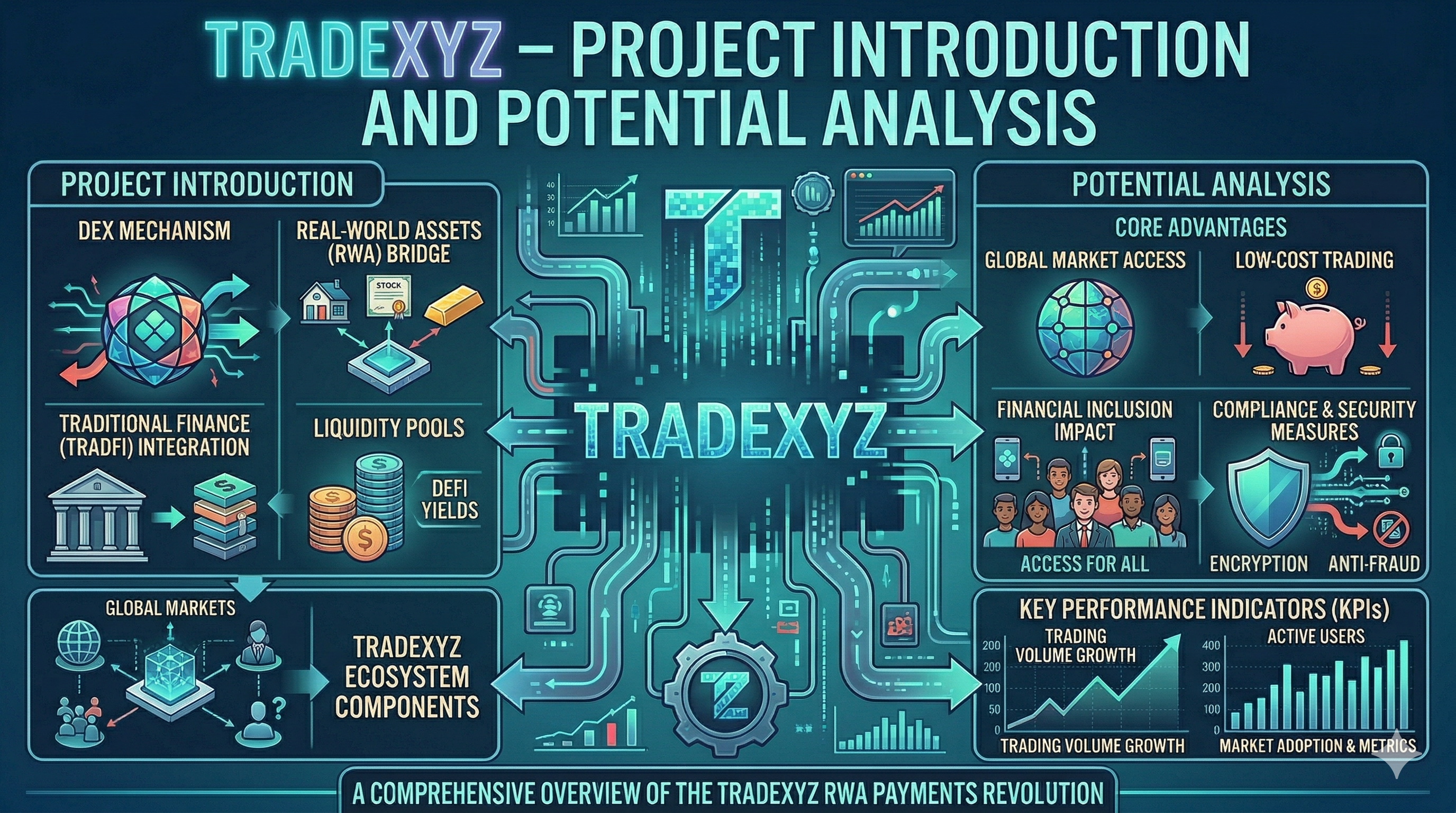
TradeXYZ illustrates a new class of decentralized exchanges designed to bridge traditional financial markets and blockchain infrastructure through real-world asset (RWA) tokenization. By enabling on-chain trading of commodities and financial instruments, it reflects a broader shift toward merging legacy finance with decentralized systems, potentially reshaping how global markets access liquidity, pricing, and ownership.
A New Type of Exchange Is Emerging in Crypto
The decentralized exchange landscape is no longer limited to trading cryptocurrencies like Bitcoin or Ethereum. A new wave of platforms is emerging, focused on bringing traditional financial assets, such as commodities, bonds, and real estate, onto blockchain rails. TradeXYZ sits directly in this category, positioning itself as a hybrid between a crypto-native exchange and a traditional trading venue. This move shows a deeper evolution within the industry, where the goal is no longer just decentralization, but integration with real-world markets.
What makes this transition important is the scale of traditional finance compared to crypto. Global commodity markets, for example, are worth trillions of dollars, far exceeding the total crypto market cap. By creating infrastructure that allows these assets to be traded on-chain, platforms like TradeXYZ are tapping into a much larger economic layer. This is not theoretical anymore. According to recent industry discussions, TradeXYZ has already seen commodities trading volumes exceed $1 billion, signaling early traction and real demand for such products.
This signals a move from speculative crypto trading toward utility-driven markets. Instead of trading tokens for price movement alone, users are increasingly interacting with representations of real assets. TradeXYZ is part of that transition, where blockchain is used not just for innovation, but for improving how existing markets function.
Understanding Real-World Assets (RWA) in Simple Terms
Real-world assets, often referred to as RWAs, are physical or traditional financial assets that are represented digitally on a blockchain. These can include things like government bonds, real estate, commodities such as gold, or even private credit instruments. The idea is simple: take something that exists in the real world and create a digital token that represents ownership or exposure to that asset.
This process is known as tokenization. It allows assets that are typically difficult to trade to become more accessible and liquid. For example, instead of needing large capital to invest in real estate, tokenization allows fractional ownership, meaning smaller investors can participate. According to industry research, tokenization can improve efficiency by combining settlement, reporting, and asset management into a single digital environment.
The importance of RWAs lies in their ability to connect blockchain technology with tangible value. Crypto markets have historically been driven by digital-native assets, but RWAs introduce real economic backing. This creates a bridge between traditional finance and decentralized systems, making platforms like TradeXYZ more relevant to institutional and retail users alike.
As the space matures, RWAs are becoming one of the most discussed sectors in crypto, with growing participation from financial institutions and infrastructure providers.
TradeXYZ’s Core Idea: Bringing Commodities On-Chain
TradeXYZ focuses heavily on commodities, which are among the oldest and most important asset classes in global finance. These include metals like gold and silver, energy products, and other raw materials that form the backbone of economic activity. Traditionally, trading these assets involves intermediaries, centralized exchanges, and strict access requirements.
TradeXYZ changes this by allowing users to trade tokenized versions of these commodities directly on-chain. This approach reduces friction, enabling faster execution and broader access. It also allows markets to operate continuously, rather than being restricted to traditional trading hours.
What stands out is the scale at which this model is already operating. Reports indicate that TradeXYZ has reached over $1 billion in commodities trading volume, reflecting strong demand for tokenized exposure to real assets. This level of activity suggests that users are not just experimenting, they are actively using the platform as an alternative trading venue.
By focusing on commodities, TradeXYZ taps into a market that is both globally relevant and deeply connected to macroeconomic trends. This gives it a unique position compared to most decentralized exchanges, which primarily deal with crypto-native assets.
How TradeXYZ Works Behind the Scenes
TradeXYZ operates as a decentralized exchange, meaning trades are executed through smart contracts rather than a centralized authority. Users interact with the platform through wallets, maintaining control over their assets while trading.
The key innovation lies in how real-world assets are represented. Instead of trading the physical asset itself, users trade tokenized derivatives or representations that track the value of those assets. These tokens are designed to mirror price movements, allowing users to gain exposure without needing direct ownership of the underlying commodity.
This structure allows for faster settlement and lower operational complexity. Traditional commodity trading often involves clearinghouses and intermediaries, which can delay transactions. On TradeXYZ, settlement can occur almost instantly, thanks to blockchain infrastructure.
The platform also benefits from transparency. Transactions are recorded on-chain, allowing participants to verify activity and pricing. This reduces information asymmetry, a common issue in traditional markets.
In essence, TradeXYZ combines the speed and openness of decentralized finance with the economic relevance of traditional assets, creating a system that feels familiar yet significantly more efficient.
Why TradeXYZ Is Gaining Attention Quickly
The fast rise of TradeXYZ can be attributed to timing and market demand. The crypto industry is entering a phase where utility matters more than speculation. Users are looking for platforms that offer real-world value, not just token trading.
TradeXYZ meets this demand by offering exposure to assets that people already understand. Commodities, for example, are widely followed and tied to global economic trends. This makes them more intuitive for new users compared to complex crypto derivatives.
There is also a growing interest in combining traditional finance with blockchain efficiency. Platforms that can successfully merge these two worlds are likely to attract significant attention. TradeXYZ appears to be doing exactly that, as reflected in its rising trading volumes and increasing visibility within industry discussions.
The platform’s appeal is also linked to accessibility. By lowering barriers to entry, it allows a broader audience to participate in markets that were previously limited to institutions or high-net-worth individuals.
This combination of relevance, accessibility, and technological efficiency explains why TradeXYZ is quickly becoming a topic of interest across the crypto ecosystem.
The Bigger Picture: Tokenization Is Scaling Fast
TradeXYZ is not operating in isolation. It is part of a much larger trend toward tokenization of financial assets. Industry data platforms like RWA.xyz highlight the rapid growth of this sector, with increasing adoption across multiple asset classes.
Tokenization is gaining traction because it addresses several inefficiencies in traditional finance. It enables faster settlement, reduces costs, and allows for fractional ownership. These benefits are attracting both startups and established financial institutions.
Projections suggest that tokenized assets could reach trillions of dollars in value over the coming years, driven by demand for more efficient financial infrastructure. This creates a favorable environment for platforms like TradeXYZ, which are built specifically to support this transition.
The growth of tokenization also reflects a broader shift toward digital-first financial systems. As more assets move on-chain, the role of decentralized exchanges is likely to expand beyond crypto, making them central to future market infrastructure.
The Real Test for TradeXYZ
Liquidity is one of the most important factors for any trading platform. It determines how easily assets can be bought or sold without affecting their price. In the context of RWAs, liquidity has historically been a challenge.
Academic research shows that many tokenized assets still suffer from low trading activity and limited participation, despite their potential advantages. This highlights the importance of platforms like TradeXYZ, which aim to create active markets for these assets.
The reported trading volumes suggest that TradeXYZ is making progress in this area. Reaching billion-dollar levels indicates that users are actively engaging with the platform, which is a positive sign for liquidity.
Sustaining this liquidity will be critical. Active markets attract more participants, creating a feedback loop that improves pricing and efficiency. TradeXYZ’s ability to maintain and grow its trading activity will play a key role in its long-term success.
Where TradeXYZ Fits in the RWA Ecosystem
The RWA ecosystem includes a wide range of platforms, from tokenization infrastructure providers to trading venues and data analytics tools. TradeXYZ occupies a specific niche within this ecosystem as a trading layer.
While platforms like Tokeny or DigiFT focus on issuing and managing tokenized assets, TradeXYZ focuses on enabling active trading. This distinction is important because tokenization alone is not enough, assets also need markets where they can be exchanged.
The ecosystem is becoming increasingly interconnected, with different platforms handling different parts of the value chain. TradeXYZ benefits from this structure by positioning itself as the place where tokenized assets gain liquidity and price discovery.
This role makes it an essential component of the broader tokenization movement, as trading activity is what ultimately determines the usefulness of any financial asset.
Competition and Market Positioning
TradeXYZ operates in a competitive environment where multiple platforms are exploring RWA trading. Some focus on institutional use cases, while others target retail users.
What differentiates TradeXYZ is its focus on commodities and high trading activity. This gives it a clear identity within the market, allowing it to stand out from platforms that offer broader but less specialized services.
Competition is likely to increase as more players enter the space. The success of TradeXYZ will depend on its ability to maintain liquidity, expand asset offerings, and continue improving user experience.
At the same time, the overall market is large enough to support multiple platforms. The key factor will be execution, platforms that can deliver reliable and efficient trading experiences are likely to capture the most value.
The Role of Data and Transparency
The main advantage of blockchain-based platforms is transparency. TradeXYZ benefits from this by providing verifiable data on trading activity and pricing. This is particularly important for RWAs, where trust and data accuracy are critical. Traditional markets often rely on intermediaries for price discovery, which can create inefficiencies. On-chain systems provide a more open alternative.
Data platforms like RWA.xyz are helping to standardize how information is tracked and analyzed across the ecosystem. This improves visibility and allows users to make more informed decisions. Transparency also enhances credibility, which is essential for attracting both retail and institutional participants.
The Future Potential of TradeXYZ
TradeXYZ’s future potential is closely tied to the broader adoption of tokenized assets. As more assets move on-chain, the demand for trading platforms is likely to increase.
The platform’s early traction suggests that it is well-positioned to benefit from this trend. Its focus on commodities provides a strong foundation, as these assets are deeply integrated into global markets.
Expansion into other asset classes could further enhance its relevance. This might include financial instruments such as bonds or equities, depending on how the ecosystem develops. The key factor will be execution. Maintaining liquidity, improving infrastructure, and adapting to market needs will determine how far TradeXYZ can scale.
Conclusion
TradeXYZ represents a meaningful step in the evolution of decentralized finance. By focusing on real-world assets and commodities, it moves beyond the limitations of crypto-native trading and into a space with significantly larger economic potential.
Its growth reflects a broader shift toward integrating blockchain technology with traditional financial systems. This transition is still in its early stages, but platforms like TradeXYZ are already demonstrating what is possible.
As tokenization continues to expand, the importance of trading infrastructure will only increase. TradeXYZ’s ability to capture this opportunity will depend on its ability to sustain liquidity, adapt to market demands, and maintain user trust.
FAQs
Q1: What is TradeXYZ?
TradeXYZ is a decentralized exchange focused on trading tokenized real-world assets, particularly commodities.
Q2: What are RWAs?
RWAs are physical or traditional financial assets represented digitally on a blockchain.
Q3: Why is TradeXYZ important?
It connects traditional finance with decentralized systems, enabling new forms of trading and access.
Q4: Is TradeXYZ widely used
It has already reached significant trading volumes, indicating growing adoption.
Q5: What makes it different?
Its focus on commodities and real-world asset trading sets it apart from typical crypto exchanges.
Disclaimer
This content is for informational purposes only and does not constitute investment advice. Cryptocurrency investments carry risk. Please do your own research (DYOR).