

Trump's May 2026 China Visit: What It Means for US Stocks and Crypto Markets
2026/05/15 11:30:02
Introduction
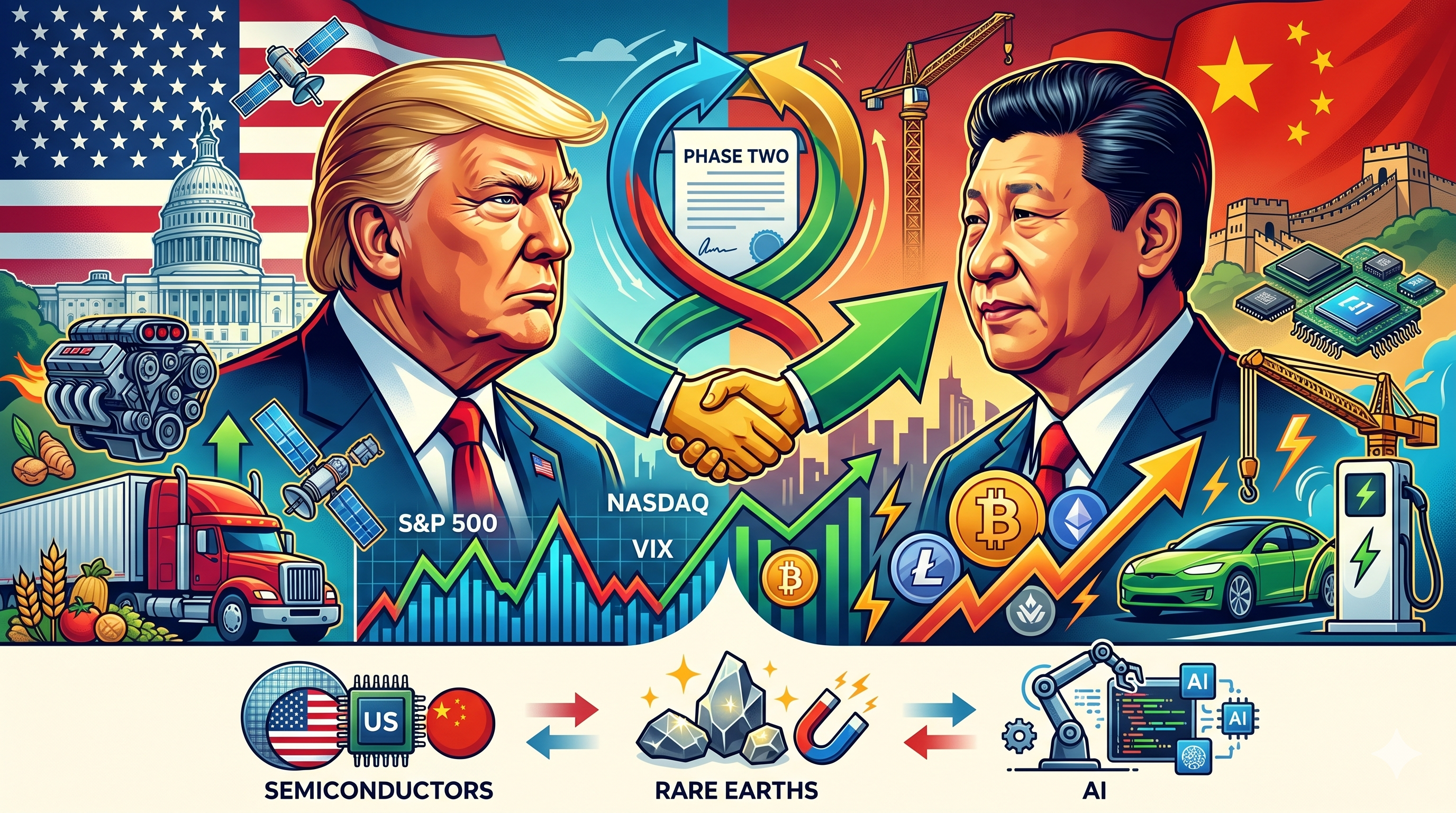
U.S. President Donald Trump's state visit to Beijing in May 2026 marks the first sitting US president to meet Xi Jinping on Chinese soil during his second term — and markets are pricing in everything from a tech truce to a tariff thaw. Semiconductors, rare earths, and AI export controls are the three flashpoints traders are watching most closely. The immediate market reaction has been notable: US equities tied to China exposure rallied into the meeting, while Bitcoin and major altcoins saw elevated volatility as traders repositioned around potential dollar weakness and risk-on sentiment.
This article breaks down exactly how the summit is moving US stocks, crypto prices, and the macro setup traders need to understand for the weeks ahead.
What Is Trump's May 2026 China Visit About?
Trump's May 2026 China visit is a high-stakes summit focused on resolving tech export controls, tariff escalation, and rare earth supply chains. According to CNBC's May 14, 2026 report on the Trump-Xi summit, the meeting agenda centers on three flashpoints: advanced semiconductor restrictions, rare earth mineral access for US manufacturers, and the framework for AI chip exports to Chinese firms.
The visit follows months of tit-for-tat tariff threats and comes after both sides agreed in April 2026 to a 90-day negotiating window. The White House has signaled it wants a "Phase Two" trade deal that goes further than the 2020 agreement, while Beijing is pushing for relief on Nvidia H20 and similar chip export bans.
Why This Summit Matters More Than Previous Meetings
This summit carries unusual weight because it directly affects roughly $580 billion in annual US-China bilateral trade flows. Unlike the 2017 Mar-a-Lago meeting, the 2026 talks include explicit market-moving deliverables: tariff schedules, export license frameworks, and potentially a currency stabilization understanding.
Markets have rarely seen a US-China summit with this many concrete, near-term catalysts on the table simultaneously.
How Are US Stocks Reacting to the Trump China Visit?
US stocks with direct China exposure have rallied sharply into the summit, with semiconductor, casino, and EV-supply-chain names leading the move. According to CNBC's May 13, 2026 report on bullish China-related stock trades, options traders have built large positions in three categories ahead of the meeting.
The Three China-Related Trades Bulls Are Loading Up On
Semiconductors with China revenue exposure are seeing the heaviest call-buying. Nvidia, AMD, and Qualcomm have all seen unusual options activity as traders bet on partial rollbacks of chip export restrictions. Nvidia (NVDAX/USDT) alone derives roughly 13% of revenue from China-based customers, and any easing of H20 chip restrictions could unlock billions in deferred sales.
Macau casino operators including Wynn Resorts and Las Vegas Sands have rallied on hopes that improved US-China relations boost Chinese consumer travel and discretionary spending. Wynn's Macau properties contribute over 70% of its EBITDA.
Rare earth and critical mineral plays round out the bullish basket. MP Materials and similar miners have moved on speculation that a supply-chain agreement could include guaranteed offtake commitments from Chinese refiners.
Broader Index Impact
The S&P 500 and Nasdaq Composite have both pushed toward fresh highs in the week leading into the summit. Risk-on sentiment is dominating, with the VIX compressed near multi-month lows as traders price in a constructive outcome.
However, a "no-deal" scenario could trigger a swift reversal — strategists are warning that the same names leading the rally would lead any pullback if tariffs escalate instead of easing.
How Is Crypto Reacting to the Trump-Xi Summit?
Crypto markets are treating the Trump China visit as a risk-on catalyst, with Bitcoin and Ethereum both trading higher into the meeting alongside US equities. The correlation between Bitcoin and the Nasdaq has tightened meaningfully in May 2026, meaning macro-driven equity moves are spilling directly into digital asset prices.
Bitcoin's Reaction to Trade Deal Optimism
Bitcoin tends to rally on weaker dollar expectations, and the Trump-Xi summit has reinforced that setup. A constructive trade deal would likely reduce safe-haven demand for the US dollar, lift global liquidity, and support Bitcoin as a macro hedge.
Conversely, if talks collapse and tariffs escalate, two competing forces emerge: short-term risk-off selling could pressure Bitcoin alongside equities, but longer-term concerns about dollar weaponization and capital controls historically benefit Bitcoin as a neutral reserve asset.
Stablecoins and Dollar Dynamics
Stablecoin issuance trends are worth watching closely. According to recent on-chain data from May 2026, USDT and USDC combined market cap has continued expanding, suggesting fresh capital is flowing into crypto markets ahead of the summit rather than rotating out.
What Are the Key Risks Traders Should Watch?
The primary risk is a summit breakdown that triggers immediate tariff escalation, which would hit both US stocks and crypto simultaneously. Other meaningful risks include unexpected export control announcements, currency policy surprises, and geopolitical flare-ups around Taiwan or the South China Sea.
Tariff Escalation Scenario
If Trump leaves Beijing without a framework agreement, markets are likely to price in renewed tariff escalation. The April 2026 baseline saw threats of tariffs reaching 60% on certain Chinese imports. A reactivation of that schedule would likely:
-
Pressure semiconductor and consumer discretionary stocks
-
Strengthen the dollar short-term, weighing on Bitcoin
-
Boost gold and defensive sectors
-
Increase volatility across all risk assets
Tech Export Control Surprises
Even within a "successful" summit framework, surprise announcements on AI chip licensing or quantum computing restrictions could whipsaw individual names. Nvidia, AMD, ASML, and TSMC ADRs are most exposed to these surprises.
Currency Policy Risk
Any joint statement on yuan stability or dollar policy could move forex markets significantly. A weaker dollar agreement would be bullish for Bitcoin, gold, and emerging market equities — while a stronger dollar push would have the opposite effect.
How Do Past US-China Summits Compare?
Historical US-China summits show that markets typically rally into the meeting and then experience a "sell the news" reaction unless deliverables exceed expectations. The 2018 G20 Buenos Aires meeting between Trump and Xi produced a 90-day tariff truce that sparked a strong year-end rally before talks broke down in May 2019.
|
Summit
|
Outcome
|
S&P 500 30-Day Reaction
|
Bitcoin 30-Day Reaction
|
|
2017 Mar-a-Lago
|
Framework only
|
+1.2%
|
+28% (other catalysts)
|
|
2018 G20 Buenos Aires
|
90-day truce
|
+6.5%
|
-8%
|
|
2019 G20 Osaka
|
Talks resumed
|
+1.8%
|
-12%
|
|
2026 Beijing (TBD)
|
Pending
|
—
|
—
|
The pattern suggests that pre-summit rallies often fade unless concrete deliverables emerge. Traders should size positions accordingly.
What Sectors Benefit Most From a Successful Summit?
A successful Trump China visit would most benefit semiconductors, industrial commodities, US agricultural exports, and crypto majors tied to risk-on flows. The benefit hierarchy depends on which deliverables actually materialize.
Direct Beneficiaries
-
Semiconductors: Easing H20 and similar export restrictions unlocks deferred China revenue
-
Agriculture: Soybean, corn, and pork exporters benefit from purchase commitments
-
Aerospace: Boeing has historically secured large China orders post-summit
-
Casinos and luxury: Improved Chinese consumer sentiment lifts Macau and luxury brands
Indirect Beneficiaries
-
Bitcoin and Ethereum: Benefit from weaker dollar and risk-on flows
-
Emerging market ETFs: Broader EM rally on reduced trade tension
-
Industrial metals: Copper, aluminum, and steel on global growth optimism
Conclusion
Trump's May 2026 China visit is one of the most consequential market events of the year, with direct implications for US stocks, cryptocurrencies, and the broader global macro setup. According to CNBC's coverage from May 13 and 14, 2026, bulls have built significant positions in semiconductor, casino, and rare earth names ahead of the summit, while crypto markets are treating the meeting as a risk-on catalyst tied to potential dollar weakness.
The base case favors a constructive framework agreement that extends the rally in China-exposed equities and supports Bitcoin alongside broader risk assets. However, the downside scenario — a summit breakdown triggering tariff escalation — would hit both stocks and crypto simultaneously and could reverse much of the pre-summit positioning.
Traders should focus on three things: the specific deliverables announced, any surprise export control language, and currency policy signals. Position sizing should reflect the binary nature of summit outcomes. Whether the meeting produces a breakthrough or a breakdown, volatility across stocks and crypto is virtually guaranteed in the days and weeks that follow.
FAQs
Will the Trump China visit cause Bitcoin to reach a new all-time high?
A successful summit could provide a meaningful tailwind for Bitcoin through weaker dollar expectations and risk-on flows, but reaching a new all-time high depends on additional catalysts including Federal Reserve policy, ETF inflows, and overall crypto market structure. The summit alone is unlikely to be the sole driver.
Which Chinese stocks listed in the US benefit most from the summit?
Alibaba, JD.com, PDD Holdings, and NetEase are the most liquid US-listed Chinese names that typically benefit from improved bilateral relations. Among China-exposed US companies, Nvidia, Wynn Resorts, and Tesla have the most concentrated revenue exposure to the Chinese market.
How does a US-China trade deal affect stablecoin demand?
A trade deal that weakens the dollar typically boosts stablecoin demand from non-US users seeking dollar exposure without holding traditional banking products. Conversely, dollar strength tends to slow stablecoin issuance growth as the dollar becomes more attractive in its native form.
Could the summit lead to changes in US crypto regulation?
The summit itself is unlikely to directly affect US crypto regulation, but improved US-China cooperation could influence broader financial regulatory coordination over time. Hong Kong's expanding crypto framework may also benefit from any thaw in cross-strait financial tensions.
What happens to gold and safe havens if the summit succeeds?
Gold typically underperforms in successful summit scenarios as safe-haven demand fades and risk assets rally. However, if any agreement includes language suggesting dollar weakness or coordinated currency action, gold can rally alongside risk assets on debasement concerns rather than safety flows.