

Top 5 Projects on Base Network: 2026 Guide to Best Base Crypto
2026/05/09 16:27:02
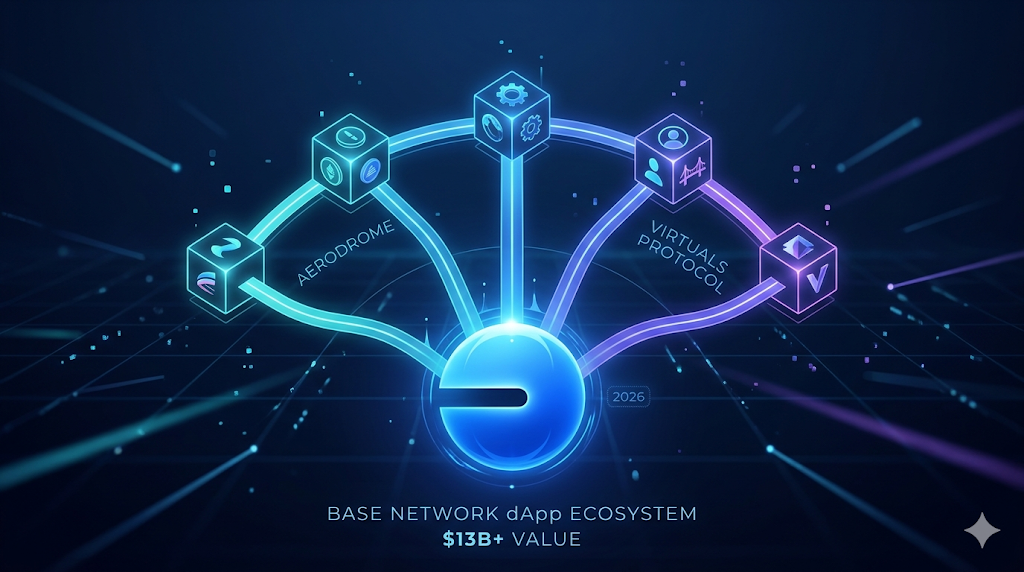
The Base network has established itself as the dominant Ethereum Layer-2 scaling solution by leveraging the massive retail distribution of the Coinbase ecosystem. According to on-chain data from May 2026, the network's DeFi Total Value Locked (TVL) has reached approximately $4.5 billion, while total cross-chain assets (Bridged TVL) have exceeded $13 billion. The top five projects currently defining the network's utility and market cap are Aerodrome Finance, Virtuals Protocol, Farcaster (Warpcast), Aave, and Brett. These protocols represent the primary pillars of liquidity, artificial intelligence, social interaction, lending, and community culture on the chain. As of early May 2026, these five assets account for over 70% of the active engagement and transactional volume within the ecosystem.
Key Takeaways
-
Base has become a leading Ethereum Layer-2, reaching a $4.5 billion DeFi TVL by leveraging Coinbase’s massive retail distribution network.
-
Aerodrome Finance acts as the central liquidity hub, maintaining over $1.2 billion in TVL through a decentralized voting-escrow incentive model.
-
Virtuals Protocol pioneers decentralized AI by allowing autonomous agents to operate as sovereign economic actors with their own private keys.
-
Farcaster’s Warpcast integrates social interaction with finance through "Frames," enabling users to execute on-chain transactions directly within social feeds.
-
The ecosystem thrives on deep technical synergy and sub-cent fees, attracting over thirteen billion dollars in total cross-chain assets.
Aerodrome Finance
Aerodrome Finance is the primary liquidity engine for the Base network, facilitating the vast majority of decentralized trading volume. Aerodrome maintains over $1.2 billion in total value locked, representing nearly 27% of the entire network's DeFi TVL. The protocol utilizes a voting-escrow (ve) model that incentivizes long-term liquidity provision and protocol governance. This architecture ensures that liquidity remains deep and stable for the most critical trading pairs in the ecosystem.
By serving as the de facto automated market maker (AMM) for the chain, Aerodrome enables all other projects on Base to maintain healthy trading environments. The protocol's Slipstream concentrated liquidity feature allows it to handle massive volume with minimal price slippage.
The veAERO Economic Engine
The veAERO model aligns the interests of token holders with the health of the network through a robust reward system. Participants who lock their AERO tokens receive voting power, which they use to direct weekly token emissions to specific liquidity pools. In exchange for their votes, they receive 100% of the trading fees and protocol incentives generated by those pools. Based on performance metrics from April 2026, veAERO lockers have seen consistent annualized returns, making it a cornerstone for long-term investors.
This "flywheel" effect creates a self-sustaining cycle where deep liquidity attracts more traders, generating higher fees, which in turn attracts more liquidity. The protocol's governance is highly decentralized, with thousands of independent lockers participating in the weekly voting process.
Strategic Infrastructure for New Projects
Aerodrome serves as the launchpad for almost every new token entering the Base ecosystem. Because it hosts the most liquid markets, it is the primary venue for project teams to bootstrap their initial liquidity. By offering bribes, new projects can efficiently attract the capital they need to ensure their tokens can be traded with low slippage.
According to ecosystem reports from May 2026, over 85% of newly listed tokens on Base utilize Aerodrome for their primary liquidity pools. This centralized focus on liquidity makes the protocol an indispensable part of the network's financial stack, ensuring it remains the most active DEX on the chain.
Virtuals Protocol
Virtuals Protocol has pioneered the DeFAI (Decentralized AI) sector on Base by providing the infrastructure necessary for autonomous agents to operate on-chain. As of May 2026, the protocol enables AI entities to manage their own wallets, execute trades, and interact with users across social protocols. The VIRTUAL token functions as the primary economic layer for these agents, used for service payments, data acquisition, and agent governance. According to market data from early May 2026, Virtuals Protocol has a market capitalization of approximately $500 million, reflecting the surging interest in AI-blockchain integration.
This protocol represents a significant technological shift where AI agents are treated as sovereign economic actors. By utilizing the Base network's low fees, Virtuals allows for high-frequency AI interactions that would be cost-prohibitive on other networks.
Autonomous Agent Sovereignty
Virtuals Protocol provides the cryptographic framework that allows AI agents to possess their own private keys. This sovereignty enables agents to hold assets, earn revenue, and reinvest in their own development without human intervention. According to technical documentation updated in April 2026, this Agentic Commerce model has led to the creation of over 5,000 autonomous entities currently active on the Base network.
These agents provide services ranging from automated portfolio management to intelligent moderation in social decentralized applications. The decentralized nature of the protocol ensures that no single entity can censor or shut down an agent's operations, providing true autonomy in the digital space.
The Role of VIRTUAL in Agentic Governance
The VIRTUAL token is used to govern the behavior and safety guardrails of the AI agents within the network. Token holders can vote on protocol upgrades that determine how agents access data and interact with external smart contracts. This community-led governance prevents the centralization of AI power, ensuring that the agents act in the best interest of the network participants.
In May 2026, Virtuals introduced a "Staked Intelligence" model, where users can stake VIRTUAL tokens to support specific high-performing agents. In return, stakers receive a portion of the revenue generated by the agent's commercial activities. This model has successfully merged the concepts of DeFi yield and AI productivity.
Farcaster (Warpcast)
Farcaster is a decentralized social protocol that has become the primary communication hub for the Base community, with Warpcast serving as its most popular client. Unlike traditional social media, Farcaster is built on an open-source architecture that allows users to own their data, identity, and social graph. According to Warpcast user metrics from May 2026, the protocol has surpassed 1.5 million daily active users, a 400% increase compared to the previous year.
The protocol's "Frames" feature has revolutionized SocialFi by allowing developers to embed functional mini-apps, such as token swaps, NFT mints, and games, directly into the social feed. This creates a frictionless user experience where social interaction and financial transactions occur simultaneously.
Frames and Social-Financial Integration
Frames allow for the seamless execution of on-chain transactions without the user ever leaving the Warpcast interface. This innovation has drastically reduced the friction associated with using decentralized applications. According to developer surveys from April 2026, over 60% of all new Base-native projects are launched through a Farcaster Frame to capitalize on the high engagement of the social layer.
Users can collect digital assets, participate in governance polls, or even trade on Aerodrome directly from a social post. This "social commerce" model is a key driver behind the Base network's retail adoption, as it mimics the ease of use found in traditional Web2 applications.
Portable Identity and Data Ownership
On Farcaster, your followers and content are tied to your decentralized identity (FID), not to a specific company or app. If a user chooses to move from Warpcast to a different Farcaster client, their entire social presence moves with them. This prevents the platform-lock-in that characterizes legacy social media companies.
Based on privacy audits from early 2026, Farcaster's decentralized storage system ensures that user data is encrypted and distributed, reducing the risk of massive data breaches. This emphasis on ownership and privacy has attracted a sophisticated audience of developers and crypto enthusiasts to the Base ecosystem.
Aave
Aave V3 remains the dominant lending and borrowing protocol on the Base network, providing the essential credit infrastructure for both retail and institutional users. According to DeFiLlama data from May 2026, Aave's deployment on Base has reached nearly $850 million in total supply, driven by the demand for leveraged trading and stablecoin yield. The protocol allows users to deposit their assets as collateral to earn interest or borrow other digital assets in a permissionless manner.
Aave's integration with Base leverages the network's high speed and low costs to offer highly efficient lending markets. It serves as the primary destination for users looking to maximize their capital efficiency without selling their underlying assets.
Efficiency Mode for Stablecoins
Aave V3’s Efficiency Mode allows users to borrow assets with significantly higher collateralization ratios when the assets are price-correlated. On the Base network, this is primarily used for stablecoin-to-stablecoin or ETH-to-LST (Liquid Staking Token) borrowing. Based on April 2026 usage reports, E-Mode transactions account for over 35% of the total borrow volume on Base.
This feature enables users to take high-leverage positions on their assets with minimal liquidation risk, provided the assets remain correlated. For example, a user can borrow USDC against their DAI collateral with up to 97% Loan-to-Value (LTV). This capital efficiency is a major draw for professional DeFi users.
Institutional Credit and GHO Integration
The introduction of the GHO stablecoin on the Base network has further solidified Aave's position as a market leader. GHO is Aave's native, over-collateralized stablecoin that users can mint directly against their deposited collateral. According to May 2026 data, the supply of GHO on Base has reached $120 million, providing a stable and reliable medium of exchange for the ecosystem.
Institutional participants favor Aave due to its extensive history of security audits and its transparent risk management frameworks. The ability to access credit 24/7 without a centralized intermediary is a fundamental component of the Base network's mission to bring the global economy on-chain.
Brett (BRETT)
Brett (BRETT) has established itself as the primary cultural mascot and most significant community-driven asset on the Base network. Inspired by Matt Furie’s "Boy's Club" comic series, BRETT has grown from a simple meme into a multi-billion dollar cultural phenomenon. According to market cap rankings from May 2026, BRETT is the highest-valued non-infrastructure asset on Base, with a market capitalization exceeding $1.8 billion.
While often viewed through the lens of retail speculation, BRETT serves a vital role in onboarding new users to the Base ecosystem. It is frequently the first asset purchased by retail participants, driving significant transactional volume and liquidity to the network's DEXs.
The "SHIB of Base" and Retail Engagement
BRETT is widely considered the "SHIB of Base," representing the community-led spirit that drives retail interest in blockchain technology. The project's massive social media following and integrated community events on Warpcast have created a loyal holder base. According to April 2026 holder data, BRETT has over 250,000 unique on-chain holders, reflecting its broad appeal.
This retail engagement provides a constant stream of liquidity to the network. During periods of market volatility, BRETT often acts as a leading indicator for retail sentiment within the Base ecosystem. Its success has spawned a whole sub-economy of community projects that build on top of its cultural legacy.
Integration with Base Ecosystem Rewards
In 2026, the BRETT project has evolved to include various utility-driven initiatives, such as token-gated access to gaming events and exclusive rewards for long-term holders. Through partnerships with other Base protocols, BRETT holders can access "Based" reward programs that offer discounts on fees or early access to new product launches.
This transition from a pure "memecoin" to a "culture-utility" hybrid has helped BRETT maintain its dominance. By providing tangible benefits to its community, the project ensures that its token remains a staple of the Base network's daily active volume.
Analyzing the Synergy Between the Top 5 Projects
The interaction between these five projects creates a "virtuous cycle" that drives the overall growth and stability of the Base network. Aerodrome provides the liquidity that allows assets like BRETT and VIRTUAL to be traded efficiently. Farcaster (Warpcast) provides the social interface where these projects build their communities and deploy interactive mini-apps via Frames. Aave provides the credit layer that allows users to leverage their positions in these assets, further increasing the total capital efficiency of the chain.
This interconnectedness is what separates Base from other Layer-2 networks. Rather than existing in siloes, these protocols are deeply integrated, often sharing liquidity and user data to provide a seamless Web3 experience.
Shared Liquidity and Composability
The composability of these projects allows developers to build complex financial products that utilize multiple protocols simultaneously. For example, a developer can create a Farcaster Frame that allows users to borrow GHO on Aave and instantly swap it for AERO on Aerodrome. This level of integration is only possible because of the high throughput and low fees provided by the Base chain.
According to developer activity reports from May 2026, over 75% of active dApps on Base utilize more than one of these top five protocols in their backend architecture. This collaborative environment accelerates innovation and reduces the time-to-market for new decentralized applications.
Impact on Bridged TVL and Retail Onboarding
The success of these projects is a major reason why the Bridged TVL of Base has exceeded $13 billion in May 2026. Users are moving their assets from Ethereum and other chains to access the unique opportunities provided by projects like Virtuals and Farcaster. The ease of onboarding from the Coinbase exchange directly into these protocols has created the most significant retail "on-ramp" in crypto history.
Based on transaction data from April 2026, nearly 50% of all first-time on-chain users in the Ethereum ecosystem begin their journey on the Base network. This massive influx of new users ensures a constant supply of fresh capital and energy, keeping the top five projects and the broader network highly vibrant.
Technical Milestones of the Base Network in 2026
The technical maturity of the Base network has reached a point where it can handle enterprise-grade loads without congestion. The implementation of EIP-4844 "blobs" has permanently lowered transaction fees to sub-cent levels, even during periods of extreme market activity. According to network performance logs from May 2026, the average transaction fee on Base has remained below $0.005 for the past sixty days.
This technical stability is critical for the AI and social applications that require millions of daily micro-transactions. Without these low fees, the high-frequency interactions seen in Farcaster and Virtuals Protocol would be financially unviable.
Scalability and Finality Improvements
Base has successfully reduced its block finality times, allowing for a near-instant user experience that rivals traditional centralized apps. According to technical audits from early 2026, the "time-to-finality" on Base has been optimized to under 2 seconds. This speed is essential for high-frequency trading on SynFutures or real-time AI agents operating through Virtuals Protocol.
The network's scalability has also improved, with the ability to process over 2,000 transactions per second (TPS) during peak demand. This headroom ensures that the network can continue to grow as more users and institutional capital migrate to the Layer-2 ecosystem.
Security and Decentralization Roadmap
As Base enters mid-2026, the network is progressing through its "Stage 2" decentralization roadmap. This includes the implementation of a multi-client ecosystem and decentralized fraud proofs. According to security reports from May 2026, the network has maintained 100% uptime since its inception, proving its resilience and technical robustness.
The security of the Base network is further bolstered by its inheritance of the Ethereum mainnet's security. By settling its state to Ethereum, Base provides users with the confidence that their assets are secured by the most decentralized and immutable blockchain in the world.
Should You Invest in Base Ecosystem Projects on KuCoin?
Investing in Base network projects on KuCoin provides a secure, high-liquidity path to the most explosive Layer-2 ecosystem of 2026. With Base consistently hitting record TVL milestones, assets like AERO, VIRTUAL, and BRETT are ideally positioned to capture the massive network effects of the current SocialFi and AI trends.
You can navigate this high-growth ecosystem through three primary avenues:
-
Execute Precise Trades: Access deep liquidity for top Base projects via the Spot Trading terminal, ensuring seamless execution for both emerging altcoins and established tokens.
-
Automate Volatility Management: Use the KuCoin Trading Bot to handle the rapid price swings of Base assets, allowing you to profit from market fluctuations without constant manual monitoring.
-
Capture Passive Yield: Deploy your long-term Base holdings into KuCoin Earn to generate consistent rewards as the network’s ecosystem continues to mature.
By choosing KuCoin, you leverage institutional-grade security and a user-friendly interface that simplifies trading complex DeFi assets.
Conclusion
The Base network has successfully navigated the complexities of the Layer-2 landscape to become the leading destination for retail-focused decentralized applications. The top five projects collectively provide liquidity, intelligence, social connectivity, credit, and culture that define the network's value proposition. According to latest May 2026 data, the $4.5 billion DeFi TVL and the $13 billion in bridged assets are a testament to the strength and resilience of these protocols.
As these projects continue to innovate and integrate, the Base network is set to maintain its dominance as the most active and liquid Layer-2 in the Ethereum ecosystem.
FAQs
Why did Aerodrome Finance become the largest project on Base?
Aerodrome was designed as a native liquidity layer for Base, using a voting-escrow model that perfectly aligns incentives between traders and liquidity providers.
What makes Farcaster (Warpcast) different from Twitter or Threads?
Farcaster is a decentralized protocol where users own their data and social graph, meaning they can move their followers and content between different apps.
How do AI agents on Virtuals Protocol earn money?
AI agents can earn revenue by providing autonomous services like asset management, data analysis, or social moderation.
Is it safe to use Aave on a Layer-2 like Base?
Yes, Aave V3 on Base utilizes the same battle-tested code and security modules as its Ethereum mainnet deployment.
Why is Brett (BRETT) valued so highly compared to other tokens?
BRETT’s value is derived from its massive community support and its role as the cultural mascot of the Base network.
Disclaimer:This content is for informational purposes only and does not constitute investment advice. Cryptocurrency investments carry risk. Please do your own research (DYOR).