



Greatest Risk in 2026: Navigating the "Age of Competition"
2026/04/16 06:15:02
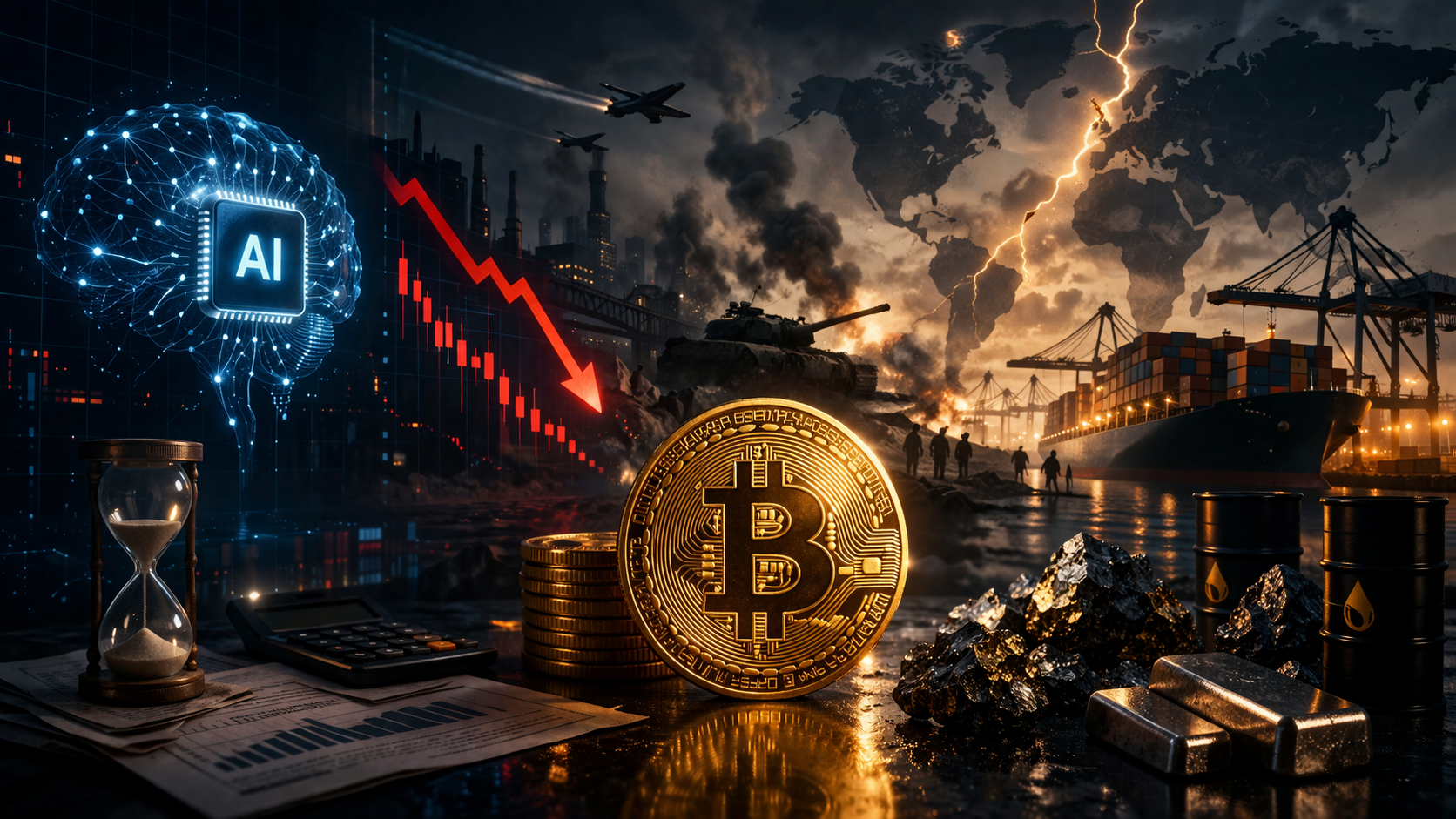
The year 2026 marks a pivotal junction where the post-WWII economic order faces its most severe stress test. As outlined in the World Economic Forum's Global Risks Report 2026, the world has shifted from a globalized marketplace into a fractured "Age of Competition." Identifying the Greatest Risk in 2026 requires understanding the toxic synergy between geopolitical friction, technological euphoria, and protectionist economics.
This comprehensive analysis explores the Greatest Risk in 2026, focusing on the convergence of AI market volatility, geopolitical instability, and the transformative role of digital assets within the crypto industry.
To understand the macro-environment of the coming year, we must look at the primary drivers of instability. The following points summarize the essential factors defining the global landscape:
-
Geoeconomic Confrontation as the Primary Trigger: For 2026, the #1 short-term risk is the weaponization of economic policies—such as targeted sanctions and investment blocks—for strategic national gain.
-
The AI Paradox: Artificial Intelligence is simultaneously viewed as a productivity savior and a potential source of a trillion-dollar financial correction, often referred to as the "AI Bubble."
-
Crypto's Dual Identity: Digital assets are evolving into sophisticated geopolitical hedging tools for sovereign nations while simultaneously facing unprecedented AI-driven security threats and smart contract vulnerabilities.
-
The "Stagflation" Trap: A new round of trade wars is structurally baking inflation into the global economy, significantly limiting the maneuverability of central banks to stimulate growth.
Geopolitical instability has transitioned from a background concern to the foreground of every financial model. In 2026, the "Geopolitical Risk Premium" is embedded in every asset class, from Bitcoin to Treasury bonds.
From Kinetic Conflicts to Global Supply Chain Paralysis
In 2026, localized wars in energy-rich or trade-critical regions, such as the Middle East or Eastern Europe, no longer remain isolated incidents. The risk lies in "spillover effects" that can paralyze global shipping lanes, such as the Strait of Hormuz or the Suez Canal. When kinetic warfare meets integrated logistics, the result is an instantaneous spike in commodity prices. This volatility directly impacts the crypto industry, as investors often flee to "hard assets" like Bitcoin during periods of fiat currency instability caused by war.
The Collapse of Multilateral Governance
With international bodies like the WTO and the UN weakened by internal divisions, 2026 is defined by "minilateralism." This involves small, exclusive blocs—such as expanded BRICS+ or specialized G7+ task forces—that prioritize internal security and "club-based" trade over global stability. This fragmentation makes coordinated responses to global crises, such as a systemic financial meltdown or a climate catastrophe, nearly impossible to achieve.
The enthusiasm that characterized the early 2020s has reached a boiling point. The Greatest Risk in 2026 for the tech sector is a massive valuation correction that could echo the 2000 dot-com crash.
The ROI Reality Check: Valuation vs. Real-World Productivity
After years of massive capital expenditure on H100 chips and LLM training, 2026 is the "judgment year" for Artificial Intelligence. Investors are no longer satisfied with "beta" versions or demos; they demand net margin improvements. Statistics suggest that if Fortune 500 companies do not see at least a 15-20% increase in operational efficiency attributed to AI, a massive sell-off is inevitable. A bursting AI bubble could wipe out trillions in market capitalization, leading to a "risk-off" environment that would temporarily depress the crypto market.
AI-Driven Misinformation and the Erosion of Social Cohesion
Beyond the stock tickers, AI-generated synthetic content is ranked as a top societal threat for 2026. The ability of deepfakes to manipulate democratic elections and fuel social polarization creates an unstable domestic environment. This internal friction often forces embattled governments to adopt more radical, populist, and unpredictable foreign policies to distract their populace, further escalating the Greatest Risk in 2026: a global conflict sparked by domestic unrest.
The era of hyper-globalization is officially over, replaced by a defensive posture where every nation seeks to build an economic fortress.
td {white-space:nowrap;border:0.5pt solid #dee0e3;font-size:10pt;font-style:normal;font-weight:normal;vertical-align:middle;word-break:normal;word-wrap:normal;}
| Trade Era | Primary Goal | Key Risk |
| 1990-2018 | Efficiency & Low Cost | Supply Chain Fragility |
| 2019-2024 | Resilience & De-risking | Rising Inflation |
| 2026 Onward | Strategic Autonomy | Geoeconomic Confrontation |
Export Controls and the Battle for Critical Minerals
The "New Trade War" of 2026 isn't just about steel tariffs or car quotas; it’s about the raw materials of the future. Restrictions on lithium, cobalt, rare earth elements, and high-end semiconductor manufacturing equipment are creating "technological iron curtains." Global companies are being forced to build redundant, hyper-expensive supply chains to ensure they aren't cut off by a sudden export ban from a rival power.
Permanent Inflation and the End of Cheap Consumer Goods
The shift from "Offshoring" to "Friend-shoring" or "Near-shoring" is largely completed by 2026, but the bill has arrived. The structural cost of moving production from low-cost regions to politically "safe" countries is a primary driver of the 2026 inflation floor. Most economists predict that global inflation will remain stubbornly above 3-4%, making the "2% target" a relic of the past. For crypto enthusiasts, this persistent inflation reinforces the narrative of Bitcoin as a digital gold and a hedge against the debasement of fiat currencies.
As a leading crypto exchange platform, we recognize that the Greatest Risk in 2026 provides both a challenge and a unique opportunity for digital assets.
-
The Rise of Digital Neutrality: As major currencies like the USD and Euro are increasingly "weaponized" through sanctions, non-aligned nations are turning to decentralized networks to settle cross-border trade.
-
The Regulatory Paradox: While the US and EU have finalized comprehensive frameworks, the "Age of Competition" means regulatory arbitrage is rampant. Regions with favorable laws are attracting the lion's share of Web3 innovation.
-
Institutional Integration: By 2026, Bitcoin ETFs are no longer "new." They are standard components of institutional portfolios, meaning crypto volatility is now more tightly correlated with traditional equities than ever before.
Bitcoin as a Neutral Reserve in a Bipolar Financial System
In a world split between competing financial spheres, Bitcoin is emerging as a "stateless" reserve asset. In 2026, we see the rise of Digital Neutrality, where decentralized stablecoins and BTC are used by businesses in the Global South to bypass the complexities of sanctioned banking corridors. This use case is driving a new wave of adoption that is decoupled from speculative trading and rooted in pure utility.
DePIN and the AI Compute Arms Race
The convergence of Crypto and AI reaches its peak in 2026 through DePIN (Decentralized Physical Infrastructure Networks). As trade wars limit access to centralized cloud compute, DePIN protocols allow for the decentralized sharing of GPU power. However, this sector remains highly vulnerable to regulatory crackdowns. Furthermore, AI-powered smart contract exploits—where malicious AI models find and execute bugs in seconds—represent a critical security risk for the DeFi ecosystem in 2026.
While tech and trade dominate the headlines, the underlying fiscal health of nations remains a ticking time bomb.
The Sovereign Debt Time Bomb
Years of high interest rates, necessitated by the inflation mentioned earlier, coupled with the astronomical costs of the "New Trade War" and green energy transitions, have pushed several emerging markets to the brink of default by 2026. Sovereign debt levels in 2026 are at record highs across both G20 and developing nations. This financial instability often serves as the "spark" that turns a diplomatic disagreement into an open geoeconomic confrontation.
The "White-Collar" Displacement Crisis
Unlike the industrial shifts of the past that affected manufacturing, 2026 marks the first year where AI-driven job displacement significantly hits the middle class and white-collar sectors. Analysts project that up to 10% of administrative and analytical roles could be automated by 2026. The resulting social unrest provides fertile ground for protectionist and populist leaders to emerge, who often advocate for even stricter trade barriers and isolationist policies, further exacerbating the Greatest Risk in 2026.
Navigating the Greatest Risk in 2026 requires a fundamental shift in how we perceive global stability and asset management. We are no longer in a world where economic efficiency is the ultimate goal; we are in an "Age of Competition" where strategic autonomy and resilience dictate survival. For the crypto industry, 2026 is a year of maturation through fire. While the bursting of the AI bubble and the escalation of trade wars pose significant threats to global liquidity, the fundamental value proposition of decentralized, neutral, and transparent financial systems has never been more relevant. Success in 2026 will belong to those who can anticipate the "multiplier effect" of geopolitical tension and leverage technology to build a more resilient financial future.
Q1: Which risk is most likely to cause a global recession in 2026?
The most likely trigger for a recession is the combination of Geoeconomic Confrontation and a potential AI Bubble burst. While the trade wars create structural weakness and high costs, a sudden collapse in tech valuations would provide the "liquidity shock" necessary to tip the global economy into a downturn.
Q2: How should the Crypto industry prepare for the Greatest Risk in 2026?
Platforms must focus on "Security-First" protocols, utilizing AI-audited smart contracts to defend against automated attacks. Furthermore, geographical decentralization of mining operations and node infrastructure is essential to avoid being caught in the crosshairs of national energy and capital control policies.
Q3: Can a "New Trade War" be avoided before 2026?
It is highly unlikely. In the current political climate, trade policy has become inseparable from national security policy. Most experts expect "managed friction"—a state of constant, low-level trade disputes—rather than a return to the open, free-trade ideals of the early 2000s.
Q4: Will AI make the crypto market more or less volatile in 2026?
AI will likely increase volatility in the short term due to high-frequency trading bots and automated sentiment analysis. However, it will also provide better tools for risk management and fraud detection, potentially leading to a more mature market in the long run.
Q5: Is Bitcoin still a good hedge against the Greatest Risk in 2026?
Bitcoin remains a strong hedge against fiat currency debasement and systemic banking failures. However, because it is now more integrated with institutional finance, it may experience temporary correlations with traditional "risk" assets during an initial market panic or an AI bubble burst.