

Taiko Hack Aftermath: Is Your Crypto Safe After the $1M Bridge Exploit?
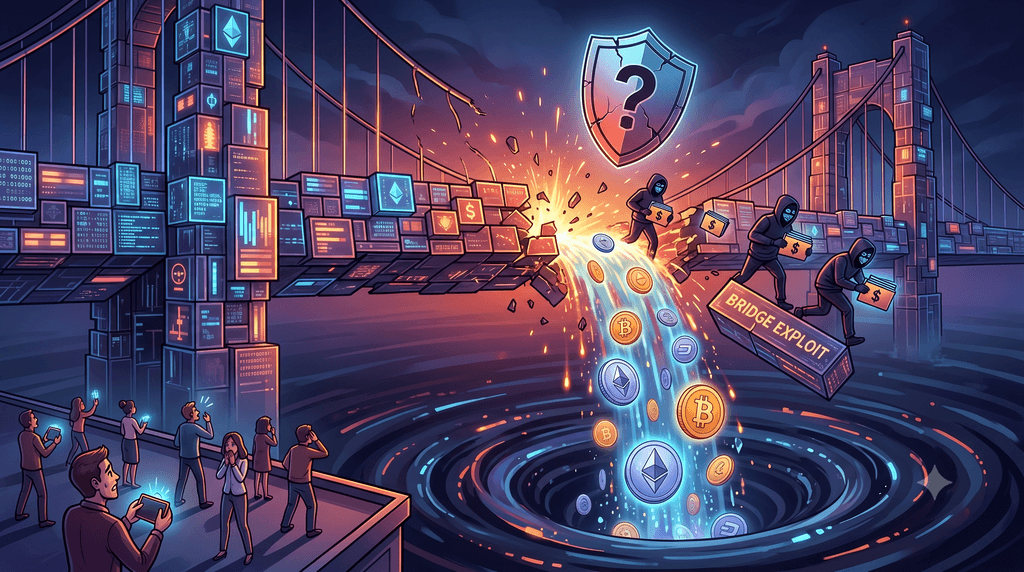
The cryptocurrency landscape is no stranger to volatility, but nothing sends shivers down an investor’s spine quite like the word "hack." In late June 2026, the decentralized finance (DeFi) space was served a harsh reminder of the vulnerabilities inherent in scaling solutions when the Taiko network—a prominent Ethereum Layer 2 (L2) scaling solution—suffered a catastrophic security breach.
The target? The Taiko ERC20 Vault. The damage? Over $1 million drained in a sophisticated cross-chain bridge exploit.
If you are a TAIKO token holder, a DeFi yield farmer, or simply a participant in the broader Ethereum L2 ecosystem, you are likely asking one critical question: Is my crypto safe? In this comprehensive breakdown, we will dissect exactly what happened during the Taiko hack, explain the technical failures of the cross-chain bridge in plain English, analyze the market’s reaction, and provide an actionable guide to securing your digital assets in the aftermath of this $1 million nightmare.
The $1M Nightmare: What Exactly Happened to Taiko?
The promise of Layer 2 networks like Taiko is to make Ethereum faster and cheaper without sacrificing security. However, the bridges that connect Layer 1 (Ethereum) to Layer 2 are incredibly complex pieces of code, making them prime targets for malicious actors.
The crisis unfolded rapidly between June 21 and June 22, 2026. On-chain monitoring systems began flashing red as anomalous transactions were detected moving out of the Taiko ERC20 Vault—a smart contract designed to securely hold user deposits.
The first public alarm was sounded by authoritative security researchers. According to an initial post-mortem alert by the prominent blockchain security firm Blockaid:"Our threat intelligence systems detected multiple unauthorized asset withdrawals from the Taiko ERC20 Vault on Ethereum mainnet. The attacker successfully bypassed the bridge's state verification, resulting in an estimated loss of $1.1 million in various ERC-20 tokens before the network was halted."
The Immediate Fallout
Once the breach was confirmed, the consequences were immediate and severe. Over $1 million worth of user funds had vanished into the hacker’s wallet. Realizing the gravity of the situation and the potential for further hemorrhaging of funds, the Taiko development team made the difficult but necessary decision to pull the emergency brake.
They executed an emergency network pause, halting all block production and bridge transactions. While this action successfully prevented the hacker from draining the remaining millions locked in the vault, it also effectively froze the funds of thousands of legitimate users, plunging the community into uncertainty.
Under the Hood: How Did the Hackers Break the Bridge?
To understand how $1 million can disappear into the digital ether, we need to look at the mechanics of cross-chain bridges. You don't need to be a Solidity developer to understand the flaw; you just need to understand how a passport works.
The Achilles' Heel: State Verification
When you bridge assets from Ethereum to Taiko, you lock your tokens in an Ethereum smart contract (the Vault). The bridge then "verifies the state" of that transaction and mints equivalent tokens for you on the Taiko network. Think of State Verification like a customs officer checking your passport. The customs officer (the smart contract) looks at your documents (cryptographic proofs) to confirm you are who you say you are, and that you actually deposited the funds.
During the Taiko hack, the attacker didn't break down the vault door with brute force. Instead, they forged a flawless fake passport. Because of a logic flaw in the code, the attacker was able to submit manipulated data that tricked the smart contract into believing a massive deposit had occurred on Layer 2. The Ethereum vault, trusting this fake "state," subsequently unlocked and released real tokens to the hacker.
The Taiko Core Development Team officially acknowledged this critical failure in their post-incident report, stating:"The root cause of the exploit was an isolated logic flaw within our cross-chain state verification parameters. The attacker crafted malicious proofs that our verifier contract failed to reject, allowing them to illicitly withdraw assets from the Layer 1 vault."
Why Cross-Chain Bridges Are Prime Targets
This incident highlights a recurring theme in crypto: bridges are massive honeypots. Because they must hold the underlying assets of an entire L2 ecosystem to maintain 1:1 backing, they often contain hundreds of millions of dollars in a single smart contract. When you combine massive concentrated wealth with highly experimental, complex cryptographic code, it creates an irresistible target for the world’s most sophisticated cybercriminals.
The Ripple Effect: Exchanges Halt and Market Reacts
News of a $1 million exploit spreads at the speed of light on Crypto Twitter, and the market reaction was swift, brutal, and highly coordinated.
Major Exchanges Step In
Centralized exchanges (CEXs) act as the primary gateways for retail investors. Upon noticing the on-chain anomaly and Taiko's network pause, major trading platforms immediately moved to protect their users and prevent the hacker from laundering the stolen funds through their order books.
Binance, the world's largest cryptocurrency exchange by volume, was among the first to react. In an official public announcement to its users, Binance stated:"To ensure user safety amidst the ongoing network instability and the reported vault vulnerabilities, we have temporarily suspended TAIKO token deposits and withdrawals. Trading remains active, but on-chain transfers will be paused until the Taiko network's security is fully audited and restored."
Other platforms like Coinbase, KuCoin, and Bybit quickly followed suit.
TAIKO Token Price Impact
Unsurprisingly, the price of the native TAIKO token took an immediate hit. Panic selling ensued as fear, uncertainty, and doubt (FUD) gripped the community. Investors feared that the $1 million loss might just be the tip of the iceberg. The price dropped by double digits within hours of the news breaking, reflecting the severe erosion of trust.
The Ecosystem Freeze
Beyond token prices, the operational impact was staggering. Because block production was paused, the entire Taiko DeFi ecosystem ground to a halt. Decentralized exchanges (DEXs) on Taiko couldn't process swaps, lending protocols couldn't liquidate undercollateralized loans, and NFT traders were left in limbo. It was a stark reminder of the centralization risks still present in early-stage Layer 2 networks.
Action Plan: Are Your Funds Safe and What Should You Do?
If you are reading this and holding TAIKO tokens, take a deep breath. Panic is the enemy of security. Your risk exposure depends entirely on where your funds were held at the time of the exploit.
Assessing Your Risk
-
If your funds are on a Centralized Exchange (Binance, KuCoin, etc.): Your funds are generally safe. The hack occurred on-chain, targeting a specific smart contract. CEXs hold your assets in their own cold wallets, which were not breached in this incident.
-
If your funds are on the Taiko Network (L2): Your funds are temporarily frozen due to the network pause, but they are not necessarily lost. The $1M was stolen from the L1 Vault, not directly from user wallets on L2.
-
If you recently interacted with the Taiko Bridge: You are in the highest risk category. If you granted token approvals to the compromised Vault contract, your wallet could still be vulnerable.
Crucial Steps for Taiko Users
To secure your assets, follow this immediate action plan:
-
Stay Informed via Official Channels: Only rely on updates from the official Taiko X (Twitter) account and Discord. Do not trust random users offering help.
-
Revoke Smart Contract Permissions: This is the most critical step. If you have ever bridged tokens, you likely gave the bridge contract "infinite approval" to spend your tokens. Go to Revoke.cash or Etherscan's Token Approval tool, connect your wallet, and immediately revoke any spending limits granted to the Taiko ERC20 Vault.
-
Do Not Attempt to Bridge: Until an official all-clear is given accompanied by comprehensive security audit reports, do not attempt to use the official bridge or any third-party bridges to move funds to or from Taiko.
Scam Warning: Beware of Fake Refunds
Hackers know that victims are desperate to recover their money. In the wake of the exploit, X (Twitter) and Telegram have been flooded with fake "Taiko Support" bots offering "Refunds" or "Compensation Airdrops."
Never click on these links. If you connect your wallet to a fake refund site and sign a transaction, the scammers will drain whatever funds you have left. Taiko will never ask for your private keys or require you to "verify" your wallet on a random website to receive compensation.
The Bigger Picture: Layer 2 Security Re-evaluated
The $1M Taiko bridge exploit is not an isolated incident; it is a symptom of a broader industry challenge.
The Trade-off Between Speed and Security
The crypto industry is currently obsessed with the "Blockchain Trilemma"—the idea that you can only optimize for two out of three: Decentralization, Scalability, and Security. Understanding the technical differences between Layer 1 vs Layer 2 scaling solutions is crucial here: while Layer 1s prioritize base-level security, Layer 2 networks like Taiko optimize for scalability (speed and low costs). However, to achieve this, they often rely on centralized sequencers, upgradeable smart contracts, and complex cryptographic proofs.
While the cryptography (like Zero-Knowledge proofs or Optimistic rollups) is theoretically secure, the implementation of that cryptography into smart contract code is written by humans. And humans make mistakes. The Taiko hack proves that even heavily audited code can contain obscure logic flaws that only reveal themselves under extreme stress testing by malicious actors.
What’s Next for Taiko?
For Taiko to survive this ordeal, transparency and technical rigor are paramount. The team's immediate next steps involve working with top-tier security firms to patch the state verification vulnerability. We can expect a multi-layered post-mortem report, followed by negotiations with the hacker (often offering a "white hat bounty" in exchange for returning the majority of the funds). Furthermore, the Taiko DAO will likely need to formulate a compensation plan to make affected users whole, which is vital for restoring community trust.
Conclusion
The Taiko ERC20 Vault hack, resulting in over $1 million in losses, is a sobering moment for the Layer 2 ecosystem. It brutally highlights that while cross-chain bridges are essential infrastructure for a scalable Ethereum, they remain the weakest link in the chain.
For investors, the age-old crypto adage remains truer than ever: Not your keys, not your coins. Always practice impeccable digital hygiene, regularly revoke unnecessary smart contract permissions, and never allocate more capital to experimental DeFi protocols than you can comfortably afford to lose. The technology will inevitably improve, but in the meantime, vigilance is your best defense.
Frequently Asked Questions (FAQs)
Can Taiko recover the stolen $1 million?
Recovering stolen crypto is notoriously difficult but not impossible. Blockchain security firms are actively tracking the hacker's wallet addresses and blacklisting the stolen assets (like USDC or USDT) where possible. Frequently, project teams will send an on-chain message to the hacker offering a "White Hat Bounty" (usually 10-20% of the stolen funds) if they return the rest safely. If the hacker attempts to cash out through a centralized exchange with KYC, law enforcement may be able to freeze the funds.
Is the TAIKO token dead after this hack?
Not necessarily. While a $1 million loss is significant, many major networks have survived far larger exploits (such as the Ronin or Wormhole hacks). The survival of the TAIKO token depends entirely on how the development team handles the aftermath. If they patch the vulnerability transparently, implement rigorous new security audits, and successfully compensate the affected users, the token and the ecosystem can recover over time.
Are funds held on centralized exchanges like Binance or Coinbase affected?
No. If you hold your TAIKO tokens or other assets on major centralized exchanges, your funds are safe from this specific smart contract exploit. The hack targeted the on-chain ERC20 Vault (a smart contract on Ethereum), not the private cold storage wallets used by major exchanges. However, you will not be able to deposit or withdraw TAIKO until the exchanges lift their network suspensions.
How can I revoke permissions for the compromised Taiko contract?
To protect your wallet, you must revoke the permissions you previously granted to the compromised bridge. Navigate to a trusted tool like Revoke.cash or the Etherscan Token Approval checker. Connect your Web3 wallet (like MetaMask), locate the permissions granted to the Taiko bridge/vault contracts, and click "Revoke." You will need to pay a small Ethereum gas fee to process this safety transaction.
Disclaim: This article is for informational purposes only and does not constitute financial or investment advice. Cryptocurrency investments carry significant risk. Always conduct your own research before trading.