

Why new US military strikes on Iran threaten the global economy
2026/07/09 14:07:00
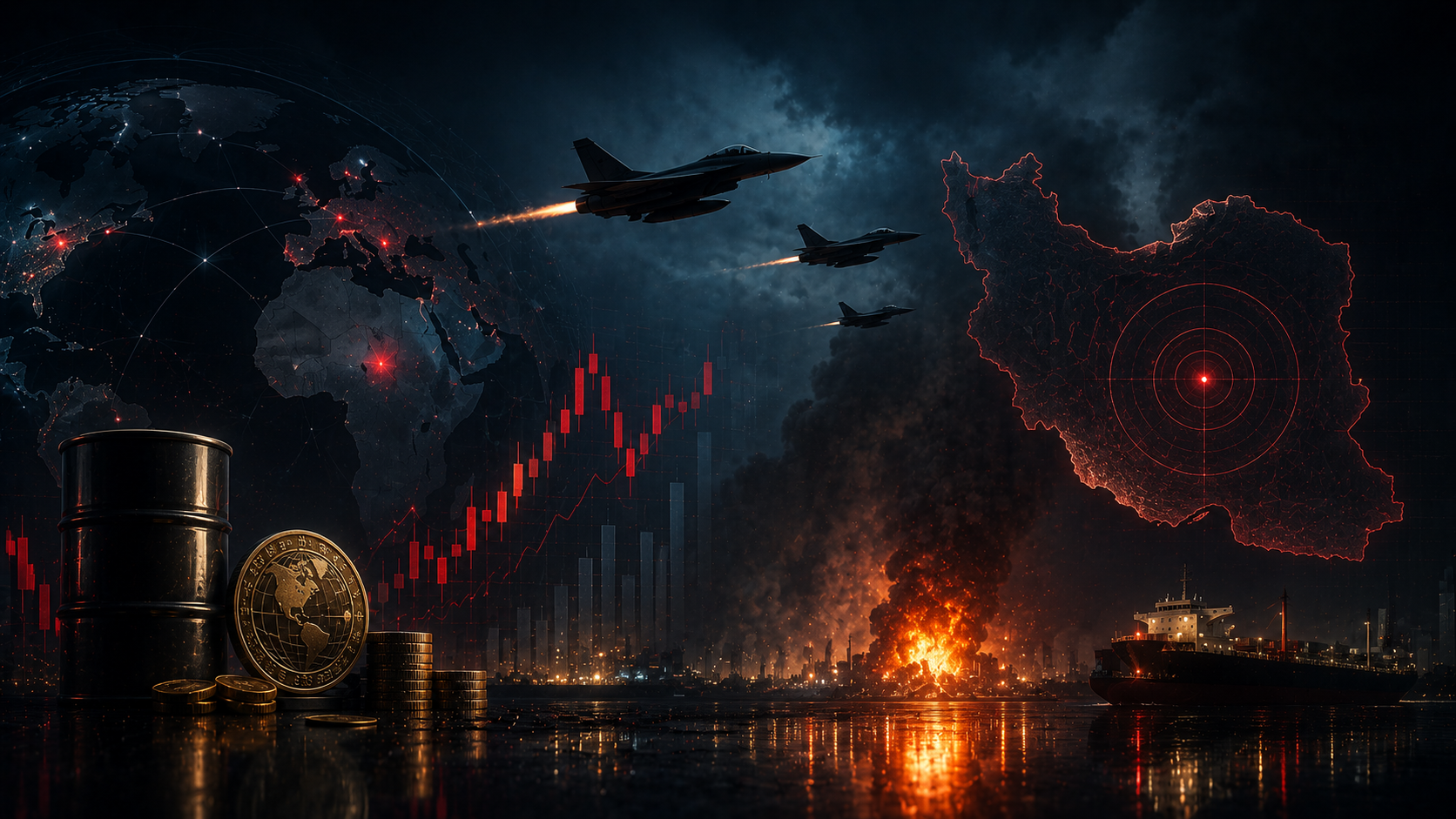
When US military strikes on Iran resumed on May 25, 2026 targeting boats laying mines and missile launch sites in southern Iran, the Strait of Hormuz was already operating at a fraction of its pre-war capacity, with only six ships crossing in a single 24-hour period compared to 125 to 140 daily transits before the conflict began on February 28, 2026. The June 10, 2026 strikes on military and surveillance installations near Bandar Abbas deepened the disruption further, with Iran retaliating against US positions in Kuwait, Jordan, and Bahrain.
Key takeaways
-
The US and Israel initiated extensive strikes on Iran on February 28, 2026, effectively shutting down the Strait of Hormuz and causing a surge in global oil prices.
-
Prior to the conflict, the Strait of Hormuz handled 125 to 140 daily ship transits; by late April 2026, only six ships crossed in a single 24-hour period.
-
On May 25, 2026, the US military struck Iranian boats laying mines and missile launch sites in Bandar Abbas, describing the action as self-defense.
-
On June 10, 2026, the US military struck multiple military and surveillance installations in southern Iran near the Strait; Iran retaliated by targeting US assets in Kuwait, Jordan, and Bahrain.
-
Around 20 million barrels of crude oil approximately one-fifth of daily world consumption exited the Strait in a 24-hour period in June 2026 after a partial ceasefire reopened the waterway.
-
Despite the partial reopening, crude shipments through the Strait remained a fraction of the 125-ship-per-day pre-war average as of June 25, 2026.
What are US military strikes on Iran?
US military strikes on Iran defined: Offensive military operations conducted by US armed forces against Iranian military targets, vessels, and infrastructure in the context of the 2026 West Asia conflict.
US military strikes on Iran in 2026 refer to a series of targeted military operations conducted by US Central Command (CENTCOM) against Iranian military assets, including mine-laying vessels, missile launch sites, and surveillance installations following the initiation of a broader conflict on February 28, 2026. The strikes are part of a cycle of escalation and ceasefire that has repeatedly disrupted the Strait of Hormuz, the 21-mile-wide waterway through which approximately one-fifth of the world's daily oil supply passes.
The Strait of Hormuz functions as a global economic chokepoint. The analogy: it is the equivalent of a single-lane bridge carrying one-fifth of the world's oil traffic, when that bridge narrows or closes, the effects ripple through energy prices, shipping costs, and ultimately the liquidity conditions of every economy that depend on imported oil. A disruption of this scale does not stay contained in the region where it originates.
CENTCOM spokesperson Captain Tim Hawkins described the May 25 and June 10, 2026 strikes as self-defense operations, stating that US forces conducted operations to protect US troops from threats posed by Iranian forces while exercising restraint. US Energy Secretary Chris Wright reported the June 2026 partial reopening data, confirming that around 20 million barrels of crude exited the Strait in a single 24-hour period, a recovery milestone that nonetheless left the waterway far below its pre-conflict operational capacity. Traders monitoring how geopolitical risk translates into asset price movements can follow macro-sensitive markets through KuCoin's trading platform.
Timeline: how the US–Iran conflict has escalated since February 2026
The 2026 US–Iran conflict has unfolded through a documented sequence of escalation, partial ceasefire, and renewed strikes each phase producing measurable effects on global shipping and energy markets.
February 28, 2026 conflict initiation. The US and Israel initiated extensive strikes on Iran, marking the start of the conflict. Iran responded by attacking Israel and US-aligned nations in the Gulf, effectively shutting down the Strait of Hormuz and causing a surge in global oil prices. The Strait's pre-war daily transit average of 125 to 140 ships collapsed almost immediately as commercial operators suspended passage due to security risk.
► Pre-conflict Strait of Hormuz daily transits: 125 to 140 ships
April 8, 2026 first ceasefire attempt. The US and Iran agreed to a two-week ceasefire on April 8, 2026. Despite the agreement, commercial shipping remained severely restricted. The Joint Maritime Information Center, a US Navy-led assessment body reported that commercial shipping remained constrained with limited transits and routing uncertainties even during the ceasefire period.
► Ships crossing the Strait in a single 24-hour period during ceasefire: 6
► Ships stuck in the Gulf during the same period: more than 600
May 25, 2026 strikes resume. US military forces struck Iranian boats attempting to lay mines and missile launch sites in Bandar Abbas, southern Iran. CENTCOM described the operation as self-defense. The strikes ended the ceasefire period and signaled a return to active conflict operations, increasing risk premiums across energy and financial markets.
June 10, 2026 escalation deepens. US forces struck multiple targets in southern Iran, including military and surveillance installations near Bandar Abbas. President Trump publicly vowed to hit Iran "hard" following renewed Iranian provocations. Iran retaliated by targeting US positions in Kuwait, Jordan, and Bahrain. Iran also reported destroying or intercepting two oil tankers in the Strait of Hormuz, though no immediate independent confirmation of those specific incidents was documented in the research.
► June 10, 2026 strike targets: military and surveillance installations near Bandar Abbas6
June 25, 2026 partial recovery. Crude shipments through the Strait reached the highest level since the conflict began in February 2026, with approximately 20 million barrels exiting in a single 24-hour period, a figure equivalent to roughly one-fifth of global daily consumption. Despite this milestone, traffic remained well below the 125-ship pre-war daily average, leaving the global energy supply chain structurally exposed to further disruption.
► June 2026 Strait crude throughput: approximately 20 million barrels in 24 hours
Current analysis: how the strikes affect global markets
Technical analysis
The escalating conflict directly affects commodity markets, which in turn transmit risk signals to digital asset markets. On KuCoin's BTC/USDT chart, geopolitical shock events, particularly those involving major oil supply disruptions, have historically produced two observable patterns: an initial risk-off selloff as investors reduce speculative exposure, followed in some cases by a recovery driven by the safe-haven narrative that frames Bitcoin as a store of value independent of geopolitical actors.
The Strait of Hormuz disruption represents one of the most significant commodity supply shocks in recent market history. A waterway that previously handled 125 to 140 daily ship transits now operating at a fraction of that capacity creates persistent upward pressure on energy prices that feeds into broader inflation expectations, Federal Reserve policy assessments, and ultimately the liquidity conditions that determine how much capital is available for risk assets, including digital currencies. Traders monitoring how these macro forces are affecting crypto asset prices can access live BTC, ETH, and commodity-linked asset data on KuCoin's markets.
Macro and fundamental drivers
The primary macro transmission channel from US military strikes on Iran to global financial markets is through oil prices and liquidity tightening. The Strait of Hormuz carries approximately one-fifth of the world's daily oil supply, a figure confirmed by US Energy Secretary Chris Wright's June 2026 report. Any sustained disruption to this volume creates an energy price shock that flows through transportation costs, manufacturing input costs, and consumer price inflation globally.
► Pre-war Strait of Hormuz daily transit average: 125 to 140 ships.
► June 2026 partial recovery: approximately 20 million barrels per 24 hours, roughly one-fifth of world daily consumption.
Higher sustained oil prices increase inflation expectations, which pressure central banks, particularly the US Federal Reserve, toward maintaining or tightening monetary policy rather than cutting rates. Tighter monetary policy reduces global liquidity and increases the opportunity cost of holding risk assets, including cryptocurrencies. This transmission mechanism conflict → oil price shock → inflation pressure → tighter monetary conditions → reduced crypto liquidity is the primary channel through which the US–Iran conflict affects digital asset markets, even without a direct same-day price correlation.
Geopolitical risk scenarios: Strait closure vs. partial disruption
The distinction between a full Strait of Hormuz closure and sustained partial disruption represents two meaningfully different risk scenarios for global markets and digital assets.
Full closure scenario. A complete closure of the Strait, which Iran has historically threatened but not sustained would remove approximately one-fifth of global daily oil supply from markets simultaneously, with no short-term rerouting alternative of comparable scale. The Cape of Good Hope alternative adds weeks to shipping routes and has limited capacity for the volume involved. A full closure would produce an oil price shock of a magnitude not seen in modern market history and would almost certainly trigger emergency policy responses from major central banks and governments. In this scenario, risk assets, including crypto, would face severe liquidity pressure, while gold and other traditional safe havens would likely benefit disproportionately.
Sustained partial disruption (current scenario). The documented pattern through June 2026 traffic at a fraction of pre-war levels, periodic attacks and counter-attacks, and ceasefire agreements that repeatedly break down represents a sustained risk premium on energy rather than a clean shock. This scenario maintains elevated oil prices and geopolitical uncertainty without triggering the emergency policy responses that a full closure would require. For digital assets, sustained partial disruption creates persistent headwinds through tighter-than-expected monetary conditions, while leaving open the possibility that Bitcoin's safe-haven narrative attracts some geopolitical safe-haven flows.
Further analysis of how macro geopolitical events and commodity price shocks affect digital asset markets is available through KuCoin's research and education blog.
Participants who prioritize traditional safe-haven exposure during geopolitical escalation may find commodity-linked or fixed-income allocations more suitable for the full-closure scenario; those who track Bitcoin's safe-haven narrative and believe digital assets can benefit from dollar-alternative demand during geopolitical stress may find crypto exposure more aligned with their framework during the partial-disruption scenario.
Future outlook: escalation and de-escalation paths
Bull case
The bull case for global economic stabilization and by extension for risk assets including crypto centers on a durable ceasefire and the gradual normalization of Strait of Hormuz traffic toward pre-war levels. The June 25, 2026 data point showing approximately 20 million barrels exiting in a 24-hour period represents the highest throughput since the conflict began, suggesting the waterway is capable of partial recovery when both sides exercise restraint. If a new ceasefire agreement holds through Q3 2026 and traffic recovers toward 80–100 daily transits, the energy price premium from the conflict would compress, inflation expectations would ease, and central banks would have more room to maintain or reduce rates supporting the macro liquidity conditions that benefit risk assets.
A verified and maintained ceasefire by Q3 2026 would also reduce the daily geopolitical risk premium across all asset classes, potentially triggering a risk-on rotation as institutional investors reduce cash and defensive allocations built during the conflict's peak uncertainty period.
Bear case
The bear case is that the ceasefire cycle observed in April 2026, broken by May 2026 strikes, and further disrupted by June 2026 escalation continues to fail, leaving the Strait permanently below pre-war operational capacity. The specific risk mechanism documented in the research is Iran's capacity to effectively restrict the Strait without fully closing it maintaining enough disruption to sustain an energy price premium while avoiding the threshold that would trigger a decisive international military response. CENTCOM's June 10 strikes on surveillance installations near Bandar Abbas and Iran's retaliatory targeting of US positions in Kuwait, Jordan, and Bahrain demonstrate that the cycle of escalation and response has not been contained by prior ceasefire agreements.
If the conflict extends through Q4 2026 without a durable resolution, the accumulated effect on global inflation, monetary policy, and investor risk appetite would represent sustained headwinds for digital assets. The lack of a verified same-day BTC or ETH price reaction to the May and June strikes does not indicate crypto immunity from the conflict it reflects the delay between macro conditions tightening and speculative capital withdrawing from risk markets. Traders and investors tracking these developments can follow ongoing market and geopolitical updates through KuCoin's official announcements channel.
Conclusion
US military strikes on Iran from the February 28, 2026 conflict initiation through the May 25 and June 10, 2026 strike episodes have produced the most significant disruption to Strait of Hormuz shipping in modern history, reducing daily transits from 125–140 ships to a fraction of that volume. The June 2026 partial recovery, with approximately 20 million barrels exiting the Strait in a single day, demonstrates the waterway's capacity for partial normalization but also its continued vulnerability to renewed escalation. For global financial markets and digital assets, the primary transmission mechanism is the energy-price-to-liquidity-conditions channel: sustained oil supply disruption maintains inflation pressure and constrains monetary easing that supports risk asset demand. Whether the conflict stabilizes or escalates through Q3 2026 is the central variable for global economic outlook.
Sign up for KuCoin today to buy, sell, and manage your entire crypto portfolio in one simple dashboard. Register Now!
FAQ
What are US military strikes on Iran targeting in 2026?
US military strikes on Iran in 2026 have targeted mine-laying vessels in the Strait of Hormuz, missile launch sites in Bandar Abbas, and military and surveillance installations in southern Iran. CENTCOM spokesperson Captain Tim Hawkins described the operations as self-defense, stating that US forces conducted strikes to protect US troops from threats posed by Iranian forces while exercising restraint.
How do US military strikes on Iran affect global oil prices?
US military strikes on Iran affect global oil prices primarily through their impact on Strait of Hormuz shipping. The Strait carries approximately one-fifth of the world's daily oil supply. When transit volume falls from 125–140 daily ships before February 28, 2026 to as few as six ships per day during the conflict, the reduced supply creates upward pressure on oil prices globally, affecting energy costs, inflation expectations, and monetary policy responses.
What is the Strait of Hormuz and why does it matter economically?
The Strait of Hormuz is a 21-mile-wide waterway between Iran and the Arabian Peninsula that serves as the primary maritime export route for Gulf oil producers. Approximately one-fifth of the world's daily crude oil supply passes through it, equivalent to around 20 million barrels per day when fully operational. A disruption to Strait traffic as documented between February and June 2026 directly reduces global oil supply, raising prices and affecting all oil-importing economies.
How does the US–Iran conflict affect cryptocurrency markets?
The US–Iran conflict affects cryptocurrency markets primarily through the macro liquidity channel: higher oil prices raise inflation expectations, which pressure central banks toward tighter monetary policy, reducing the global liquidity that supports speculative asset demand, including digital currencies. The conflict also reinforces two competing narratives for Bitcoin as a risk asset vulnerable to liquidity tightening, and as a potential safe-haven alternative during geopolitical stress affecting traditional financial systems.
What happened to Strait of Hormuz shipping after the June 2026 strikes?
Following the June 10, 2026 US strikes on Iranian military installations, crude shipments through the Strait reached the highest level since the conflict began, with approximately 20 million barrels exiting in a single 24-hour period in June 2026, roughly one-fifth of global daily consumption. Despite this milestone, traffic remained well below the pre-war average of 125 to 140 daily ship transits as of June 25, 2026, reflecting continued operational uncertainty rather than full normalization.
Further reading
Disclaimer: The information on this page may have been obtained from third parties and does not necessarily reflect the views or opinions of KuCoin. This content is provided for general informational purposes only, without any representation or warranty of any kind, nor shall it be construed as financial or investment advice. KuCoin shall not be liable for any errors or omissions, or for any outcomes resulting from the use of this information. Investments in digital assets can be risky. Please carefully evaluate the risks of a product and your risk tolerance based on your own financial circumstances. For more information, please refer to our Terms of Use and Risk Disclosure.