

GRVT Token Price Prediction 2026: Next Rally or Support Test After the Squeeze?
2026/08/06 17:23:00
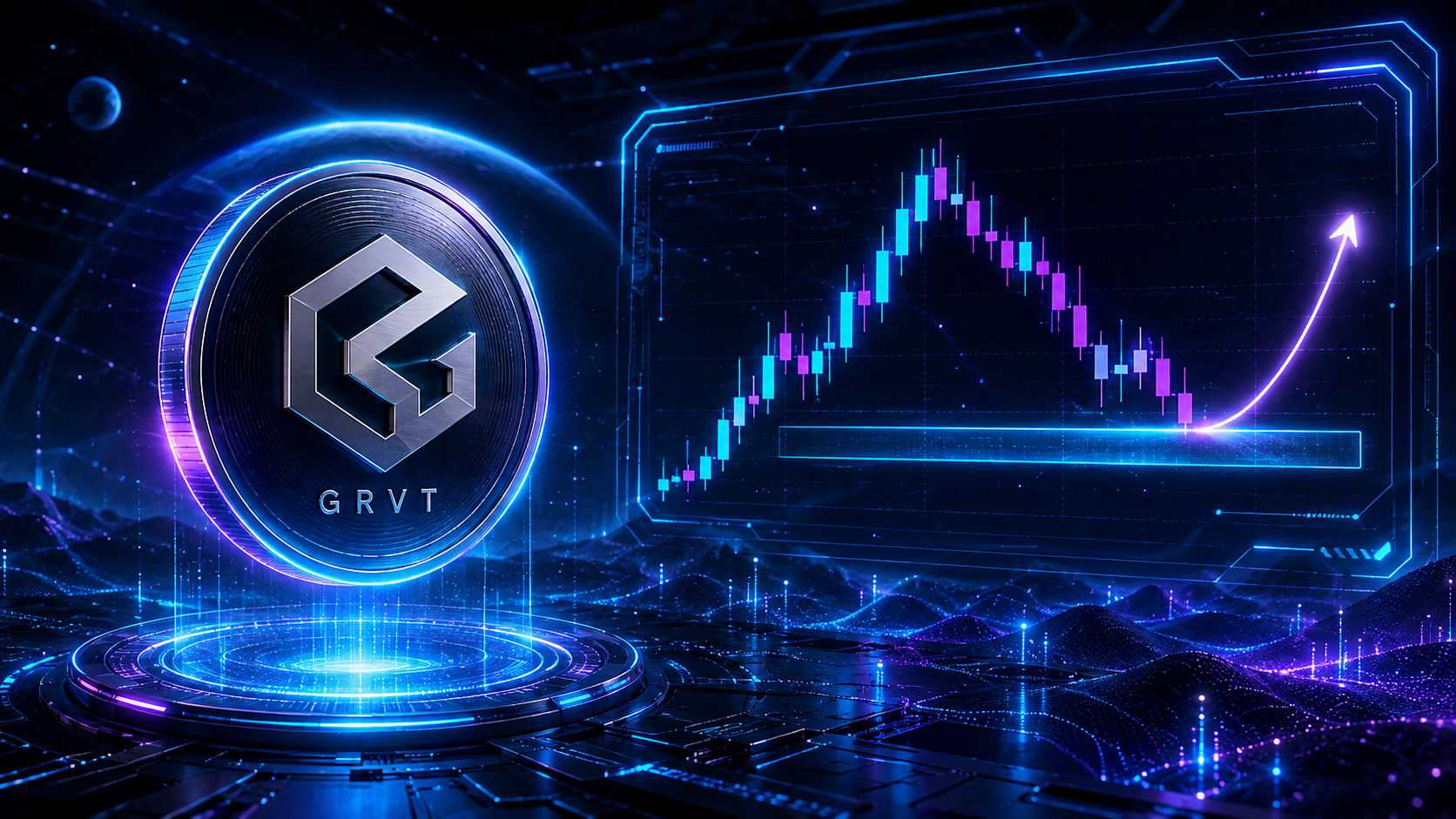
GRVT has entered its first serious post-launch price test. After beginning public trading on July 30, the token moved between an all-time low of about $0.2195 and an all-time high near $0.4545. A fresh rally on August 5 briefly pushed GRVT toward $0.35, but the token subsequently retreated toward the $0.27–$0.29 area. The reversal has raised an important question: was the surge the beginning of a sustainable bullish trend, or was it mainly a short squeeze that temporarily forced leveraged traders to buy back their positions?
The answer will depend on what happens after the squeeze. GRVT must show that real spot demand can replace liquidation-driven buying, while the Grvt platform must convert its trading, investment, yield and payment products into recurring token demand. This GRVT price prediction examines the token’s early trading history, technical structure, supply profile, platform fundamentals and key risks before presenting bearish, base-case and bullish scenarios for the rest of 2026.
What Is GRVT and Why Is the Token Getting Attention?
Grvt is a regulated, self-custodial trading and investment platform built using ZKsync technology. The platform attempts to combine the fast order execution and professional trading experience associated with centralized exchanges with blockchain-based custody and settlement. User funds remain in smart contracts rather than being transferred to a traditional exchange-controlled wallet, while trades can be matched efficiently before being settled through the underlying blockchain infrastructure. Grvt says this structure is designed to provide low-cost trading, greater privacy and direct user control over deposited assets.
The project is also moving beyond the narrow definition of a perpetual futures exchange. Its broader strategy is based on a “one balance” model in which deposited capital can earn yield, serve as trading collateral and provide access to investment products without being repeatedly moved between separate applications. Grvt has organized this ecosystem around four connected areas: Trade, Earn, Invest and Pay. The long-term objective is to keep capital productive while simplifying the experience for users who currently manage funds across multiple exchanges, wallets and DeFi protocols.
GRVT is intended to function as the membership asset for this ecosystem. Holding the token can improve trading fees, margin efficiency and access to professional tools. It may also provide higher allocations to investment vaults, early access to new products, better foreign-exchange and on-ramp rates, and cashback through future payment services. The token therefore resembles a crypto-native membership program more than a conventional governance token. Its value proposition grows only if the underlying platform attracts enough users, liquidity and capital to make those benefits economically meaningful.
That distinction is important for any GRVT price prediction. A newly launched exchange token can appreciate because of listings, limited supply or speculative demand, but a sustainable valuation requires a deeper connection between platform activity and token ownership. GRVT must eventually prove that traders and investors have practical reasons to hold or stake the token rather than buying it only during short-term market events.
What Caused the GRVT Short Squeeze?
GRVT’s recent move developed in an environment that was already highly sensitive to sudden changes in demand. Only about 114.3 million tokens, or roughly 11.43% of the fixed one-billion-token maximum supply, were reported as circulating in early August. A relatively thin float means that a modest amount of concentrated buying can move the price sharply, particularly during the first weeks after a token generation event when market makers and traders are still establishing reliable price levels.
The squeeze began when GRVT broke above a narrow consolidation range and traders holding short positions were forced to reduce their exposure. Closing a short position requires buying the underlying token or offsetting the position, which adds demand to an already rising market. As the price advanced, additional short liquidations created more forced purchases, producing a feedback loop in which higher prices triggered buying that then pushed prices even higher.
Exchange expansion amplified this mechanism. Upbit announced support for GRVT in Korean won, Bitcoin and USDT markets on August 5, significantly improving access for South Korean traders. The token was already available through international venues, but the new fiat-denominated market introduced another source of liquidity and retail attention. GRVT rose ahead of the launch, suggesting that part of the listing catalyst was priced in before trading began.
Technical analysis published during the rally identified a four-hour RSI of approximately 76.47 while GRVT traded near $0.35. That reading reflected extremely strong momentum but also indicated an overbought market. More importantly, the move was reportedly dominated by short liquidations. This explains why the rally could be powerful and vulnerable at the same time: forced buying can generate a rapid breakout, but it disappears once most exposed short positions have been closed.
GRVT Price History and the Levels That Matter
GRVT has only a limited public price history, but its first week provides useful information about where buyers and sellers have been most active. CoinGecko recorded a closing price of approximately $0.2449 on July 30, followed by closes near $0.2730 on July 31 and $0.2759 on August 1. The token then consolidated around $0.26 before closing at approximately $0.3003 on August 5. Trading volume expanded from around $72.6 million on August 5 to more than $435 million during August 6, showing how quickly attention returned after the squeeze and exchange-listing announcements.
The first significant support area sits between $0.26 and $0.27. GRVT repeatedly traded around this range before the squeeze, making it an early reference point for buyers who missed the move toward $0.35. A controlled pullback into this area would not automatically destroy the bullish structure. However, repeated daily closes below it would suggest that the breakout failed to create a stronger price floor.
The next important zone is approximately $0.30–$0.31. During the rally, analysts identified $0.3078 as a key level that needed to hold for the immediate bullish structure to remain intact. Because GRVT subsequently fell below that threshold, the area has changed from potential support into near-term resistance. Reclaiming it would be the first sign that buyers are returning after the post-squeeze correction.
Above that level, $0.35 is the first major momentum barrier, while the $0.42–$0.45 region represents the launch-week high zone. GRVT would need to break that upper range with strong spot participation before traders could reasonably describe the token as entering price discovery. On the downside, losing $0.26 would expose the July 30 low near $0.22. A decisive break below $0.22 would leave the market with very little historical price structure to identify the next support area.
Is the GRVT Short Squeeze Already Over?
A short squeeze can end even while trading volume remains elevated. The key question is not whether people are still trading GRVT, but why they are trading it. During the strongest stage of a squeeze, rising prices force bearish traders to close positions. After those positions have been removed, the market must find voluntary buyers who believe the token is attractive at the new valuation.
Open interest, funding rates, liquidations and spot volume can help distinguish the two phases. If GRVT stabilizes while open interest declines and funding returns toward neutral levels, the market may be completing a healthy leverage reset. That would reduce the risk of another liquidation cascade and allow spot buyers to establish a more credible support range.
The outlook becomes less constructive when price and open interest rise together while funding rates become increasingly positive. That combination may indicate that aggressive long positions are replacing the shorts that were just liquidated. Instead of becoming less leveraged, the market simply changes direction. A relatively small decline can then force newly opened long positions to sell, producing a long squeeze that reverses much of the original rally.
GRVT’s unusually high turnover relative to its circulating market capitalization shows that speculative activity remains a major influence. CoinGecko reported an August 6 market capitalization of approximately $34.3 million alongside more than $435 million in volume. Such liquidity can support another rally, but it can also reflect rapid token rotation rather than steady accumulation. The strongest confirmation would be a declining volume-to-market-cap ratio accompanied by stable prices, followed by renewed spot volume when GRVT attempts to break resistance.
GRVT Technical Analysis: Rally or Deeper Support Test?
Bullish Continuation
The bullish structure begins with GRVT holding the $0.26–$0.27 demand area and recovering above $0.30–$0.31. A daily close above $0.31 would indicate that the post-squeeze correction is losing control, but the market would still need to overcome $0.35. A convincing breakout should be accompanied by sustained spot volume rather than another temporary rise in liquidation activity. If GRVT subsequently forms a higher low above $0.30, the token could challenge $0.42–$0.45 and potentially begin a broader expansion phase.
Neutral Consolidation
A prolonged range between roughly $0.26 and $0.35 may be the healthiest medium-term outcome. Consolidation would allow momentum indicators to cool, early airdrop recipients to take profits and new investors to establish positions without chasing a vertical move. Volume would ideally decline during this period while support remains intact. Although range-bound trading attracts less attention than a rapid rally, it can produce a more reliable foundation for a later breakout because the market develops a wider distribution of entry prices.
Bearish Breakdown
The bearish structure would become more credible if GRVT repeatedly closes below $0.26 and fails to reclaim the level during subsequent rebounds. That outcome would suggest that buyers who entered during the listing-driven rally are unwilling to defend their positions. A further decline below $0.22 would invalidate almost the entire launch-week structure. Because GRVT has little trading history below that price, downside volatility could accelerate until the market finds a new area of long-term demand.
GRVT Tokenomics Could Become the Next Price Test
GRVT has a fixed maximum supply of one billion tokens, and the project says no inflation will increase that cap. A limited maximum supply can provide clarity, but the more immediate concern is the difference between maximum supply and circulating supply. With approximately 114.3 million tokens currently circulating, close to 89% of the total supply is not yet available in the public market.
This structure creates a large difference between circulating market capitalization and fully diluted valuation. At a token price of $0.28, the circulating market capitalization would be around $32 million, while the fully diluted valuation would be approximately $280 million. The fully diluted figure does not mean all remaining tokens will immediately enter circulation, but it illustrates the valuation that the market is assigning to the entire eventual supply.
A low float can support sharp price increases because fewer liquid tokens are available to satisfy new demand. The same feature also increases slippage, volatility and sensitivity to large holders. More importantly, future vesting and distribution events can introduce supply that must be absorbed by the market. CMC’s August 6 summary highlighted a scheduled unlock equal to approximately 6.39% of total supply on August 29, making token distribution one of the most important near-term variables for the GRVT price.
Token utility could offset part of that pressure if platform users need GRVT to obtain valuable benefits. Reduced fees, improved margin efficiency, priority investment access and payment advantages can create recurring demand, but only when the products themselves attract recurring activity. Tokenomics cannot be evaluated independently from the exchange. The relevant question is whether platform growth will produce enough holding or staking demand to absorb tokens entering circulation.
What Could Drive GRVT’s Next Rally?
GRVT’s next sustainable move will require stronger evidence than another exchange listing. The most important catalysts are connected to the growth of the Grvt platform and the extent to which that growth improves the economic value of membership:
-
Sustained trading volume and open interest on Grvt itself
-
Wider use of Unified Margin and yield-bearing collateral
-
Expansion into equities, commodities and foreign-exchange perpetuals
-
Higher TVL across Earn, GLP and curated investment products
-
Greater utility from payments, fee benefits and GRVT membership tiers
Unified Margin is central to the investment case because it attempts to eliminate the separation between idle capital, yield-generating capital and trading collateral. If users can earn returns on deposited assets while retaining the ability to trade, Grvt may attract capital that would otherwise remain fragmented across lending protocols and centralized exchanges. More productive deposits can deepen liquidity, improve execution and attract more traders, creating the compounding cycle described in the project’s 2026 roadmap.
Grvt also has early operating data that provide a foundation for this strategy. The project reported $177 billion in accumulated trading volume during 2025, a community exceeding 500,000 members, peak TVL of $98 million and strong demand for its GLP vault. These figures are project-reported rather than independently audited performance guarantees, but they indicate that Grvt had an operating platform and user base before the GRVT token launched.
The most convincing bullish catalyst would be simultaneous growth in platform volume, TVL, recurring users and token participation. Rising GRVT prices without improving platform metrics would imply that speculation remains dominant. By contrast, increasing product adoption alongside greater demand for fee discounts, margin benefits and investment access would strengthen the argument that the token deserves a higher valuation.
GRVT Price Prediction 2026: Three Possible Scenarios
The following GRVT price forecasts are conditional scenarios rather than guaranteed targets. Because the token has traded publicly for only a short period, its price history is too limited to support a precise statistical forecast. The ranges should instead be understood as possible outcomes based on market structure, platform adoption, supply changes and broader crypto conditions.
| Scenario | Possible 2026 Range | Main Conditions |
| Bearish | $0.12–$0.22 | Support fails, speculative volume fades and unlock pressure increases |
| Base Case | $0.24–$0.38 | Platform adoption grows gradually while GRVT builds a wider range |
| Bullish | $0.42–$0.60 | Spot demand strengthens, launch highs break and platform metrics improve |
Bearish Scenario: GRVT Falls Toward $0.12–$0.22
The bearish scenario assumes that the August rally was driven primarily by exchange-listing excitement and short liquidations. GRVT fails to recover $0.30, loses support at $0.26 and eventually breaks below its launch-week low near $0.22. At the same time, speculative volume declines and future token distributions introduce additional selling pressure. A weaker altcoin market could amplify the decline, particularly because GRVT’s low float and limited trading history make it difficult to identify established support below the initial range. Under these conditions, the token could spend part of 2026 between $0.12 and $0.22.
Base Case: GRVT Trades Between $0.24 and $0.38
The base case assumes that Grvt continues developing its platform but requires time to convert existing users into consistent GRVT holders. The token absorbs new supply without collapsing, although demand is not yet strong enough to produce a decisive breakout above the launch high. GRVT trades around $0.24–$0.38, with $0.30 acting as a recurring pivot rather than permanent support or resistance. This scenario would allow the market to establish a more reliable valuation while investors monitor platform volume, TVL, membership participation and the impact of token unlocks.
Bullish Scenario: GRVT Breaks Toward $0.42–$0.60
The bullish scenario requires spot buyers to replace the forced buying that powered the squeeze. GRVT reclaims $0.31, holds above $0.35 and eventually breaks through the $0.42–$0.45 launch-high region. Platform activity must strengthen at the same time, with higher trading volume, deeper liquidity, increasing investment-product demand and clearer evidence that users are acquiring GRVT for membership benefits. If these conditions coincide with a favorable altcoin market, the token could trade between $0.42 and $0.60. At $0.60, its circulating market capitalization would be around $68.6 million based on the currently reported supply, while its fully diluted valuation would reach $600 million.
What Could Invalidate the Bullish GRVT Forecast?
The first major risk is supply. GRVT’s fixed cap prevents unlimited inflation, but the small percentage currently circulating means that future distributions may still affect the market. Investors who received tokens at little or no direct cost may be willing to sell at prices that remain profitable even after a substantial decline. If unlocks occur while organic demand is weak, GRVT could experience persistent selling pressure rather than a single correction.
A second risk is the gap between platform success and token value capture. Grvt may attract users because of self-custody, fast execution or yield-bearing collateral without creating enough demand for GRVT. Membership benefits must be sufficiently valuable to justify holding the token instead of buying it only when a discount or product allocation is required. If users can access most of the platform without maintaining a meaningful GRVT balance, growth in platform activity may not translate proportionally into token appreciation.
Competition also remains intense. Grvt must compete with major centralized exchanges, established perpetual DEXs, DeFi lending protocols and emerging platforms that combine trading with yield. Its expansion into tokenized equities, commodities and foreign exchange may increase its addressable market, but it can also introduce new regulatory and operational complexity. Grvt’s hybrid infrastructure must continue delivering reliable execution and secure settlement during periods of market stress.
Finally, GRVT is exposed to ordinary crypto-market risk. A Bitcoin decline, falling altcoin liquidity or a broad reduction in leverage could overwhelm project-specific progress. The bullish forecast would be seriously weakened if GRVT falls below $0.22 while platform volume, TVL and active-user indicators deteriorate. A price correction alone can be temporary; a correction combined with declining fundamentals is much harder to dismiss.
Is GRVT a Good Crypto to Watch in 2026?
GRVT deserves attention because it represents more than a token attached to a newly launched exchange. Grvt is attempting to combine self-custodial trading, yield-bearing balances, investment products and payments within one platform. Its reported 2025 volume, existing user community and institutional funding provide a stronger operating background than many tokens that reach the market before launching a functional product.
The token also has clear sources of potential utility. Fee reductions, margin benefits, investment access and payment advantages can become valuable as the platform expands. A relatively small circulating market capitalization gives GRVT significant price sensitivity if real demand increases. However, that same low float creates greater volatility and makes the token more vulnerable to unlocks, concentrated trading and rapid changes in sentiment.
For those reasons, GRVT may be appropriate for a speculative watchlist rather than a low-risk crypto portfolio. Investors should not treat the August short squeeze as proof that a long-term uptrend has begun. A stronger signal would be several months of platform growth, stable liquidity and increasing GRVT membership participation while the market successfully absorbs scheduled supply.
The key distinction is between attention and adoption. Exchange listings can create attention almost immediately. Sustainable demand develops only when users repeatedly choose to trade, earn, invest or make payments through the platform and find GRVT valuable enough to hold.
Conclusion: Can GRVT Start Another Rally?
GRVT can begin another rally in 2026, but the token first needs to prove that its post-squeeze support is real. The $0.26–$0.27 area is the immediate demand zone, while $0.30–$0.31 must be reclaimed to restore short-term momentum. A break above $0.35 would strengthen the bullish case, but the launch-high region between $0.42 and $0.45 remains the more important barrier.
The quality of the next move will matter more than its speed. A rally driven by spot buying, rising platform activity and stronger token utility would be more sustainable than another burst of leveraged liquidations. Conversely, losing $0.26 and then $0.22 while token supply expands would favor a deeper correction.
GRVT’s first squeeze proved that the token can attract liquidity and market attention. Its next phase will reveal whether that liquidity was temporary speculation or the beginning of a broader revaluation of Grvt’s one-balance financial ecosystem. For now, the base-case range of $0.24–$0.38 appears more balanced than an immediate move toward $0.60, although improving fundamentals could shift that outlook.
|
KuCoin is celebrating its 9th anniversary with a special platform campaign filled with exclusive rewards, trading activities, and limited-time offers. Don’t miss the chance to participate and enjoy the benefits as the exchange marks nine years of growth and innovation. Visit the official campaign page now:
|
FAQs
Is GRVT the official token of the Grvt platform?
Yes. GRVT is the membership and utility token associated with the Grvt ecosystem. It is intended to provide benefits across trading, investment and payment products, including lower fees, improved margin efficiency, priority access and potential cashback. It does not represent equity ownership in Grvt, and holding it does not give investors a legal ownership claim over the company.
Is GRVT built on Ethereum or ZKsync?
Grvt’s trading infrastructure is built using ZKsync technology and is connected to the broader Ethereum ecosystem. The network used by the platform and the blockchain representation of the tradable GRVT token should not automatically be treated as the same thing. Users should verify the official token contract and supported deposit network through Grvt or the relevant exchange before making a transfer.
Does holding GRVT automatically generate yield?
Holding GRVT alone should not be assumed to generate automatic yield. Its main purpose is to unlock membership benefits, improved platform conditions and access to certain products. Yield may come from separate Earn products, lending markets or investment vaults, each of which has its own terms and risks. Investors should distinguish token ownership from participation in an income-generating product.
What is the difference between GRVT’s market cap and FDV?
Market capitalization multiplies GRVT’s current price by the number of tokens already circulating. Fully diluted valuation multiplies the price by the full one-billion-token maximum supply. Because only around 11.43% of GRVT is currently circulating, the FDV is substantially higher than the market cap. The gap highlights the potential influence of future token distributions.
How often should a GRVT price prediction be updated?
A GRVT forecast should be reviewed after major token unlocks, platform-data releases, exchange listings and decisive technical breakouts. Changes in Grvt’s TVL, trading volume, active users and membership structure may also alter the outlook. Because the token is new and highly volatile, a prediction made before an unlock or major market event can become outdated within days.
Disclaimer: This article is for informational purposes only and does not constitute financial advice. Cryptocurrency prices are highly volatile, and readers should conduct independent research before making investment decisions.