

BlackRock's On-Chain tokenized Assets Reach $2.93B as BUIDL Surges Across Ethereum, Avalanche & Solana
2026/07/14 14:31:00
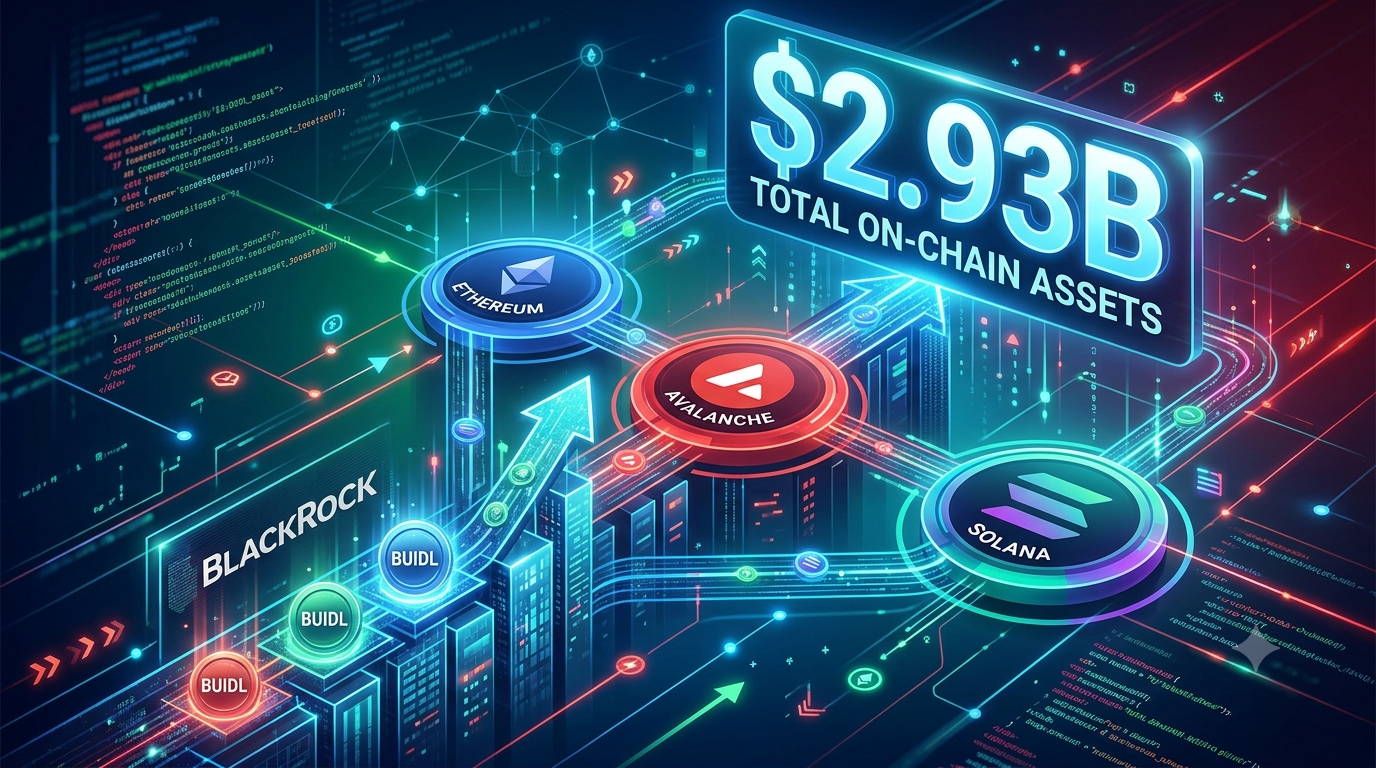
BlackRock BUIDL Growth Highlights Rising Institutional Demand for Tokenized U.S. Treasury Funds
BlackRock's tokenized USD Institutional Digital Liquidity Fund, known as BUIDL, has reached approximately $2.93 billion in total value as of recent July 2026 data, marking a significant step in the integration of traditional finance with blockchain infrastructure. This growth reflects sustained institutional demand for on-chain yield-bearing assets backed by U.S. Treasuries, offering daily liquidity, stability at a $1.00 NAV, and near real-time transfers.
The fund, tokenized through Securitize and custodied by BNY Mellon, operates across multiple blockchains, enabling qualified investors to access familiar money market returns with the programmability of distributed ledger technology. BlackRock's BUIDL expansion across Ethereum, Avalanche, and Solana demonstrates how tokenized real-world assets are bridging TradFi and DeFi, driving measurable efficiency gains, liquidity improvements, and broader institutional participation in on-chain markets without disrupting core regulatory compliance.
BUIDL's Rapid Ascent in Tokenized Treasury Markets
The BUIDL fund has grown from its March 2024 launch on Ethereum to become one of the largest tokenized U.S. Treasury products on-chain, with recent figures showing total assets around $2.87 billion to $3.69 billion across networks, according to tracking platforms. This expansion is fueled by institutional allocations seeking stable yields in a high-interest-rate environment, combined with blockchain's advantages in settlement speed and transparency. On Ethereum, the primary deployment holds over $1 billion, serving as the foundational layer due to its robust security and developer ecosystem. Recent surges, particularly on Avalanche, where AUM doubled to over $900 million in a single week in July 2026, highlighting how specific chains optimize for different use cases, such as lower fees and faster finality. Solana contributes substantially with hundreds of millions in TVL, benefiting from high throughput ideal for frequent transfers and DeFi integrations. These developments position BUIDL as a benchmark for how major asset managers are scaling tokenized offerings, contributing to the overall tokenized RWA market exceeding $30 billion.
BlackRock's involvement lends credibility, attracting capital that might otherwise remain in traditional money markets while introducing on-chain capabilities like programmable dividends and P2P transfers. Market observers note that the fund's multi-chain strategy mitigates single-network risks and broadens accessibility for global participants. Daily APY figures around 3-4% provide competitive returns relative to traditional equivalents, with the added benefit of 24/7 availability. As more protocols integrate BUIDL as collateral or liquidity backing, its utility extends beyond simple holding, fostering deeper ecosystem liquidity. This direction underscores a maturing market where institutional products drive meaningful on-chain activity rather than speculative retail flows.
Ethereum's Enduring Role as BUIDL's Primary Anchor
Ethereum continues to host the largest share of BUIDL assets, with over $1 billion in value locked, reflecting its status as the leading smart contract platform for institutional deployments. The network's battle-tested security, extensive tooling, and widespread adoption by custodians and transfer agents like Securitize make it the default choice for high-value tokenized securities. BUIDL's presence on Ethereum enables seamless interactions with decentralized applications, including recent integrations that allow trading via advanced routing mechanisms. This connectivity enhances liquidity options for holders while maintaining strict permissioned access compliant with qualified purchaser requirements. Ethereum's layer-2 ecosystem further amplifies efficiency, with deployments on Arbitrum, Optimism, and others reducing costs for smaller transactions. The chain's role in settlement standardization positions it favorably as tokenization volumes increase, with BUIDL contributing to broader DeFi TVL through collateral and yield strategies.
Institutional investors value Ethereum's maturity, which aligns with risk management frameworks at firms like BlackRock. Recent data shows steady inflows, supported by the network's native capabilities for complex financial primitives. As Ethereum develops with upgrades focused on scalability and staking, BUIDL benefits from improved performance without sacrificing decentralization guarantees. This foundation allows the fund to serve as a gateway for traditional capital entering on-chain environments, where transparency of underlying Treasury holdings via on-chain attestations builds trust. The combination of BlackRock's brand and Ethereum's infrastructure creates a compelling proposition for allocators seeking both yield and technological upside. Growth on this chain sets the pace for multi-chain expansions, proving that core security layers remain essential even as specialized networks gain traction for specific applications.
Avalanche's Explosive Growth in Hosting BUIDL Assets
Avalanche has emerged as a standout performer for BUIDL, with assets under management surging to approximately $900 million in mid-July 2026, more than doubling in a short period. This increase positions Avalanche as the second-largest host after Ethereum and underscores its appeal for institutional tokenization due to high speed, low transaction costs, and subnet flexibility. The network's architecture supports efficient handling of large transfers and integrates well with enterprise-grade solutions, making it attractive for Treasury-backed products requiring reliable performance. BUIDL's dominance on Avalanche, where it represents one of the biggest RWAs, signals growing confidence from institutions in alternative L1s for scaling operations. Practical examples include its use in DeFi protocols on the chain for collateral and liquidity provision, enhancing overall ecosystem activity. The surge aligns with broader tokenized asset totals on Avalanche exceeding $1 billion in prior periods, driven largely by this single fund.
Avalanche's consensus mechanism provides near-instant finality, beneficial for 24/7 money market operations. BlackRock's deployment here demonstrates strategic diversification, leveraging the chain's strengths in gaming, institutional, and RWA verticals. Investors benefit from reduced gas fees compared to mainnet Ethereum, facilitating more frequent rebalancing and transfers. This growth also highlights interoperability advancements, such as those powered by bridges, allowing seamless movement across chains. As Avalanche continues to attract developers and capital, BUIDL's presence amplifies network effects, encouraging further adoption of tokenized products. The development provides concrete evidence of how specialized blockchains can capture significant institutional flows when aligned with performance needs.
Solana's High-Throughput Contribution to BUIDL Liquidity
Solana hosts a substantial portion of BUIDL assets, exceeding $550-630 million, capitalizing on its reputation for speed and cost-effectiveness in high-volume environments. The chain's parallel processing capabilities support rapid P2P transfers and integration with decentralized exchanges, making tokenized shares more dynamic for users. BUIDL on Solana enables efficient dividend distributions and redemptions, appealing to participants requiring quick settlement. This deployment adds to the fund's overall resilience by tapping into Solana's vibrant ecosystem of DeFi and NFT applications, where stable yield assets find natural utility. Recent expansions have strengthened Solana's position in the tokenized Treasury sector, with BUIDL becoming one of the largest such products on the network. The low fees facilitate micro-transactions and broader participation within institutional parameters.
Solana's focus on developer-friendly tools has accelerated integrations, allowing BUIDL to serve as backing for other on-chain products. This creates positive feedback loops where increased liquidity attracts more capital. Data indicates strong transfer volumes on Solana-specific share classes, reflecting active management and utilization. BlackRock's multi-chain approach, including Solana, mitigates concentration risks and optimizes for different user preferences. The chain's performance during peak activity periods validates its suitability for financial primitives at scale. Ongoing developments in Solana's infrastructure promise even greater efficiency, potentially drawing additional allocations to BUIDL. This segment of the fund's growth illustrates how high-throughput networks complement more established layers in the tokenized asset landscape.
Multi-Chain Strategy Driving BUIDL's Accessibility and Resilience
BlackRock's decision to deploy BUIDL across Ethereum, Avalanche, Solana, and additional networks like Aptos and BNB Chain creates a robust, interoperable framework that enhances overall fund utility. Wormhole and other bridging solutions facilitate secure cross-chain transfers, allowing investors to move positions based on specific needs such as cost or ecosystem integration. This strategy reduces dependency on any single blockchain while expanding reach to diverse user bases. Each chain contributes unique advantages: Ethereum for security, Avalanche for speed in certain applications, and Solana for throughput. The result is a more resilient product capable of handling varying market conditions and demand spikes. Interoperability advancements enable composability with protocols across ecosystems, increasing BUIDL's role in on-chain finance.
Qualified investors benefit from flexible custody options and daily operations that align with traditional finance schedules but operate continuously. Total TVL figures across chains show the successful execution of this multi-chain vision. By avoiding single points of failure, the approach aligns with institutional risk preferences. Practical analysis shows improved liquidity metrics and transfer activity as the fund scales. This model sets a precedent for future tokenized products, emphasizing flexibility over monolithic deployments. As the RWA sector matures, such strategies will likely become standard, fostering greater capital efficiency and innovation. BUIDL's implementation provides a case study in how large managers navigate blockchain diversity to maximize impact.
Yield Generation and Operational Mechanics of BUIDL
BUIDL generates yields primarily from U.S. Treasury bills, repurchase agreements, and cash equivalents managed by BlackRock, with daily accruals distributed to token holders. The fund maintains a stable $1.00 NAV, focusing on liquidity and capital preservation while delivering competitive APY in the 3-5% range depending on market rates. Management fees range from 0.20 to 0.50%, competitive for the asset class. Securitize handles tokenization, subscriptions, and redemptions, with a minimum investment threshold reflecting its institutional focus. On-chain transparency allows verification of holdings through attestations, building confidence in the product's backing.
Operational efficiency stems from blockchain's ability to automate dividend payouts and enable near-instant transfers, contrasting with slower traditional systems. This setup appeals to treasury managers and DeFi participants seeking a stable yield. Performance data shows consistent returns with minimal volatility, supported by high-quality underlying assets. The mechanics integrate traditional portfolio management with distributed ledger benefits, such as programmable compliance. As interest rates evolve, BUIDL's adaptability positions it well for varying economic cycles. Examples of use include collateral in lending protocols and liquidity pools, extending its utility. This operational model demonstrates practical tokenization benefits, including reduced counterparty risk through on-chain settlement. Investors gain from the combination of institutional-grade management and blockchain features.
Institutional Adoption Patterns and Investor Profiles
Institutional interest in BUIDL comes from qualified purchasers, including funds, corporations, and high-net-worth entities seeking on-chain exposure to Treasuries. The $5 million minimum subscription reflects regulatory requirements while targeting sophisticated capital. Adoption is driven by the need for yield in digital formats, portfolio diversification, and operational efficiencies like 24/7 access. Custodians such as Anchorage and Fireblocks support secure holdings across chains. Data on holder counts and transfer volumes indicate growing engagement, with concentrations in key ecosystems. Institutions value the regulatory compliance framework, including Reg D exemptions and oversight.
BUIDL serves as a low-risk entry point to blockchain infrastructure, allowing firms to build familiarity with tokenized assets. Practical examples include integration into broader treasury operations and DeFi strategies for enhanced returns. The fund's growth correlates with rising RWA interest across the industry. Profiles show allocators balancing traditional mandates with emerging technology exposure. This pattern suggests accelerating mainstream integration as infrastructure matures. BlackRock's leadership encourages peer participation, creating network effects. Monitoring tools and on-chain analytics further support informed decision-making.
Impact on Broader Tokenized RWA Ecosystem
BUIDL's success influences the entire tokenized real-world assets space, currently valued over $30 billion, by demonstrating scalable institutional products. It paves the way for expansion into other asset classes like credit and equities. Competitors and collaborators observe BlackRock's model for best practices in tokenization and distribution. Increased visibility drives infrastructure investments in bridges, oracles, and compliance tools. The fund's multi-chain presence stimulates activity on supporting networks, boosting their RWA TVL. Liquidity spillovers benefit adjacent protocols, enhancing market depth. As more assets are tokenized, BUIDL serves as collateral or a benchmark, fostering composability.
Industry reports show its contribution to quarterly growth in treasuries. This momentum encourages regulatory clarity and technological standardization. Practical outcomes include faster capital formation and reduced friction in global finance. The ecosystem benefits from proven large-scale implementations, reducing perceived risks. BUIDL exemplifies how flagship products can catalyze sector-wide progress toward trillions in potential tokenized value. Its integration with DeFi rails marks a notable evolution.
Technological Infrastructure Supporting BUIDL Deployments
Securitize's platform provides the tokenization layer, ensuring compliance through allow-lists and KYC processes while leveraging blockchain for issuance and transfers. Partnerships with custodians and auditors maintain traditional safeguards alongside on-chain features. Smart contract standards vary by chain but prioritize security and upgradability where appropriate. Interoperability protocols enable cross-chain functionality, critical for unified liquidity. Monitoring dashboards track TVL, yields, and activity in real time. Technological choices balance innovation with institutional requirements, such as permissioned access.
Upgrades across host chains improve scalability and cost structures. For instance, Solana's architecture handles high transaction volumes efficiently. Ethereum's ecosystem offers mature development resources. These elements collectively support reliable operation at a billion-dollar scale. Ongoing advancements in zero-knowledge proofs and data availability promise further enhancements. The infrastructure validates blockchain's readiness for significant financial workloads. BUIDL's technical setup provides a blueprint for similar initiatives.
Market Effects for Liquidity and Capital Efficiency
BUIDL enhances capital efficiency by enabling fractional ownership, faster settlement, and continuous trading of Treasury exposure. On-chain transfers reduce intermediary layers, lowering costs and times. This efficiency attracts capital previously sidelined in slower systems. Liquidity pools and DEX integrations expand trading options within compliant bounds. Market depth improves as more participants engage, potentially tightening spreads. Implications extend to broader fixed-income markets, where tokenized versions compete on features. Yield opportunities in DeFi amplify returns for holders.
As volumes grow, secondary market activity increases, supporting price discovery and accessibility. Institutions report better cash management through programmable features. The fund contributes to overall crypto market maturity by introducing stable, high-quality assets. Comparative analysis shows advantages over purely off-chain alternatives in transparency and speed. These dynamics suggest structural shifts in how capital is allocated and moved globally.
Performance Against Traditional Money Market Funds
BUIDL offers yields competitive with conventional money market funds while adding blockchain-native benefits such as real-time visibility and transferability. Traditional funds often face longer settlement periods and limited accessibility. BUIDL's on-chain nature provides advantages in transparency, with underlying holdings verifiable digitally. Performance remains stable, with NAV adherence supported by high-quality assets. Fee structures are comparable, adjusted for technological overhead.
Investors gain optionality for use in digital ecosystems without exiting traditional positions entirely. Data comparisons indicate strong retention and inflows during periods of market stress. The hybrid model appeals to forward-looking treasuries. Practical benefits include automation potential and integration with emerging financial tools. While traditional options retain strengths in certain regulatory contexts, BUIDL bridges gaps effectively. Its growth trajectory suggests evolving preferences among allocators. This comparison highlights tokenization's value proposition in modern portfolio construction.
Integration with DeFi and Emerging Use Cases
BUIDL's entry into DeFi via integrations allows it to function as collateral, liquidity, and yield sources in decentralized protocols. This connectivity unlocks new efficiencies, such as automated strategies and composable financial products. Examples include lending pools and structured products leveraging its stability. As more platforms adopt it, network effects strengthen. Emerging use cases span treasury management, payment rails, and portfolio optimization.
The fund's predictable yield supports innovative designs previously limited by volatility. Cross-chain capabilities expand these opportunities. DeFi participants benefit from institutional-grade assets, reducing overall risk profiles. Growth in this area signals the maturation of hybrid finance. Practical implementations provide real-world validation of tokenization's potential. Continued development will likely yield more sophisticated applications. This integration represents a key frontier for BUIDL's impact.
Conclusion
BlackRock's BUIDL fund, with its multi-chain presence and substantial assets under management (AUM), exemplifies the tangible progress being made in the tokenization of real-world assets. Its continued growth across Ethereum, Avalanche, and Solana reflects both strategic expansion and increasing institutional demand for blockchain-based financial products. By combining the stability of U.S. Treasury-backed assets with the efficiency and programmability of blockchain networks, BUIDL demonstrates how traditional finance and digital infrastructure can work together within a regulated framework.
As institutional adoption of tokenized assets continues to accelerate, BUIDL's success contributes to more efficient, transparent, and accessible financial markets while setting a benchmark for future tokenized investment products. Ongoing monitoring of the fund's performance, ecosystem integrations, and cross-chain expansion will provide valuable insights into how tokenized finance evolves and influences the broader financial landscape in the years ahead.
FAQs
How does BUIDL achieve its yield while maintaining stability?
BUIDL invests in short-term U.S. Treasuries, repo agreements, and cash instruments managed by BlackRock to generate income consistent with liquidity and principal stability. Dividends accrue daily and are reflected in token value or distributions, with the NAV targeted at $1.00. The multi-chain deployment allows efficient operations while underlying assets provide credit quality backed by the U.S. government. Management fees are deducted transparently, and the structure supports institutional requirements for low-risk yield products.
What role do different blockchains play in BUIDL's overall ecosystem?
Ethereum provides the secure core with the largest allocation, Avalanche delivers high performance with recent rapid growth to $900M, and Solana offers throughput for high-volume activities. Additional chains like Aptos and BNB extend reach and resilience. Interoperability tools enable fluid movement, optimizing for fees, speed, and specific DeFi integrations per network. This diversified strategy enhances accessibility and reduces risks associated with individual platforms.
Who is eligible to invest in BUIDL, and what are the key requirements?
BUIDL targets U.S. qualified purchasers with a typical $5 million minimum initial investment. Investors must complete KYC/AML through Securitize, sign subscription agreements, and meet regulatory criteria under exemptions like Reg D. The process involves wire transfers and wallet whitelisting for token receipt. Redemptions follow similar daily procedures with minimum thresholds. This institutional focus ensures compliance while enabling on-chain benefits. Documentation and approvals are handled efficiently by the transfer agent.
How does BUIDL compare to other tokenized Treasury products?
BUIDL stands out due to BlackRock's management, scale, and multi-chain availability, often leading in AUM among peers like those from Franklin Templeton or Circle. It offers strong liquidity features, daily operations, and DeFi integrations. While competitors provide alternatives, BUIDL's brand, custody arrangements, and yield consistency provide differentiation. Performance metrics and transparency levels are competitive across the sector.
What are the primary risks associated with holding BUIDL tokens?
Risks include interest rate fluctuations affecting yields, smart contract or bridge vulnerabilities (mitigated by audits and partners), regulatory changes, and chain-specific issues. NAV stability is targeted but not guaranteed. Counterparty elements, though minimized, exist with service providers. Liquidity in secondary markets varies. Macroeconomic factors impacting Treasuries apply. Diversification across chains and thorough due diligence help manage exposure.
How can investors track BUIDL performance and on-chain activity?
Platforms like RWA.xyz, DefiLlama, and Securitize provide TVL, APY, holder data, and transfer metrics. Etherscan, Solscan, and equivalent explorers offer transaction visibility by chain. BlackRock and partner reports deliver periodic updates. Aggregators compile cross-chain insights. Real-time dashboards facilitate analysis of flows and yields.
Disclaimer: This content is for informational purposes only and does not constitute investment advice. Cryptocurrency investments carry risk. Please do your own research (DYOR).