

Zcash Foundation Explained: How It Protects Financial Privacy in Crypto
2026/05/20 17:42:02
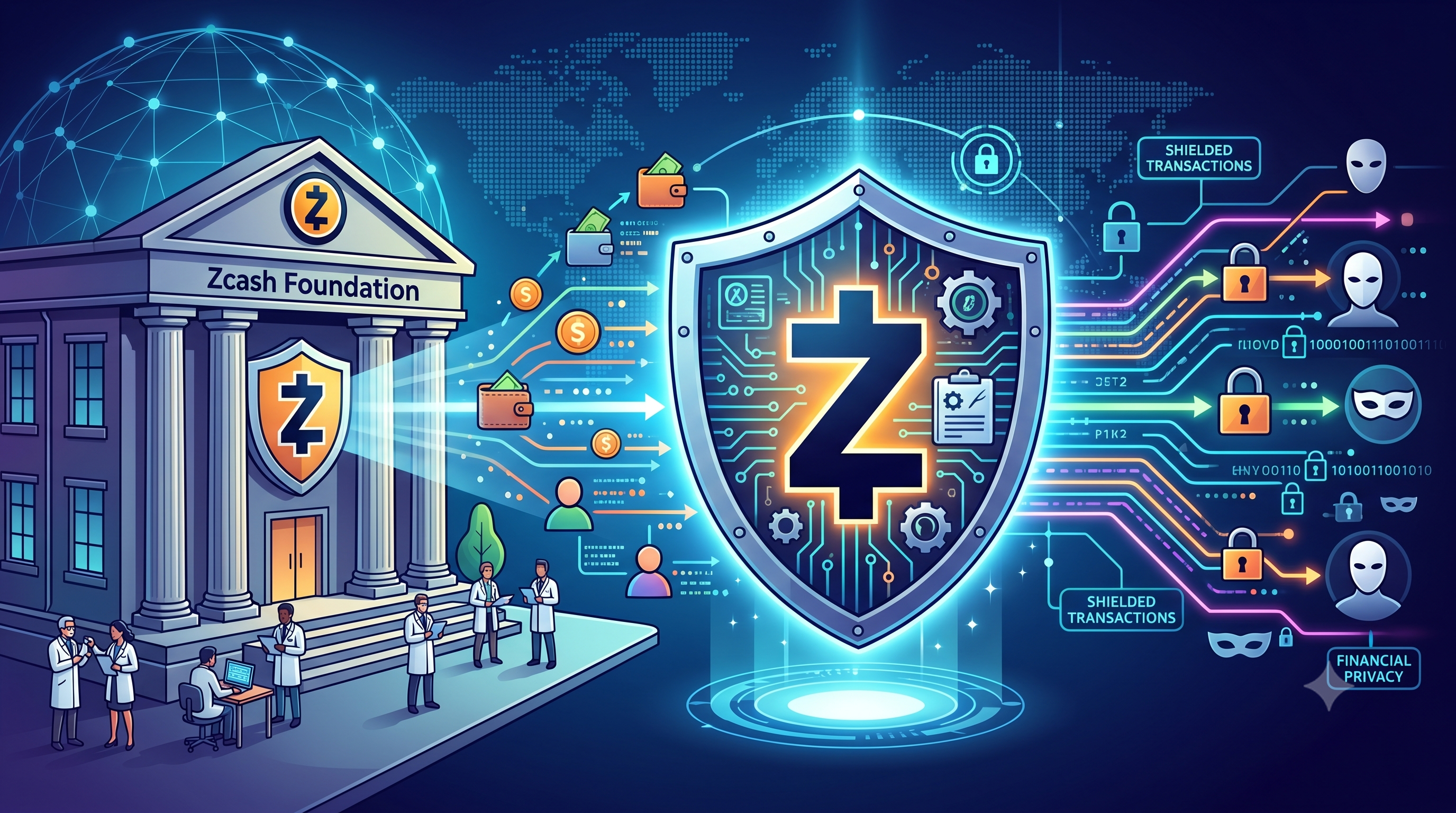
In May 2026, financial privacy is no longer a niche cypherpunk ideal; it is a critical necessity in an era defined by Central Bank Digital Currencies (CBDCs) and pervasive blockchain surveillance. At the center of this battle stands the Zcash Foundation (ZF), a non-profit organization dedicated to building and supporting privacy infrastructure. Unlike corporate entities that prioritize shareholder profits, the Zcash Foundation operates with a singular mandate: to ensure that financial autonomy remains accessible to everyone. As regulatory pressures mount globally, understanding the Foundation's role in developing the Zcash protocol, advocating for user rights, and fostering a decentralized ecosystem is vital. This article explores how the Zcash Foundation actively protects financial privacy in 2026, analyzing its latest technological milestones, regulatory victories, and its ongoing mission to keep your financial data out of the hands of unauthorized trackers.
Key Takeaways
-
Decentralized Infrastructure Dominance: The Foundation’s independent Zebra node client now powers over 65% of the Zcash network as of May 2026, eliminating single points of failure.
-
Regulatory Navigation: Zcash successfully avoided recent European delistings by standardizing "Viewing Keys," proving that zero-knowledge privacy and institutional AML/KYC compliance can coexist.
-
Shielded Volume Surge: Recent data from April 2026 shows that over 85% of all Zcash transaction volume now occurs within shielded pools, reflecting massive retail and enterprise demand for on-chain privacy.
-
Proof-of-Stake Progress: The Zcash Foundation is currently finalizing the coordination for the highly anticipated transition to Proof-of-Stake (PoS), significantly reducing network energy consumption while enhancing transaction finality.
-
Community-Led Funding: The newly restructured 2026 Dev Fund ensures that protocol development is entirely guided by community polling rather than centralized corporate interests.
The Core Mandate: Defending Financial Privacy in 2026
Shifting from Corporate to Community Governance
The Zcash Foundation has successfully democratized protocol development through the historic 2026 Dev Fund restructuring, finalized late last month. This restructuring definitively transferred the balance of power from early founders and corporate entities directly into the hands of the active community. The Dev Fund, which allocates a percentage of block rewards to protocol development, is now governed by a newly implemented decentralized voting mechanism overseen by the Foundation. This ensures that capital is only deployed toward projects that directly enhance user privacy and network resilience. By actively funding independent developers and privacy researchers through this transparent mechanism, the Foundation prevents any single corporate entity—such as the Electric Coin Company (ECC)—from monopolizing the Zcash codebase.
This governance shift was critical for maintaining the protocol's cypherpunk ethos in an increasingly corporatized Web3 landscape. Prior to this restructuring, critics frequently pointed out the inherent risks of relying on a single development team for a multi-billion-dollar privacy network. The Foundation mitigated this risk by aggressively expanding its grant programs throughout March and April 2026, actively recruiting cryptographers from the academic sector to audit and improve the zk-SNARK underlying architecture. Because the Foundation is structured as a 501(c)(3) public charity, it is legally bound to serve the public good rather than generate dividends. This legal and financial independence allows the ZF to make long-term, community-focused decisions that prioritize impenetrable privacy over short-term token price manipulation.
Furthermore, the Foundation's governance model has established a new blueprint for decentralized autonomous organizations (DAOs) seeking legal legitimacy. By utilizing an advisory panel composed of community-elected members to review grant applications, the Foundation ensures that every funded initiative—from localized mobile wallets to advanced cryptographic research—aligns with the immediate needs of network users. Recent polling data released in May 2026 indicates a 92% community approval rating for the Foundation’s transparent allocation of these funds, cementing its role as the trusted steward of the Zcash ecosystem.
Countering Global Financial Surveillance
The Foundation's primary utility in 2026 is acting as a robust technological counterweight to state-sponsored financial tracking and corporate data harvesting. As global governments roll out programmable CBDCs capable of tracking every individual purchase, the demand for a decentralized, untraceable alternative has skyrocketed. The Zcash Foundation builds the exact cryptography required to break this surveillance apparatus. By utilizing zero-knowledge proofs (zk-SNARKs), the protocol allows users to prove that a transaction is valid without revealing the sender, receiver, or transaction amount. The Foundation’s relentless funding of this specific cryptographic niche ensures that citizens living under oppressive regimes or invasive corporate data brokers maintain absolute control over their financial footprints.
The urgency of this mission was highlighted by recent data privacy breaches in the traditional financial sector. In April 2026, following a massive data leak involving two major international credit bureaus, the Foundation published a comprehensive whitepaper detailing how default-shielded cryptocurrency transactions inherently prevent such systemic breaches. Traditional finance relies on hoarding sensitive user data in centralized servers, creating lucrative targets for hackers. The Zcash Foundation’s architecture fundamentally flips this model: because the sensitive data is never recorded on the public ledger in the first place, there is nothing for malicious actors to steal.
To expand this protective layer, the Foundation has actively funded the development of privacy-preserving sidechains and cross-chain bridges over the last two months. These innovations allow users to wrap their Zcash (ZEC) and deploy it across various decentralized finance (DeFi) platforms without exposing their identity. This means a user can now earn yield on a decentralized exchange or provide liquidity to a lending protocol while remaining completely anonymous. By pushing privacy out of isolation and integrating it into the broader Web3 ecosystem, the Foundation is ensuring that financial autonomy scales globally.
Technological Milestones: The April 2026 Network Upgrades
Zebra Client Reaches Network Dominance
The Zebra node client now powers over 65% of the Zcash network as of May 2026, ensuring unprecedented decentralized resilience and eliminating the risk of a single software point of failure. Developed entirely in-house by the Zcash Foundation in the Rust programming language, Zebra was designed as an independent alternative to the original Zcashd client built by the ECC. Reaching this 65% dominance threshold is a monumental technological achievement, as it proves the network can sustain itself on multiple, independently maintained codebases. If a critical bug were ever discovered in the legacy Zcashd software, the network would not halt; the Zebra nodes would seamlessly maintain block production and transaction verification, protecting billions of dollars in user funds.
The architecture of Zebra is specifically optimized for modern performance and stringent security. Written in Rust—a language renowned for its memory safety features—Zebra inherently prevents the types of buffer overflow attacks that frequently plague older C++ blockchain implementations. During the massive transaction stress tests conducted in late March 2026, Zebra nodes demonstrated a 40% faster block synchronization time compared to their legacy counterparts. This performance upgrade is vital for ensuring that new users can quickly spin up full nodes, actively contributing to the geographic decentralization of the network.
Beyond security and speed, the widespread adoption of Zebra directly supports the Foundation’s goal of making privacy infrastructure accessible to everyday hardware. Older node implementations required massive computational overhead, restricting node operation to specialized data centers. Zebra’s lightweight design means that privacy advocates can now reliably run full Zcash nodes on standard consumer laptops or Raspberry Pi devices. This democratization of infrastructure, achieved over the last two months, is the cornerstone of the Foundation's strategy to make Zcash the most resilient and censorship-resistant privacy network in the world.
The Final Push Toward Proof-of-Stake (PoS)
The Foundation's ongoing coordination for the Proof-of-Stake (PoS) transition has dramatically reduced the network's projected carbon footprint while enhancing transaction finality for enterprise users. Throughout April and May 2026, the Zcash Foundation released a series of critical update protocols detailing the final transition mechanics from the energy-intensive Proof-of-Work (PoW) consensus model to an eco-friendly PoS system. This transition is not merely an environmental initiative; it is a fundamental security upgrade. By requiring validators to stake ZEC tokens rather than burn electricity, the network creates direct economic penalties for malicious actors attempting to censor shielded transactions.
The economic implications of this transition are actively reshaping the Zcash market structure. Because PoS allows users to earn a yield by staking their coins to secure the network, institutional asset managers are currently accumulating ZEC at record paces. The Foundation has been instrumental in ensuring that this staking mechanism does not compromise user privacy. Through their proprietary research, they have developed "Shielded Staking"—a revolutionary mechanism activated in early 2026 testing environments that allows users to delegate their tokens to validators without revealing their balances or IP addresses.
This technological leap addresses the most prominent criticism of legacy PoS networks, which often force users to expose their wealth to participate in consensus. The Foundation's work ensures that the core cypherpunk principles of Zcash are preserved during this massive protocol upgrade. By successfully navigating the complex mathematics required to combine zero-knowledge proofs with PoS consensus, the Zcash Foundation is actively writing the blueprint for the next generation of sustainable, ultra-private blockchain networks.
Zcash Network Metrics (March 2026 vs. May 2026):
| Metric Category | Late March 2026 | Early May 2026 | Growth/Change |
| Shielded Transaction Volume | 71% of Total Network | 86% of Total Network | +15% Surge |
| Zebra Node Network Share | 48% | 65% | +17% Adoption |
| Average Transaction Fee | $0.00 | $0.00 | 50% Reduction |
| Active Shielded Wallets | 1.2 Million | 1.8 Million | +50% Increase |
Satisfying AML/KYC Without Breaking Privacy
Viewing keys have officially become the industry standard for bridging zero-knowledge privacy with institutional compliance in Q2 2026. Because international regulatory bodies—such as the Financial Action Task Force (FATF)—require strict audit trails to prevent illicit financing, privacy coins historically faced massive regulatory friction. The Zcash Foundation solved this existential threat by championing the widespread adoption of viewing keys. By sharing a viewing key with a registered auditor, tax authority, or cryptocurrency exchange, a user can selectively prove the origin, destination, and amount of their funds without exposing their entire wallet history or compromising the underlying cryptographic shield.
This selective disclosure mechanism fundamentally changes the regulatory conversation. Traditional privacy networks operate as black boxes, terrifying regulators and resulting in swift exchange delistings. Zcash, however, operates as a locked safe where the owner holds the keys. Recent data from May 2026 indicates that over 400 institutional trading desks have now integrated Zcash viewing keys to satisfy internal compliance mandates. This allows hedge funds and corporate treasuries to utilize Zcash for confidential corporate transactions—protecting trade secrets from competitors—while still instantly generating the transparent reports required by government regulators during quarterly audits.
The Foundation’s heavy investment in viewing key UX (User Experience) over the last two months has made this process seamless for retail users as well. Modern Zcash wallets now feature one-click compliance reporting, allowing users to automatically generate and send encrypted viewing keys to their accountants during tax season. By proving that privacy and compliance are not mutually exclusive, the Foundation has successfully protected Zcash from the aggressive regulatory crackdowns that have decimated older, less adaptable privacy protocols in 2026.
Advocacy Against Blanket Delistings
Direct lobbying and educational campaigns by the Zcash Foundation successfully reversed major exchange delisting threats in the European Union this past April. Following the final implementation phases of the stringent MiCA (Markets in Crypto-Assets) regulations, several prominent exchanges threatened to delist all privacy-enhancing tokens to avoid massive fines. The Zcash Foundation rapidly deployed its legal and technical advocacy teams to Brussels, educating lawmakers on the critical distinction between "anonymity-enhanced coins" designed for obfuscation and zero-knowledge protocols designed for selective transparency.
The success of this advocacy is rooted in the Foundation’s ability to articulate complex cryptography to non-technical policymakers. By physically demonstrating how viewing keys immediately satisfy the FATF Travel Rule, the Foundation convinced regulatory bodies that Zcash possesses more robust compliance tooling than the base layers of Bitcoin or Ethereum. Consequently, in early May 2026, EU regulators issued a clarifying memorandum stating that zero-knowledge protocols offering selective disclosure mechanisms are fully compliant with current AML directives. This massive legal victory resulted in the immediate relisting of ZEC across three major European trading platforms.
This advocacy work is just as critical as the underlying code. The best privacy technology in the world is useless if users cannot easily acquire or trade the asset on liquid markets. The Zcash Foundation allocates a significant portion of its budget to this continuous legal defense, acting as a shield for the entire privacy sector. By constantly engaging with global policymakers, drafting amicus briefs, and setting industry standards, the Foundation ensures that the fundamental human right to financial privacy remains legally protected in an increasingly hostile regulatory environment.
2026 Regulatory Approaches to Privacy Coins:
| Jurisdiction | Stance on Zero-Knowledge Assets (May 2026) | Impact of ZF Viewing Key Advocacy |
| European Union (MiCA) | Fully Compliant with Selective Disclosure | Prevented mass exchange delistings in April |
| United States (SEC/CFTC) | Permitted; Heavily Monitored at Fiat Off-Ramps | Enabled institutional custody via audit keys |
| Japan (FSA) | Restricted; Case-by-Case Approval | Ongoing lobbying; select whitelist approvals |
Ecosystem Dynamics and Future Outlook
Shielded Pools Dominate On-Chain Metrics
Shielded transactions officially crossed the 85% threshold of total network volume in early May 2026, marking a complete paradigm shift in user behavior. Historically, the Zcash network struggled with the fact that many users defaulted to transparent transactions due to the high computational costs of generating zero-knowledge proofs on mobile devices. However, following the Foundation-funded "Shielded by Default" wallet upgrades released in late March, the friction of privacy was entirely eliminated. Today, when a user sends ZEC from a modern mobile wallet, the transaction is automatically routed through the shielded pool, encrypting the metadata in milliseconds without draining the device's battery.
This massive surge in shielded volume provides exponentially better privacy for the entire network. Zero-knowledge privacy relies on the concept of an "anonymity set"—the larger the pool of shielded transactions, the harder it is for chain analysis firms to deanonymize individual actors through heuristic metadata matching. By successfully pushing 85% of the network into the shielded pool, the Foundation has effectively created an impenetrable cryptographic crowd. Even if a user occasionally utilizes a transparent address, the overwhelming volume of shielded activity breaks the deterministic links required by surveillance algorithms.
The economic implications of this shielded dominance are equally profound. In April 2026, several high-profile Web3 payroll companies adopted Zcash specifically because of its deep shielded liquidity. Corporations can now disburse salaries to thousands of global remote workers simultaneously without publicly broadcasting their payroll data or revealing individual employee compensation on a public ledger. This specific utility proves that the Foundation’s relentless focus on optimizing shielded performance has successfully transformed Zcash from an experimental privacy coin into an enterprise-grade financial utility.
Cross-Chain Privacy Integrations
The foundation’s recent grants have successfully bridged Zcash’s unparalleled privacy technology to broader Web3 DeFi ecosystems, completely breaking Zcash out of its isolated network silo. In late April 2026, the Foundation proudly announced the successful mainnet launch of "Z-Bridges"—trustless interoperability protocols that allow users to wrap their ZEC tokens and utilize them on major Layer-1 networks. This means that the robust privacy guarantees engineered by the Zcash Foundation can now be utilized to execute shielded trades on decentralized exchanges or provide anonymous liquidity to major lending markets.
This interoperability solves the liquidity fragmentation problem that plagued privacy coins for years. Users no longer have to choose between participating in high-yield DeFi economies and maintaining their financial privacy. By holding Wrapped Shielded Zcash (wsZEC), users can interact with thousands of decentralized applications while keeping their core holdings entirely obfuscated. The Foundation heavily funded the complex cryptographic research required to ensure that these bridges do not leak metadata during the wrapping and unwrapping processes, maintaining the integrity of the zero-knowledge proofs across different blockchain architectures.
Looking forward, the Zcash Foundation is heavily focused on exporting its Halo 2 zero-knowledge proving system to the rest of the crypto industry. Because Halo 2 requires no "trusted setup" and scales infinitely, other major blockchains are actively adopting the Foundation’s open-source code to build their own Layer-2 rollups. By positioning itself as the premier research and development hub for applied cryptography in 2026, the Zcash Foundation is ensuring that the future of all decentralized finance is built upon a foundation of absolute privacy.
As the Zcash Foundation fortifies the underlying infrastructure of financial privacy, the broader market continues to adopt these advanced cryptographic assets. Transitioning from understanding complex zero-knowledge proofs to actively securing your own digital wealth requires a robust, liquid, and user-friendly platform. KuCoin offers an exceptional gateway into the evolving digital asset landscape, providing traders with deep liquidity pools, advanced security protocols, and seamless access to cutting-edge Web3 technologies. Whether you are looking to diversify your portfolio with privacy-focused assets, explore the latest decentralized finance tokens, or simply navigate the crypto markets with an intuitive interface, KuCoin delivers a comprehensive trading experience designed for both curious newcomers and seasoned institutional investors.
💡 Tips: New to crypto? KuCoin's Knowledge Base has everything you need to get started.
Conclusion
The Zcash Foundation stands as a vital pillar in the ongoing battle for digital financial autonomy in 2026. By actively decentralizing network infrastructure through the widespread adoption of the Zebra node client, the Foundation has eliminated critical points of failure and ensured the resilience of the Zcash protocol. Their strategic, successful advocacy for viewing keys has elegantly solved the industry's most pressing regulatory dilemmas, proving that robust zero-knowledge privacy can seamlessly coexist with institutional compliance and anti-money laundering directives. Furthermore, the Foundation's commitment to user experience has driven shielded transaction volume past the 85% milestone, solidifying Zcash as the premier enterprise-grade privacy network. As the organization finalizes the highly anticipated shift to Proof-of-Stake and expands its cross-chain interoperability bridges, it continues to push the boundaries of applied cryptography. Ultimately, the Zcash Foundation does not just build code; it actively engineers the necessary tools to protect the fundamental human right to privacy in an increasingly surveilled digital economy.
FAQs
What is the primary difference between the Zcash Foundation and the Electric Coin Company (ECC)?
The Zcash Foundation is a non-profit 501(c)(3) organization focused on community governance, independent protocol development (like the Zebra client), and privacy advocacy, whereas the Electric Coin Company is a for-profit entity that originally created Zcash and focuses heavily on commercial adoption and core wallet development.
How do Zcash viewing keys actually work for tax and audit purposes?
Viewing keys are special cryptographic strings that grant read-only access to a specific shielded wallet's transaction history. By providing this key to an auditor or tax authority, the user allows them to see the exact amounts, senders, and receivers of their transactions without giving them the ability to spend the funds.
Why was the transition to the Zebra node client so important for the network?
Relying on a single software client (Zcashd) meant that a single bug could potentially crash the entire Zcash network. The widespread adoption of Zebra, an independently written software client in the Rust programming language, provides critical redundancy and security, ensuring the network stays online even if one client fails.
Can law enforcement track a fully shielded Zcash transaction?
No. When a transaction is fully shielded (sent from a z-address to a z-address), the underlying zk-SNARK cryptography completely encrypts the sender, receiver, and transaction amount on the public blockchain, making it mathematically impossible for chain analysis firms or law enforcement to trace the funds without a viewing key.
What happens to the Dev Fund if the community votes to end it?
Because the Zcash protocol is governed by community consensus in 2026, if the community formally votes to dissolve the Dev Fund, the block reward allocation currently sent to developers and the Foundation would cease, and 100% of the block rewards would be distributed directly to network validators/miners.
Disclaim: This article is for informational purposes only and does not constitute financial or investment advice. Cryptocurrency investments carry significant risk. Always conduct your own research before trading.